
Norway and More See Greener Cruise Buzz as Viking and NYK Push Hydrogen-Powered Voyages

Published
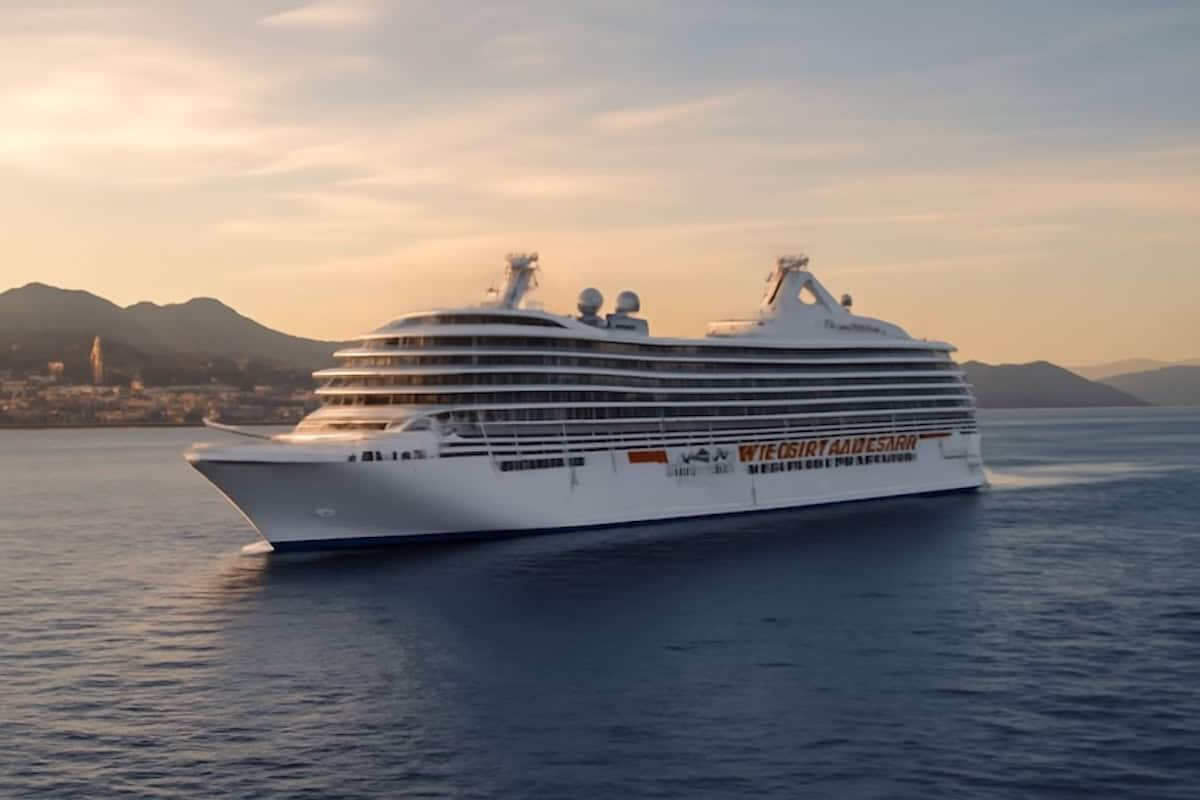
Norway and more destinations are seeing greener cruise buzz as Viking and NYK push hydrogen-powered voyages into the spotlight. Meanwhile, Norway is becoming a major focus for greener cruise travel, while more destinations explore cleaner maritime tourism. Viking and NYK are advancing hydrogen-powered voyages that could reshape how travellers experience popular coastal destinations. As a result, greener cruise options are gaining attention among global travellers seeking responsible journeys. Travel And Tour World examines how Norway and more destinations could benefit from this cruise transformation. The story also explores Viking, NYK, hydrogen-powered ships, greener voyages, and the future of sustainable cruise travel worldwide. Read on for the complete picture.
Hydrogen Cruise Ships Expand as Viking, NYK and PONANT Push Greener Travel
Hydrogen-powered cruising is moving from an experimental concept toward real passenger operations. Viking is leading the ocean-cruise sector with Viking Libra and Viking Astrea, while Japan’s NYK is developing a smaller hydrogen-fuel-cell dining ship for Tokyo.
The development is significant for travellers because cruise destinations are introducing stronger environmental requirements. Norway is among the most important examples. Its World Heritage fjords are moving toward zero-emission passenger vessels, creating stronger demand for cleaner propulsion technologies.
The global cruise industry is also becoming much larger. The Cruise Lines International Association projected about 37.7 million cruise passengers worldwide for 2025, showing why cleaner ships could have an increasingly important role in tourism.
Advertisement
Advertisement
Viking Libra: The First Large Hydrogen-Powered Ocean Cruise Ship
Viking Libra is the most advanced large-scale hydrogen cruise project currently moving into passenger service. Viking and Fincantieri designed the ship as a small ocean vessel with approximately 54,300 gross tonnes, a length of 239 metres and capacity for 998 guests.
The vessel contains 499 staterooms. Its propulsion architecture combines liquefied hydrogen and fuel-cell technology. The fuel-cell system is designed to produce as much as six megawatts of power.
Advertisement
Advertisement
For travellers, the most important feature is the planned ability to operate with zero emissions during operation. This could become valuable as ports and protected destinations introduce stricter environmental requirements.
Viking has scheduled Libra for delivery in November 2026. Its first seasons cover Mediterranean and Northern European waters.
Advertisement
Advertisement
Current published itineraries include Barcelona to Rome, Venice to Athens, Rome to Athens, Istanbul to Athens, Bergen to London, Stockholm to Bergen and Amsterdam to Bergen.
Travellers considering these voyages can therefore combine major European cultural destinations with a ship designed around next-generation propulsion.
A Mediterranean plan could begin in Barcelona before continuing toward Italian and Greek ports. A Northern European journey can instead connect London, Bergen, Amsterdam, Stockholm, Iceland or Tromsø.
The ship’s 998-guest capacity is also substantially smaller than the biggest contemporary cruise vessels. That gives travellers access to a more intimate style of cruising and allows Viking’s small-ship fleet to use ports that can be difficult for very large vessels.
Advertisement
Advertisement
Viking Astrea: The Second Major Hydrogen Ocean Cruise Ship
Viking Astrea is the second major hydrogen-powered ocean vessel in Viking’s programme. It is scheduled for delivery in 2027 and follows the same basic small-ship philosophy used for Libra.
The ship is approximately 239 metres long and designed for 998 passengers in 499 staterooms.
Viking promotes the vessel as an all-veranda small ship. This configuration is particularly relevant to scenic itineraries because passengers have private outdoor space from which to observe coastlines, islands and fjords.
Its published programme includes Mediterranean routes such as Barcelona–Rome, Rome–Venice, Venice–Athens, Rome–Athens and Istanbul–Athens.
Northern European options include Bergen–London, Stockholm–Bergen, Amsterdam–Bergen, Bergen–Barcelona and Bergen–Reykjavík.
For a traveller, a practical seven-to-eight-day Mediterranean plan could centre on Barcelona, Rome, Venice or Athens. Longer voyages can combine several countries and extend the journey toward Iberia, the Adriatic, the Aegean or Northern Europe.
Advertisement
Advertisement
Norway is especially important because its cruise sector is already handling millions of passenger movements annually.
In 2024, Norway recorded 3,654 cruise arrivals and approximately 5.9 million passengers onboard those arrivals. About 1.5 million passengers were classified as unique cruise visitors arriving from foreign ports.
Bergen recorded 328 cruise arrivals in 2024, the highest number among Norwegian ports. Ålesund followed with 290.
Day-cruise passenger numbers were also substantial. Ålesund recorded 656,678, Bergen 590,944, Stavanger 590,241 and Geiranger/Hellesylt 510,049.
These figures demonstrate why cleaner ships could become increasingly relevant to Norway’s tourism economy.
Norway Travel Plan: Bergen, Ålesund, Stavanger and Geiranger
Travellers planning a future hydrogen-focused Norwegian cruise should pay particular attention to Bergen.
Advertisement
Advertisement
Bergen is one of the country’s principal cruise gateways and recorded the highest number of cruise arrivals in 2024.
A traveller can use Bergen as a pre-cruise base before exploring the waterfront, historic Bryggen district and surrounding mountain landscapes.
The next logical destination is Ålesund. Its Art Nouveau architecture and access to the Sunnmøre region make it a strong sightseeing stop.
Stavanger provides another major cruise destination. Travellers can use the port as a gateway toward dramatic landscapes and the wider fjord region.
Geiranger and Hellesylt offer some of Norway’s most famous fjord scenery. However, these destinations are also among the areas where environmental pressure from tourism is particularly important.
Norwegian authorities have introduced zero-emission requirements for cruise ships and tourist vessels operating in the World Heritage fjords. Requirements began affecting smaller passenger vessels in 2026, while larger passenger vessels of 10,000 gross tonnes and above face requirements from 2032.
Advertisement
Advertisement
This makes future hydrogen-powered ships particularly relevant for Norwegian itineraries.
Norway’s cruise season is also becoming longer. In 2024, cruise calls occurred throughout the year. June recorded 728 calls and July 721, while January recorded 62, February 106 and December 94.
For travellers, shoulder-season cruising can offer a different experience from peak summer. Spring and autumn may provide changing landscapes and potentially lower visitor pressure, although weather conditions must be considered carefully.
Norway Cruise Visitor Comparison
| Year | Norwegian cruise arrivals | Passengers onboard cruise arrivals | Key interpretation |
|---|---|---|---|
| 2023 | 3,812 | About 5.96 million | Record year before 2024 slowdown |
| 2024 | 3,654 | About 5.90 million | Slight decline |
| 2025 forecast | About 3,900 | About 6.4 million | Forecast indicated new record |
| 2024 unique cruise visitors | — | About 1.5 million | Foreign-port arrivals closely representing unique visitors |
The figures require careful interpretation. The 5.9 million figure counts passenger movements across reported cruise arrivals rather than unique people. A traveller visiting Bergen, Ålesund and Stavanger during one cruise can therefore appear in several port-level statistics.
Norway’s Most Important Cruise Ports
| Destination | 2024 cruise arrivals | 2024 day-cruise passengers | Traveller appeal |
|---|---|---|---|
| Bergen | 328 | 590,944 | Historic city, fjord gateway |
| Ålesund | 290 | 656,678 | Art Nouveau, fjords |
| Stavanger | Major Norwegian port | 590,241 | Fjords and coastal culture |
| Geiranger/Hellesylt | Included as one statistical destination | 510,049 | Iconic fjord scenery |
| Flåm | Major cruise destination | Over 200,000 category | Flåm Railway and fjord landscapes |
Norwegian Coastal Administration statistics show that several destinations have experienced major changes since 2019. Ålesund gained 113 calls, Haugesund gained 78 and Kristiansand gained 73.
Meanwhile, Geiranger/Hellesylt and Flåm each recorded 29 fewer calls than in 2019 under the revised statistical methodology.
Advertisement
Advertisement
NYK’s Tokyo Hydrogen Dining Cruise
Japan provides another important hydrogen cruise development, although its scale is very different from Viking.
NYK, Yanmar Power Solutions and ENEOS announced in June 2026 that they will install a hydrogen fuel-cell system aboard a new dining cruise ship scheduled to enter service in 2027.
The vessel will replace NYK’s Lady Crystal, which currently operates from the Tennoz Isle area of Tokyo.
The ship will be approximately 48 metres long, 9.5 metres wide and 2.1 metres deep. Gross tonnage is expected to be approximately 480 tonnes.
That makes it dramatically smaller than Viking Libra and Astrea.
The vessel will use hydrogen storage modules supplied by Toyota, while Yanmar Power Solutions will design the fuel-cell system. ENEOS will produce and supply hydrogen through its infrastructure, primarily in Tokyo.
Advertisement
Advertisement
NYK says the fuel-cell system itself produces electricity without greenhouse-gas or nitrogen-oxide emissions during operation.
The company is following safety verification based on Japan’s Ministry of Land, Infrastructure, Transport and Tourism guidelines for hydrogen fuel-cell ships.
Travellers should understand that this is a dining cruise rather than a long-distance international cruise liner.
The experience is therefore likely to be centred on Tokyo’s waterfront rather than multi-country itineraries.
Tokyo Travel Plan for Hydrogen Cruise Visitors
Tokyo is already an important cruise destination.
The Tokyo Metropolitan Government reported 83 cruise ship calls in 2025, the highest figure since the Tokyo International Cruise Terminal opened.
Advertisement
Advertisement
The wider destination recorded approximately 28.65 million foreign visitors in 2025, according to the Tokyo Metropolitan Government’s tourism survey. Foreign visitor numbers increased 15.6 percent year on year.
For a traveller, a Tokyo hydrogen dining cruise could be combined with a three-day city itinerary.
Day one can focus on Asakusa, Senso-ji and the Sumida River waterfront.
Day two can cover Tokyo Station, the Imperial Palace area and Ginza.
Day three can combine the Tennoz waterfront with a hydrogen dining-cruise experience before departure.
The cruise itself should be treated as a city-based tourism attraction rather than a replacement for an ocean cruise.
Advertisement
Advertisement
Tokyo’s cruise infrastructure also has significant economic importance. The Tokyo Metropolitan Government estimates that a premium cruise model carrying 2,700 passengers and using Tokyo as a homeport could generate approximately ¥242.9 million in economic impact per call.
NYK Hydrogen Vessel Data
| Feature | NYK hydrogen dining vessel |
|---|---|
| Planned service | 2027 |
| Length | Approx. 48 metres |
| Beam | Approx. 9.5 metres |
| Draft | Approx. 2.1 metres |
| Gross tonnage | Approx. 480 tonnes |
| Main base | Tokyo |
| Previous vessel | Lady Crystal |
| Hydrogen system | Fuel cell |
| Hydrogen storage | Toyota modules |
| Hydrogen supplier | ENEOS |
| System designer | Yanmar Power Solutions |
| Primary tourism model | Dining cruise |
PONANT Swap2Zero: Hydrogen Plus Wind and Solar
PONANT is pursuing one of the most ambitious future hydrogen cruise concepts through its Swap2Zero project.
However, travellers should not confuse Swap2Zero with an already operating hydrogen cruise ship.
The proposed vessel is planned at approximately 181 metres with around 100 cabins.
Its energy strategy combines several technologies rather than relying solely on hydrogen.
PONANT says wind could provide an average of 50 percent of propulsion energy at a target speed of 10 knots.
Advertisement
Advertisement
More than 1,000 square metres of photovoltaic panels are planned.
The ship would also use a low-temperature hydrogen fuel cell for propulsion and a high-temperature fuel cell for hotel energy requirements.
Carbon-capture technology is another planned component.
The concept targets more than 80 percent greenhouse-gas reduction and approximately 30 days of autonomy.
PONANT also plans to integrate the ship into its scientific programme, potentially carrying researchers studying decarbonisation.
No definitive commercial itinerary or port schedule has been announced.
Advertisement
Advertisement
Therefore, travellers cannot currently build a bookable itinerary around Swap2Zero.
The project’s importance lies in demonstrating how future expedition and luxury ships could combine wind, solar, hydrogen, fuel cells and carbon capture.
For destination planners, this could eventually be particularly relevant to remote areas where environmental sensitivity is high and shore-side infrastructure is limited.
MSC’s Hydrogen Cruise Programme: Important But Not Yet a Ship
MSC should also appear in any serious overview of hydrogen cruising, but with an important qualification.
In 2021, MSC Cruises, Fincantieri and Snam announced a feasibility initiative for an oceangoing hydrogen-powered cruise ship.
The objective was to study the technical requirements for constructing the ship and developing hydrogen-bunkering infrastructure.
Advertisement
Advertisement
MSC described hydrogen as part of its longer-term decarbonisation pathway.
However, this announcement did not result in a publicly announced operational hydrogen-powered MSC cruise ship.
MSC has continued researching hydrogen-derived fuels and other technologies.
The company also tested alternative fuels such as HVO with MSC Opera in 2026. That trial is different from hydrogen propulsion.
Therefore, travellers should not expect an MSC hydrogen cruise itinerary at present.
The MSC case is nevertheless important because it demonstrates how hydrogen moved onto the strategic agenda of one of the world’s largest cruise groups before commercial hydrogen ocean ships became reality.
Advertisement
Advertisement
Hydrogen Cruise Ships and Future Projects Compared
| Cruise operator/project | Vessel | Status in 2026 | Size | Capacity | Hydrogen role | Confirmed itinerary |
|---|---|---|---|---|---|---|
| Viking | Viking Libra | Under construction/final development | 54,300 GT | 998 | Liquefied hydrogen + fuel cells | Yes |
| Viking | Viking Astrea | Under construction | Approx. 54,300 GT | 998 | Hydrogen + fuel cells | Published itineraries |
| NYK | New dining cruise vessel | Planned for 2027 | 480 GT | Not publicly stated | Hydrogen fuel cell | Tokyo |
| PONANT | Swap2Zero | Future project | 181 m | Around 100 cabins | Hydrogen fuel cells + wind + solar | Not announced |
| MSC/Fincantieri/Snam | Hydrogen ocean cruise concept | Feasibility/project stage | Not announced | Not announced | Hydrogen propulsion concept | None |
How Hydrogen Changes the Traveller Experience
Hydrogen is not simply another fuel choice.
For travellers, it could affect which ports a vessel can visit and how destinations manage cruise tourism.
Norway provides the clearest example.
The country is introducing increasingly strict requirements in protected fjord areas. This could favour ships capable of operating with little or no direct emissions.
A similar trend is visible through shore-power development.
Carnival Corporation says shore power can reduce total emissions in port by as much as 98 percent depending on the electricity mix. However, the company also notes that only a small share of cruise ports worldwide currently have shore-power infrastructure.
Advertisement
Advertisement
This demonstrates why no single technology will immediately solve cruise emissions.
Hydrogen, batteries, shore power, sustainable fuels, wind assistance and energy-efficiency systems will probably develop together.
Global Cruise Market Gives Hydrogen a Larger Role
The scale of the cruise market makes these developments significant.
CLIA projected approximately 37.7 million cruise passengers globally in 2025.
Its 2026 industry research also indicates that cruise operators are investing heavily in new ships, sustainable propulsion and future fuels.
Yet fuel availability remains a major obstacle.
Advertisement
Advertisement
Hydrogen needs production facilities, storage systems, transport networks, bunkering infrastructure and strict safety procedures.
For travellers, this means hydrogen ships will initially be concentrated on routes where suitable infrastructure exists.
Northern Europe, the Mediterranean and major metropolitan ports such as Tokyo are therefore important testing grounds.
Traveller Planning Guide
| Traveller priority | Best hydrogen-related option | Recommended destination focus |
|---|---|---|
| Large ocean cruise | Viking Libra | Mediterranean/Northern Europe |
| Future second hydrogen ocean ship | Viking Astrea | Mediterranean/Northern Europe |
| Tokyo city experience | NYK hydrogen dining ship | Tokyo waterfront |
| Future expedition/luxury concept | PONANT Swap2Zero | Itinerary not yet announced |
| Monitoring future technology | MSC hydrogen programme | No hydrogen itinerary currently |
Travellers should also distinguish zero-emission operation from zero-emission fuel production.
A fuel cell using hydrogen produces electricity without direct greenhouse-gas emissions at the point of operation. The overall environmental outcome depends on how the hydrogen itself is produced and supplied.
This distinction is particularly important when comparing future cruise ships.
Advertisement
Advertisement
The Biggest Travel Takeaway
Viking Libra and Viking Astrea represent the clearest near-term change because they are actual ocean cruise ships moving toward passenger operations.
NYK’s Tokyo vessel demonstrates how hydrogen technology can also enter smaller urban tourism experiences.
PONANT’s Swap2Zero shows where expedition cruising could eventually go, while MSC’s earlier feasibility work demonstrates the industry’s broader interest in hydrogen.
For global travellers, the most important change may eventually be itinerary flexibility.
Ships with cleaner propulsion could become better positioned for destinations introducing strict environmental standards.
Norway’s fjords are an early example of this transition.
Advertisement
Advertisement
With millions of cruise passenger movements already recorded annually, the pressure to protect popular destinations while maintaining tourism income will continue.
Hydrogen will not solve every challenge facing cruising.
But Viking’s two new ocean ships, NYK’s Tokyo dining vessel and ambitious projects from PONANT demonstrate that hydrogen has moved beyond a purely theoretical discussion.
For travellers, the next generation of cruise planning may therefore involve not only destination, price and cabin, but also the technology powering the journey.
Advertisement
