
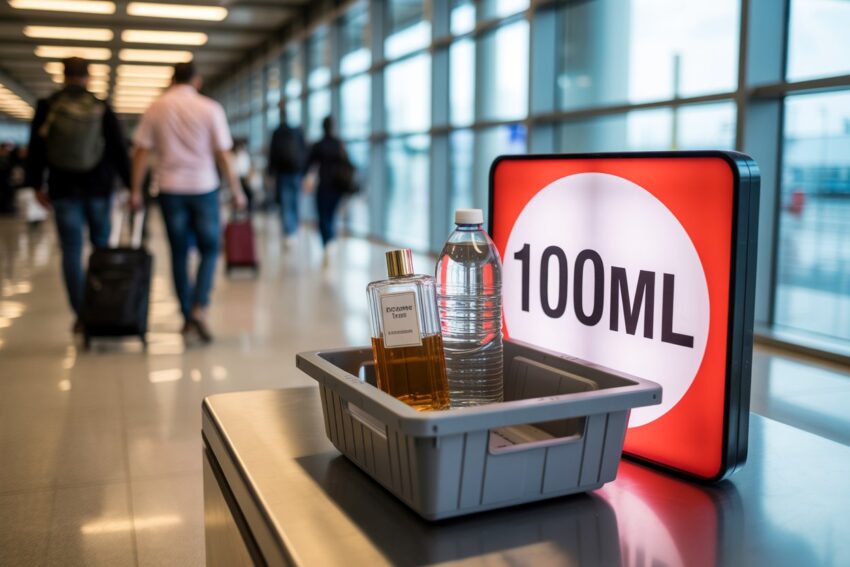
Image generated with Ai
For twenty years, the “100ml rule” has been the bane of the modern traveler’s existence. We’ve all been there: frantically decanting shampoo into tiny plastic bottles or standing at a security bin, watching a perfectly good bottle of sunblock get tossed into the trash because it was 10ml over the limit.
As we move through 2026, the headlines promised us a revolution. With the rollout of advanced Computed Tomography (CT) scanners across major hubs like Birmingham, Heathrow, and Gatwick, the dreaded 100ml limit was supposed to be a relic of the past. However, a new warning from travel experts and the Birmingham Mail suggests that for many UK tourists, the transition has created a confusing “two-tier” system that could lead to expensive airport purchases being confiscated.
Advertisement
At airports like Birmingham (BHX) and London Heathrow (LHR), the security experience has been transformed.Thanks to next-generation 3D scanners, passengers can now carry up to two litres of liquids in their hand luggage. Even better, you no longer need to separate them into clear plastic bags or remove your laptop from your rucksack.
This “2.0 version” of security is designed to be faster and more human-friendly. “It’s about bringing dignity back to the airport queue,” says one security official. “You shouldn’t feel like you’re being interrogated just because you want to bring a full-size bottle of water on a plane.”
Advertisement
The danger for UK tourists isn’t usually on the way out; it’s on the way back. While you might be able to breeze through Birmingham Airport with a large bottle of luxury perfume or a specialty local spirit in your hand luggage, the airport you are returning from may not have the same technology.
Most international airports—and even several smaller UK hubs like Manchester, Stansted, and Luton—still strictly enforce the 100ml rule. If you are connecting through one of these airports or flying home from a destination that hasn’t upgraded its scanners, any liquid over 100ml in your cabin bag will be seized.
The “Duty-Free” Loophole: Many travelers assume that because they bought a liquid after security, it’s safe. However,if you have a connecting flight, your duty-free must be sealed in a Security Tamper Evident Bag (STEB) with the receipt visible. Even then, some security checkpoints in non-EU countries may not recognize these bags, leading to the heartbreaking sight of a £100 bottle of gin being poured away.
The 2026 landscape is a patchwork of rules. While the UK government set a deadline for all major airports to install the new CT scanners, the implementation has been plagued by two major hurdles:
Advertisement
Advertisement
This has resulted in what travelers are calling “Security Roulette.” You might experience the future of travel at Heathrow Terminal 5, only to be thrust back into 2006 when flying out of a regional terminal.
The most significant impact isn’t just the financial loss of confiscated goods; it’s the return of “Security Anxiety.” Travelers are reporting higher stress levels as they try to guess which rules apply to their specific itinerary.
“I thought the rules had changed everywhere,” says one traveler who recently had a family-sized suncream confiscated at a connecting hub. “I read the news about Birmingham lifting the limit, so I packed accordingly. No one told me that the rules change the moment you land in another country.”
To ensure your holiday souvenirs and essentials make it home, experts suggest a three-step safety check:
Despite the current “patchwork” of regulations, the industry is moving toward a unified standard. By the end of 2027, it is expected that almost all major European and North American hubs will have completed their scanner upgrades. Until then, the best tool a traveler has isn’t a 3D scanner—it’s information.
Advertisement
Advertisement
Advertisement













Saturday, September 5, 2026

Saturday, September 5, 2026

Saturday, September 5, 2026

Saturday, September 5, 2026

Saturday, September 5, 2026

Saturday, September 5, 2026

Saturday, September 5, 2026

Saturday, September 5, 2026



