
Thousands Of Passengers Trapped Around Europe As United Kingdom, Germany, Spain, France, Italy and More Face 1476 Delays And 400 Cancellations Disrupting Lufthansa, Air France, Ryanair, KLM and Others in Berlin, Paris, Brussels, Vienna, Zurich and More

Published
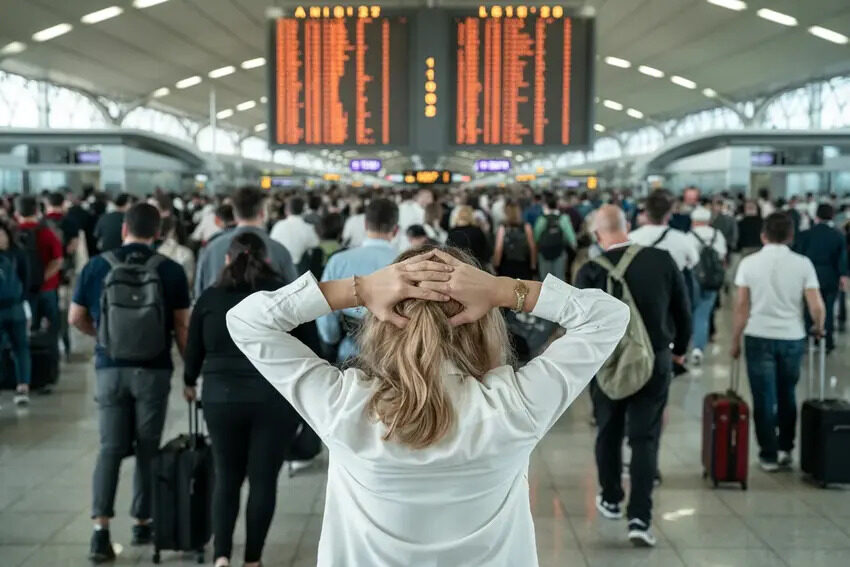 Image generated with Ai
Thousands of passengers are trapped across Europe as a wave of flight delays and cancellations continues to wreak havoc in major airports, including Berlin, Paris, Brussels, Vienna, and Zurich. Yesterday, Europe faced a severe disruption with 1476 delayed flights and 400 cancellations, impacting key airlines such as Lufthansa, Air France, Ryanair, and KLM. The ongoing chaos, triggered by operational challenges and congestion in the airspace, has left passengers stranded, forced to navigate long waits and uncertainty as airports and airlines struggle to manage the crisis. This disruption is particularly felt across the United Kingdom, Germany, Spain, France, Italy, and other affected regions, as travelers are left wondering when they will finally be able to continue their journeys.
Yesterday, Europe’s skies were disrupted by an unprecedented wave of flight delays and cancellations, leaving thousands of passengers grounded. Major airlines like Lufthansa, Air France, Ryanair, and KLM were all affected, with air traffic management struggling to cope with the volume of disruption. As travelers in the United Kingdom, Germany, Spain, France, Italy, and several other European countries found themselves caught in the chaos, 1476 flights were delayed, and 400 were cancelled.
The Massive Scale of Flight Delays and Cancellations Across Europe
The scale of the travel chaos sweeping through Europe is staggering. Passengers across several major airports are facing prolonged waiting times, missed connections, and uncertainty about when their flights will depart. The impact has been particularly severe at some of the continent’s busiest airports, including Berlin Brandenburg (BER), Paris Charles de Gaulle (CDG), Brussels (BRU), Zurich (ZRH), Vienna International (VIE), and Munich (MUC).
Here is a breakdown of cancellations and delays by some of the hardest-hit airports across Europe:
Advertisement
Advertisement
| Airport | Cancelled (#) | Cancelled (%) | Delayed (#) | Delayed (%) |
|---|---|---|---|---|
| Vienna International (VIE) | 7 | 2% | 20 | 8% |
| Brussels Airport (BRU) | 5 | 0% | 34 | 6% |
| Copenhagen Airport (CPH) | 5 | 1% | 30 | 8% |
| Paris Charles de Gaulle (CDG) | 12 | 2% | 101 | 11% |
| Zurich Airport (ZRH) | 7 | 1% | 125 | 27% |
| Munich International (MUC) | 10 | 2% | 44 | 8% |
| London Heathrow (LHR) | 12 | 1% | 101 | 9% |
These statistics reflect only a portion of the travel disruptions affecting Europe, highlighting the severity of the delays and cancellations that have caused significant inconveniences for travelers. With major airports reporting dozens of cancellations and a substantial number of delayed flights, air travelers are being left stranded, and many have to deal with mounting frustration and uncertainty.
The Airlines Most Affected by Delays and Cancellations
It is not just the airports that are suffering. Major European airlines have been significantly impacted by the disruptions as well. Airlines like Lufthansa, Air France, Ryanair, KLM, and several others have had to ground flights, affecting thousands of passengers. For passengers expecting a smooth journey, these delays and cancellations have created confusion and chaos, with some people stranded for hours or forced to rearrange their entire travel plans.
Advertisement
Advertisement
Here’s a snapshot of how the airlines are faring in terms of cancellations and delays:
| Airline | Cancelled (#) | Cancelled (%) | Delayed (#) | Delayed (%) |
|---|---|---|---|---|
| Lufthansa | 26 | 3% | 116 | 14% |
| Air France | 22 | 3% | 89 | 13% |
| Ryanair | 40 | 2% | 132 | 7% |
| KLM | 10 | 1% | 57 | 8% |
| Swiss | 11 | 4% | 89 | 35% |
| easyJet | 35 | 2% | 156 | 10% |
These airlines have had to deal with a high number of cancellations and delays, leading to major disruptions across the European travel network. With this volume of disturbances, many airlines are working around the clock to manage the fallout and find alternative solutions for stranded passengers. However, the sheer scale of the issue means that some passengers may have to endure long waits or find new routes to continue their journeys.
The Impact on Passengers and Their Travel Plans
The repercussions of these disruptions go far beyond the flight schedule. Thousands of passengers are being forced to adjust their travel plans, often at great inconvenience and additional cost. From rebooking flights to arranging alternate modes of transportation, passengers are facing an arduous battle to get where they need to go.
Many travelers have been left without adequate communication from airlines or airports regarding the status of their flights. Some passengers have reported waiting hours in long queues, trying to secure alternative arrangements or simply get updates about their flight status. For those traveling with connecting flights, missed connections have added an extra layer of frustration to an already stressful situation.
In particular, airports like London Heathrow, Paris Charles de Gaulle, and Zurich are seeing a rise in passenger complaints due to long delays and overcrowding. The airports are struggling to handle the growing number of stranded passengers, leading to mounting tensions and confusion in terminals.
The Ripple Effect Across European Hubs
While Germany, France, Belgium, and other key European countries are at the forefront of this disruption, the ripple effect is being felt across the continent. Some flights are being rerouted through less affected airports, further compounding congestion. As a result, Berlin, Zurich, Brussels, and Munich are seeing a steady stream of diverted flights, which adds to the chaos at these already busy airports.
Advertisement
Advertisement
The delays and cancellations have also disrupted Europe’s multi-modal travel network. Many passengers who were supposed to fly have been forced to take trains or buses to complete their journeys. This has caused additional strain on Europe’s train services, which are also experiencing an increase in demand.
What Can Passengers Do to Minimize the Impact?
If you’re planning to fly in Europe soon, it’s crucial to be prepared for the possibility of delays and cancellations. Here are some tips to help minimize the impact of flight disruptions:
- Stay Informed: Regularly check your flight status through your airline’s website or app. Airports are also posting updates on their flight information boards.
- Consider Travel Insurance: If you’re planning to travel during a busy period, travel insurance can offer protection in case of cancellations or missed connections.
- Contact Your Airline: If you are impacted by a delay or cancellation, don’t hesitate to reach out to your airline to get rebooked on another flight or find alternatives.
- Pack Essentials: If you’re facing a long delay, ensure that you have snacks, water, and entertainment to keep you comfortable while waiting.
- Be Patient: Understand that airport staff and airline representatives are doing their best to handle the large volume of disruptions. Remaining calm and patient will help make the experience smoother for everyone.
As of now, Europe’s skies remain in turmoil with thousands of passengers grounded across multiple countries. The ongoing wave of delays and cancellations is a stark reminder of how fragile air travel can be during peak periods. Airlines like Lufthansa, Air France, Ryanair, and KLM are doing their best to manage the fallout, but the disruptions are far-reaching and will likely continue to affect air travel for the foreseeable future.
Thousands of passengers are trapped across Europe as 1476 flight delays and 400 cancellations disrupt major airlines like Lufthansa, Air France, Ryanair, and KLM. The chaos, caused by operational issues and airspace congestion, is impacting key airports in the United Kingdom, Germany, Spain, France, Italy, and more.
Travelers are urged to stay informed and flexible, as they may need to make last-minute adjustments to their plans. While the situation remains fluid, the best strategy is to be prepared for the unexpected and to rely on the support of airlines and airports to help navigate the challenges.
Advertisement
