

Thousands of Travellers Stranded In Middle East As Qatar, Kuwait, Saudi Arabia And Others Delay 515 And Cancelled 228 Flights Impacting FlyDubai, Emirates, Etihad Airways And Others In Riyadh, Doha And More

Published
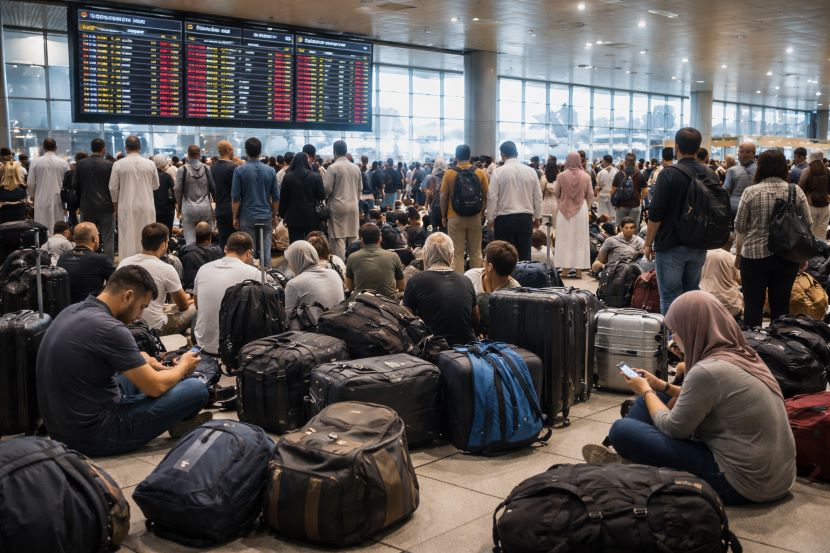 Image generated with Ai
Thousands of travellers across the Middle East are facing severe disruptions as multiple airlines, including FlyDubai, Emirates, and Etihad Airways, struggle with widespread flight cancellations and delays. A staggering 228 flights have been cancelled, and 515 flights delayed, affecting major airports in Riyadh, Doha, Kuwait, and other key regional hubs. The ongoing disruptions have left passengers stranded, with long waiting times and difficulties in rebooking their flights. The ripple effects of these cancellations and delays have extended beyond local routes, impacting international connections as well. With both regional and global airlines, including Qatar Airways and Saudi Arabian Airlines, grappling with operational challenges, passengers are urged to stay informed and be prepared for changes to their travel plans. As the travel season continues, these delays are causing considerable inconvenience for passengers, particularly those on tight schedules or with connecting flights.
Bahrain International Airport (BAH) Sees Major Cancellations
Bahrain International Airport (BAH) experienced a high cancellation rate, with 92 flights cancelled, though it reported no delays. The cancellations have raised concerns among travellers relying on the hub for connections, especially given its central role in connecting the Gulf region with international destinations. Passengers planning to travel via BAH are urged to check flight statuses before heading to the airport to avoid further inconvenience.
Advertisement
Advertisement
Dubai International Airport (DXB) Struggles with Cancellations and Delays
Dubai International (DXB), one of the busiest airports in the world, faced 40 cancellations and 47 delayed flights. The high volume of delays may cause passengers to experience longer wait times, especially during peak travel periods. Dubai is a key stopover for international long-haul flights, and these disruptions could lead to cascading delays across multiple regions.
Hamad International Airport (DOH) Experiences Multiple Delays
At Hamad International Airport (DOH), 23 flights were cancelled, while 46 faced delays. As Qatar’s primary international gateway, these disruptions could have a significant impact on connecting flights, particularly for passengers heading to destinations in Europe, Asia, and Africa. Qatar Airways travellers are urged to monitor updates for potential changes to their itineraries.
Advertisement
Advertisement
King Khalid International Airport (RUH) Faces Extensive Delays
King Khalid International Airport (RUH) in Riyadh experienced 21 cancellations and a staggering 106 delayed flights, which represent a significant portion of its daily operations. This level of disruption may affect business and leisure travellers alike, especially those flying to and from the kingdom’s capital. With numerous international connections, the ripple effects are expected to impact air travel across the region.
Abu Dhabi International Airport (AUH) Sees Moderate Cancellations and Delays
Abu Dhabi International Airport (AUH) reported 12 cancellations and 31 delays, a relatively lower number compared to other Middle Eastern airports. However, any delays can still cause inconvenience for passengers. As a key hub for Etihad Airways, the airport’s operations are critical for connecting travellers to destinations across Europe, Asia, and the Americas.
Advertisement
Advertisement
King Abdulaziz International Airport Faces Widespread Delays, Impacting Passengers
King Abdulaziz International Airport (JED) in Jeddah, a major gateway to Saudi Arabia and a key hub for Hajj and Umrah pilgrims, has recently been affected by significant operational disruptions. With 7 flight cancellations and a staggering 114 delayed flights, the airport has seen a high level of disruption, impacting both domestic and international passengers. This level of delay can cause considerable inconvenience, especially for those with tight connections or connecting flights to other parts of the Middle East, Asia, and beyond.
Kuwait International Airport Faces Cancellations, but No Delays
Kuwait International Airport (KWI) has experienced some disruptions recently, with 10 flight cancellations reported. However, in a positive development for travellers, the airport has managed to avoid any delays, ensuring that the majority of flights have departed on time. While the cancellations may cause inconvenience to affected passengers, the absence of delays means that other flights are running as scheduled, minimizing the overall impact on travel.
King Fahd International Airport Sees Cancellations and Delays, Impacting Travel
King Fahd International Airport (DMM) in Dammam has recently experienced operational disruptions, with 9 flight cancellations and 21 delayed flights. These disruptions may cause significant inconvenience for passengers, particularly those with tight connections or onward travel plans. Despite the relatively smaller number of cancellations, the delayed flights are likely to affect a broader range of travellers, especially those connecting to international destinations.
Jeddah International Airport Experiences Significant Delays, Affecting Passengers
Jeddah International Airport (JED), one of Saudi Arabia’s busiest airports and a major hub for pilgrims travelling to Mecca, has been hit by operational disruptions, with 7 cancellations and a substantial 116 delayed flights. The high number of delays is likely to cause inconvenience for passengers, particularly those with connections to international destinations or pilgrims with scheduled travel for Hajj and Umrah.
Prince Mohammad Bin Abdulaziz Airport Faces Cancellations and Delays
Prince Mohammad Bin Abdulaziz Airport (MED) in Medina has recently experienced operational disruptions, with 3 flights cancelled and 26 delayed. Although the number of cancellations is relatively low, the delays may cause significant inconvenience for passengers, particularly those connecting to other destinations or planning to visit the holy city of Medina.
Beirut Rafic Hariri International Airport Faces Minor Disruptions
Beirut Rafic Hariri International Airport (BEY) has experienced minor disruptions, with 4 flights cancelled and 8 delayed. While the cancellations are limited, the delays may still impact travellers, particularly those with tight connections or onward travel plans. As Lebanon’s primary international gateway, these disruptions may cause inconvenience for passengers flying to and from popular destinations in Europe, the Middle East, and beyond.
Advertisement
Advertisement
Middle Eastern Airports Facing Widespread Flight Disruptions: What Travellers Need to Know
The aviation sector in the Middle East has recently experienced significant disruptions, with multiple airports reporting high cancellation and delay rates. These operational challenges have affected both domestic and international travellers, particularly those flying through key regional hubs such as Dubai, Riyadh, Doha, and Jeddah. Passengers are advised to remain informed and check the status of their flights to minimize inconvenience. Below is a summary of the ongoing disruptions at various Middle Eastern airports.
| Airport | Cancellations | Delays | Impact |
|---|---|---|---|
| Bahrain International Airport (BAH) | 92 | 0 | A high number of cancellations, though no delays, has raised concerns for travellers relying on BAH for connections. Passengers should check flight statuses. |
| Dubai International Airport (DXB) | 40 | 47 | High cancellations and delays at DXB, a major hub for international long-haul flights, leading to potential cascading delays across multiple regions. |
| Hamad International Airport (DOH) | 23 | 46 | Disruptions at DOH could significantly affect connecting flights, especially for passengers heading to Europe, Asia, and Africa. Passengers should stay updated. |
| King Khalid International Airport (RUH) | 21 | 106 | Extensive delays and cancellations affecting both business and leisure travellers, with a ripple effect expected throughout the region. |
| Abu Dhabi International Airport (AUH) | 12 | 31 | Moderate disruptions with cancellations and delays, primarily impacting passengers connecting to Europe, Asia, and the Americas. |
| King Abdulaziz International Airport (JED) | 7 | 116 | Significant delays and a smaller number of cancellations, causing considerable inconvenience for travellers with tight connections, especially during Hajj. |
| Kuwait International Airport (KWI) | 10 | 0 | No delays reported, but cancellations have left some passengers stranded. The absence of delays offers some relief for other travellers. |
| King Fahd International Airport (DMM) | 9 | 21 | A moderate level of disruptions with a relatively smaller number of cancellations, but delays could affect passengers connecting to international flights. |
| Jeddah International Airport (JED) | 7 | 114 | High delays and cancellations, affecting both domestic and international passengers, especially those flying for Hajj and Umrah. |
| Prince Mohammad Bin Abdulaziz Airport (MED) | 3 | 26 | Relatively low cancellations, but delays may inconvenience passengers connecting to other destinations, particularly for those visiting Medina. |
| Beirut Rafic Hariri International Airport (BEY) | 4 | 8 | Minor disruptions with cancellations and delays, but passengers with tight connections should stay informed about potential changes to their itineraries. |
The Middle Eastern aviation sector has been facing significant disruptions across key airports, with both cancellations and delays causing major inconveniences for travellers. These disruptions are particularly impactful for passengers flying through major hubs like Dubai, Doha, and Riyadh, which serve as critical connections to global destinations. To mitigate the impact, passengers are encouraged to stay informed by checking flight statuses frequently and allowing extra time for potential delays. Airlines and airports must continue to improve operational efficiency to reduce such disruptions, especially during peak travel periods.
Some Affected Airlines Due To This Cancellation
Gulf Air Faces Significant Cancellations, No Delays
Gulf Air has recently faced a substantial number of cancellations, with 91 flights cancelled, though it reported no delays. This high cancellation rate has caused major disruptions for passengers, especially those relying on Gulf Air for connections to and from the Middle East, Europe, and beyond. While the absence of delays may provide some relief, the large number of cancellations is likely to leave many travellers stranded or requiring rebooking. Passengers affected by the cancellations are advised to check with Gulf Air for rebooking options and stay informed about potential schedule changes.
FlyDubai Faces Cancellations and Delays, Impacting Passengers
FlyDubai has recently experienced disruptions with 14 flight cancellations and 12 delayed flights, affecting passengers travelling through one of the Gulf’s leading low-cost carriers. While the number of cancellations is moderate, the delays could lead to extended wait times, especially for those with tight connections or onward travel plans. Passengers flying with FlyDubai are urged to stay updated on the status of their flights and check for rebooking options if their flights are cancelled. These disruptions may have a ripple effect, impacting travel plans across FlyDubai’s extensive network, especially for those connecting to popular destinations in the Middle East, Asia, and Europe.
Emirates Faces Cancellations and Delays, Affecting Global Passengers
Emirates has faced recent operational disruptions, with 5 flights cancelled and 24 delayed. While the cancellations affect a smaller portion of the airline’s extensive network, the delays could cause significant inconvenience, especially for passengers with tight connections or international travel plans. As a major carrier connecting the Middle East to destinations worldwide, these disruptions are likely to ripple across Emirates’ routes, impacting travellers heading to and from key global hubs. Passengers are advised to regularly check their flight status and seek rebooking options if their travel plans are affected.
Qatar Airways Experiences Cancellations and Delays, Impacting Travel Plans
Qatar Airways has encountered significant disruptions, with 11 flight cancellations and 50 delays, affecting passengers across its global network. The high number of delays could cause long wait times, particularly for travellers with connecting flights or tight schedules. As one of the leading carriers connecting the Middle East to key international destinations, these disruptions are likely to have a ripple effect, impacting travel across Europe, Asia, and beyond. Passengers flying with Qatar Airways are urged to check their flight statuses regularly and explore rebooking options if their flight is affected by the cancellations.
Advertisement
Advertisement
Etihad Airways Sees Minimal Disruptions with Few Delays
Etihad Airways has reported minimal disruptions recently, with no cancellations and only 2 flights delayed. While the delays are relatively small, they still may cause slight inconvenience for passengers, particularly those with tight connections or onward travel plans. As a major carrier based in Abu Dhabi, Etihad’s smooth operations ensure that most flights are running on schedule, offering some relief to travellers. Passengers are advised to stay updated on any potential changes, but overall, the airline’s performance remains largely unaffected by widespread disruptions.
Cyprus Airways Faces Minimal Disruption with One Cancellation
Cyprus Airways has experienced minimal disruption recently, with only 1 flight cancelled and no delays reported. This relatively low level of disruption is a positive for travellers, especially those relying on the airline for connections to destinations in Europe and the Middle East. While the single cancellation may affect a small number of passengers, the absence of delays ensures that most flights are operating as scheduled, providing a smooth travel experience. Passengers affected by the cancellation are encouraged to check for rebooking options with the airline.
Recent Flight Disruptions Across Middle Eastern and International Airlines: What Travellers Need to Know
The aviation sector has been facing various disruptions at multiple airports and airlines globally, affecting both domestic and international travellers. While some airlines have seen a high number of cancellations and delays, others have managed to maintain smooth operations with minimal disruptions. Passengers are urged to stay updated with flight statuses and rebook if necessary to mitigate the impact of these disruptions. Below is a summary of the current flight cancellations and delays across multiple airlines:
| Airline | Cancellations | Delays | Impact |
|---|---|---|---|
| Gulf Air | 91 | 0 | A large number of cancellations, with no delays, may cause significant disruption for travellers connecting through Bahrain. |
| FlyDubai | 14 | 12 | Moderate disruptions with both cancellations and delays, affecting passengers on connections, especially during peak travel periods. |
| Emirates | 5 | 24 | Few cancellations, but the high number of delays could cause inconvenience, especially for those with tight connections across Emirates’ global network. |
| Qatar Airways | 11 | 50 | A significant number of delays, with some cancellations, impacting global connections through Qatar’s extensive network. |
| Etihad Airways | 0 | 2 | Minimal disruptions with no cancellations and only a small number of delays, ensuring most flights remain on schedule. |
| Cyprus Airways | 1 | 0 | Very few disruptions with just one cancellation and no delays, offering a smooth travel experience for passengers. |
While some airlines have faced substantial disruptions, others have managed to maintain relatively smooth operations with minimal cancellations and delays. Passengers travelling with these airlines, especially those flying through major Middle Eastern hubs like Dubai, Doha, and Abu Dhabi, are advised to stay informed and check their flight statuses regularly. For those affected by cancellations, rebooking options should be explored as soon as possible to avoid further inconvenience. Keeping up with real-time updates will help ensure a more seamless travel experience despite these temporary setbacks.
Summary of Recent Flight Disruptions at Middle Eastern Airlines and Airports
The aviation sector has been experiencing notable disruptions across multiple Middle Eastern airports and international airlines, affecting both regional and global travellers. Notably, Gulf Air has seen the highest number of cancellations, with 91 flights cancelled, though it reported no delays, impacting passengers’ connections through Bahrain. FlyDubai also faced moderate disruptions, with 14 cancellations and 12 delays, which could cause delays for passengers with connecting flights. Similarly, Emirates encountered 5 cancellations and 24 delays, which may lead to extended wait times, particularly for those on long-haul international flights. Qatar Airways reported 11 cancellations and a significant 50 delays, causing inconvenience for travellers across its network, especially those with tight connection schedules.
In contrast, Etihad Airways managed to avoid cancellations, with only 2 delays reported, making it one of the more reliable carriers during this period. Cyprus Airways experienced minimal disruption, with just 1 cancellation and no delays, offering a smooth experience for most of its passengers. These disruptions are particularly impactful for travellers connecting to and from major airports such as Dubai International (DXB), Hamad International (DOH), and King Khalid International (RUH), where numerous flights are either cancelled or delayed, causing cascading effects throughout the network. Passengers are advised to regularly check flight statuses and explore rebooking options where necessary to avoid further inconvenience during their travels.
Advertisement
Advertisement
Conclusion
The widespread disruptions across Middle Eastern airlines are a major setback for global travellers, with thousands of passengers experiencing delays and cancellations. The impact of 228 cancelled flights and 515 delays at airports such as Riyadh, Doha, and Kuwait is felt far beyond the region, with international connections severely affected. Airlines like FlyDubai, Emirates, and Etihad Airways, which are pivotal in connecting the Middle East to the world, are working to manage the situation, but the ripple effects continue to cause inconvenience. For passengers, the situation is both frustrating and unpredictable, as flight statuses can change at any moment. Travellers are advised to remain proactive, stay updated on their flight statuses, and reach out to their airlines for assistance and rebooking. With the aviation sector under pressure, it’s clear that more attention will be needed to restore normalcy and avoid further disruptions.
Source:- FlightAware and Different Airports
Advertisement
