

Georgia Emerges Alongside Azerbaijan And Bosnia To Attract Expanding GCC Holiday Demand: All You Need To Know

Published
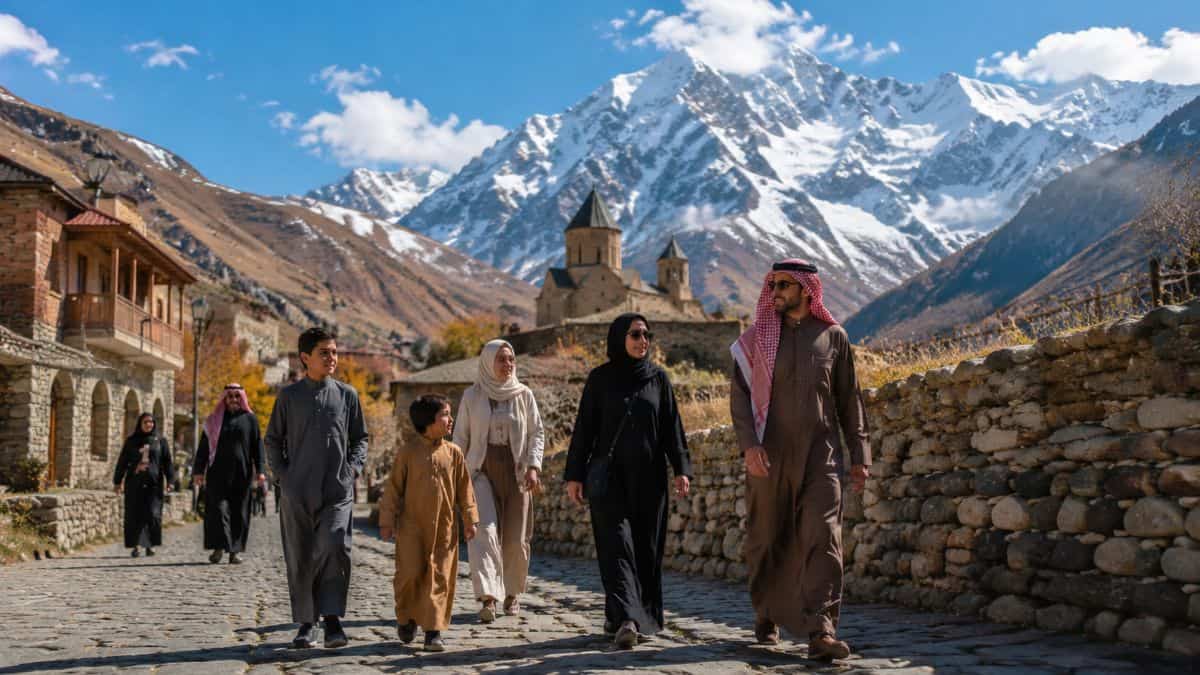
Georgia is emerging as one of the most appealing new destinations for visitors from the Gulf region. This is attributed to easy visa policies, good air service, and its diverse landscapes and quality vacation offerings. The year 2025 saw 145,513 visitors from GCC countries, an increase of 3.4% over 2024. Saudi Arabia has shown the most growth, at 9.1%, while Georgia’s tourism market in total hit new records with 7,803,239 travellers from abroad, and over 5.5 million overnight visitors.
The increase in the number of visitors from the Gulf shows that the global travel preferences are changing. GCC tourists are on the lookout for new places with cool climate, cultural experience, nature, activities for children and easy accessibility. Georgia has successfully marketed itself as a place where travelers can visit numerous historical cities, mountain landscape, seaside resorts, and health resorts, as well as enjoy winter tourism.
Yet, having a success story in the Gulf is not only about the number of tourists coming to the country. The task facing Georgia now is to translate quick fame about the country into sustainable tourism by attracting new segments of the Middle Eastern market, promoting year-round tourism and longer trips.
Georgia’s Tourism Growth Builds A Strong Foundation For Gulf Visitors
Georgia’s tourism recovery has strengthened significantly over recent years. International traveller visits increased from 7,072,220 in 2023 to 7,368,149 in 2024, before reaching 7,803,239 in 2025. Overnight tourism also expanded, with tourist visits exceeding 5.5 million in 2025.
Advertisement
Advertisement
This growth shows that Georgia is not only receiving more border crossings but also attracting travellers who stay longer and contribute more to the tourism economy. The difference between traveller visits and tourist visits is important because overnight visitors generally generate greater spending through hotels, restaurants, transport services and attractions.
The GCC market represents a smaller share of Georgia’s total tourism volume, accounting for around 1.9% of international traveller visits. However, its importance extends beyond numbers. Gulf travellers often demonstrate longer stays and higher expectations for accommodation quality, making the market strategically valuable for hotels, resorts and tourism businesses.
Advertisement
Advertisement
In 2024, Persian Gulf visitors stayed an average of 6.5 nights, compared with 5.5 nights for all international visitors. Additionally, 64.1% of Persian Gulf visits were first-time visits, showing that Georgia still has significant potential to attract new customers from the region.
Saudi Arabia Leads Georgia’s Expanding Gulf Tourism Market
Saudi Arabia has become the centre of Georgia’s GCC tourism strategy. The country recorded 88,298 Saudi visits in 2024, making it the largest identified Gulf source market. Georgia reported that Saudi visits increased by another 9.1% in 2025, suggesting continued momentum from this important market.
Saudi travellers are increasingly looking beyond traditional European destinations for holidays that offer affordability, cultural discovery and natural scenery. Georgia fits these preferences through destinations such as Tbilisi, Kazbegi, Gudauri, Batumi and Kakheti.
Tbilisi provides a combination of historic architecture, restaurants and urban experiences. Batumi offers a Black Sea coastal atmosphere with hotels and entertainment options. Mountain destinations such as Kazbegi and Gudauri provide landscapes, adventure activities and winter experiences that appeal to families and younger travellers.
The Saudi market also highlights the importance of premium value rather than simply low prices. Travel searches from Saudi Arabia have shown strong interest in four-star and five-star accommodation, indicating that Gulf visitors often seek quality experiences while still considering overall trip value. For Georgian hotels, this creates opportunities to develop family suites, Arabic-language services, halal dining information and personalised travel packages designed around Gulf expectations.
UAE, Kuwait, Oman And Qatar Create New Opportunities Beyond Saudi Arabia
Although Saudi Arabia dominates Georgia’s GCC tourism performance, other Gulf markets are becoming increasingly important for diversification.
Advertisement
Advertisement
The UAE remains a strategically valuable market because of its strong aviation links. Georgia recorded significant passenger movement between Georgia and the UAE, with the UAE acting as both a source market and a major connectivity hub. Air Arabia, flydubai and other carriers have strengthened links between Georgian destinations and Gulf airports.
UAE travellers are attracted by Georgia’s short travel distance, cultural experiences and variety of holiday options. The country also benefits from Dubai and Abu Dhabi’s role as major aviation gateways, allowing easier access for both residents and connecting passengers.
Kuwait remains another important market, although recent performance has been mixed. Kuwait was Georgia’s second-largest identified GCC market in 2024 with 27,277 visits, but arrivals declined during parts of 2025.
The decline demonstrates that increasing flight capacity alone does not automatically create tourism growth. Destination marketing, pricing, travel preferences and seasonal demand must work together.
Oman recorded particularly strong momentum, with first-half 2025 visits increasing by 45.5%, although from a smaller base. Qatar also recorded growth, supported by direct connectivity through Qatar Airways’ Doha–Tbilisi service. Together, these markets represent an opportunity for Georgia to reduce dependence on one dominant source country and create a stronger Gulf tourism portfolio.
Why Georgia Appeals To Gulf Travellers Seeking Premium Experiences
Georgia’s attraction among GCC travellers comes from several factors working together. The country offers easy entry, convenient flights, diverse experiences and competitive holiday costs.
Advertisement
Advertisement
One of Georgia’s strongest advantages is visa accessibility. Citizens of all six GCC countries can enter Georgia without a visa and stay for up to one year under the country’s visa regime.
This removes one of the biggest barriers influencing destination choice. Travellers can plan holidays with less uncertainty compared with destinations requiring complex visa applications.
Air connectivity has also played a major role. Georgia has developed multiple links with Gulf markets through airlines including Qatar Airways, flydubai, Air Arabia, Jazeera Airways, flynas and flyadeal. During June–October 2024, Georgia expected 2,255 flights connected with GCC markets, representing around 17% of its scheduled flights during that period.
Beyond accessibility, Georgia offers the type of experiences increasingly valued by Gulf travellers. These include cooler summer weather, mountain escapes, cultural attractions, food experiences, wellness tourism and outdoor activities. Unlike destinations offering only one type of holiday, Georgia allows travellers to combine multiple experiences within a single trip.
Azerbaijan Strengthens Its Position As A GCC Favourite Through Accessibility And Cultural Appeal
Azerbaijan has emerged as one of Georgia’s closest competitors in attracting Gulf travellers seeking accessible European-style experiences with shorter travel distances and simplified travel planning. The country recorded 182,639 GCC tourist arrivals in 2023, exceeding Georgia’s 2025 GCC visitor figure and highlighting the growing importance of the Caucasus region as a preferred holiday option for Gulf markets.
The success of Azerbaijan’s GCC tourism strategy has been supported by three major factors: direct air connectivity, convenient visa procedures and strong cultural positioning. The Azerbaijan Tourism Board has identified these elements as important contributors to the country’s popularity among Gulf visitors. Baku, with its combination of modern architecture, historic heritage, luxury hotels and waterfront attractions, has become a major gateway for travellers from Saudi Arabia, the UAE, Kuwait and other Gulf countries.
Advertisement
Advertisement
Azerbaijan has also developed a more balanced GCC visitor mix compared with some competing destinations. In 2023, Saudi Arabia represented around 44% of Azerbaijan’s GCC arrivals, while the UAE and Kuwait also contributed significant volumes. This wider distribution provides greater resilience because tourism demand is not dependent on a single Gulf market.
For Gulf travellers, Azerbaijan offers a combination of urban luxury and natural landscapes. Visitors can experience Baku’s cultural attractions before travelling to mountain areas such as Gabala and Shahdag, which provide cooler climates and outdoor activities. This mirrors the wider trend among GCC travellers searching for destinations that combine comfort, nature and cultural discovery.
Azerbaijan’s growth demonstrates that Georgia is competing within a wider Caucasus tourism market where destinations are increasingly targeting the same Gulf audience. The competition is no longer only about price but about delivering seamless travel, quality accommodation, unique experiences and reliable connectivity.
Bosnia And Herzegovina Attracts GCC Travellers Through Nature, Heritage And Value
Bosnia and Herzegovina represents another important destination competing for Gulf travellers who want European landscapes, cultural experiences and affordable premium holidays. The country recorded 115,657 arrivals from the six GCC markets in registered tourism accommodation establishments in 2023, creating a tourism profile comparable in scale to Georgia’s Gulf segment.
Sarajevo has become the centre of Bosnia and Herzegovina’s Gulf appeal, offering Ottoman heritage, historic neighbourhoods, mountain scenery and a welcoming environment for international visitors. Beyond the capital, destinations such as Mostar, the Adriatic-influenced areas of Herzegovina and mountain regions provide travellers with opportunities for cultural tourism, nature experiences and outdoor activities.
Saudi Arabia remains a key source market for Bosnia and Herzegovina, contributing around 45% of GCC arrivals in 2023. However, the country also receives visitors from the UAE, Oman, Kuwait, Bahrain and Qatar, creating a diversified Gulf visitor base.
Advertisement
Advertisement
Bosnia and Herzegovina benefits from a similar travel trend driving Georgia’s growth: Gulf travellers increasingly want destinations that provide scenic environments, cooler summer conditions and strong cultural identity without the higher costs associated with some traditional European destinations.
The rise of Bosnia and Herzegovina, Azerbaijan and Georgia highlights a new category within Gulf outbound travel. These destinations are attracting visitors who are not necessarily seeking conventional beach holidays but instead want mountain landscapes, heritage cities, food experiences and family-friendly environments within manageable travel distances.
For Georgia, these emerging competitors reinforce the need to continue improving its tourism offering. Stronger Arabic-language services, premium accommodation options, diversified itineraries and year-round attractions will be essential as more destinations compete for the same Gulf travellers.
Hotels And Tourism Businesses Must Prepare For The Next Stage Of Growth
The future of Georgia’s GCC tourism success will depend on how effectively hotels, airlines and tourism operators adapt to changing visitor expectations.
Luxury and upscale accommodation providers have a major opportunity. Gulf travellers often look for privacy, family-friendly facilities, premium service and comfortable experiences. Hotels can strengthen their appeal through larger rooms, Arabic communication options, halal food guidance and customised family packages.
Georgia also needs stronger regional tourism distribution. While Tbilisi and Batumi remain major visitor destinations, travellers should be encouraged to explore mountain areas, wine regions, wellness resorts and rural communities. Creating ready-made itineraries can help convert interest into bookings. Packages combining Tbilisi with Kazbegi, Gudauri, Kakheti or Batumi can make Georgia easier for international travellers to understand and purchase.
Advertisement
Advertisement
The country must also focus on reducing seasonality. Around 67.4% of GCC visits in 2025 occurred during the second half of the year, showing heavy concentration during peak travel periods. Developing winter tourism, wellness travel, spring holidays and shoulder-season experiences could help hotels achieve stronger year-round performance.
Georgia’s Gulf Tourism Future Depends On Sustainable Growth
Georgia’s success with GCC tourists is attributed to the combination of good accessibility, scenic beauty, opportunities for various cultural experiences, and travel affordability. Georgia had a total of 145,513 visitors from GCC countries in 2025 which indicates Georgia’s success with tourists from this region.
The next stage, however, demands a strategy that is more considered. Georgia needs to focus on developing its presence in Saudi Arabia and at the same time growing its business in the UAE, Oman, and Qatar, as well as the markets of Kuwait and Bahrain. The country has to enhance its seasonal distribution; it has to make its services of premium tourism quality better.
The chances are pretty big. Georgia is offering a mix that is exactly what so many GCC travelers are looking for — pleasant weather, immense accessibility, beautiful landscapes, rich culture, and good experience for money spent. The task now is to convert the increasing interest into a sustainable tourism system.
Advertisement
