
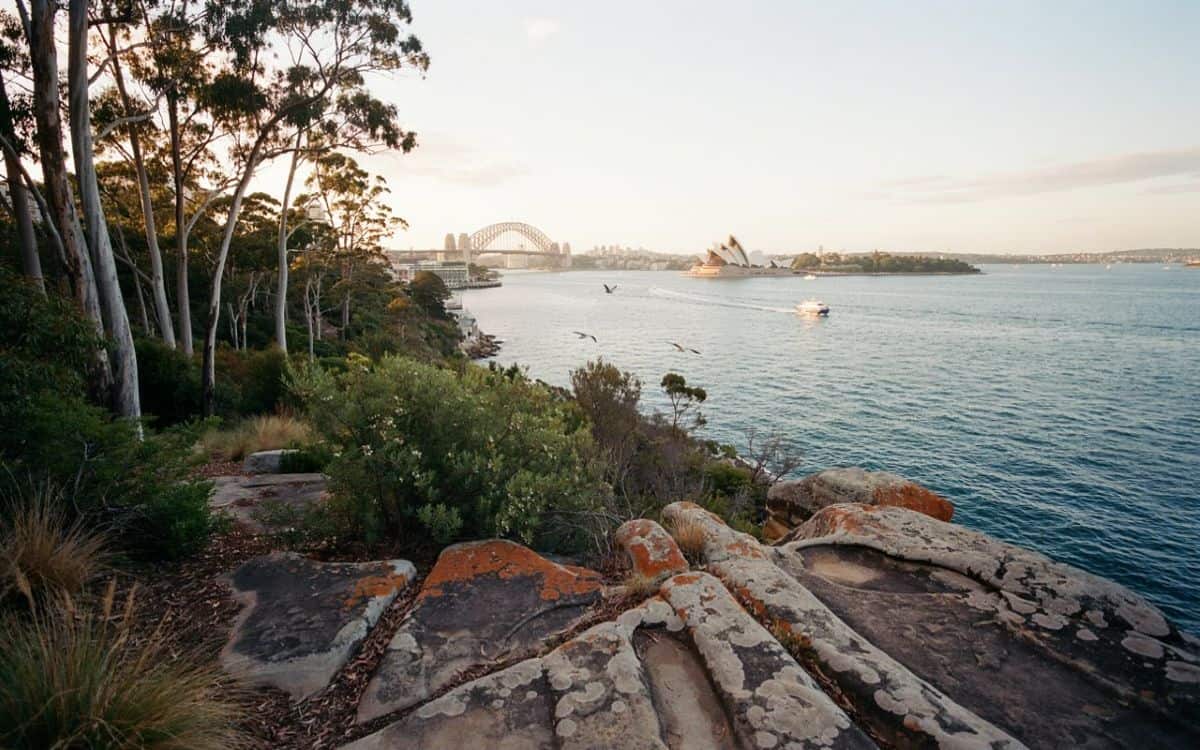
Image generated with Ai
Australia Sydney allows people to move from the sightseeing in the harbor to the experience of nature within one day without having to travel far from the city. The coastal walks guide the visitors from the crowded beaches to the cliffs, rock pools and ocean views. Additionally, the parks located in the northern and southern parts of Sydney put forests, rivers and Aboriginal culture just next to the city center.
Sydney Harbour is the heart of the city. It stretches for 19 kilometres from North and South Heads towards the Lane Cove and Parramatta rivers. It covers 29.1 square kilometres.
Advertisement
Its curved shoreline creates quiet bays, small beaches, green islands and dramatic headlands. Ferries and yachts move across the water throughout the day. Modern towers rise behind historic buildings. The result is a city view that keeps changing.
Circular Quay offers the easiest introduction. The Opera House stands on one side. The Harbour Bridge rises on the other. The Rocks and Royal Botanic Garden sit within walking distance.
Advertisement
Public ferries leave Circular Quay for Manly, Watsons Bay, Taronga Zoo, Cockatoo Island and several harbour communities. This means an ordinary transport journey can become an affordable sightseeing cruise.
The Sydney Opera House is more than a famous building. It looks like a work of art floating beside the harbour. Its white roof shells change colour with the light. They appear bright during the day and golden near sunset.
The building stands at Bennelong Point, known to the Gadigal people as Tubowgule. UNESCO placed it on the World Heritage List in 2007 because of its bold architecture, engineering and relationship with Sydney Harbour.
The Harbour Bridge adds strength to the scene. Visitors can walk across its eastern pedestrian path for free. The route provides wide views of the Opera House, harbour and skyline.
Advertisement
Advertisement
The south-eastern Pylon Lookout offers an even higher view. A commercial bridge climb goes higher still. Yet travellers do not need an expensive ticket to enjoy one of Sydney’s greatest panoramas.
The Royal Botanic Garden brings calm natural beauty into central Sydney. Green lawns, ponds and colourful plants meet the edge of Farm Cove. Visitors can walk directly from the Opera House into the garden.
The waterfront path continues towards Mrs Macquaries Point. This headland provides one of Sydney’s most famous views. The Opera House and Harbour Bridge appear together across the water.
The garden opens every day at 7am and closes around sunset. Most areas support wheelchair and walking-aid access. Entry is free.
Nearby, The Rocks gives visitors a different experience. Sandstone buildings, old lanes and historic stairways sit below the Harbour Bridge. Observatory Hill rises above the area and offers a quiet panoramic view across the western harbour.
Together, the garden, The Rocks and Observatory Hill show how Sydney combines nature, history and modern city life within a small area.
Barangaroo Reserve proves that a modern city can bring nature back to an old industrial waterfront. The six-hectare park contains about 75,000 native plants. Walking and cycling paths pass lawns, sandstone terraces and almost one kilometre of shoreline.
The park also honours Barangaroo, a powerful Cammeraygal woman. Her story gives the waterfront a deeper cultural meaning.
Visitors can continue along Yananurala, or Walking on Country. This nine-kilometre route follows the harbour from Pirrama in Pyrmont to Wallamool at Woolloomooloo Bay.
The walk uses Aboriginal place names, public art and stories to explain the living culture of the harbour. It reminds visitors that Sydney’s beautiful land and water have held meaning for Aboriginal communities for thousands of years.
This cultural layer makes Sydney more than a collection of attractive photographs. It turns the waterfront into a place for learning, reflection and respect.
Sydney changes completely when travellers leave the sheltered harbour and reach the Pacific coast. Strong waves hit sandstone cliffs. Ocean pools sit beside the sea. Long beaches stretch beneath open skies.
The Bondi-to-Coogee coastal route connects Bondi, Tamarama, Bronte, Clovelly, Gordons Bay and Coogee. Each section feels different.
Marks Park provides sweeping views towards Bondi and Coogee. Gordons Bay offers a smaller and more hidden coastal setting. Clovelly has a narrow bay and an ocean pool. Coogee combines a broad beach with parks and walking paths.
Randwick’s 4.5-kilometre section between Clovelly and South Coogee supports wheelchairs and prams in most places. However, Gordons Bay contains more difficult sections.
The complete walk has steps, slopes and exposed areas. Travellers should wear suitable shoes, carry water and protect themselves from the sun.
The ferry journey from Circular Quay to Manly passes some of Sydney Harbour’s finest scenery. After arriving, travellers can walk to Manly’s two-kilometre ocean beach.
A gentle waterfront path continues towards Fairy Bower and Shelly Beach. It passes marine sculptures, a historic ocean pool and the protected waters of Cabbage Tree Bay.
North Head rises above Manly. It shows visitors the city’s harbour and ocean landscapes from one high point.
The one-kilometre Fairfax Walk connects Yiningma and Burragula lookouts. One faces the open Pacific. The other looks across the harbour towards central Sydney. The paved route is suitable for many wheelchair users and families.
Some parts of North Head remain closed because of fire damage and unstable ground. Visitors must follow official signs and check current alerts before exploring.
Watsons Bay combines ferry travel, beaches, cliffs and history. The one-kilometre South Head Heritage Trail begins near Camp Cove and reaches Hornby Lighthouse.
The route passes old gun positions and opens views across the harbour entrance. Migrating whales may appear offshore during the annual season.
Across the harbour, the Bradleys Head-to-Chowder Bay walk creates another striking experience. The four-kilometre route passes native bushland, beaches and military remains.
Walkers repeatedly see the Opera House, Harbour Bridge and city skyline across the water. This close meeting of bush and city is one of Sydney’s greatest scenic strengths.
Palm Beach marks Sydney’s spectacular northern edge. Barrenjoey Headland rises between Pittwater, Broken Bay and the Pacific Ocean.
A climb of about one kilometre leads to Barrenjoey Lighthouse. The walk takes roughly 30 minutes each way and requires moderate fitness. From the top, visitors can see beaches, waterways and distant Central Coast headlands.
Ku-ring-gai Chase National Park adds creeks, rainforest, mangroves, cliffs and important Aboriginal sites. West Head Lookout provides magnificent views of Pittwater and Barrenjoey.
South of the city, Royal National Park protects wild beaches and coastal forest. Its famous Coast Track runs for 27 kilometres between Bundeena and Otford.
These landscapes complete Sydney’s scenic argument. The city does not end where its buildings stop. It continues into beaches, forests, cliffs and waterways.
Sydney’s beauty comes from this remarkable concentration. Harbour icons create its global image. Beaches add energy. National parks protect its wild edges. Aboriginal culture gives the landscape deeper meaning. In 2026, that powerful combination keeps Sydney firmly among the world’s most unforgettable urban destinations.
Sydney does not require one perspective to leave an impression on travelers. It stands out by virtue of diversity. The harbor unites the icons. The ferries unite the waterways. Beaches introduce action and color. Headlands deliver the power of the open ocean. National parks preserve the wilderness borders.
Travelers have numerous possibilities to build their own unique itinerary for Sydney. One traveler can select such sites as the Opera House, Botanical Gardens and Barangaroo. Another one can opt for Manly, Shelly Beach and North Head. A more energetic walker can travel to Barrenjoey, West Head or Royal National Park.
In 2026, the biggest tourist attraction of Sydney becomes evident. It is a world-class city that has remained connected to nature all the time. Its harbor icons bring visitors from across the globe. Its beaches give life to the city. Its national parks preserve its soul.
Advertisement
Advertisement
Advertisement













Friday, September 4, 2026

Friday, September 4, 2026
Friday, September 4, 2026
Friday, September 4, 2026

Thursday, September 3, 2026

Wednesday, September 2, 2026

Friday, September 4, 2026

Friday, September 4, 2026


