
China Expands High-Speed Suburban Rail Networks Across Shanghai, Beijing, Guangzhou, Nanjing and Shenzhen to Transform Airport and Regional Connectivity

Published
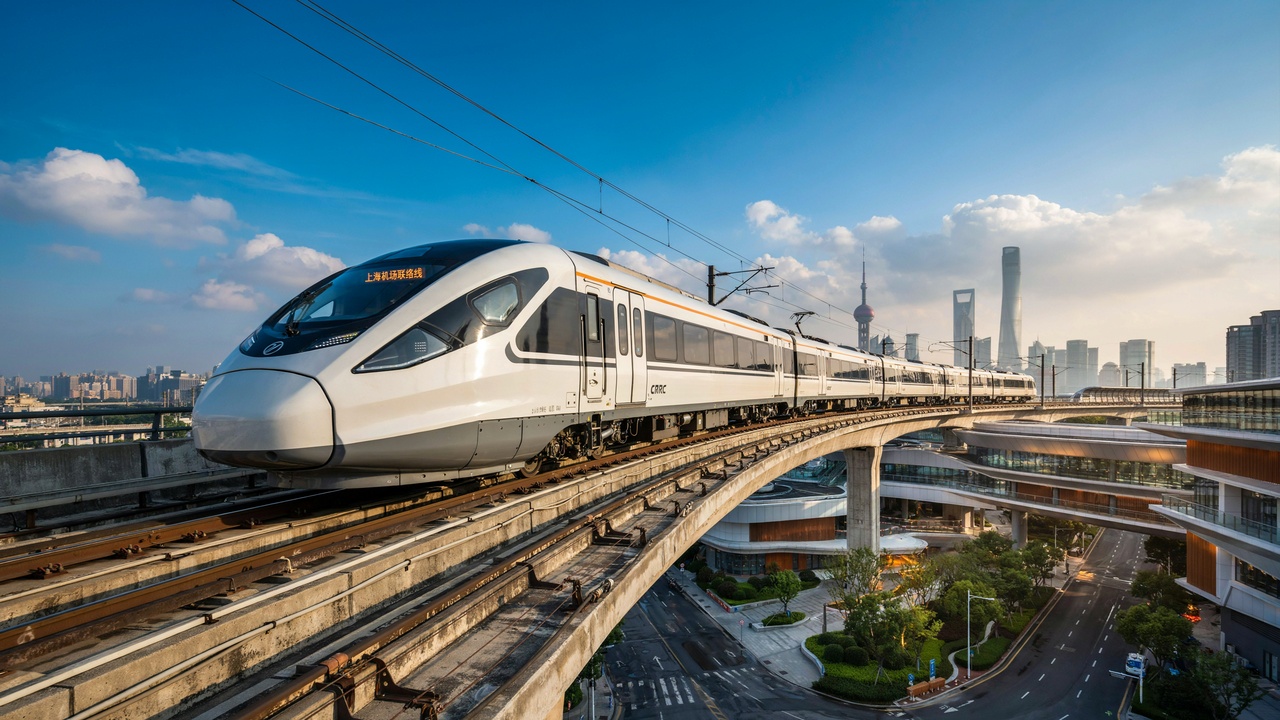
China is reshaping regional transport in 2026 through an expanding network of suburban railways connecting major cities, airports, business districts and surrounding communities. Developments across Shanghai, Beijing, Guangzhou, Nanjing, Ningbo, Tianjin and Shenzhen are combining high-speed railway technology with metro-style accessibility, creating additional travel options beyond conventional urban rail networks. Several operational corridors already support trains designed for speeds of 120–160 km/h, while new projects are being developed for speeds of up to 200 km/h. For international visitors and domestic passengers, these investments are improving the range of available connections between airports, city centres and regional destinations.
Why Is China Developing a New Generation of Suburban Rail Networks?
China’s suburban railway expansion reflects the increasing geographical scale of its largest metropolitan regions. As urban development spreads beyond traditional city centres, conventional metro systems are being supplemented by faster railway corridors designed to cover longer distances.
Metro networks generally serve densely populated districts with relatively frequent stations. Mainline railways, meanwhile, connect major cities and transport hubs over considerably longer distances. Suburban railways increasingly occupy the space between these two systems.
Some projects use dedicated infrastructure, allowing trains to operate at higher speeds and stop less frequently than conventional metro services. Others use upgraded existing railway tracks, introducing regional passenger services without constructing entirely new corridors.
Advertisement
Advertisement
Airport connectivity is another important part of this development. Shanghai, Beijing and Guangzhou are introducing or expanding railway links that connect major aviation gateways with metropolitan transport networks.
For travellers, the practical benefit is greater choice. Suburban railways can provide alternatives to road transport and help passengers reach destinations outside established metro corridors.
Advertisement
Advertisement
However, these projects remain at different stages of development. Some lines are operating, others are undergoing passenger trials, and several have opening dates scheduled for 2027 or later.
Which Chinese Cities Are Leading the Suburban Rail Expansion in 2026?
China’s emerging suburban railway system includes developments across the Yangtze River Delta, Pearl River Delta, Beijing metropolitan region and Tianjin-Binhai area.
Advertisement
Advertisement
These projects differ in route length, infrastructure design, operating speed and their relationship with existing railway networks.
Major Railway Projects and Their Reported Progress
| City or region | Railway project | Length | Status reported in October 2026 |
|---|---|---|---|
| Nanjing | Line S2 | 54.2 km | Opened April 2026 |
| Nanjing–Yangzhou | Line S5 | 57.9 km | Under construction |
| Nanjing–Chuzhou | Line S4 | 46.2 km | Operational |
| Ningbo | Line 12 | 61.4 km | Passenger-carrying trials began September 2026 |
| Ningbo | Line 10 | 63.6 km | Opening targeted by end of 2026 |
| Binhai | Line Z4 initial section | 23.7 km | Opened January 2026 |
| Binhai | Line Z2 first phase | 39.3 km | Under construction |
| Guangzhou | Zhuliao–Xintang South section | 48.2 km | Opened August 2026 |
| Beijing | Daxing Airport Express | 41.4 km | Operational; extensions under construction |
| Beijing | Beijing Xi–Liangxiang | 31.5 km | Suburban services began July 2026 |
| Shanghai | Airport Link Line | 58.5 km | Operational since December 2024 |
| Shanghai | Airport Link extension | 10.2 km | Under construction |
| Shenzhen | Pingshan–Dapeng Line | 39.4 km | Opening targeted for late 2026 |
The projects demonstrate how China’s railway development is moving beyond a simple division between metro and high-speed rail.
Instead, operators are introducing services designed for specific metropolitan and regional travel requirements.
How Is Nanjing Connecting Neighbouring Cities Through Faster Rail Services?
Nanjing has developed one of China’s most extensive suburban railway systems, with routes radiating from metro interchanges towards surrounding communities and neighbouring cities.
Advertisement
Advertisement
Lines S1, S2, S3, S4, S6, S7, S8 and S9 entered service between July 2014 and April 2026. The network uses trains capable of at least 100 km/h, reflecting the longer distances involved in suburban travel.
Line S2 is particularly important because it crosses a provincial boundary. Opened on 22 April 2026, the 54.2 km railway connects Xishanqiao, on Nanjing Metro Line 7, with Taibai in Ma’anshan. The 16-station route improves connections between Jiangsu and neighbouring Anhui.
Another important project is Line S5, which will link Xianlinhu on Metro Line 4 with Yangzhou Xi. Construction began in December 2021, with completion envisaged for 2030.
The 57.9 km route will include underground, elevated and ground-level sections, with trains designed for speeds of 160 km/h. Both express and stopping services are planned.
Nanjing’s Line S4 already connects Chahe with Chuzhou over 46.2 km. An additional 8.2 km extension towards Nanjing Bei is under construction.
The line uses four-car Type D electric multiple units branded Orange Phoenix. Their design incorporates visual references to the mythical phoenix and Chuzhou’s cultural heritage.
Advertisement
Advertisement
For visitors, these developments provide additional possibilities for exploring destinations outside central Nanjing without relying exclusively on road transport.
Why Are Ningbo’s New Railway Lines Different from Conventional Metros?
Ningbo is developing two suburban railway lines with operating characteristics closer to regional rail than traditional urban metro services.
Line 12, also known as the Ningxiang Line, began passenger-carrying test operations on 10 September 2026, initially offering free travel.
The 61.4 km route connects Xiaoyangjiang, an interchange with Metro Lines 4 and 7, with southeastern suburban districts. It includes two underground and eight elevated stations.
Line 10, known as the Ningci Line, is scheduled to follow by the end of 2026.
The 63.6 km route will connect Kongpu on Metro Line 2 with northern suburban communities, serving seven underground and six elevated stations.
Advertisement
Advertisement
Both lines are being equipped with four-car suburban electric multiple units supplied by CRRC.
The trains are designed for 160 km/h operation, considerably faster than the 80–100 km/h capability commonly associated with conventional Chinese metro vehicles.
Wider station spacing allows these services to cover substantial distances without stopping as frequently as an urban metro.
For travellers, the distinction matters because suburban railway lines can provide connections to areas that would otherwise require longer journeys using buses or multiple metro services.
Nevertheless, Line 12’s passenger-carrying trials should not be confused with unrestricted commercial operation, and Line 10’s opening remains a scheduled development.
How Is Tianjin’s Binhai Region Building a New Suburban Railway System?
The Binhai region near Tianjin is developing two major suburban corridors, designated Z2 and Z4.
Advertisement
Advertisement
The first section of Line Z4 opened on 18 January 2026, connecting Zhaishang and Beitang over approximately 23.7 km.
The predominantly elevated railway has relatively wide station spacing, allowing it to serve longer suburban journeys.
Further extensions are planned, including a 12 km section towards central Binhai targeted for completion by the end of 2027.
Another 12 km extension towards Xinchengwu is planned for a later stage.
Line Z2 is also under construction, with a first phase extending approximately 39.3 km.
The completed railway is intended to connect Binhai International Airport with Beitang, serving 14 stations.
Advertisement
Advertisement
Its first operational section between Beitang and Zhongxin Avenue is scheduled for 2027, while the airport connection will follow later.
Both lines will use CRRC Dalian trainsets designed for 120 km/h operation.
The projects demonstrate how suburban railway networks can serve satellite cities and developing urban districts where conventional metro coverage may be insufficient.
However, the airport connection on Z2 is not yet available, and travellers should not plan journeys using sections that remain under construction.
How Is Guangzhou Improving Railway Connections Between Two Major Airports?
Guangzhou’s intercity railway expansion is strengthening transport connections across the Pearl River Delta.
A significant development occurred on 1 August 2026, when the 48.2 km Zhuliao–Xintang South section of the Guangzhou–Shenzhen Intercity Railway opened.
Advertisement
Advertisement
The new connection completed an important missing section of the regional network, enabling through services between Guangzhou Baiyun International Airport and Shenzhen Bao’an International Airport.
This is particularly relevant to international travellers because the two airports serve major cities within the Guangdong-Hong Kong-Macao Greater Bay Area.
An official Shenzhen government update published on 9 October 2026 stated that passengers could travel between the airports in approximately 90 minutes using the intercity railway.
The same update confirmed that the 15.15 km Shenzhen Airport–Qianhai extension was approaching completion, with opening targeted before the end of 2026. The future underground section will serve Xixiang, Bao’an and Qianhai.
Further plans include a 21.158 km extension towards Huanggang Checkpoint, providing a future connection with a major border crossing between Shenzhen and Hong Kong.
Guangzhou’s wider railway programme also includes the East Ring Intercity Railway, whose 57.8 km section between Baiyun Airport North and Panyu opened in September 2025.
Advertisement
Advertisement
Another 22 km connection between the Guangzhou–Qingyuan corridor and Guangzhou Baiyun railway station opened in January 2026.
Together, these routes provide additional interchange opportunities across one of China’s largest urban regions.
For passengers, the principal advantage is improved access between airports, regional cities and major railway stations. Actual travel arrangements still depend on service frequency, ticketing rules and individual train stopping patterns.
What Is Changing on Beijing’s Daxing Airport Express and Xiong’an Connections?
Beijing’s Daxing Airport Express is being extended to strengthen links between the capital, its second major airport and the developing Xiong’an New Area.
The original 41.4 km airport express opened in September 2019, connecting Caoqiao with Beijing Daxing International Airport.
Its infrastructure combines underground and elevated railway sections, while its trains are capable of 160 km/h operation.
Advertisement
Advertisement
A southern extension of approximately 86 km towards Xiong’an is under development. The project is intended to support travel between the new urban area, the airport and Beijing’s metropolitan transport system.
At the northern end, a 3.5 km extension towards Lize is also under construction, with opening scheduled for June 2027.
The Lize extension is intended to provide connections with Beijing Metro Lines 14 and 16, improving access to an important commercial district.
CRRC Sifang has also developed a fully automated suburban trainset designed for 200 km/h operation for the Beijing–Daxing Airport–Xiong’an corridor.
The train was unveiled in September 2025, but its presentation should not be interpreted as confirmation that passenger operations using the new vehicles have commenced.
Beijing’s official 2026 rail construction plan includes the Daxing Airport Express extension and additional suburban railway improvements.
Advertisement
Advertisement
Meanwhile, an official airport group update published in October 2026 highlighted the expansion of high-speed rail connections serving Daxing Airport. The group reported that the opening of the Xiong’an–Shangqiu high-speed railway on 28 September had expanded the airport’s three-hour high-speed rail catchment to 26 cities.
These developments illustrate the increasing importance of connecting aviation gateways with both urban and national railway infrastructure.
Why Is Beijing Reusing Existing Railway Tracks for New Commuter Services?
Beijing is also developing suburban transport through improvements to existing railway corridors.
On 1 July 2026, dedicated suburban services began operating between Beijing West railway station and Liangxiang.
The 31.5 km route uses upgraded sections of conventional railway infrastructure, including improvements to signalling and station facilities.
Two new stations were constructed at Yamenkou Dong and Fangshan Dong, while existing stations received refurbishment.
Advertisement
Advertisement
The service operates using CRH6F intercity electric multiple units.
An end-to-end journey takes approximately 30 minutes, with 13 trains operating daily in each direction under the reported initial timetable.
Passengers can use mainline railway tickets, Beijing public transport smartcards and QR code payment methods.
This approach differs from building a fully segregated suburban railway.
Instead, it uses available capacity on existing tracks to introduce additional passenger services.
For travellers, the advantage is the provision of another railway connection between western Beijing and suburban communities.
Advertisement
Advertisement
The model may also inform future projects seeking to improve regional transport without constructing completely new alignments.
However, its frequency remains lower than that of many conventional metro services, making timetable planning important.
How Does Shanghai’s Airport Link Line Improve Travel Between Hongqiao and Pudong?
Shanghai’s Airport Link Line is one of the most prominent examples of a suburban railway combining metro-style accessibility with higher operating speeds.
Opened in December 2024, the 58.5 km route connects Hongqiao International Airport Terminal 2 with Pudong International Airport Terminals 1 and 2.
The line serves seven stations and avoids travelling through central Shanghai.
This alignment is important because the two airports are located on different sides of the metropolitan region.
Advertisement
Advertisement
The railway provides a direct transport corridor between them, reducing the need to travel through central interchange stations.
Services are operated by Shentong Metro Group using trains capable of 160 km/h.
The fleet includes four-car and eight-car Type C trainsets manufactured by CRRC Changchun.
A further 10.2 km extension towards Shanghai East railway station is under construction, with opening scheduled for July 2027.
Shanghai East is being developed as a major railway hub associated with the Nantong–Shanghai railway project.
The Airport Link infrastructure has also been designed to accommodate possible future connections with the national high-speed railway network.
Advertisement
Advertisement
This would create opportunities for greater integration between airport express services and longer-distance rail travel.
Shanghai’s municipal transport authorities reported on 19 October 2026 that the Airport Link’s later-stage section and the Nanhui branch had completed an initial powered dynamic test. The successful test marked progress towards integrated systems testing and trial operations, rather than the opening of passenger services.
For travellers, the existing airport connection is already operational, while the Shanghai East extension remains a future addition.
What Will Shenzhen’s Pingshan–Dapeng Railway Offer Coastal Travellers?
Shenzhen’s Pingshan–Dapeng railway is intended to connect the city’s eastern districts with the coastal Dapeng area.
The 39.4 km double-track route is being constructed entirely underground and is planned to serve six stations.
It will branch from the Shenzhen–Huizhou railway corridor south of Pingshan and continue towards Dapeng.
Advertisement
Advertisement
The line is expected to be operated by Shenzhen Metro, with passenger services targeted for the final quarter of 2026.
CRRC Changchun unveiled a suburban electric multiple unit for the project in May 2026.
The manufacturer describes the train as combining characteristics associated with high-speed railway performance and high-frequency urban rail operation.
The project is especially relevant to regional tourism because Dapeng is associated with Shenzhen’s coastal landscapes and leisure destinations.
A dedicated railway connection could provide another transport option for visitors travelling towards the area from other parts of Shenzhen.
However, the announced opening remains a target. The supplied information does not establish that commercial services have already begun.
Advertisement
Advertisement
Passengers should therefore continue to rely on confirmed operational transport services until an official opening is announced.
How Are China’s New Suburban Trains Different from Conventional Metro Vehicles?
The distinction between suburban rail and conventional metro services is increasingly important as Chinese cities develop larger transport networks.
Metro trains generally operate with relatively short distances between stations and frequent stops. Suburban trains are designed to cover longer journeys, often with wider station spacing and higher speeds.
Several Chinese projects are introducing electric multiple units capable of 120–160 km/h, while the new Beijing–Xiong’an train has been designed for 200 km/h operation.
These speeds represent vehicle capabilities rather than guaranteed average passenger journey speeds.
Comparison of Railway Technologies
| Railway type | Typical characteristics | Examples |
|---|---|---|
| Conventional metro | Frequent stops, dense urban coverage | Existing metropolitan metro networks |
| Standalone suburban railway | Wider station spacing, faster regional journeys | Ningbo Lines 10 and 12 |
| Intercity railway | Connections between neighbouring cities | Guangzhou–Shenzhen Intercity Railway |
| Airport express | Faster links between airports and transport hubs | Shanghai Airport Link, Daxing Airport Express |
| Upgraded conventional railway | Suburban trains sharing existing infrastructure | Beijing West–Liangxiang |
| High-speed railway | Longer-distance travel between major cities | Beijing–Xiong’an high-speed railway |
The emerging model allows operators to choose infrastructure and rolling stock according to the journeys each corridor must serve.
Advertisement
Advertisement
It also creates opportunities for greater integration between metro, regional railway and national transport networks.
Why This Matters
China’s suburban railway expansion is significant because it addresses a transport challenge created by the growth of large metropolitan regions.
Traditional city-centre transport networks cannot always provide convenient connections to distant airports, satellite cities and regional destinations.
Suburban railways help bridge these gaps by introducing faster services over longer distances while retaining connections with established metro systems.
For international visitors, airport railway developments are particularly important.
The Guangzhou–Shenzhen inter-airport corridor and Shanghai Airport Link provide examples of infrastructure designed to connect major aviation gateways.
Advertisement
Advertisement
For domestic travellers, suburban lines can offer additional options for commuting, visiting neighbouring cities and reaching destinations outside central urban areas.
The wider investment programme also provides context.
According to China State Railway Group figures published by the Chinese government on 22 October 2026, the country opened 1,625 km of new railway lines during the first nine months of 2026.
Railway fixed-asset investment reached 601.2 billion yuan during the same period, an increase of 1.3% compared with the corresponding period of 2025.
National railway passenger journeys totalled 3.71 billion in the first three quarters, up 4.8% year on year. These are nationwide figures, not passenger totals specifically attributable to suburban railway projects.
The expansion demonstrates the role of regional connectivity within China’s wider railway development strategy.
Advertisement
Advertisement
What Travellers Should Know
Travellers planning journeys in China should distinguish between operational railways, routes undergoing passenger trials and projects that remain under construction.
Although new connections can improve transport choices, individual services may have different ticketing systems, frequencies and interchange arrangements.
Before Booking
- Shanghai: The Airport Link between Hongqiao and Pudong is operational; the Shanghai East extension remains under construction.
- Beijing: Daxing Airport Express is operational, while extensions towards Lize and Xiong’an remain development projects.
- Guangzhou: Intercity rail connections between Guangzhou and Shenzhen airports are operating, but passengers should verify train schedules.
- Nanjing: Several suburban lines are operational, while Line S5 remains under construction.
- Ningbo: Line 12 began passenger-carrying trials in September 2026; Line 10 has a future opening target.
- Tianjin-Binhai: The initial Z4 section is operational, but Z2 and additional extensions are not yet fully available.
- Shenzhen: The Pingshan–Dapeng line is targeting an opening in late 2026.
Passengers should also confirm station locations, transfer requirements, accepted payment methods and operating hours.
For airport journeys, additional time should be allowed for transfers between railway stations and terminals, security screening and airline check-in.
Frequently Asked Questions
Which Chinese cities are expanding suburban railway networks in 2026?
Major developments are taking place in Shanghai, Beijing, Guangzhou, Nanjing, Ningbo, Tianjin-Binhai and Shenzhen. Projects include airport links, suburban railways and upgraded conventional railway corridors.
Can passengers travel between Guangzhou and Shenzhen airports by train?
Yes. The Guangzhou–Shenzhen Intercity Railway provides a connection between Guangzhou Baiyun International Airport and Shenzhen Bao’an International Airport. Official information published in October 2026 indicates a journey of approximately 90 minutes.
Advertisement
Advertisement
Is Shanghai’s Airport Link Line operational?
Yes. The 58.5 km line opened in December 2024 and connects Hongqiao and Pudong airports. A further extension towards Shanghai East railway station remains under construction.
What is the difference between suburban rail and metro services?
Suburban railways generally cover longer distances, often with fewer stations and higher train speeds. Metro systems typically focus on frequent services within densely populated urban districts.
When will China’s new suburban railway projects be completed?
Completion dates vary. Several projects have opening targets in late 2026 or 2027, while Nanjing Line S5 is envisaged for completion in 2030. These dates remain subject to construction, testing and official approval.
Closing Update: China’s Regional Railway Transformation Continues Beyond Major City Centres
China’s suburban railway expansion is changing the relationship between metropolitan transport, regional mobility and airport connectivity.
Projects across Shanghai, Beijing, Guangzhou, Nanjing, Ningbo, Tianjin and Shenzhen demonstrate how railway infrastructure is being adapted to serve increasingly large urban regions.
Some corridors provide direct airport connections, while others extend metro networks into neighbouring cities or use existing railway tracks for new passenger services.
Advertisement
Advertisement
The introduction of trains designed for higher speeds also allows suburban services to cover longer distances than conventional metro routes.
For travellers, the practical value lies in additional transport options, improved connections between major hubs and the potential to reach regional destinations more conveniently.
However, the benefits differ between operational and planned routes. Passengers must continue to distinguish completed railway services from projects awaiting testing or opening approval.
As further lines enter service, China’s suburban rail networks are becoming an increasingly important part of its integrated passenger transport system.
Advertisement
