

Travel Through the Heart of the Alps: Brenner Base Tunnel Offers Seamless Access for Tourists

Published
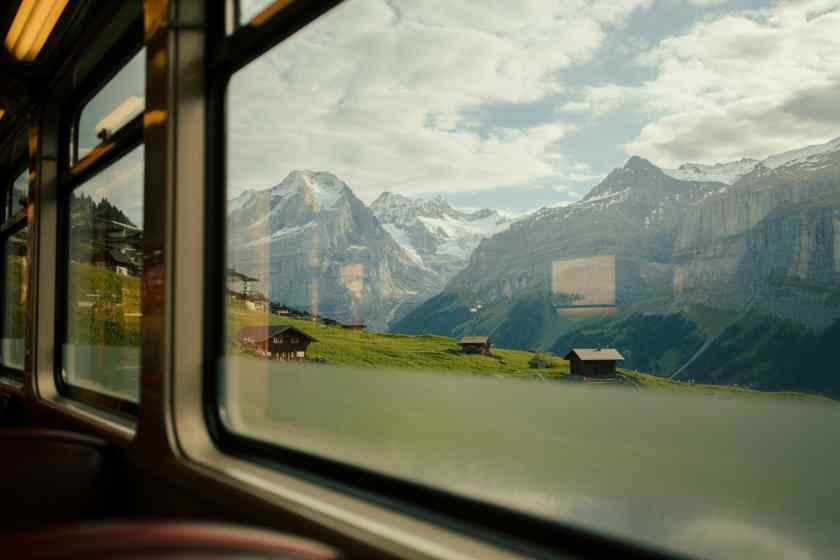 Image generated with Ai
The Brenner Base Tunnel, now recognised as the longest rail tunnel worldwide, was inaugurated today, heralding a pivotal enhancement in Europe’s supply-chain architecture and passenger rail travel. Spanning the Alpine divide between Austria and Italy, the passage will substantially shorten journey times and streamline the flow of visitors heading to South Tyrol and the broader northern Italian region. The opening, staged at the Brenner Pass border terminal, was witnessed by an array of dignitaries, including Italian Prime Minister Giorgia Meloni, Austrian Chancellor Christian Stocker, and EU Commissioner for Sustainable Transport and Tourism Apostolos Tzitzikostas.
This landmark construction, regarded as one of Europe’s most daring engineering enterprises, merges advanced tunnelling technology with sustainability principles, evidencing a broader strategic vision for interconnected, environmentally-conscious travel. Where continental corridors once required lengthy diversions through mountain passes, the new rail-embedded geometry newly excludes topographic barriers and will reconfigure intercity linkages from Vienna, Innsbruck, Bolzano, Verona, and Milan. Immediate outcomes are expected to include an uplift in tourist traffic and augmented economic integration across the Alpine arc, individually affirming and collectively enhancing the tourism economy in both the Tyrol and the Po Valley.
Connecting Austria and Italy: An Effortless Journey through the Alps
Beneath the majestic Alps, the Brenner Base Tunnel—spanning 55 kilometres—promises to compress journey times between Austria and Italy by a full hour. For the modern visitor, this translates to a decisive advantage: swifter access to the continent’s most celebrated cultural, historical, and scenic assets. The new alignment between Innsbruck and Bolzano will, in practical terms, redefine the complexity of itineraries by linking these two vibrant hubs in barely 60 minutes, a decisive savings for those continuing south to the historic vineyards and peaks of South Tyrol.
Advertisement
Advertisement
Travellers will find not only speed but elevated convenience. Austria’s imperial Vienna, the mellifluous echoes of Mozart in Salzburg, and the breathtaking ridges of the Tyrol now lie one seamless segment of tunnel away from Italy’s world-renowned gems: the limestone towers of the Dolomites, Bolzano’s rose-scented streets lined with medieval frescoes, and the storied splendour of Milan and Verona. The itinerary, previously marred by delay, now unfolds in virtually straight lines of rail and rail, with significant positive reverberations for excursion planning.
Accessibility will extend more widely to picturesque regions, with South Tyrol at the forefront. Bolzano, capital of the province, will benefit from enhanced lines that merge the stylistic duality of Austrian and Italian influence. Redesigned schedules will nourish winter ski seasons, summer vineyard dallies, and shoulder-season cultural festivals alike, compelling the discerning traveller to think of the Brenner route not as a crossing, but as a polishing. Contemporary mobility thus breathes at a new cadence beneath iron and rock, absorbing travellers in elegance from tunnel mouth to city centre.
Advertisement
Advertisement
Promoting Sustainable Tourism and Travel
The imminent opening of the Brenner Base Tunnel stands as a landmark advancement for sustainable rail travel across Europe. By shortening the need for high-impact motor and air travel through the Alps, the corridor channels visitors toward a low-carbon alternative, thereby mitigating the carbon intensity typically linked to prolonged car and air routes. The engineering solutions adopted—optimised gradients and aerodynamics—minimise journey duration, while the tunnel’s operational philosophy deliberately limits direct and life-cycle greenhouse gas emissions, effectively scaling climate-conscious mobility to a continuously surging cross-Alpine passenger audience.
As a key infrastructural component of the Trans-European Transport Network, the Brenner Base Tunnel advances the broader European Union mandate to alleviate surface-road stress, maximise the modal share of rail and harmonise mobility with substantiated climate objectives. The projected modal shift to a decarbonised rail legacy further substantiates the co-alignment with established EU eco-tourism subsidies by permitting a streamlined, carbon-conscious vector for the mounting multinational visitation of Austria and Italy, thereby consolidating complementary travel and environmental synergies.
To the international traveller, the Brenner Base Tunnel thus emerges as a compelling case for modal preference. Its engineering efficiencies noticeably curtail travel durations while enriching Europe’s tapestry of cultural and environmental offerings. The resultant, speedy access to both recognised and emergent attractions across the Tyrolean and South Tyrolean landscapes encourages a dispersal of visitation that lowers the imposition of concentrated impacts, redistributes economic value, and fortifies the sustainability objectives that now define the future of European tourism.
Boosting Regional Tourism and Economic Growth
The newly constructed Brenner Base Tunnel is projected to exert an expansive positive influence on tourism and, by extension, on regional economic structures. By markedly compressing travel times between Austria and Italy, the infrastructure will orient the visiting public toward the deeper exploration of both nations, positioning the Tyrol region of Austria and the adjoining South Tyrol of Italy as functional gateway zones. It is foreseeable that the Mozarab and travellers, now presented with a more user-friendly itinerary, will elect to prolong their sojourn, thus dispersing economic benefit more evenly across the contiguous alpine and pre-alpine landscapes that the improved railway and highway corridors adjoin.
Advertisement
Advertisement
Within this framework, winter-sports markets will receive a particularly powerful stimulus. By shortening access times, the tunnel enlarges the catchment area for Tyrolean and South Tyrolean ski centres, noticeably enlarging the pool from which the inbound winter clientele is drawn. Places such as Innsbruck and Bolzano may well record a marked surge of winter-sports visitors, while the proportion of non-winter traffic may grow substantially in the summer season as the platform of the Dolomites and the Alpine scenic byways becomes equally attractive for trekkers, mountain-bikers, and road-cyclists.
Simultaneously, the Brenner Base Tunnel harbours the potential to institutionalise, or further intensify, regional collaboration between Austria and Italy. Reduced transit friction amplifies the capacity for cultural, commercial, and touristic interchange, thus creating a bilingual economic corridor whose merit is appreciable on both sides of the border. Expected cosmopolitan traffic will translate directly into higher retail revenues, an expansion of hotel occupancy ratios, and improved market frontiers for local and national tour operating companies, to the mutual benefit of both the Alpine and pre-alpine economic ecosystems and the attendant goals of the European Union.
A Future for European Rail Travel
The Brenner Base Tunnel embodies a transformative evolution in trans-Alpine rail infrastructure, establishing a streamlined, high-capacity corridor that connects Austria and northern Italy—territorial gateways for leisure and commercial activity across Europe. Fortified by continuing European Union strategic frameworks that prioritise high-performance rail and ecological sustainability, the tunnel extends Europe’s intermodal asset base and positions rail as an anticipatory pillar of continent-wide transport systems.
International tourists of varying durations are the immediate beneficiaries, as the alignment substantially minimises transfer stops and inter-modal logistics. Weekend visitors and long-stay leisure guests alike will encounter enhanced, time-efficient travel that couples high-speed integrity with the onboard comfort that characterises Europe’s elite rail companies.
Conclusion: Future Travel in Europe
Advertisement
Advertisement
Projected operational dates place the Brenner Base Tunnel at the nexus of Emilia-Romagna, Tyrol and EU operational networks, recasting anticipated tourism flows across the wider continent. By racially redistributing travel time and optimising rolling-stock efficiency, the asset amplifies tourist appeal and structural benefit while reinforcing the Union’s legally binding objectives of carbon-reduction and sustainable mobility.
Travellers wishing to discover the magnificent Alpine scenery, rich historical sites, and vibrant cultural landmarks of Europe can now rely on the Brenner Base Tunnel as a swift, convenient, and environmentally responsible travel option. By significantly enhancing connections to both Austria and Italy, this pioneering infrastructure enables a more integrated and easily navigable Europe, accommodating visitors arriving from every continent.
Advertisement
