
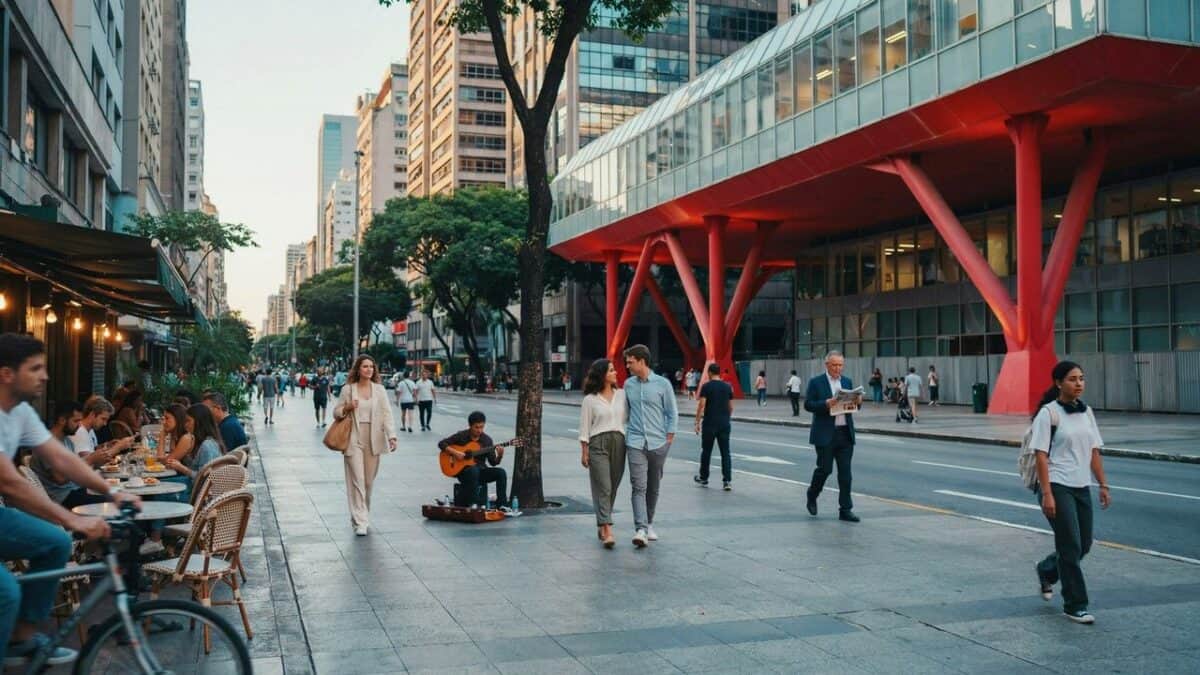
Image generated with Ai
São Paulo is one of the most exciting cities in Brazil. It is huge, busy and full of life. It does not try to be a beach escape. Instead, it offers something different. It offers art, music, food, football, parks, shopping and people from many cultures.
The city can feel big at first. Tall buildings fill the skyline. Cars move through wide roads. Streets stay busy from morning until late at night. Yet São Paulo becomes easier to enjoy when visitors explore one area at a time.
This is a city of neighbourhoods. Each one has its own sound, smell and style. One street may have a grand museum. The next may have a small café, a bright mural or a food stall. A visitor can spend a whole day walking, eating and finding new things.
São Paulo is best for curious travellers. It suits people who want to see how modern Brazil lives, works, eats and creates.
Avenida Paulista is one of the best places to begin. It is a famous avenue with museums, cinemas, hotels, restaurants, shops and cultural spaces. It gives visitors a fast view of São Paulo’s energy.
The avenue becomes even more special on Sundays. Parts of it welcome walkers, cyclists, dancers and street artists. Families come out to enjoy the open space. Musicians play. Food sellers bring snacks. The road feels like a long outdoor party.
Avenida Paulista also gives visitors easy access to other key areas. Jardins sits nearby with shops and hotels. Augusta Street brings a younger and more lively feeling. It is also an important area for LGBT+ nightlife and culture.
A walk along Paulista is simple but powerful. It shows that São Paulo is not only a business city. It is a city where people meet, share ideas and enjoy culture in public.
MASP, the Museu de Arte de São Paulo, is a major highlight on Avenida Paulista. The building itself is famous. Italian-Brazilian architect Lina Bo Bardi designed it. Its large red structure looks as if it floats above the ground.
Inside, visitors can see art in a different way. Many paintings stand on clear glass easels instead of hanging on walls. This lets people walk around the works and see them from more than one side. It makes the museum feel open and fresh.
MASP opened in 1947 and became Brazil’s first modern museum. It remains one of the most important art stops in the country. A visit can include international art, Brazilian art and changing exhibitions.
The museum also gives travellers a deeper view of São Paulo. It shows a city that cares about ideas, design and history. Even people who do not usually visit museums can enjoy the building, the open space below it and the busy avenue outside.
Ibirapuera Park is a welcome break from the city’s fast pace. It has trees, paths, lakes and wide open areas. People come to walk, run, cycle, meet friends and rest in the shade.
The park also has a strong cultural side. Museums, exhibition spaces and the Ibirapuera Auditorium bring art and music into the green setting. This means visitors can see a show, visit an exhibition or simply sit outside.
Ibirapuera is a good place for families. It is also useful for business travellers who need a quiet break between meetings. The park shows that São Paulo has room to breathe.
A day can start with art on Paulista and end with a slow walk in Ibirapuera. This simple plan gives visitors two very different sides of the city.
Advertisement
São Paulo is one of the best food cities in South America. Its food tells the story of people who came from many places and made the city their home. Italian, Japanese, Portuguese, Middle Eastern and Brazilian flavours all shape what visitors can eat.
The Mercado Municipal Paulistano, known as the Mercadão, is a famous food stop. It is full of fruit, spices, snacks and local ingredients. The market is colourful and busy. It gives visitors a quick taste of the city’s food spirit.
Liberdade is another important food area. It is known for Japanese-Brazilian culture, shops and restaurants. Visitors can find Asian food, sweets, tea, gifts and street scenes that feel very different from other parts of São Paulo.
Food in São Paulo can be simple or grand. A visitor can enjoy a small snack from a bakery, a plate of Brazilian food at lunch or a special dinner at night. The best way to travel here is to stay hungry and try something new.
Vila Madalena is known for art, cafés, bars and colourful streets. It is a good place to see murals and enjoy a relaxed afternoon. At night, it becomes lively with music and people meeting friends.
Pinheiros is another strong choice for food, shops and modern city life. It feels creative and busy but less formal than some business districts. Jardins offers stylish stores, galleries and hotels. It suits visitors looking for comfort and easy access to Paulista.
The historic centre gives travellers a different experience. It has older buildings, churches, squares and important city landmarks. This is where visitors can learn more about São Paulo’s early history.
The city also offers guided routes through many of these areas. The programme includes walks in Paulista, Liberdade, Vila Madalena, Pinheiros, the historic centre and other districts. This can help first-time visitors feel more confident in such a large city.
Football is part of daily life in São Paulo. It brings together families, friends and people from different parts of the city. For visitors, it offers a direct way to feel Brazil’s sporting passion.
The Museu do Futebol at Pacaembu is a good place to begin. It explains the history of the game and its place in Brazilian culture. Visitors can also look for stadium tours or a live match at major venues such as MorumBis or the Neo Química Arena.
A match day can be loud, exciting and full of colour. Travellers should always check official schedules and stadium rules before going. Even without a match, football museums and stadium areas show an important side of the city.
São Paulo has a rich night scene. Visitors can find samba, jazz, Brazilian music, electronic sounds and small bars with live performers. Pinheiros, Vila Madalena, Baixo Augusta and Paulista offer many choices.
The city also takes food seriously at night. People often meet for dinner, snacks and long conversations. This makes evenings feel social and warm. A visitor does not need to find a large club to enjoy São Paulo after dark.
The best nights often come from simple plans. Choose one neighbourhood. Have dinner. Listen to music. Walk safely between nearby places. Let the city show its energy slowly.
Advertisement
Advertisement
Many visitors do not know that São Paulo has rural and green areas at its southern edge. Places around Parelheiros offer nature, farms, protected landscapes and eco-tourism experiences.
This side of São Paulo feels far from the towers and traffic. It can suit travellers who want hiking, local food, nature and a slower day. It also gives a more complete picture of the city.
São Paulo is not one easy story. It is many stories happening at once. Its art is bold. Its food is rich. Its football is loud. Its parks are calm. Its streets are full of surprises. For travellers who want to feel the real energy of modern Brazil, São Paulo delivers an unforgettable urban adventure.
Advertisement
Advertisement
Advertisement













Saturday, September 5, 2026

Friday, September 4, 2026
Saturday, September 5, 2026

Saturday, September 5, 2026

Thursday, September 3, 2026

Wednesday, September 2, 2026

Saturday, September 5, 2026

Saturday, September 5, 2026


