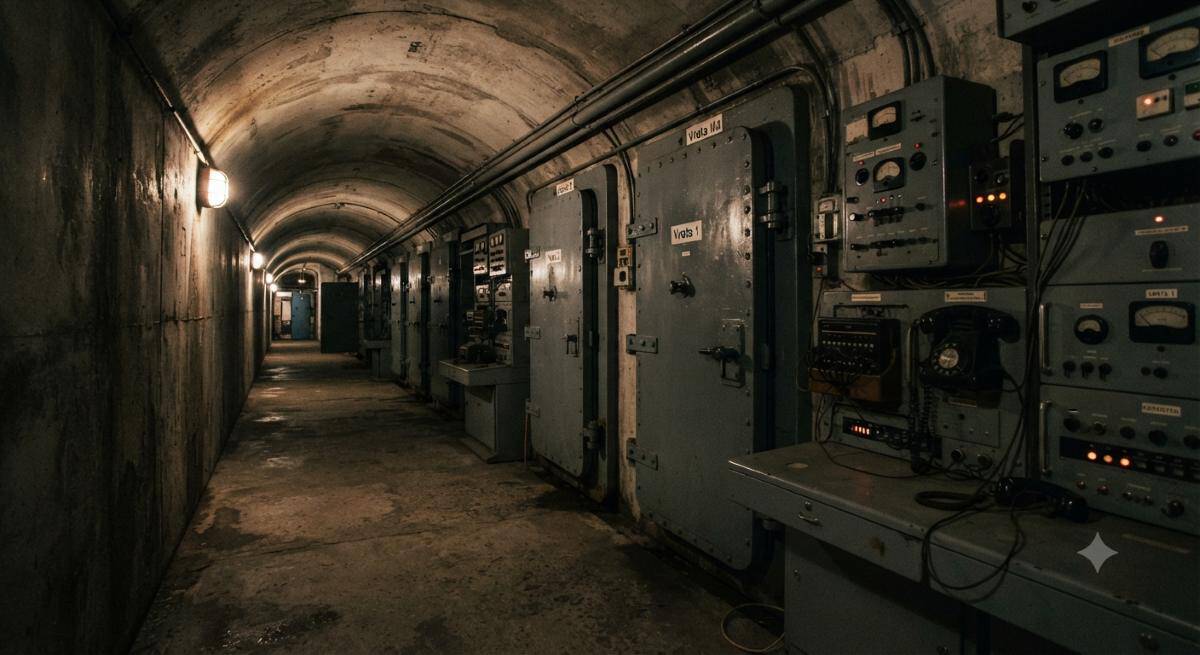
Image generated with Ai
The historical narrative of twentieth-century Europe is intricately defined by ideological experimentation, geopolitical conflict, and physical reconstruction. Within this broader framework, the Utopia of Tito’s Yugoslavia, the labyrinthine depths of Tito’s Bunker, and the enduring memories of the Siege of Sarajevo stand out as profound monuments to a fractured era. Yugoslavia under Josip Broz Tito represented a unique sociopolitical experiment, balancing non-alignment during the Cold War with a complex internal federation built on brotherhood and unity. Beneath the surface of this utopian vision, however, lay immense military preparation, symbolized by heavily fortified subterranean installations designed to ensure the continuity of the state in the event of nuclear annihilation.
Decades later, the physical and ideological architecture of this period was severely tested and reshaped by the violent dissolution of the federation, most vividly demonstrated by the Siege of Sarajevo. The juxtaposition of a hidden, concrete atomic shelter with a city bearing the enduring scars of a modern siege offers a stark glimpse into the dual nature of twentieth-century statecraft—where utopian aspirations were perpetually guarded by the looming threat of total destruction.
For contemporary travellers, a journey through these historic sites offers an immersive, visceral encounter with the past rather than a traditional sightseeing tour. Visitors are invited to descend into the cool, concrete silence of a decommissioned atomic bunker, where the sensory experience is defined by stale air, echoing corridors, and preserved communications equipment that has remained untouched for decades. This subterranean world starkly contrasts with the experience of surfacing into the open air of Sarajevo.
Walking through the city allows travellers to witness the physical scars of the siege firsthand, where mortar shell impacts—famously filled with red resin and known as Sarajevo Roses—punctuate the pavement alongside modern urban rebirth. This transition from a hidden, subterranean realm of Cold War paranoia to the sunlit, vibrant streets of a recovering capital instigates a deep reflection on resilience, memory, and the fragility of peace. Travellers are challenged to reconcile the grand ambitions of state-sponsored utopias with the human cost of their eventual collapse.
Advertisement
From the perspective of the cultural heritage and tourism industries, sites associated with the Yugoslav era and the subsequent conflicts represent a complex, rapidly evolving niche often categorized as dark tourism or heritage tourism. Tourism boards and preservationists face the delicate task of commercializing sites of trauma and secrecy without trivializing the historical suffering attached to them. Tito’s Bunker, officially known as Atomic War Command ARK D-0, has transitioned from a classified military secret to a celebrated hub for contemporary art exhibitions and historical tours.
Similarly, Sarajevo has integrated its wartime heritage into its broader cultural economy, utilizing museums, walking tours, and memorial sites to educate global audiences. Industry experts note a rising demand among travellers for authentic, narrative-driven experiences that delve deep into regional complexities, moving away from sanitized resort travel in favor of destinations that offer profound historical engagement and emotional resonance.
Planning a journey to explore these historical landmarks requires careful preparation regarding venues, ticketing, and commuting logistics.
The management, accessibility, and public perception of these historical sites have undergone a radical transformation since the immediate post-war period. In the years immediately following the conflict of the 1990s, much of the infrastructure associated with the Yugoslav military and the siege was either classified, neglected, or viewed strictly through the lens of recent trauma and division. Access to facilities like Tito’s Bunker was entirely restricted to military personnel, while civilian areas focused almost exclusively on immediate physical reconstruction and humanitarian relief rather than historical preservation.
Advertisement
Advertisement
In contrast, contemporary policies emphasize transparency, historical education, and cultural tourism. Former military installations have been demilitarized and opened to international researchers and tourists, while urban planning in Sarajevo now incorporates memorials as integral components of the cityscape. Rather than concealing the uncomfortable remnants of the past, modern heritage management seeks to utilize these physical archives as educational tools to promote dialogue, remembrance, and cross-cultural understanding.
Advertisement
Tags: balkans heritage, Bosnia, Cold War, Dark tourism, Herzegovina
Advertisement
Advertisement











Tuesday, September 1, 2026

Tuesday, September 1, 2026

Tuesday, September 1, 2026

Tuesday, September 1, 2026
Tuesday, September 1, 2026

Tuesday, September 1, 2026

Tuesday, September 1, 2026

Tuesday, September 1, 2026