
California High-Speed Rail Turns to Private Funding as Track Laying Prepares for Late 2026

Published
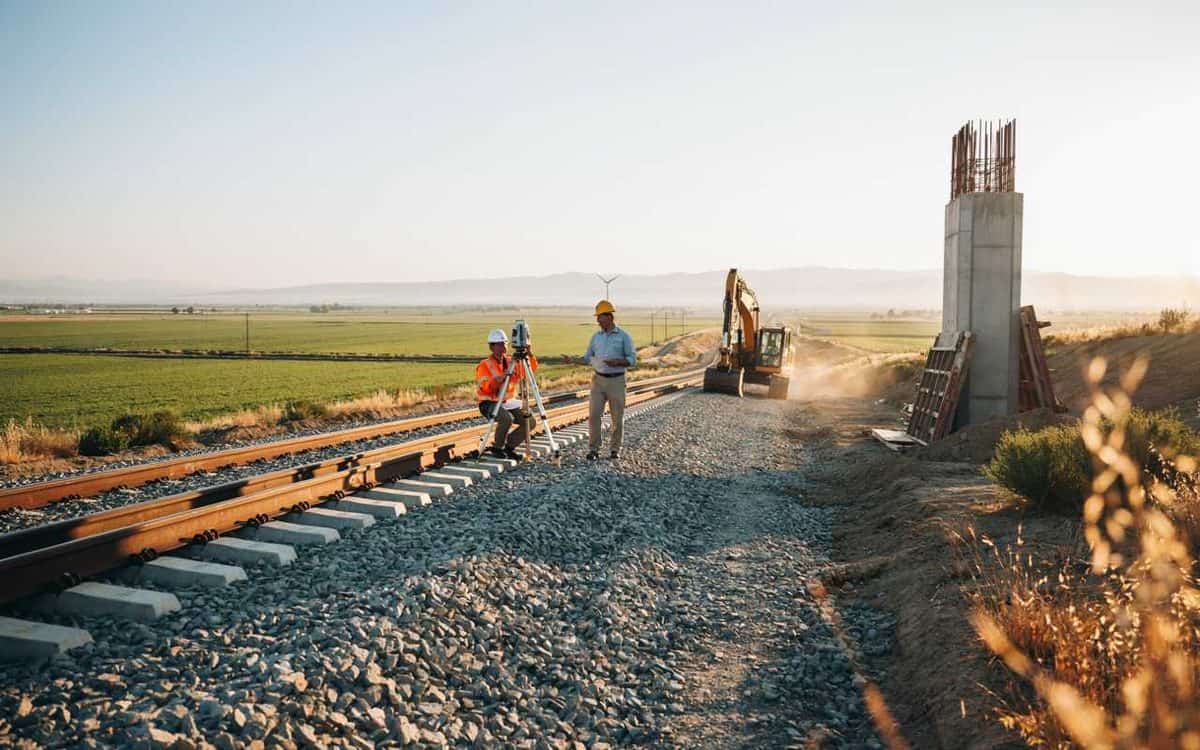
Image generated with Ai
In the central valley of California in September 2026, the U.S. is undergoing a massive infrastructure revolution, meaning the construction of 89 miles of track for the fastest 220 mph rail line in America, after building its infrastructure. The significance of this current situation is that the state government decided to turn its back on funding sources from the public sector and to apply a strategy of private capital as well as international examples in order to ensure its work until 2033.
However, while the media keeps focusing on the political and financial aspect of this project, the truth is that there is much more to it than just that. As it follows from the report of California High-Speed Rail Authority CEO in August 2026, written by CEO Ian Choudri, this current project has already outgrown the boundaries of a regular civil engineering project funded from the public budget. It has become one of the world’s most popular projects concerning hybrid infrastructure financing and high-speed rail implementation.
What Others Get Wrong About the Central Valley Corridor
What others get wrong about California’s high-speed rail project is evaluating the initial Merced-Bakersfield segment as an isolated transit line. Sceptics frequently label the Central Valley buildout a “train to nowhere,” failing to grasp the fundamental mechanics of mega-project commissioning.
High-speed rail networks globally—from France’s TGV to Japan’s Shinkansen—have historically established their testing grounds and core trunks in long, topographically favorable corridors before making high-density urban connections. The 119-mile active construction segment stretching across the spine of California serves a dual purpose:
Advertisement
Advertisement
- The Operational Proving Ground: Testing 220 mph rolling stock requires miles of uninterrupted, high-precision trackway. You cannot run initial 220 mph safety certifications inside the dense, heavily constrained urban geography of Los Angeles or San Francisco.
- The Economic Spine: The Central Valley represents one of the fastest-growing regions in North America, facing severe air quality issues, highway congestion on Interstate 5 and Highway 99, and a historic lack of rapid transit interconnectivity.
According to the August 2026 report presented to the Authority’s Board of Directors, civil works across this corridor have reached critical mass. Out of 92 major structures required for the initial line, 65 are fully completed. Furthermore, 89 miles of continuous guideway are built out of the 119 miles under active construction.
Advertisement
Advertisement
By building out this trunk line first, the Authority creates an undeniable physical asset that forces the hand of future state and federal legislatures to complete the coastal connections.
From Earthworks to Iron: The TSCC Megadeal
What others are missing in the 2026 milestone updates is the subtle transition from civil earthworks—grading dirt and pouring concrete piers—to track systems installation. The era of pure heavy civil engineering on the initial segment is winding down, and the era of railway systems assembly has officially arrived.
A critical milestone occurred in June 2026 when CEO Ian Choudri and Kiewit Executive VP Matt Scott signed the Track and Systems Construction Contract (TSCC) agreement. Representing a heavyweight joint venture of Kiewit, Stacy Witbeck, and Herzog, the TSCC consortium brings deep experience in complex rail delivery.
This contractor consortium is actively mobilising ahead of physical track installation set to commence by the end of 2026. The scope of this agreement covers:
- Ballast and Slab Trackway: Engineering precision track beds capable of withstanding continuous 220 mph dynamic loads.
- Overhead Contact Systems (OCS): Deploying high-tension electrical catenary wires to deliver clean power directly to the trainsets.
- Train Control Systems: Implementing advanced digital signaling, automated train protection (ATP), and positive train control (PTC) architecture.
- Maintenance Facilities & Sub-Stations: Building the physical infrastructure needed to power, monitor, and maintain the initial fleet.
This physical transition to systems installation is precisely what transforms a civil construction site into a functional railway. Once these systems are energized, track testing can proceed on schedule.
Advertisement
Advertisement
The Private Capital Gamble: Reimagining Megaproject Finance
Perhaps the most significant strategic pivot outlined in the August 2026 CEO report involves how the project plans to pay for its operational phase. Historically, public transit megaprojects in the United States have relied almost exclusively on a patchwork of federal grants, local sales tax measures, and municipal bond issuances. California is breaking that mold.
The Authority officially appointed Momentum Alliance Partners as its Co-Development Partner in mid-2026. This team has been tasked with restructuring the project’s commercial, technical, and financial framework to attract massive private-sector investment.
Unlocking the Cap-and-Invest Revenue Stream
In 2025, California established a long-term dedicated funding mechanism by committing $1 billion annually from its Cap-and-Invest programme through 2045. While a guaranteed $20 billion revenue stream over two decades provides stability, megaprojects require massive up-front capital deployment rather than slow annual disbursements.
To bridge this liquidity gap, the Authority is pursuing Public-Private Partnership (P3) models. By leveraging the guaranteed $1 billion annual Cap-and-Invest stream, the state can securitize and structure long-term private financing packages, attracting global private equity, infrastructure funds, and pension managers.
The Legislative Bottleneck: Amending Senate Bill 198
Securing private capital is not merely a financial exercise; it requires statutory modernization. In his report to the Board, CEO Ian Choudri explicitly highlighted that realizing full private-sector involvement will require targeted amendments to Senate Bill 198.
Advertisement
Advertisement
Existing statutory limits restrict how the state can structure long-term concessions, risk-sharing agreements, and Design-Build-Finance-Operate-Maintain (DBFOM) contracts. Amending Senate Bill 198 will give the Authority the statutory tools to:
- Transfer Commercial Risk: Shift operational, ridership, and routine maintenance risks to private concessionaires in exchange for performance-based availability payments.
- Accelerate Capital Deployment: Allow private consortiums to bring upfront capital to the table, compressing construction timelines for the Merced and Bakersfield extension legs.
- Capture Real Estate Value: Grant private partners development rights around high-speed rail stations in Merced, Fresno, Kings/Tulare, and Bakersfield, unlocking billions in transit-oriented real estate value.
Underground Realities: Third-Party Utility Obstacles
Despite momentum across guideway structures and contracting, the August 2026 report remains candid regarding ongoing operational headwinds. The primary culprit behind localized delays and cost adjustments remains third-party utility relocation.
Building a 220 mph rail line through historic agricultural and municipal corridors requires relocating thousands of subsurface and overhead utilities. The challenges include:
- High-Pressure Gas & Oil Mains: Rerouting massive transmission corridors requiring multi-agency environmental sign-offs and seasonal shutdown windows.
- Regional Electrical Transmission: Reconfiguring high-voltage power lines that cross the high-speed rail right-of-way, demanding coordination with regional utility monopolies.
- Fiber Optic and Telecommunications Grids: Unmapped historical underground fiber routes that require micro-trenching and delicate relocation to avoid regional broadband outages.
Because third-party utility companies often operate under their own scheduling timelines and regulatory frameworks, the Authority has faced persistent friction. To mitigate this, Choudri’s leadership team has instituted dedicated utility coordination squads and streamlined master utility agreements to prevent utility work from stalling track installation scheduled for late 2026.
Operational Leadership: Assembling the Global Dream Team
Recognising that managing high-speed civil construction requires a vastly different skillset than running an active, safe, and punctual railway, the Authority has reorganized its senior executive ranks. The recruitment strategy draws directly from established international high-speed rail markets.
Advertisement
Advertisement
Precision Contracting Architecture: MATOC and A&E IDIQ
To complement its leadership team, the Authority has overhauled its procurement procedures to eliminate bureaucratic delays.
- Multiple Award Task Order Contract (MATOC): Task orders have been issued to five vetted contractor groups. MATOC provides the Authority with agile, pre-approved contracting capacity, allowing smaller specialized construction items, emergency repairs, and site preparations to be executed in days rather than months.
- Architectural & Engineering Services IDIQ (A&E IDIQ): The Authority is finalizing the minor pools for its Indefinite-Delivery, Indefinite-Quantity contract in autumn 2026. This setup grants project directors immediate access to top-tier engineering expertise, structural analysis, and design modifications without triggering lengthy procurement cycles.
Benchmark Analysis: How California Compares Globally
To fully evaluate California’s strategy, we must compare its initial segment against established high-speed rail networks and domestic passenger corridors across key operational metrics.
| Metric / Attribute | California High-Speed Rail (Merced–Bakersfield) | Tokaido Shinkansen (Japan) | TGV Sud-Est (France) | Northeast Corridor (Acela – USA) |
| Top Operating Speed | 220 mph (354 km/h) | 177 mph (285 km/h) | 186 mph (300 km/h) | 150 mph (240 km/h) |
| Track Infrastructure | Dedicated, Grade-Separated Concrete/Ballast | Dedicated, Grade-Separated | Dedicated High-Speed Lines | Shared Commercial/Freight Corridor |
| Primary Funding Engine | Cap-and-Invest + Private P3 Equity | State Initial / Fully Privatized (JR Central) | State Capital / SNCF Infrastructure | Federal Grants / Amtrak Subsidies |
| Projected / Active Miles | 119 Miles (Initial active trunk) | 320 Miles (Tokyo–Osaka) | 254 Miles (Paris–Lyon) | 457 Miles (Boston–DC) |
| Electrification System | 25 kV 60 Hz AC Overhead Catenary | 25 kV 60 Hz AC Overhead | 25 kV 50 Hz AC Overhead | Mixed Variable Voltage Catenary |
| Delivery Framework | DBFOM & Public-Private Partnership | State Built, Public Corporation Sale | State Enterprise Design & Operation | Federal Public Corporation Maintenance |
| Status / Target Launch | 2029 Testing / 2033 Passenger Launch | Operational since 1964 | Operational since 1981 | Operational since 2000 |
What this comparison reveals is that California is aiming straight for top-tier international standards—dedicated, fully grade-separated trackway designed for 220 mph operational speeds. Unlike Amtrak’s Northeast Corridor, which suffers from legacy track geometry, shared freight right-of-way, and aging bridges, California is building a purpose-built high-speed system from the ground up.
Travel Analytics & Regional Mobility Impact
To understand why this project remains vital despite its funding and political challenges, we must evaluate the travel analytics. The initial 119-mile operating segment between Merced and Bakersfield will alter mobility dynamics across interior California, serving as a catalyst for economic growth.
Corridor Capacity & Modal Shift Projections
By analyzing regional travel patterns across California’s Central Valley, transportation modeling highlights four major structural shifts once high-speed operations commence in 2033:
Advertisement
Advertisement
1. Highway Congestion Mitigation
Highway 99 and Interstate 5 are heavily congested with freight trucks and regional traffic. The introduction of reliable, 220 mph rail service will absorb an estimated 100,000+ daily vehicle miles traveled (VMT) off Valley highways during initial operational phases, significantly reducing fatal traffic accidents and asphalt degradation.
2. Intra-State Air Travel Substitution
Short-haul flights between the Central Valley, the San Francisco Bay Area, and the Los Angeles Basin represent some of the most carbon-intensive transit routes in North America. By providing a sub-one-hour transit time between Merced and Bakersfield—with seamless connections to regional transit buses and future rail extensions—high-speed rail renders regional short-haul air hops obsolete.
3. Housing and Labor Market Integration
California’s ongoing housing crisis has driven middle-class families further inland, away from coastal employment hubs. The Merced-Bakersfield corridor connects major urban centers—Fresno, Kings/Tulare, Merced, and Bakersfield—creating a unified regional labor market.
Workers will no longer be forced to choose between affordable housing in the Valley and career access, transforming cities like Fresno into thriving secondary economic hubs.
4. Decarbonization and Air Quality
The San Joaquin Valley suffers from some of the most severe particulate matter ($PM_{2.5}$) and ozone pollution in the United States, largely driven by diesel freight and highway gridlock.
Advertisement
Advertisement
Operating on 100% renewable electricity, the California High-Speed Rail network will deliver zero-direct-emission transit, eliminating hundreds of thousands of metric tons of greenhouse gas emissions annually.
Editorial Perspective: The Blueprint for 21st-Century Megaprojects
The August 2026 CEO Report signals an important inflection point. For over a decade, narrative coverage of California High-Speed Rail has been trapped in a reactive political loop. Critics focused on initial cost estimates and construction delays, while advocates made promises about a green transit future without addressing structural procurement flaws.
The strategy outlined by CEO Ian Choudri reflects a pragmatic, business-minded shift. By taking a clear-eyed look at project delivery, the Authority is demonstrating how 21st-century American megaprojects must evolve to survive:
- Acknowledge Underground Realities Early: Utility relocation and right-of-way acquisition must be aggressively managed before civil works contracts are executed, avoiding costly delay claims from construction contractors.
- Embrace Global Expertise: High-speed rail is a proven technology across Europe and Asia. Importing proven operational leadership—such as Carsten Puls—brings decades of global best practices to California.
- Deploy Agile Contracting Frameworks: Rigid, monolithic procurement models inevitably fail under changing economic conditions. Combining MATOC task orders, A&E IDIQ pools, and large-scale TSCC systems contracts allows project managers to adapt rapidly to changing site conditions.
- Leverage Private Capital via P3 Models: Public treasuries cannot fund multi-billion-dollar infrastructure projects entirely through cash allocations. Structuring long-term private financing around guaranteed revenue streams—backed by legislative fixes like Senate Bill 198—is the only viable path forward for mega-scale transit.
Conclusion
It can be easily seen now that California is making progress from conceptualizing to actual operations. It is evident from the fact that California has already made some success in building 89 miles of guideway and 65 facilities.
Advertisement
Advertisement
The signing of the TSCC agreement is sufficient enough to establish the fact that the construction of rails will begin from 2026 onwards. The appointment of the Momentum Alliance Partners, together with the attempt to revise Senate Bill 198, is the basis that is necessary for accessing the global financial markets.
The Merced-Bakersfield is not only a train track in California; rather, it is the lifeline of the entire high-speed rail network in America. If California succeeds in building this track into action by 2033, the transportation system on the western coast of America will never remain the same anymore.
Advertisement
