
Qantas Unveils Next Generation Business Suites as Premium Travel Demand Reshapes Australia’s Aviation Future

Published
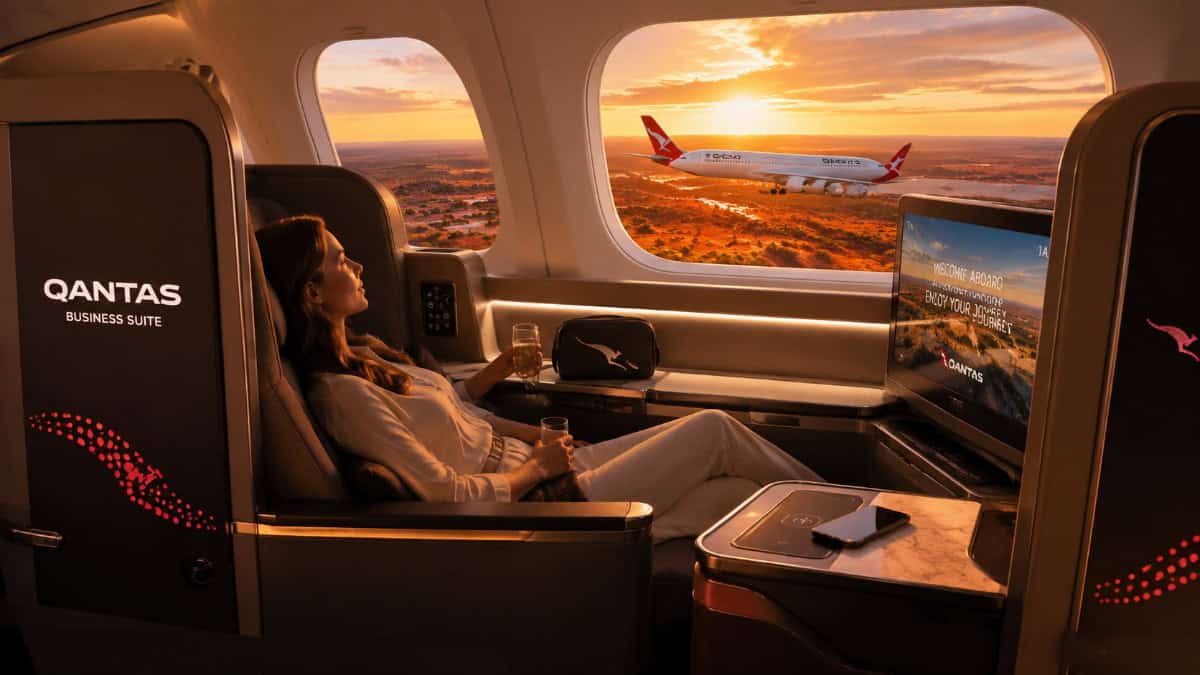
Image generated with Ai
Qantas has lined up a complete change in its premium travel offering by introducing the Qantas Business Suites which will have beds that recline all the way, along with doors for privacy and enhanced technology on the planes it plans to operate in the future as part of its fleet consisting of the Airbus A321XLR and Boeing 787-9 Dreamliners. It is doing this at a time when it has reported a surge in international travelers and is recording premium cabin bookings growth at double the rate of economy revenue growth in FY2026.
As part of its full-year report, it has announced its underlying profit before tax at A$2.06 billion for the period ending June 30, 2026. The figure has been slightly better than analysts’ projections, while its stock prices are going up following positive market reaction to the results. For the travelers, this is going to mean greater premium comfort choices on longer domestic flights, transcontinental Australian flights and some international flights.
Advertisement
Advertisement
Why This Matters for Travellers
The introduction of new Business Suites represents a major shift in premium aviation because Qantas will bring lie-flat beds to a single-aisle aircraft for the first time. Traditionally, narrowbody aircraft have offered limited Business Class features compared with larger long-haul jets.
The move responds to changing passenger behaviour, with more travellers prioritising comfort, privacy and productivity when choosing flights.
Advertisement
Advertisement
New Features That Will Change the Premium Cabin Experience
- Lie-flat beds will be introduced on Airbus A321XLR Business Suites.
- Sliding privacy doors will create individual passenger spaces.
- Larger entertainment screens will improve onboard experiences.
- Wireless and USB-C charging will keep devices powered throughout journeys.
- Dedicated storage areas will allow easier access to personal belongings.
The investment reflects a wider aviation trend where airlines are increasing premium capacity as demand for higher-value travel continues to outperform economy travel.
What Has Changed in Qantas’ Premium Travel Strategy?
Qantas reported strong demand across its international network, particularly among premium travellers. Premium cabin revenue increased 15% in FY2026, growing at twice the rate of economy cabin revenue.
Advertisement
Advertisement
The airline said next-generation aircraft joining its fleet will feature a higher proportion of premium seats compared with the aircraft they replace.
Key Business Developments Behind the Cabin Upgrade
- Qantas reported FY2026 underlying profit before tax of A$2.06 billion.
- The result was around 3% above Visible Alpha consensus estimates, according to Citi.
- Qantas and Jetstar increased capacity and unit revenue during the year.
- Premium travel growth continued to outperform economy demand.
- Investors responded positively, with Qantas shares rising after the announcement.
The financial results highlight why airlines are investing heavily in premium cabins despite ongoing operating pressures, including higher fuel costs.
Advertisement
Advertisement
How Will the Airbus A321XLR Business Suites Improve Travel?
The Airbus A321XLR Business Suite is one of the most significant changes in Qantas’ upcoming fleet renewal programme.
The new aircraft will allow Qantas to offer premium long-distance comfort on routes traditionally operated by smaller aircraft.
The first of 16 A321XLR aircraft configured with the new Business Suites is expected to arrive in 2028.
Airbus A321XLR Business Suite Features
- 1-1 seating configuration.
- Angled herringbone seat arrangement.
- Direct aisle access for every Business Class passenger.
- Sliding privacy doors.
- Lie-flat beds.
- 19-inch entertainment screens.
- Wireless charging capability.
- USB-C charging ports.
- Fast and free Wi-Fi.
- Storage space for laptops and personal items.
The A321XLR will have a range of up to 8,700 kilometres, providing more than 3,000 kilometres of additional range compared with the Boeing 737. This capability gives Qantas greater flexibility when operating longer domestic and international routes.
Advertisement
Advertisement
Which Routes Could Benefit From the New Aircraft?
Qantas plans to use the A321XLR on longer domestic services, including transcontinental flights, as well as short and medium-haul international routes.
The aircraft’s range allows the airline to connect destinations where a widebody aircraft may not be commercially suitable.
Potential Travel Benefits of the A321XLR Fleet
- More premium travel options on longer domestic flights.
- Improved comfort on selected international routes.
- Greater flexibility for route planning.
- New opportunities for thinner international markets.
- Better passenger experiences on narrowbody aircraft.
The aircraft will help Qantas match capacity with demand while maintaining a premium onboard experience.
How Will Boeing 787-9 Dreamliner Passengers Benefit?
Alongside the A321XLR announcement, Qantas revealed an upgraded Business Suite for additional Boeing 787-9 Dreamliners.
The updated cabin focuses on improving long-haul comfort by adding privacy features and increasing sleeping space.
Boeing 787-9 Business Suite Improvements
- Each aircraft will feature 42 Business Suites.
- Sliding privacy doors will appear on Qantas Dreamliners for the first time.
- Seats will convert into 80-inch lie-flat beds.
- Wider footwells will improve sleeping comfort.
- Storage areas will be redesigned.
- Cabin styling will draw inspiration from Western Australia’s Pilbara region.
The new design was developed using customer feedback and ergonomic trials to improve comfort during long international flights.
Advertisement
Advertisement
Why This Matters for Australia’s Aviation Industry
Qantas’ investment reflects a broader transformation in global aviation. Airlines are increasingly competing through premium experiences rather than simply increasing seat numbers.
As international travel demand grows, carriers are focusing on attracting passengers willing to pay more for comfort, privacy and additional services.
How Premium Travel Is Changing Airline Competition
- Airlines are increasing Business Class investment.
- Aircraft interiors are becoming a major competitive factor.
- Privacy features are becoming standard expectations among premium travellers.
- New aircraft are supporting more flexible international networks.
For Australia, stronger premium aviation products can improve connectivity with major global markets and strengthen the country’s position in international travel.
What Travellers Should Know Before Booking
Passengers should understand that the new Qantas Business Suites will be introduced gradually as new aircraft enter service.
The A321XLR Business Suites are scheduled to arrive from 2028, while updated Boeing 787-9 cabins will enter service as additional aircraft join the fleet.
Before Booking
- Eligibility: Business Suite availability will depend on aircraft type and selected routes.
- Booking conditions: Travellers should confirm aircraft configuration before purchasing tickets.
- Destinations: The new cabins will support selected domestic and international services.
- Availability: A321XLR Business Suites begin with aircraft deliveries expected from 2028.
- Official advice: Passengers should check Qantas flight details before travelling.
Aircraft configurations may change due to operational requirements, so travellers should always confirm their scheduled aircraft before departure.
Advertisement
Advertisement
Industry Impact: How Qantas Is Preparing for Future Travel Demand
The Qantas investment comes during a period of strong passenger demand but rising operational challenges. Higher fuel costs have affected airline profitability, but demand for international travel remains resilient.
Qantas expects domestic and international unit revenue to increase by 8% to 10% in the first half of FY2027, even as fuel expenses remain a challenge.
Future Aviation Trends Highlighted by Qantas
- Premium travel continues to grow faster than economy travel.
- Next-generation aircraft are enabling new route opportunities.
- Airlines are focusing on passenger experience improvements.
- Fleet renewal is becoming central to long-term competitiveness.
The combination of new aircraft, premium cabins and stronger connectivity shows how airlines are adapting to changing traveller expectations.
Frequently Asked Questions
When will Qantas introduce the new Business Suites?
The first Airbus A321XLR aircraft with the new Business Suites is expected to arrive in 2028.
Will the new Qantas Business Suites include lie-flat beds?
Yes. The A321XLR Business Suites will include lie-flat beds, while updated Boeing 787-9 Business Suites will feature 80-inch lie-flat beds.
How many A321XLR aircraft will receive the new Business Suite?
A total of 16 A321XLR aircraft will be configured with the new Business Suites.
Advertisement
Advertisement
What makes the new Qantas Business Suites different?
The suites introduce privacy doors, improved storage, larger screens and enhanced sleeping comfort.
Why is Qantas investing in premium cabins?
Premium cabin demand is growing faster than economy demand, making upgraded Business Class products increasingly important.
Closing Update
The Business Suites concept marks a new stage of premium air travel that Qantas has started to implement in order to provide more comfort, privacy and flexibility to their passengers on board of its newest planes.
This is the response to the growth of the demand for premium travel and will make Qantas competitive in international air markets. With the development of their fleet, Qantas has marked that the future will bring even small aircraft comfortable long hauls that were exclusive to wide-body planes before.
Advertisement
