
Germany Joins Spain and Other Countries Across Europe to Brace for Higher Road Travel Costs as EU Fuel Prices Rise 23.8%

Published
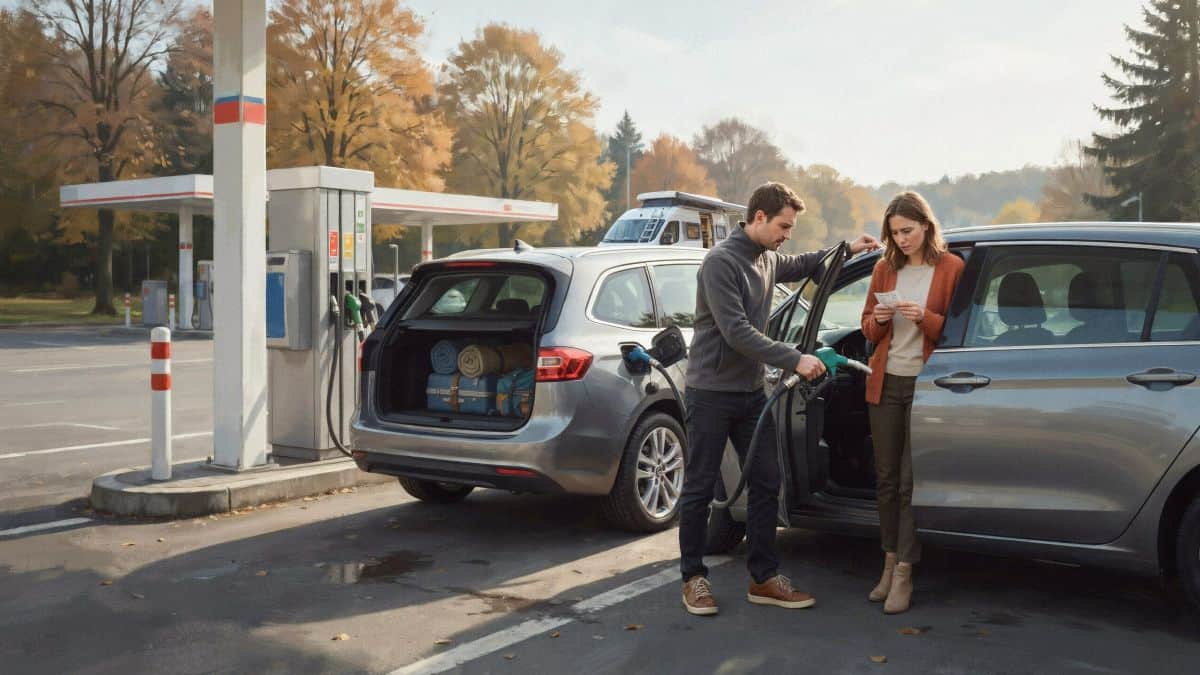
Image generated with Ai
Driving holidays in Germany, Spain and other European destinations require closer attention to fuel spending. According to Eurostat, prices of fuels and lubricants for personal transport in the EU increased by 23.8% year on year in August 2026. The increment will influence the price of traveling between places and not a corresponding increment in each and every holiday spending. The practical opportunity is in selecting the appropriate vehicle, reducing the number of kilometres travelled and determining if a lower cost fuel stop is, indeed, a cost-saving option.
EU Fuel Inflation: Why Last Year’s Road-Trip Budget Needs Updating
The annual increase accelerated from 13.7% in June to 16.9% in July before reaching August’s level. Prices increased in 26 of 27 EU countries, and 18 recorded rises exceeding 20%.
| Country | August 2026 fuel and lubricant inflation against August 2025 |
|---|---|
| Bulgaria | 34.5% |
| Lithuania | 28.8% |
| Finland | 27.6% |
| Germany | 27.5% |
| France | 27.4% |
| Ireland | 11.7% |
| Sweden | 6.1% |
| Hungary | 1.3% |
Each percentage measures change from that country’s earlier prices. It does not identify the cheapest or most expensive destination.
For returning visitors, an old fuel receipt offers context. A dated price per litre provides a stronger basis for planning the next trip.
Advertisement
Advertisement
Germany and Spain Fuel Prices: Compare the Bill Behind the Percentage
Spain’s petrol prices increased 8.2% between July and August. Across the EU, monthly diesel inflation reached 8.3%, compared with 3.3% for petrol. These monthly figures measure something different from Germany’s annual increase above.
Advertisement
Advertisement
For country comparisons, the European Commission’s 17 September Weekly Oil Bulletin provides tax-inclusive prices for 14 September 2026. Figures below are converted to euros per litre and rounded to three decimals.
| Destination | Petrol, Euro-super 95: €/litre | Diesel: €/litre |
|---|---|---|
| EU weighted average | 2.063 | 2.159 |
| Germany | 2.357 | 2.426 |
| Spain | 1.867 | 1.834 |
| France | 2.172 | 2.291 |
| Italy | 2.084 | 2.191 |
| Netherlands | 2.434 | 2.494 |
| Finland | 2.317 | 2.505 |
| Bulgaria | 1.620 | 1.856 |
| Sweden | 1.514 | 1.981 |
| Malta | 1.340 | 1.210 |
At these benchmarks, 50 litres of petrol cost approximately €24.51 more in Germany than in Spain.
Bulgaria illustrates the distinction between inflation and affordability: its annual increase was the largest listed, yet its petrol benchmark remained below Germany’s. National averages help compare destinations; individual station prices determine what travellers pay.
Advertisement
Advertisement
Italy Motorway Fuel Costs: Is Leaving the Route Worth It?
Italy’s Ministry of Enterprises and Made in Italy recorded the following self-service averages on 23 September 2026.
| Network | Petrol: €/litre | Diesel: €/litre |
|---|---|---|
| Ordinary roads | 2.155 | 2.340 |
| Motorways | 2.245 | 2.418 |
For 50 litres, the motorway premium works out at €4.50 for petrol or €3.90 for diesel.
Advertisement
Advertisement
However, consider a petrol car consuming 6 litres per 100 km. A 20 km total detour uses 1.2 litres, worth approximately €2.59 at the ordinary-road average. The petrol saving falls to €1.91, before extra tolls or the value of time.
This calculation makes a useful distinction: choosing a cheaper station already on your route preserves more of the saving than driving out of your way.
Petrol or Diesel Hire Car? Compare the Full Journey Cost
A higher price per litre does not automatically make a vehicle more expensive to run. Fuel consumption can reverse the comparison.
Using Italy’s 23 September ordinary-road averages, an illustrative 1,000 km journey produces these results:
| Assumed vehicle consumption | Fuel required | Calculated fuel bill |
|---|---|---|
| Petrol car: 6 litres/100 km | 60 litres | €129.30 |
| Diesel car: 5 litres/100 km | 50 litres | €117.00 |
| Diesel campervan: 10 litres/100 km | 100 litres | €234.00 |
The assumed diesel car saves €12.30 against the petrol car. A rental premium above that amount would absorb its fuel advantage over this distance, before considering other costs.
Advertisement
Advertisement
These are original calculations using hypothetical consumption rates. They exclude hire charges, tolls and parking. Request the actual vehicle category and compare its expected consumption with the complete rental quote.
Cheaper Hotels Can Add an Extra Driving Bill
Accommodation location also belongs in a road-trip budget.
At Italy’s ordinary-road petrol average, driving an additional 40 km each day in a car using 6 litres per 100 km costs approximately €5.17 daily.
Over seven days, that becomes €36.20. If a hotel saves €10 per night for seven nights but requires those additional journeys, its €70 room saving falls to €33.80 before parking and other costs.
This illustrative calculation gives travellers a practical way to assess a lower room rate alongside the journeys needed to reach attractions.
Advertisement
Advertisement
France and Croatia Fuel Relief: What Holidaymakers Can Actually Use
Government announcements require a close look at their terms.
Croatia’s seven-day regime starting 22 September 2026 announced:
- Petrol at €1.74/litre.
- Diesel at €1.91/litre.
- A further three-cent-per-litre diesel excise reduction, although the announced diesel price still rose six cents against the preceding period.
France’s €450 million package, updated on 23 September, includes €100 for October–December under the eligible-worker Grands rouleurs scheme. Its intended reach expands from 3 million to 5.5 million people, while the exceptional annual tax-exemption ceiling for employer fuel assistance rises to €1,000.
France’s advertised 40-cent-per-litre equivalent describes targeted support, not an automatic tourist discount. Visitors should use displayed pump prices and check the dates of any regulated-price scheme.
Europe’s Oil Import Bill Shows Broader Cost Pressure
Eurostat’s 22 September energy-trade release reports that petroleum-oil import value in Q2 2026 rose 55.8%, while volume increased 1.2%, against the monthly average in 2025.
Advertisement
Advertisement
The gap supports an interpretation of higher import costs without a comparable increase in quantities. It does not predict the next forecourt price or establish how much of that price reflects refining, distribution or taxation.
For travellers, the evidence supports reviewing transport spending. It does not establish that driving holidays are becoming unaffordable for everyone or that tourism demand has fallen.
Calculate Your Europe Road-Trip Fuel Budget Before Booking
Start with the complete itinerary, including airport transfers, sightseeing and accommodation-related driving:
Fuel budget = kilometres ÷ 100 × litres per 100 km × price per litre.
Every €0.10-per-litre increase adds €6 over 1,000 km at 6 litres per 100 km, or €10 at 10 litres per 100 km.
Advertisement
Advertisement
Before paying:
- Compare the rental quote with the expected fuel bill.
- Add parking and tolls separately.
- Check stations along the planned route.
- Refresh prices shortly before departure.
France’s official fuel-price portal supports searches by location and itinerary. Price the kilometres your holiday actually requires, then decide where a different vehicle, hotel or refuelling stop offers a worthwhile saving.
In conclusion, Germany joins Spain and other countries across Europe in facing higher road travel costs as EU figures confirm a 23.8% annual rise in fuel and lubricant prices for August 2026. As travellers, brace for higher fuel bills, especially on longer journeys. However, the final cost depends on vehicle efficiency, local pump prices and distance travelled. Comparing rental options, limiting unnecessary detours and checking accommodation locations can protect holiday budgets. The practical response is to price the complete journey, rather than apply one inflation figure to every expense.
Advertisement
