
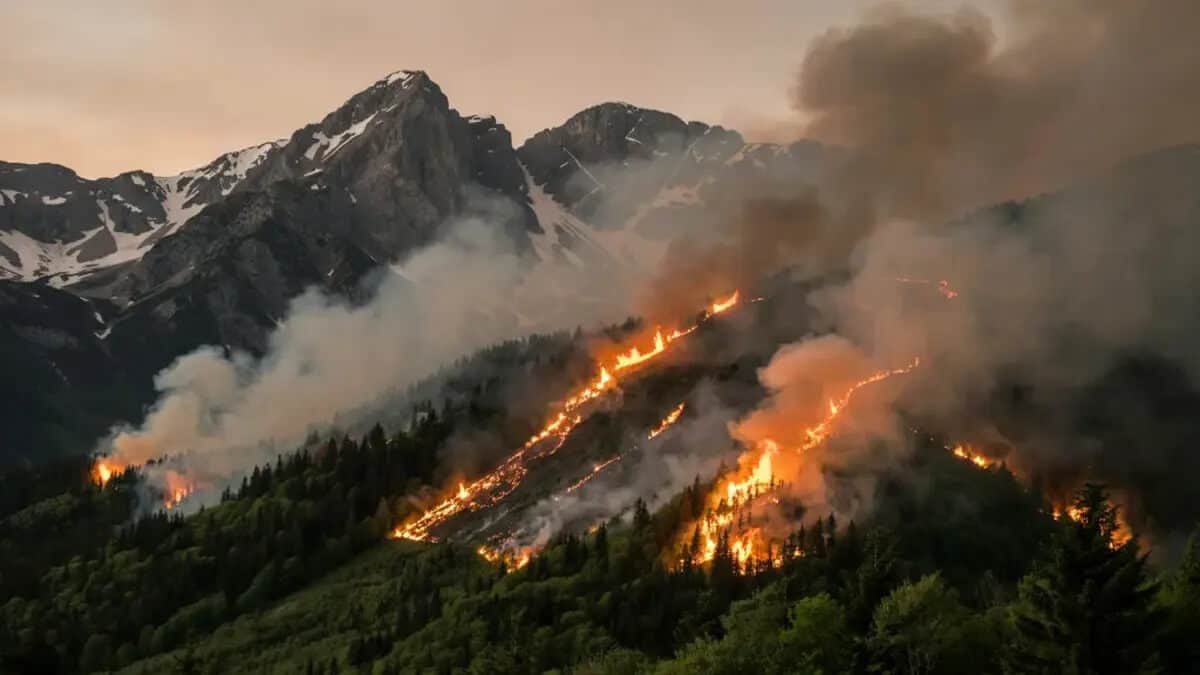
Image generated with Ai
Kenya is at risk of a Mount Kenya fire threatening adventure tourism as the wildfire poses risks to one of the country’s most renowned hiking, climbing, and outdoor adventure tourism sites. Kenya’s Mount Kenya wildfire has been a source of growing concern for one of the country’s most famous hiking trails. The fire, detected on September 1 in remote parts of the mountain, has proved challenging to access for firefighting teams due to the steep terrain.
Mount Kenya has long attracted travellers seeking challenging trekking routes, mountain climbing experiences, camping adventures and nature-based escapes. The mountain’s unique landscapes, high-altitude ecosystems and famous peaks have made it a key attraction for both domestic and international visitors. However, the ongoing wildfire has raised concerns about visitor safety, environmental damage and the possible impact on tourism activities surrounding the mountain.
The situation highlights the close connection between conservation and tourism. The appeal of Mount Kenya is built not only around reaching its peaks but also around experiencing its forests, moorlands, wildlife habitats and changing landscapes. Any major environmental damage could affect the long-term sustainability of adventure tourism in the region.
The wildfire on Mount Kenya was first identified on September 1 in a remote section of the mountain where access has been difficult. Due to the challenging landscape, some response teams have reportedly been forced to continue their efforts on foot after vehicles could no longer reach affected areas.
Advertisement
Advertisement
By September 7, the fire had continued for several days, with conservation teams, volunteers and other organisations involved in containment efforts. The flames had affected vegetation below the mountain’s higher sections, including areas connected with routes used by hikers travelling towards the peaks.
For adventure travellers, the immediate concern is safety. Mountain environments can change quickly during wildfire situations. Smoke can reduce visibility, winds can alter fire movement, and damaged vegetation can create additional hazards along trails.
As a result, some hiking activities may face temporary changes. Routes could be assessed, redirected or restricted depending on the level of damage and safety conditions. For visitors planning trekking experiences on Mount Kenya, access to certain areas may depend on the progress of firefighting operations and environmental assessments.
Mount Kenya remains one of East Africa’s most important adventure tourism destinations. The mountain is recognised as Africa’s second-highest peak and is known for its climbing, trekking and outdoor experiences. Its famous peaks, including Batian, Nelion and Point Lenana, attract climbers and adventure enthusiasts from around the world.
The mountain’s tourism economy extends beyond the hiking trails. A wide network of businesses depends on visitors arriving for mountain experiences. Tour operators, professional guides, porters, accommodation providers and transport companies all contribute to the wider adventure tourism industry around Mount Kenya.
A prolonged wildfire could create economic pressure if visitor numbers decline or if trekking routes become unavailable for extended periods. Adventure travellers often plan mountain journeys months in advance, and uncertainty around accessibility can influence travel decisions.
However, the overall tourism impact will depend on the final extent of the fire damage and whether major hiking routes remain operational. If key trails and visitor areas are protected, the disruption could remain limited. If the fire spreads further, the effects could become more significant for local tourism operators.
The impact of a mountain wildfire goes beyond visible areas of burned vegetation. Mount Kenya’s natural environment plays a crucial role in supporting wildlife, protecting soil systems and maintaining ecological balance.
Different altitude zones on the mountain contain unique ecosystems. Forest areas, alpine landscapes and moorlands each support different forms of plant and animal life. Damage to these environments could take years to recover, especially in sensitive high-altitude areas.
The natural scenery is also one of the main reasons travellers visit Mount Kenya. Tourists are attracted not only by the challenge of reaching the summit but also by the journey through diverse landscapes. The experience includes forests, valleys, mountain vegetation and opportunities to observe wildlife along the way.
A decline in environmental quality could therefore influence the destination’s long-term appeal. Adventure tourism depends heavily on healthy natural surroundings, making conservation efforts essential for protecting future visitor experiences.
Tourism around Mount Kenya provides income opportunities for many communities living near the mountain. From mountain guides and porters to hospitality workers and transport providers, thousands of people benefit from adventure tourism activities.
When access to a destination becomes uncertain, local businesses can experience reduced demand. Fewer hiking groups can affect bookings for accommodation, transport services and guided expeditions.
The impact is especially important because mountain tourism often supports communities beyond the immediate visitor sites. Many travellers rely on local expertise during climbs, creating economic connections between international visitors and nearby communities.
A quick containment of the wildfire would help reduce disruption. However, continued fire activity could require additional recovery measures to restore damaged areas and rebuild visitor confidence.
The period after the wildfire will be critical for both conservation and tourism management. Once the fire is fully contained, assessments will need to determine the extent of ecological damage and identify areas requiring restoration.
Recovery programmes could include habitat protection, vegetation restoration and improved wildfire prevention systems. Strengthening early warning technology and emergency response planning could also help reduce future risks.
For tourism, recovery efforts could focus on ensuring that visitors can safely return while protecting vulnerable areas. Clear communication about trail conditions, access updates and safety measures will be important for travellers and tourism operators.
Mount Kenya’s future as an adventure tourism destination depends on maintaining a balance between visitor experiences and environmental protection. The mountain’s natural landscapes are the foundation of its global tourism appeal, and protecting these resources remains essential.
The Mount Kenya wildfire has shown how environmental emergencies can quickly become tourism challenges. A mountain that attracts hikers, climbers and nature lovers from across the world now faces a situation where conservation and tourism priorities are closely connected.
While firefighting efforts remain focused on controlling the blaze, the long-term focus will be on restoration, safety and resilience. Protecting Mount Kenya is not only about preserving a famous natural landmark but also about safeguarding the adventure tourism economy that depends on its landscapes.
Kenya’s Mount Kenya blaze prompts fresh worries about the future of adventure tourism as wildfires affect the region, threatening not only local flora and fauna but also the area’s hikers and bikers.
This incident shows that any destination that relies on nature needs to constantly invest in conserving the local environment, preventing forest fires and preparing for other disasters. The future of hiking and adventure tourism experiences in this Kenyan mountain will only remain strong if the destination successfully recovers from this fire event.
Advertisement
Advertisement
Advertisement













Monday, September 7, 2026
Monday, September 7, 2026

Monday, September 7, 2026

Monday, September 7, 2026

Monday, September 7, 2026

Monday, September 7, 2026