
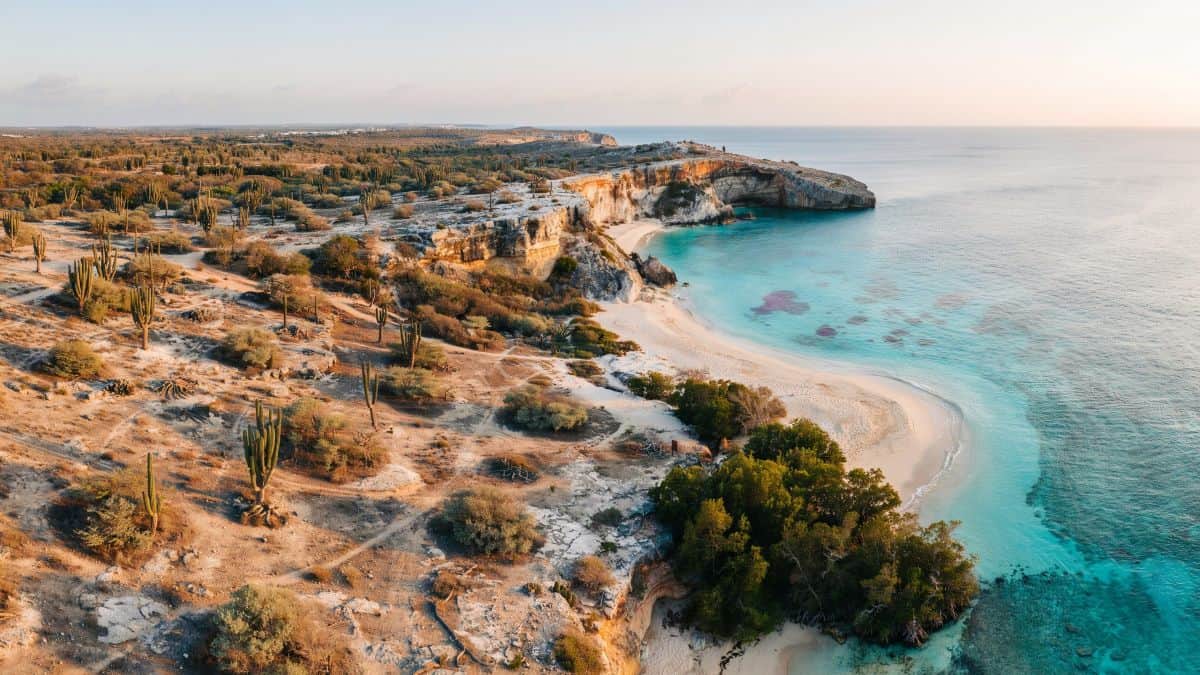
Image generated with Ai
Aruba has achieved a major international milestone after the UNESCO Man and the Biosphere (MAB) Programme International Coordinating Council officially approved the designation of the Aruba Biosphere Reserve during its 38th session held in Hernandarias, Paraguay. The recognition places the entire island of Aruba within UNESCO’s prestigious World Network of Biosphere Reserves, highlighting the island’s commitment to balancing environmental protection, sustainable development and community participation.
According to UNESCO and the Government of Aruba, this designation reflects years of collaboration between government agencies, local communities, scientists, civil society organisations and private-sector stakeholders. Beyond its environmental importance, the recognition strengthens Aruba’s position as one of the Caribbean’s leading destinations for sustainable tourism, offering travellers the opportunity to experience exceptional natural landscapes while supporting responsible travel practices.
Advertisement
Unlike many biosphere reserves that protect only selected natural areas, Aruba’s designation encompasses the entire island, demonstrating that sustainable development can be achieved across an entire nation.
According to UNESCO, the biosphere reserve covers approximately 19,300 hectares of land and includes an Exclusive Economic Zone (EEZ) of nearly three million hectares surrounding the island. Around 108,000 residents live within this internationally recognised biosphere reserve.
Advertisement
UNESCO describes biosphere reserves as “learning places for sustainable development,” where environmental conservation, economic progress and community well-being are managed together. These areas provide practical solutions for protecting biodiversity while supporting local livelihoods, education and scientific research.
For Aruba, this recognition highlights the island as a model for other Small Island Developing States (SIDS) seeking sustainable pathways for future growth.
The designation marks Aruba’s first UNESCO Biosphere Reserve and strengthens the Caribbean’s presence within UNESCO’s global conservation network.
Prior to Aruba’s inclusion, UNESCO recognised only two biosphere reserves in the English- and Dutch-speaking Caribbean:
With Aruba joining the network, the Caribbean gains greater international visibility for its conservation achievements while encouraging neighbouring islands to pursue similar models of sustainable development.
UNESCO Regional Director for the Caribbean, Eric Falt, noted that Aruba’s achievement demonstrates how biodiversity conservation, cultural heritage and sustainable development can successfully coexist within island communities.
Although Aruba is widely known for its white-sand beaches and turquoise waters, UNESCO’s designation recognises the island’s remarkable ecological diversity extending far beyond its coastline.
The island features distinctive semi-arid landscapes, where giant cacti, drought-resistant vegetation and rare native plant species have adapted to challenging environmental conditions.
These desert-like ecosystems contrast dramatically with Aruba’s coastal habitats, creating one of the Caribbean’s most distinctive natural environments.
UNESCO highlights this remarkable combination of terrestrial and marine ecosystems as one of the key reasons behind Aruba’s successful nomination.
Aruba’s marine ecosystems form another essential component of its biosphere reserve.
According to UNESCO, the island’s coastline includes healthy coral reefs, mangrove forests and seagrass beds, each playing a vital role in supporting marine biodiversity.
Mangroves provide sheltered nursery habitats for juvenile fish and other marine species while protecting coastlines from erosion.
Seagrass meadows improve water quality, capture carbon and provide feeding grounds for numerous marine animals.
Coral reefs support vibrant underwater ecosystems that attract divers and snorkellers from around the world while contributing to fisheries and coastal resilience.
Together, these interconnected habitats demonstrate how marine conservation contributes directly to sustainable tourism.
Tourism remains one of Aruba’s most important economic sectors.
UNESCO’s biosphere reserve designation enhances the island’s reputation among travellers increasingly seeking environmentally responsible destinations.
Modern visitors are placing greater value on authentic experiences that combine natural beauty with conservation, local culture and sustainable practices.
The biosphere reserve encourages tourism that respects local communities while protecting ecosystems that make Aruba unique.
Rather than limiting tourism, UNESCO’s approach promotes responsible visitation that benefits both residents and visitors while preserving natural resources for future generations.
One of the defining features of Aruba’s successful nomination was its inclusive development process.
According to UNESCO, the biosphere reserve was created through cooperation involving:
Technical support was provided by the UNESCO Regional Office for the Caribbean, ensuring that scientific knowledge and community priorities were integrated throughout the nomination process.
This collaborative model reflects UNESCO’s emphasis on involving local people in long-term environmental management.
UNESCO biosphere reserves serve not only as protected landscapes but also as centres for scientific research and environmental learning.
Aruba’s designation creates new opportunities for researchers to study island ecosystems, biodiversity conservation, climate resilience and sustainable resource management.
Educational programmes can also increase awareness among residents and visitors about protecting fragile island environments.
By sharing scientific knowledge internationally, Aruba will contribute to broader understanding of sustainable development in small island settings.
UNESCO expects Aruba’s recognition to strengthen collaboration throughout the Caribbean Basin.
The island will now exchange knowledge and best practices with other biosphere reserves across the region, including those in:
This regional cooperation supports biodiversity conservation while encouraging innovative solutions for environmental management and climate adaptation.
Shared experiences between island nations help strengthen resilience against common challenges such as biodiversity loss, coastal erosion and climate change.
Aruba now joins one of the world’s largest international conservation partnerships.
At the opening of the 38th session of UNESCO’s MAB International Coordinating Council, the World Network of Biosphere Reserves included 784 biosphere reserves across 142 countries.
Each biosphere reserve contributes unique experiences and scientific knowledge while supporting UNESCO’s broader objectives of biodiversity conservation, sustainable development and international cooperation.
Joining this network provides Aruba with access to global expertise while raising the island’s international profile.
The UNESCO designation represents more than an environmental honour.
It positions Aruba as a destination where travellers can experience protected natural landscapes while supporting responsible tourism practices.
Visitors can explore coastal ecosystems, unique desert scenery, marine habitats and cultural heritage knowing these environments are managed according to internationally recognised sustainability principles.
This combination of conservation and tourism reflects changing traveller preferences, with increasing numbers of visitors seeking destinations that demonstrate genuine commitments to protecting nature.
Aruba’s designation as a UNESCO Biosphere Reserve marks a defining moment in the island’s environmental and tourism journey.
By recognising the entire island as a living example of sustainable development, UNESCO has highlighted Aruba’s success in integrating biodiversity conservation, community participation and responsible economic growth.
For travellers, the recognition offers additional confidence that Aruba’s natural treasures from its cactus-filled landscapes and mangrove forests to its coral reefs and coastal waters—are being carefully protected for future generations.
As part of UNESCO’s global network of biosphere reserves, Aruba now stands among the world’s leading examples of how tourism, conservation and sustainable development can successfully work together, strengthening both the Caribbean region and the future of global eco-tourism.
Advertisement
Tags: Aruba Tourism, Aruba Travel, Aruba UNESCO Biosphere Reserve, Biodiversity Aruba, Caribbean eco tourism
Advertisement
Advertisement













Saturday, September 5, 2026

Friday, September 4, 2026
Saturday, September 5, 2026
Saturday, September 5, 2026

Thursday, September 3, 2026

Wednesday, September 2, 2026

Saturday, September 5, 2026
Saturday, September 5, 2026


