

United States Air Travel Chaos as United, Hawaiian, Air Canada, Frontier Airlines and More Report 3,876 Delays and 105 Cancellations at Seattle, Boston, Atlanta, Orlando, New York, San Diego and Others

Published
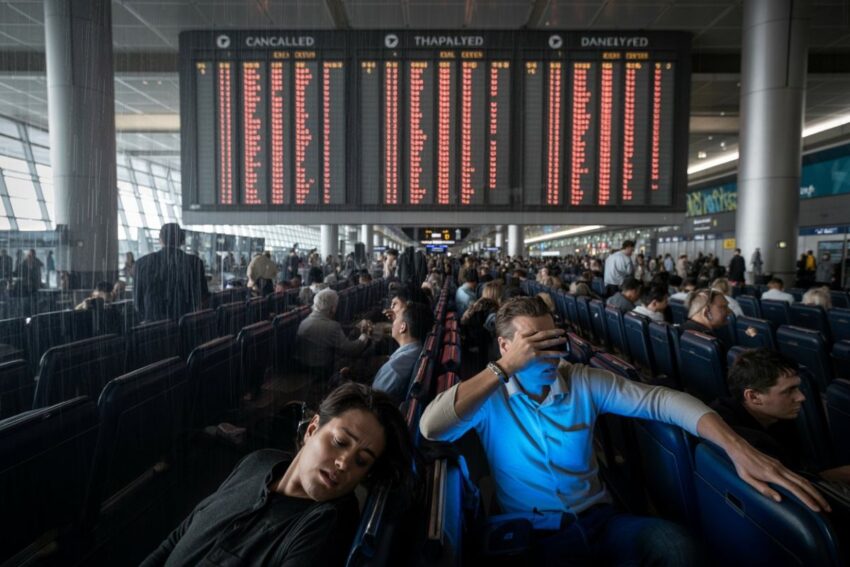 Image generated with Ai
United States air travel is facing chaos as major carriers including United, Southwest, Air Canada, Alaska Airlines, and more struggle with operational disruptions. Today, travelers across the country experienced 3,876 delays and 105 cancellations at key airports such as Seattle, Boston, Atlanta, Orlando, New York, San Diego, and others. The disruptions have affected both domestic and international flights, creating ripple effects across schedules and connections. Reasons for the delays and cancellations include congestion at busy hubs, ongoing staffing and logistical challenges, and high passenger volumes during peak travel periods.
Consequently, passengers traveling on United, Southwest, Air Canada, Alaska Airlines, and other airlines found themselves facing uncertainty and extended wait times. Additionally, cities like Seattle, Boston, Atlanta, Orlando, New York, San Diego, and others witnessed heavy air traffic disruptions, forcing airlines to adjust schedules proactively. For travelers, this chaos underscores the importance of flexibility and constant updates when flying in the United States today.
Advertisement
Advertisement
Major Flight Disruptions Hit U.S. Airports
Air travel across the United States faced significant disruptions today, 15th May, with a total of 105 cancelled flights and 3,876 delayed flights reported across domestic and international operations. The widespread delays impacted major airports and key carriers, creating travel challenges for thousands of passengers navigating the country’s busiest air hubs.
U.S. Airports Most Affected by Delays and Cancellations
Among the nation’s busiest airports, Seattle-Tacoma International (SEA) led with 13 cancellations and 184 delays, reflecting operational pressures in the Pacific Northwest. Boston Logan International (BOS) reported the highest number of delays at 338, while Denver International (DEN) experienced 6 cancellations and 200 delays, highlighting challenges in central U.S. hubs.
Advertisement
Advertisement
East Coast airports were also notably impacted. John F. Kennedy International (JFK) recorded 9 cancellations and 112 delays, while Hartsfield-Jackson Atlanta International (ATL) saw 6 cancellations and 172 delays. Florida airports including Orlando International (MCO) and Fort Lauderdale International (FLL) experienced a combined 11 cancellations and 190 delays, affecting both leisure and business travel in the region.
Other airports such as San Francisco International (SFO) and San Diego International (SAN) reported over 200 combined delays, underscoring ongoing air traffic management challenges in major West Coast cities. Smaller regional airports including Billings Logan (BIL) and Lihue (LIH) saw minimal cancellations and delays, indicating that disruptions were concentrated at larger, busier airports.
Advertisement
Advertisement
Airlines Facing Operational Pressures
Leading carriers were heavily affected by today’s disruptions. Delta Air Lines topped the cancellation chart with 16 cancelled flights and 308 delays, closely followed by United Airlines with 15 cancellations and 373 delays. Southwest Airlines recorded the highest number of delayed flights at 764, reflecting operational strains across its domestic network.
Other airlines such as American Airlines (4 cancellations, 458 delays) and SkyWest (3 cancellations, 335 delays) experienced significant delays, highlighting widespread challenges across both legacy and regional carriers. Alaska Airlines (11 cancellations, 108 delays) and Hawaiian Airlines (7 cancellations, 34 delays) also faced disruptions affecting travelers on both domestic and transpacific routes. Smaller carriers such as Frontier and Horizon (ASA) experienced fewer delays and cancellations but contributed to the overall disruption picture.
Impact on Passengers and Travel Tips
Passengers traveling today across United States are advised to check real-time flight updates and review airline rebooking policies before heading to airports. Flexibility is key: travelers should allow extra time for connections, consider alternative flights or airports, and stay informed through official airline communication channels.
Passengers should also remain calm and patient, as airlines continue to actively modify schedules to ensure safety and operational efficiency. Real-time tracking tools and airline mobile apps can help travelers manage delays and make necessary adjustments.
Authors Observation: All information has been manually obtained from FlightAware’s official website, and all operations remain subject to change based on real-time updates. To ensure safety, airlines actively adjust schedules and itineraries as needed. Passengers are advised not to panic during disruptions and to consider alternate travel options to reach their destinations safely. Staying informed through real-time updates, reviewing airline rebooking policies, and maintaining flexibility with travel plans are all strongly recommended for a smoother travel experience.
Conclusion
Today’s U.S. air travel chaos, impacting United, Southwest, Air Canada, Alaska Airlines, and more, with 3,876 delays and 105 cancellations, was triggered by staffing shortages, airport congestion, and high travel volumes. Cities including Seattle, Boston, Atlanta, Orlando, New York, San Diego, and others bore the brunt, forcing airlines to adjust schedules rapidly. Passengers faced uncertainty but proactive steps such as monitoring flight updates, exploring alternative connections, and staying flexible helped mitigate disruptions. Ultimately, this surge highlights systemic challenges in U.S. aviation, revealing how operational pressures and peak travel demand can combine to create widespread travel chaos, demanding patience and preparedness from every traveler.
Advertisement
