
Urgent Security Crisis in Niger as US Government Orders Non-Emergency Personnel to Evacuate as Violent Unrest and Political Turmoil Escalate – What This Means for Travelers and US Citizens

Published
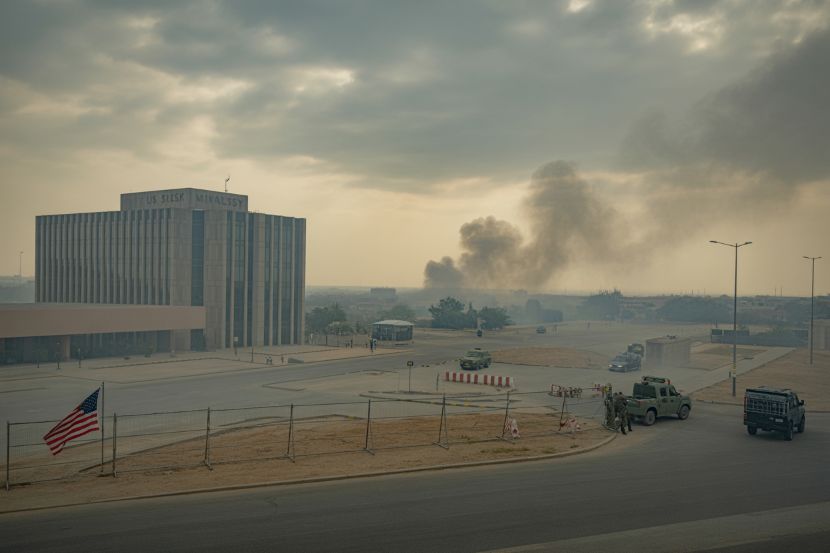 Image generated with Ai
In a major development, the United States government has issued an urgent order for non-emergency U.S. government employees and their families to depart Niger due to a rapidly deteriorating security environment in the West African nation. This unprecedented move, which highlights growing concerns about safety, affects the staff at the U.S. Embassy in Niamey, the capital of Niger.
This decision comes in the wake of escalating threats linked to political instability and the rise in militant activity across the Sahel region. The U.S. Department of State’s announcement signals a shift in diplomatic relations and security postures in Niger, which had previously been a key partner for the United States in counter-terrorism efforts in the region.
Advertisement
Advertisement
The Situation in Niger: A History of Political Uncertainty and Instability
Niger’s political situation has been unstable since July 2023, when a military coup ousted President Mohamed Bazoum. The takeover by the National Council for the Safeguard of the Homeland (CNSP) marked a dramatic shift in the country’s governance. Following the coup, Niger’s political relations with Western nations, including the United States, became strained, with many countries reconsidering their diplomatic and military presence in the country.
Before the coup, Niger had been a strong ally for the U.S., particularly in combating terrorism and extremism in the Sahel. However, the instability following the military takeover has led to a reduction in diplomatic presence, with the U.S. being one of the most recent to withdraw non-essential personnel due to the deteriorating safety conditions. According to the U.S. State Department, while the embassy remains operational, it is now limited in its capacity to provide routine consular services, especially in regions outside of Niamey.
Advertisement
Advertisement
Why the U.S. Made the Move
The U.S. Department of State’s directive for the departure of non-emergency personnel from Niger emphasizes the rising security risks in the country. With extremist groups operating in the region and ongoing political turmoil, the U.S. government has stated that it is no longer able to guarantee the safety of its diplomatic personnel, particularly outside Niamey.
In its official travel advisory, the Department noted that U.S. citizens in Niger are urged to consider leaving as there may be limited access to consular support in emergency situations. The announcement highlights that the U.S. government cannot ensure regular consular services, particularly outside Niamey, due to the security risks posed by groups active in the Sahel region.
Advertisement
Advertisement
The U.S. Embassy in Niamey: Impact on Daily Operations
Despite the departure of non-essential staff, the U.S. Embassy in Niamey will remain open, but with reduced staffing levels. The embassy will focus on providing limited emergency consular services to U.S. citizens in Niger. However, the U.S. government has made it clear that routine services such as visa processing, passport renewals, and other administrative functions will be affected.
For U.S. nationals in Niger, the departure order serves as a stark reminder of the volatile security situation and the lack of predictable support systems. The U.S. Department of State has repeatedly emphasized that U.S. citizens should exercise caution and stay informed of the ever-changing security environment in the region.
Advertisement
Advertisement
The State Department’s travel advisory for Niger currently advises against all non-essential travel to the country. The advisory also highlights the increased risks from militant groups, which have made it more difficult for the embassy to carry out its duties effectively. As of now, U.S. citizens are urged to leave Niger immediately if they can make arrangements to do so.
The Bigger Picture: U.S. and Niger Relations Post-Coup
The U.S. has had a strong military and diplomatic relationship with Niger for years, using the country as a base for counter-terrorism operations aimed at reducing extremist activity across the Sahel. In recent years, the U.S. has contributed troops, funding, and training to assist Nigerien forces in battling groups like Boko Haram and Al-Qaeda. However, following the military coup in 2023, the political and military landscape has changed significantly.
The coup has prompted many nations, including the U.S., to reevaluate their engagement with Niger. The U.S. military presence in the country, which had been part of a broader counter-terrorism strategy, is set to undergo significant reductions in the coming months. U.S. troop withdrawals are expected to be completed by September 2024, signaling a shift in the country’s role as a strategic partner for the U.S.
The Broader Impact on International Diplomacy and Security
The evacuation order also highlights the wider geopolitical ramifications of the crisis in Niger. The U.S. and other Western nations have historically relied on Niger as a partner in the fight against terrorism in the Sahel. The region has been a hotspot for militant groups, and the political instability following the coup has only made the situation more dire.
Advertisement
Advertisement
While the U.S. continues to monitor the situation, it is also shifting its focus to working with regional organizations and neighboring countries to ensure that counter-terrorism efforts in the Sahel do not collapse. Niger’s junta, meanwhile, has expressed its intention to continue working with international military partners but has also shown resistance to Western influence, further complicating relations.
What This Means for U.S. Nationals and Travelers
For U.S. citizens currently in Niger, the U.S. government’s travel advisory has significant implications. Travelers are urged to monitor the situation closely and take immediate steps to leave the country if possible. Those who choose to stay must understand that consular support will be extremely limited, and emergency evacuation procedures may be delayed due to the ongoing security threats.
The U.S. government has also highlighted the importance of staying in touch with the embassy for updates on security conditions and emergency services. In times of crisis, it is essential for U.S. nationals to stay informed through official channels and prepare for any possible eventualities.
Looking Forward: The Road Ahead for U.S. Citizens and Niger
As the political and security situation in Niger remains fluid, U.S. citizens are advised to keep their travel plans flexible and follow any new advisories issued by the U.S. government. The embassy’s reduced capacity means that those who remain in Niger must be self-reliant in securing any essential services.
It remains unclear how the future of U.S.-Niger relations will evolve, but what is certain is that the political instability in Niger will continue to affect the ability of the U.S. to maintain a robust diplomatic and military presence in the country. The departure order for non-emergency personnel is a clear indication of the challenges ahead, both for the U.S. and its citizens in the region.
Advertisement
