
US Witness Travel Interference amidst Winter Storm as Endeavor Air Face Eight Flight Cancellations and Numerous Delays across New York, North Carolina, Georgia and more

Published
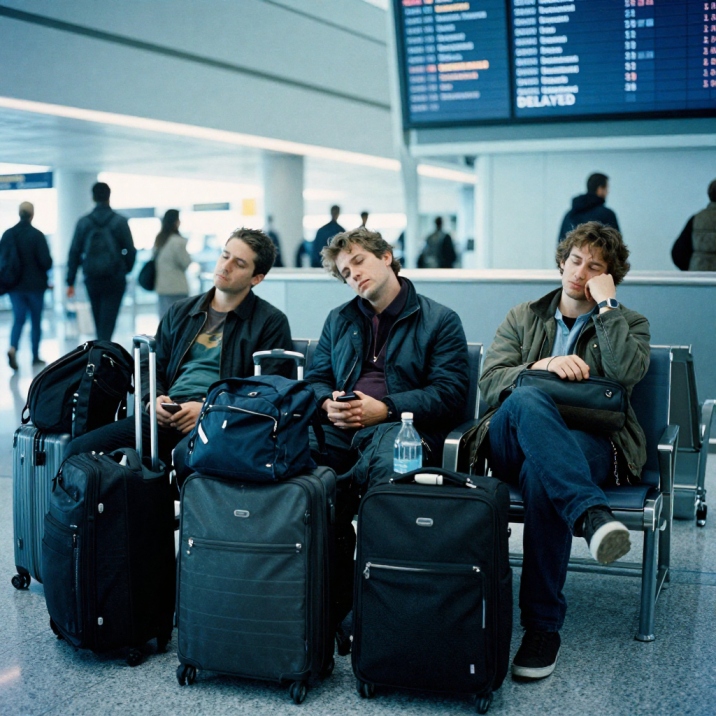
Image generated with Ai
A massive winter storm is currently paralyzing travel across the US as Arctic air sweeps through the eastern two-thirds of the country. Consequently, over 10,000 flights have been cancelled, leaving thousands of passengers stranded. Major disruptions are hitting critical hubs in New York, North Carolina and Georgia, where freezing rain and heavy snow create “catastrophic” conditions. Furthermore, regional carrier Endeavor Air faces significant operational challenges, recording 8 specific cancellations and 77 delays. The reach of this historic weather event extends north into Ontario, where icing complicates international routes. Meanwhile, emergency declarations in Virginia/DC highlight the severity of the infrastructure impact. Travelers must stay alert as temperatures plummet to life-threatening lows. Transitioning into the new week, airlines urge passengers to monitor apps for abrupt changes. This report breaks down the specific impact on regional aviation and provides essential guidance for those navigating this widespread interference.
A Breakdown of the Affected Flights
As of Sunday morning, the operational integrity of regional air travel has been challenged by plummeting temperatures and “catastrophic ice accumulation.” In the data captured for Endeavor Air, eight specific flights were identified as being at the forefront of this disruption. These flights, primarily operated by Bombardier CRJ900 (CRJ9) and CRJ700 (CRJ7) aircraft, represent the vital links between regional municipalities and major international gateways.
While the broader US aviation market has seen five-figure cancellation totals, the precision of these specific Endeavor Air disruptions highlights how localized icing and visibility issues can paralyze regional connectivity. Federal emergency disaster declarations have been approved as states prepare for “dangerous travel and infrastructure impacts” that are expected to linger for several days.
| Flight Number | Aircraft | Departure Airport | Arrival Airport | Scheduled Time |
| EDV5363 | CRJ9 | Syracuse Hancock Intl (KSYR) | John F Kennedy Intl (KJFK) | Sun 05:30AM EST |
| EDV5318 | CRJ9 | Frederick Douglass/Greater Rochester Intl (KROC) | John F Kennedy Intl (KJFK) | Sun 05:31AM EST |
| EDV5265 | CRJ9 | Ithaca Tompkins Intl (KITH) | John F Kennedy Intl (KJFK) | Sun 05:39AM EST |
| EDV4888 | CRJ9 | Albert J Ellis (KOAJ) | Hartsfield-Jackson Intl (KATL) | Sun 05:50AM EST |
| EDV5514 | CRJ9 | Augusta Regional (KAGS) | Hartsfield-Jackson Intl (KATL) | Sun 05:55AM EST |
| EDV5066 | CRJ9 | Toronto Pearson Int’l (CYYZ) | John F Kennedy Intl (KJFK) | Sun 06:10AM EST |
| EDV5407 | CRJ9 | Reagan National (KDCA) | John F Kennedy Intl (KJFK) | Sun 06:10AM EST |
| EDV5462 | CRJ7 | Fayetteville Rgnl (KFAY) | Hartsfield-Jackson Intl (KATL) | Sun 06:10AM EST |
The recorded flight disruptions emphasize a heavy concentration of travel interference on routes funneling into two primary hubs: John F. Kennedy International (KJFK) in New York and Hartsfield-Jackson International (KATL) in Georgia.
Advertisement
Advertisement
- To New York (KJFK): Routes from Syracuse (KSYR), Rochester (KROC), Ithaca (KITH), Toronto (Ontario, CYYZ) and Washington (Virginia/DC, KDCA) were all listed among those facing early-morning interference.
- To Georgia (KATL): Key southern corridors, including those from Jacksonville (North Carolina, KOAJ), Augusta (KAGS) and Fayetteville (North Carolina, KFAY), have been compromised.
These routes are essential for business and international transfers and their disruption creates a “bottleneck” effect that ripples throughout the entire US air traffic control system.
Delays
The statistical impact on Endeavor Air’s schedule is stark, with a recorded 77 total delays and 8 cancellations. This results in a 10% delay rate, a figure that is expected to fluctuate as the storm moves toward the Northeast. The National Weather Service (NWS) has warned that wind chill lows could dip to -50°F in some regions, making ground operations, such as de-icing and baggage handling, nearly impossible or extremely hazardous for ground crews.
Advertisement
Advertisement
Major US airlines have warned that these delays are not merely temporary inconveniences but are precursors to “long-duration power outages” and impassable conditions that may affect crew availability and aircraft positioning for the remainder of the week.
Affected Airports
Affected Departure Airports
| Code | Airport Name | City | State/Province | Country |
| KSYR | Syracuse Hancock Intl | Syracuse | New York | USA |
| KROC | Frederick Douglass/Rochester Intl | Rochester | New York | USA |
| KITH | Ithaca Tompkins Intl | Ithaca | New York | USA |
| KOAJ | Albert J Ellis | Jacksonville | North Carolina | USA |
| KAGS | Augusta Regional | Augusta | Georgia | USA |
| CYYZ | Toronto Pearson Intl | Mississauga | Ontario | Canada |
| KDCA | Reagan National | Washington | DC/Virginia* | USA |
| KFAY | Fayetteville Regional | Fayetteville | North Carolina | USA |
Affected Arrival Hubs
| Code | Airport Name | City | State | Country |
| KJFK | John F Kennedy Intl | New York City | New York | USA |
| KATL | Hartsfield-Jackson Intl | Atlanta | Georgia | USA |
In these locations, the threat of freezing rain and heavy snowfall has led to “catastrophic” warnings. In Virginia/DC and the surrounding Mid-Atlantic, the ice accumulation is cited as a primary concern for runway safety and airport infrastructure.
Probable Impact on Local Tourism
The timing of this historic storm on a Sunday is particularly damaging to the tourism and hospitality sectors. In New York and Georgia, where KJFK and KATL serve as primary tourist gateways, the cancellation of thousands of flights means a significant loss in hotel occupancy and local commerce.
In North Carolina and Virginia/DC, where weather emergencies have been declared, local travel has been discouraged by authorities. The Department of Homeland Security has urged citizens to stock up on food and fuel, a directive that effectively halts leisure tourism. With nearly a million customers without electricity—including 290,000 in Tennessee and substantial numbers in Georgia and North Carolina—the infrastructure required to support tourism is currently diverted toward emergency recovery and power restoration.
Advertisement
Advertisement
What Affected Passengers Can Do Now
For passengers currently caught in the “travel interference” across the US, immediate action is required. Major airlines have issued advisories for passengers to remain alert for abrupt changes.
- Monitor Flight Status: Passengers traveling through New York, North Carolina or Georgia should use mobile apps for real-time updates, as the situation is described by the NWS as “widespread” and evolving.
- Check Travel Waivers: Given the federal emergency declarations in nearly 20 states and Virginia/DC, most carriers are offering flexible rebooking options.
- Prioritize Safety: With temperatures forecast to remain life-threatening for a week post-storm, travelers are encouraged to follow the advice of DHS Secretary Kristi Noem and stay indoors where possible.
- Stay Informed on Infrastructure: Because power outages are affecting over 850,000 customers, passengers should verify that their destination accommodation has functional utilities before departing for the airport.
As this polar vortex-driven event continues to paralyze the nation, the priority remains the restoration of safety and infrastructure. Aviation experts and meteorologists alike will continue to monitor the 2,000-mile spread of this system as it moves through New England and the Northeast.
-The information provided is sourced from FlightAware.
Advertisement
