
Image generated with Ai
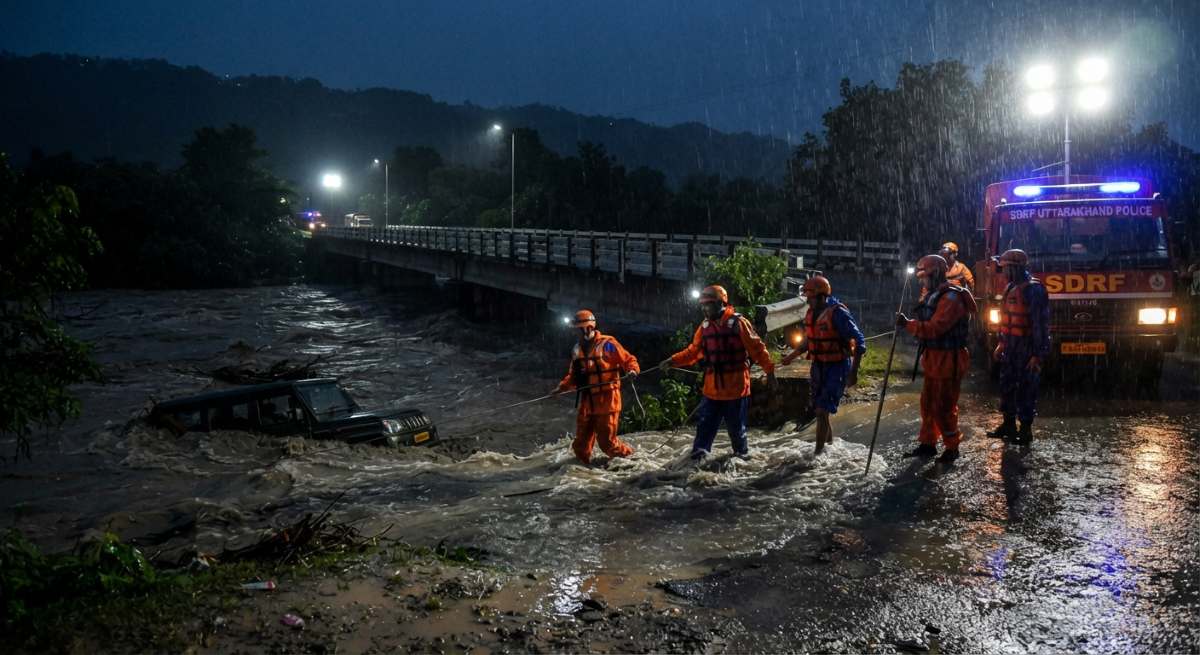
Heavy rainfall and flash floods continue to pose severe threats across hilly terrains, as highlighted by a recent tragic incident where an SUV swept away in Dehradun.
The event occurred near the Kandoli Bridge on Poundha Road within the Prem Nagar area. Information was received late at night by the State Disaster Response Force regarding a vehicle being washed away by an aggressive rainwater current. Three individuals—comprising one male and two females—were travelling inside the vehicle when the disaster struck. Immediate search and rescue operations were launched by a specialized State Disaster Response Force team from Dakpatthar, led by Assistant Sub-Inspector Suresh Tomar.
Despite adverse weather conditions and continuous heavy downpours throughout the night, personnel navigated the hazardous environment to locate the victims.
One injured female, identified as Sehaj, daughter of Gulshan Baveja, was successfully rescued approximately two kilometres away from the primary incident site and handed over to local law enforcement.
Advertisement
Advertisement
Tragically, the bodies of the other two occupants—identified as 20-year-old Akshay, a resident of Jaipur, Rajasthan, and an unidentified young woman—were subsequently recovered and sent for postmortem examinations. This catastrophe unfolded merely a day after an Orange Alert was issued by the Meteorological Department for Uttarakhand, prompting high-alert protocols across disaster management units.
The recurrence of such severe weather events drastically alters the landscape for tourists and daily commuters navigating mountainous or low-lying riverine routes. When torrential rains swell local streams and cause sudden inundations, vehicles attempting to cross bridges or submerged roads frequently become trapped in lethal undercurrents.
Tourists unfamiliar with the topography of regions like Dehradun often underestimate how rapidly small trickles can transform into raging torrents. Consequently, travel itineraries are heavily disrupted, roads are blocked, and educational institutions or local offices are forced into sudden closures.
The psychological and physical toll on victims, families, and survivors is immense, as demonstrated by the night-long ordeal faced by the rescue teams and the injured survivor. Mobility is severely restricted, and visitors are compelled to reconsider travel plans, often finding themselves stranded in unsafe zones due to sudden road washouts and compromised infrastructure.
Tourism and transport sectors operating within vulnerable ecological zones are increasingly scrutinized regarding their risk-mitigation frameworks. Industry experts emphasize that traditional weather advisories are no longer sufficient to prevent loss of life; proactive operational halts must be enforced during active Orange or Red meteorological alerts.
Tour operators, hoteliers, and vehicle rental services are being urged to integrate real-time tracking and localized weather updates into their daily planning. Furthermore, insurance providers and regional tourism boards are collaborating to establish standardized emergency response protocols. There is a growing consensus within the hospitality industry that clear liability guidelines and mandatory briefing sessions regarding local flash flood zones should be instituted for all incoming visitors to high-risk districts like Dehradun.
To mitigate risks associated with sudden cloudbursts and rising water levels, travellers must strictly adhere to a comprehensive safety guide:
In comparison to older frameworks that primarily relied on post-disaster relief and reactive rescue deployments, contemporary disaster management strategies reflect a paradigm shift toward pre-emptive preparedness.
Previously, alerts issued by meteorological agencies often resulted in advisory warnings that lacked strict ground-level enforcement or mandatory travel restrictions.
In contrast, current administrative protocols—exemplified by high-level review meetings chaired by State Disaster Response Force commanders like Arpan Yaduvanshi—demonstrate a proactive stance. Teams are now pre-positioned in vulnerable sectors with specialized heavy rescue gear before severe weather peaks.
Furthermore, modern synchronization between weather forecasting departments and local policing units ensures that swift preventive measures, such as institutional closures and immediate deployment of specialized water-rescue squads, are executed efficiently to safeguard human lives.
Advertisement
Tags: dehradun, flash floods, India, Monsoon Travel, SDRF
Advertisement
Advertisement













Saturday, September 5, 2026

Friday, September 4, 2026

Saturday, September 5, 2026

Thursday, September 3, 2026

Wednesday, September 2, 2026

Saturday, September 5, 2026

Saturday, September 5, 2026