
Jordan’s Petra Expands Beyond Ruins With New Beidha Heritage Exhibition

Published
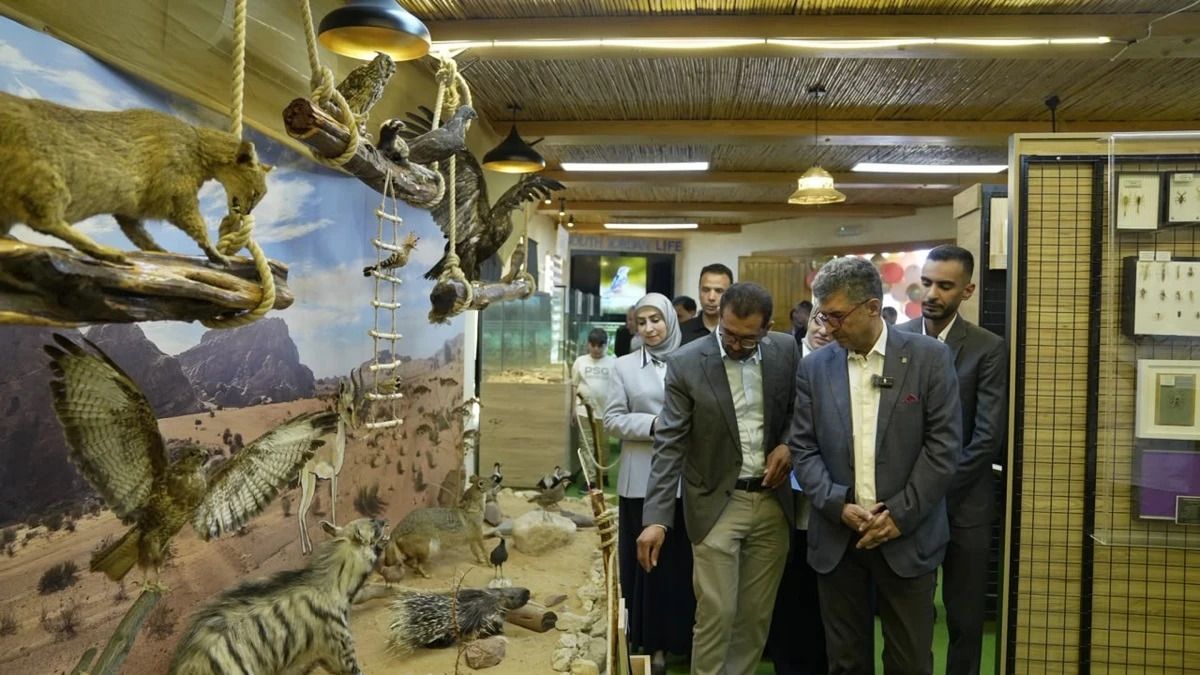
Many travellers visiting the legendary rose-red city of Petra for a more intimate experience don’t realise that the ancient civilisations that once flourished there depended on a rich and fragile natural heritage. For decades, global tourism has focused squarely on the carved facades of the Siq and the Treasury. But there is a paradigm shift in the making in destination management. Today’s conservation efforts demand an integrated understanding of archaeology and ecology, and visitors can no longer afford to ignore the landscape that surrounds them. If you’re headed to Jordan this season, understanding this ecological shift is key to a complete, well-rounded itinerary that pays homage to the delicate balance of the region.
What Travellers Want to Know
- What is the Petra Biodiversity and Natural Heritage Exhibition? It is a newly launched exhibition located at the Nabataean Cultural Village in Beidha, designed to showcase the region’s native wildlife, plant life, and complex desert ecosystems.
- Where is the Beidha exhibition located? The exhibition is hosted specifically within the Nabataean Cultural Village, situated just a short distance from the main archaeological site of Petra in southern Jordan.
- What can visitors see inside the exhibition? Visitors are introduced to live specimens, preserved wildlife, fossils, freshwater aquariums, and interactive scientific installations detailing the local natural environment.
Expanding Beyond the Stones: The Beidha Initiative
The historical narrative of southern Jordan has traditionally been dominated by human engineering, rock-cut architecture, and trade routes. Yet, a crucial piece of the puzzle has often been left untold: the natural environment that enabled these ancient societies to thrive. To bridge this historical gap, a significant new initiative has been established. The Petra Biodiversity and Natural Heritage Exhibition has been officially opened at the Nabataean Cultural Village, marking a pivotal expansion in how the region presents itself to international tourists.
By shifting attention away from purely archaeological sightseeing, this new attraction introduces a multi-disciplinary approach to regional tourism. Conservationists and cultural planners have long emphasized that the canyons and arid highlands surrounding Petra are not lifeless geological formations. Instead, they represent dynamic, highly specialized ecosystems that have evolved over millennia to withstand extreme climatic pressures.
Inside the Exhibition: Science, Specimens, and Ecosystems
Designed to appeal to both casual sightseers and dedicated science enthusiasts, the exhibition utilizes a blend of modern museum technology and traditional curation. Inside the facility, a diverse collection of displays brings the hidden natural world of the region into sharp focus. Live specimens, carefully preserved wildlife, ancient fossils, and specialized freshwater aquariums are integrated seamlessly into the layout.
Advertisement
Advertisement
Furthermore, interactive scientific installations are heavily utilized to explain how local flora and fauna adapt to scarce water supplies and seasonal temperature swings. Visitors are guided through exhibits detailing indigenous plant life—ranging from drought-resistant shrubs to rare desert wildflowers—that once supported nomadic pastoralism and early settlement agriculture. Through these rigorous scientific frameworks, the exhibition offers an objective, data-driven look at the ecological networks that underscore the greater Petra area.
Conservation and the Future of Sustainable Tourism in Jordan
The launch of the exhibition at Beidha goes hand in hand with broader national efforts to promote sustainable tourism and environmental responsibility in Jordan. Environmental reports from heritage authorities and information on regional development show that the inclusion of biodiversity education in large tourist centres helps to reduce the human footprint in sensitive archaeological sites by dispersing the flow of visitors and broadening educational outreach.
The exhibition emphasises the vulnerabilities of local ecosystems and encourages travellers to feel more ecologically responsible. To protect the larger Petra region from modern environmental threats like climate change and habitat fragmentation, conservation experts say it is important to get a handle on the native wildlife and plant life. In this way, the exhibition is not just an entertaining side activity but an important educational tool for preserving Jordan’s natural and historical heritage for future generations.
Advertisement
