
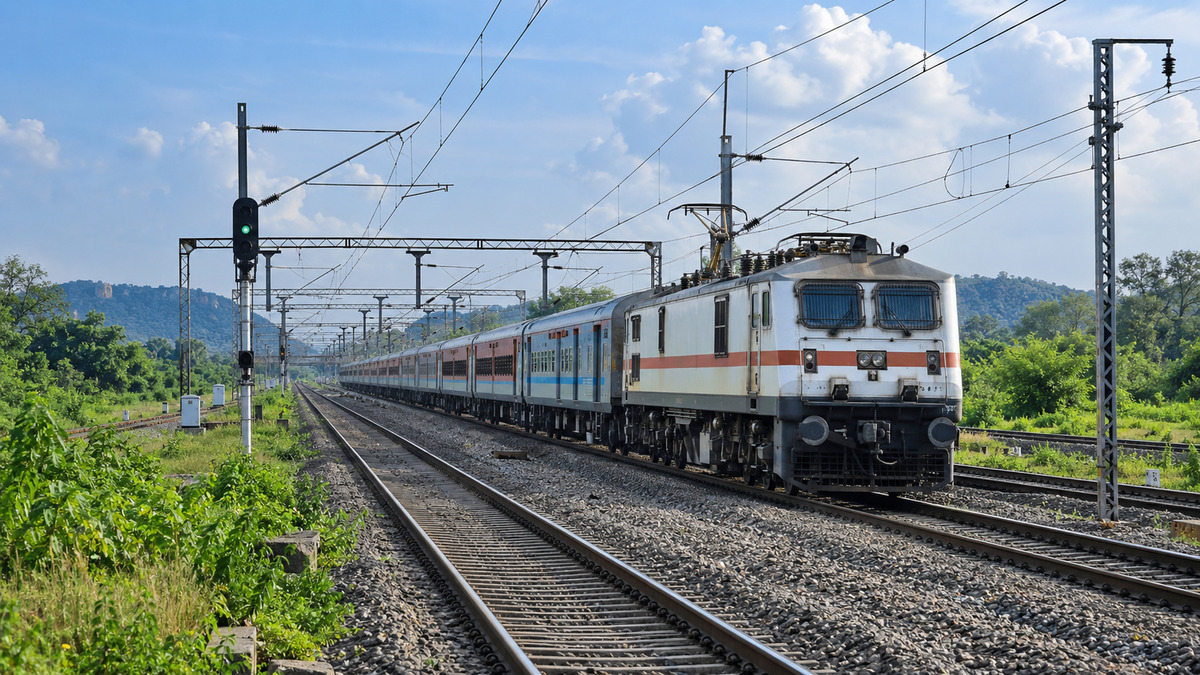
Image generated with Ai
South East Central Railway has launched a next generation digital monitoring hub at its Bilaspur Division in Chhattisgarh to give future rail operations a boost. Advanced air signalling and communication systems allow real-time visibility of movements of 59 trains along the line and signalling parameters and performance of the railway network, thus enabling easy coordination and decision making and improving safety and train management.
Installed at the Divisional Control Office in Bilaspur, the monitoring system brings several railway operations onto one centralised digital platform. It is designed to improve coordination between control teams while providing a clearer picture of what is happening across important sections of the railway network at any given moment.
A major feature of the new facility is an ultra-narrow-bezel video wall that provides controllers with a large visual display of railway operations.
The installation has been described as the largest display of its type currently used by Indian Railways. Instead of relying on fragmented information from different operating systems, controllers can now view important details through a common digital interface.
Advertisement
Live train positions, signalling information, railway sections and operational conditions can be monitored simultaneously.
This wider view is particularly important on busy railway corridors where several passenger and freight trains may be moving through neighbouring stations and block sections at the same time.
The scale of the monitoring network makes the project particularly significant.
The system covers 47 stations within Bilaspur Division and another 12 stations belonging to Raipur Division. This means a total of 59 stations can be observed through the centralised monitoring arrangement.
Advertisement
Advertisement
Bringing such a large number of stations together allows controllers to understand conditions beyond individual station boundaries.
Train operations are closely connected across railway sections. A delay at one station can affect train paths several kilometres away. Centralised monitoring therefore allows controllers to see developing problems earlier and make operational adjustments before disruption spreads further across the network.
Real-time train monitoring forms the centre of the new system.
Controllers can follow train movements as they progress through stations and inter-station sections. Signalling conditions can also be viewed, giving railway teams greater awareness of how trains are moving through the network.
The platform additionally supports automated tracking of rolling stock.
This combined information can help railway control teams understand where trains are located, how railway infrastructure is being used and where potential traffic conflicts may develop.
Faster access to accurate operational information can be particularly valuable during peak traffic periods, when railway teams must manage several train movements within limited track capacity.
The monitoring platform also provides visualisation of station yards and inter-station block sections.
Station yards are among the most operationally complex parts of a railway network. Passenger services, freight trains, empty coaches and locomotives may all need to move through or remain within these areas.
A clearer digital picture can help controllers understand how railway assets are positioned and how individual train movements could affect wider operations.
Monitoring block sections between stations is equally important because these areas determine how efficiently trains can move along a corridor.
When congestion starts developing, controllers can use live information to assess the situation and make quicker decisions regarding train sequencing and traffic management.
Another major element is a centralised dashboard showing operational data and analytics.
Instead of checking several systems separately, controllers can access important information through one monitoring environment. This should make it easier to identify unusual operating conditions, analyse bottlenecks and coordinate responses between different railway departments.
Centralised information could also reduce the time required to understand the cause of an operational problem.
During disruptions, minutes can matter. A quicker assessment can help railway teams determine where trains are located, which sections are affected and what alternative operating decisions may be possible.
Maintaining punctuality remains one of the biggest challenges for railway networks operating large numbers of passenger and freight services.
A minor delay can sometimes create wider problems when several trains share the same corridor.
The new monitoring system is designed to help railway managers recognise such situations earlier. By combining live field information, digital mapping and operational analytics, controllers can identify potential bottlenecks before they become more serious.
Better traffic management could help trains move through congested sections more efficiently while reducing the possibility of avoidable delays spreading through the timetable.
Passengers may not directly interact with the technology, but improved control-room visibility could ultimately translate into more reliable railway operations.
The system could become particularly valuable when normal railway operations are disturbed.
Infrastructure problems, signalling issues, heavy traffic or other unexpected operating conditions can require several railway departments to work together.
Previously, controllers might need to gather information from different operational sources before developing a complete picture of the problem.
With a centralised live monitoring system, critical information can be viewed together.
This increased situational awareness allows controllers to assess ground conditions faster and coordinate decisions involving train regulation, signalling, station operations and other railway functions.
The deployment represents another step in Indian Railways’ wider transition towards digitally supported railway management.
Modern railway networks increasingly depend on real-time data because operating decisions must be made quickly across complicated and heavily used infrastructure.
Bilaspur Division handles important passenger and freight movements, making effective traffic management particularly significant.
Digital monitoring can support better use of available railway capacity without depending entirely on physical infrastructure expansion.
By understanding exactly how trains and infrastructure are performing, railway teams can make more informed decisions about traffic flow and network management.
The Live Train Monitoring System could have wider importance as Indian Railways prepares for increasing traffic across high-density routes.
Growing passenger demand, freight movement and railway modernisation will require control centres to manage increasingly complex networks.
Real-time monitoring, automated train tracking and integrated analytics can give railway operators the tools needed to handle that growth more efficiently.
The Bilaspur installation demonstrates how centralised digital technology can strengthen railway control operations by combining live information from stations, signals and railway sections.
As railway traffic becomes increasingly data-driven, systems of this kind could play a larger role in improving safety, punctuality, capacity management and disruption response.
For travellers, the technology operates largely behind the scenes. However, its potential impact is significant. Faster decisions, improved traffic coordination and better understanding of network conditions can contribute to a railway system that is more reliable, responsive and prepared for future passenger demand.
Advertisement
Advertisement
Advertisement













Saturday, September 5, 2026

Friday, September 4, 2026
Saturday, September 5, 2026

Saturday, September 5, 2026

Thursday, September 3, 2026

Wednesday, September 2, 2026

Saturday, September 5, 2026

Saturday, September 5, 2026


