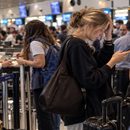
Image generated with Ai
Flight cancellations persist today as Europe continues facing operational pressure, with airlines facing 2,457 flight delays and 53 cancellations across Germany, Spain, France, the UK, the Netherlands, Italy, and Croatia all experienced notable impacts as Europe’s busiest hubs absorbed heavy traffic.
Frankfurt recorded the highest number of delays, while Amsterdam Schiphol and London Heathrow shared the highest number of cancellations.
easyJet faced the greatest delay burden, while British Airways, BA Euroflyer, and KLM recorded the most cancellations. Other major gateways including Barcelona, Madrid, Malaga, Paris Charles de Gaulle, Paris Orly, London Gatwick, Milan Malpensa, and Split also experienced varying levels of disruption.
Frankfurt emerged as Europe’s busiest congestion hotspot, recording the highest number of delays. As one of the continent’s largest connecting hubs, even modest disruptions can affect hundreds of onward flights. Lufthansa accounted for much of the operational pressure as the carrier’s hub-and-spoke operation concentrated arrivals and departures throughout the day. Condor, Air Dolomiti, United, and Discover also experienced delays as they shared Frankfurt’s busy operating environment. The airport remained open and operational, but sustained traffic volumes produced rolling schedule adjustments.
Advertisement
Spain experienced disruption across multiple major airports rather than one isolated location. Barcelona handled the country’s largest delay total, while Madrid and Malaga also experienced sustained congestion. Vueling Airlines absorbed significant operational pressure across Barcelona and Malaga, reflecting the carrier’s extensive Spanish network. Ryanair, easyJet, Air Europa, Air Europa Express, Iberia, and Iberia Express also recorded delays as aircraft rotations became increasingly compressed. The pattern suggests widespread operational demand across Spain rather than airport-specific disruption.
French operations were split between Charles de Gaulle and Orly, both of which remained busy throughout the day. Air France carried one of Europe’s largest delay totals as activity intensified across its Paris hubs. HOP!, easyJet, Transavia France, Vueling Airlines, and several regional operators also experienced delays. Rather than widespread cancellations, Paris airports continued processing flights while managing congestion that gradually extended into connecting services across Europe.
Advertisement
Advertisement
London’s aviation system experienced pressure at both Gatwick and Heathrow. easyJet shouldered the largest share of delays at Gatwick, while British Airways dominated operations at Heathrow. BA Euroflyer also recorded notable disruption at Gatwick as its leisure-focused network encountered scheduling pressure. London’s importance as one of Europe’s largest connecting markets meant delays arriving from continental hubs frequently affected departures later in the day, reinforcing the interconnected nature of the European network.
Amsterdam Schiphol remained among Europe’s busiest delay hotspots while also sharing the highest number of cancellations. KLM experienced substantial operational pressure as the airport’s dominant carrier managed a busy wave-based hub operation. Transavia Airlines, easyJet, Delta Air Lines, Air France, and other international carriers also experienced delays as Schiphol continued balancing dense traffic flows with tight connection schedules.
In southern Europe, Milan Malpensa experienced heavy congestion, driven largely by easyJet, Ryanair, Wizz Air Malta, and Neos operations. Although cancellations remained relatively limited, delays built steadily throughout the day. Meanwhile, Split experienced lighter overall traffic but still recorded operational disruption affecting Croatia Airlines, easyJet, Eurowings, and seasonal leisure services, illustrating how even smaller airports can experience knock-on effects from delays elsewhere in Europe.
Today’s disruption pattern was overwhelmingly delay-driven rather than cancellation-driven. More than 97% of all recorded disruptions were delays, while cancellations accounted for just over 2%, highlighting that airlines largely chose to absorb operational pressure instead of grounding services.
Germany, Spain, France, the Netherlands and the United Kingdom carried the greatest operational burden as Europe’s largest hub airports handled sustained traffic throughout the day. Frankfurt alone accounted for nearly 14% of all recorded delays, illustrating how pressure at a single hub can influence flights far beyond Germany.
The figures also show that airports largely remained fully operational despite congestion. Aircraft continued departing, albeit behind schedule, allowing airlines to preserve networks and minimise passenger rebooking. This reflects a common summer operating pattern in Europe where schedules remain intact while delays accumulate through aircraft rotations, gate availability, air traffic sequencing and busy terminal operations.
Travel And Tour World contacted all relevant airports for comment before publication.
Barcelona Airport: “On the day you are asking about, the airport functioned and operated completely normally. If you want specific details regarding a cancellation or the reason for a flight delay, you need to contact the airlines.”
At the time of publishing, no other responses had been received.
easyJet recorded Europe’s highest delay total, with operational pressure concentrated at London Gatwick, Milan Malpensa, Amsterdam Schiphol, Malaga, Barcelona, Charles de Gaulle, Orly, and Split. Its extensive short-haul network means aircraft frequently perform multiple sectors each day, allowing earlier delays to cascade through later departures.
Vueling Airlines experienced particularly heavy disruption across Barcelona, supported by additional delays in Malaga, Orly, London Gatwick, and Milan Malpensa. The airline’s large presence within Spain meant congestion at Barcelona quickly affected aircraft rotations throughout its wider European network.
Most of Air France’s operational pressure centred on Charles de Gaulle and Orly, with additional impacts reaching Amsterdam Schiphol and London Gatwick. As Paris functions as one of Europe’s principal transfer hubs, delays affecting inbound aircraft naturally extended into connecting departures.
Lufthansa experienced the majority of its delays at Frankfurt, where its hub operation handled intense traffic throughout the day. Because so many European and long-haul connections depend on Frankfurt, relatively small operational disruptions can influence large numbers of onward flights.
KLM remained heavily affected at Amsterdam Schiphol, where its tightly coordinated hub structure required aircraft to arrive and depart within narrow connection windows. Congestion reduced operational flexibility, contributing to delays across domestic, European and intercontinental services.
British Airways experienced most of its disruption at London Heathrow, with additional delays at Gatwick and Madrid. Heathrow’s role as a major global hub meant arriving aircraft frequently determined the punctuality of later departures, while BA Euroflyer also faced operational pressure at Gatwick’s busy leisure network.
Today’s disruption stemmed primarily from heavy airport congestion, air traffic management constraints, aircraft rotation delays, European airspace congestion, and operational restrictions at several of the continent’s busiest hubs. Summer schedules continue to push airport capacity close to operational limits, leaving little flexibility when inbound aircraft arrive behind schedule.
Because aircraft often operate several flights daily, a delay during an early sector can continue affecting subsequent departures across different countries. Busy transfer hubs such as Frankfurt, Amsterdam, Paris and London amplify this effect because thousands of passengers and aircraft connections depend on carefully timed arrival and departure banks. Rather than isolated airport issues, today’s delays spread through Europe’s interconnected aviation system as congestion moved progressively between major hubs.
Passengers travelling through Frankfurt, Barcelona, Amsterdam, London, Paris, Milan, and Madrid should expect continued departure delays, particularly where aircraft are arriving late from earlier sectors. Connecting passengers may experience tighter transfer windows as airlines work to preserve scheduled services despite rolling operational congestion.
Flights departing later in the day remain especially vulnerable because earlier delays can continue propagating through aircraft rotations. Travelers connecting between major hubs may also notice revised departure times as airlines adjust gate assignments and sequencing to maintain network stability. While widespread cancellations have remained relatively limited, punctuality is likely to remain the biggest challenge until congestion gradually eases.
Today’s disruptions across Europe affected major aviation centres including Frankfurt, Barcelona, Amsterdam, London, Paris, Madrid, Malaga, Milan, and Split, with delays far outweighing cancellations across the continent. easyJet, Vueling Airlines, Air France, Lufthansa, KLM, British Airways, Ryanair, and several other carriers continued operating extensive schedules despite persistent congestion. Rather than grounding large numbers of flights, airlines focused on keeping aircraft moving through Europe’s interconnected network while absorbing delays created by busy hubs, air traffic management constraints and aircraft rotation pressures. As operations continue evolving throughout today, passengers should expect schedules to remain dynamic as congestion gradually shifts between Europe’s busiest aviation gateways.
The data has been extensively curated by our editorial team using real-time aviation figures recorded on 1 August 2026 at 1:02 pm ET USA (1 August 5:02 pm GMT).
Primary Source: FlightAware.
Verification Protocol: All statistics have been independently reviewed and cross-checked by our human editorial desk. Timestamped records, data logs and feed snapshots are securely archived internally to support historical accuracy and editorial transparency.
Note: Real-time flight-tracking figures reflect active airspace and operational data. Minor variations may occur when compared with information displayed at individual airport terminals or airline departure gates.Travellers are advised to check directly with their respective airlines and airports for the latest flight status, schedule changes and operational updates.
Advertisement
Tags: British Airways flights cancelled today, easyJet cancelled flights today, Europe flight cancellations today, europe flight delays today, London Heathrow Airport Cancellations
Advertisement
Advertisement












Tuesday, September 1, 2026
Tuesday, September 1, 2026

Wednesday, September 2, 2026

Wednesday, September 2, 2026

Tuesday, September 1, 2026

Tuesday, September 1, 2026

Tuesday, September 1, 2026

Tuesday, September 1, 2026