 Somudranil Sarkar Somudranil Sarkar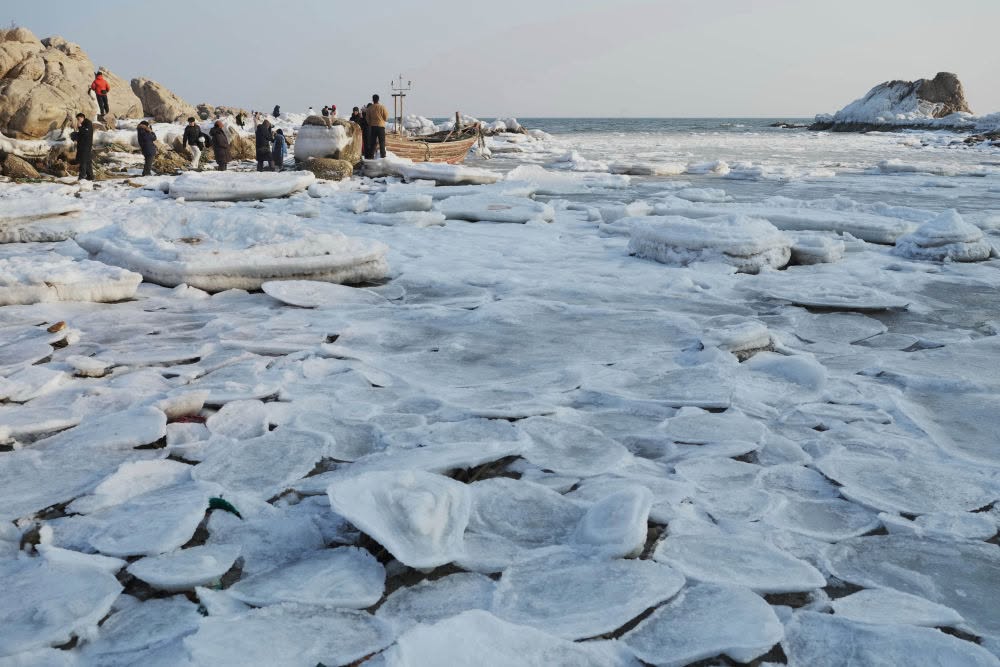
The opening of international bookings for winter travel next month had travel agencies reporting that bookings for travel to an unlikely destination, Qinhuangdao, shot up unlike anything they had seen before. That is not booking for tropical vacation destinations or the conventional alpine destinations in Europe or powdery slopes of Hokkaido. This sudden interest in Qinhuangdao baffles traditional travel planners, but not so much with travel agents that are selling something new and different. Masterminds behind the marketing of Qinhuangdao are packages for winter travel that combine new world class skiing and snowboarding facilities, 6,000-year-old history, ultra modern resort coastal communities and car-less tourist districts with Chinese visa exemptions. This is a combination that simply cannot be matched anywhere else in the world. You could ski in the morning, visit the Great Wall at Shanhaiguan where it meets the Bohai Sea where it is frozen in the afternoon, and enjoy an art coffee in a modern beach art district surround by the elements at sunset.
The concept of “China Cool” has evolved rapidly over the past two years. Initially a social media buzzword used by international vloggers documenting China’s ultra-modern infrastructure and safe cities, it has now firmly attached itself to the nation’s burgeoning ice and snow economy. China’s domestic winter tourism sector has now surpassed a valuation of 160 billion yuan, driven significantly by an influx of overseas visitors.
Advertisement
Following the long-tail legacy of the 2022 Winter Olympics, Hebei province inherited a wealth of state-of-the-art snowmaking technology, infrastructure, and winter sports enthusiasm. Recent data highlights this surge: travel agency-organized domestic tourist stays in Hebei reached a massive 4.8 million person-days in 2024, showing continuous year-over-year growth.
Foreign tourists—particularly from Southeast Asian nations like Thailand, Malaysia, and Singapore, as well as European and Russian travelers—are drawn to the novelty of low-latitude and coastal ice-and-snow tourism. They are looking for destinations that offer more than just a ski lift and a lodge. They want cultural immersion, culinary excellence, and aesthetic brilliance. Qinhuangdao delivers this trifecta perfectly.
Advertisement
Advertisement
The crown jewel of Qinhuangdao’s active winter tourism for thrill-seekers is the Laojunding Ice and Snow Kingdom. Nestled in Shimenzhai Town within the eastern section of the Yanshan Mountains, it is a mere 40-minute drive from the city center.
Laojunding masterfully leverages its natural mountain topography, blending it with cutting-edge winter resort management. The facility caters heavily to international tourists of all skill levels, boasting an impressive array of slopes and features:
For the international traveler, the convenience is unmatched. The resort provides comprehensive equipment rental halls where all gear is meticulously sanitized and dried, alongside free half-hour safety lessons taught by certified instructors to ensure novices understand basic fall protection.
For those who prefer backcountry beauty and alpine sightseeing over high-speed downhill skiing, Zushan Mountain offers a breathtaking alternative. Located in the northwest of Qinhuangdao, Zushan translates to “the ancestor of the mountains,” a fitting title for a range whose main peak, Tiannvfeng, towers at 1,424 meters.
Advertisement
Advertisement
In the winter months, Zushan transforms into an ethereal wonderland. The steep, rugged terrain is blanketed in snow, and the low temperatures create magnificent crystal-clear ice waterfalls and rime frost on the ancient trees. International hiking and photography clubs are increasingly booking multi-day excursions to Zushan. It provides a stark, raw contrast to the highly curated seaside resorts, offering a profound sense of solitude and natural grandeur that resonates deeply with eco-tourists.
A major factor driving the influx of foreign tourists to Qinhuangdao is its unparalleled family-friendly infrastructure. Winter travel with children can often be logistically daunting, but Qinhuangdao has gamified the experience.
A prime example is the Guangnianli Seaside Park Resort Hotel, situated within the 4A-rated Jifa Dream Kingdom. This resort has pioneered what travel agents are calling the “Playground + Pandas + Ice and Snow” combo, a highly marketable package for international families:
No discussion of Qinhuangdao’s international appeal is complete without examining the “Aranya Effect.” Located on the golden coast of Beidaihe, the Aranya community spans 6,500 mu and has single-handedly redefined Chinese coastal luxury.
While it gained fame as a summer retreat, Aranya in winter is a revelation. The beaches are often dusted with snow, and the sea ice forms jagged, beautiful patterns along the shore. This stark, monochromatic landscape serves as the perfect backdrop for Aranya’s iconic minimalist architecture, including the famous “Lonely Library” and the UCCA Dune Art Museum.
Foreign tourists—particularly digital nomads, artists, and culture seekers—are flocking to Aranya during the winter months for its curated cultural calendar. The community hosts the Aranya Waves Film Week, offering masterclasses and independent film screenings. Furthermore, the culinary scene remains vibrant year-round, with international visitors enjoying everything from high-end seafood at Changy Restaurant to local northwestern Chinese cuisine at Huanghe Ruhai.
The winter vibe in Aranya is spiritual and meditative. It is the antithesis of a crowded tourist trap, offering international visitors a sophisticated, intellectual winter escape that feels leagues apart from standard resort fare.
The “China Cool” trend is not just anecdotal; it is backed by formidable economic data. Foreign tourists are spending more, staying longer, and utilizing organized travel infrastructure at unprecedented rates.
Here is a breakdown of the tourism economic indicators driving the region’s growth:Metric Recent Data Point Market Implication Travel Agency Organized Stays (Hebei) 4.81 Million Person-Days (2024) Strong reliance on structured, high-quality tour packages by visitors. Average Daily Expenditure (Foreigner) ~$199.24 USD High-value tourism; visitors are paying for premium resorts, dining, and ski gear. National Ice & Snow Economy Value > 160 Billion Yuan Massive state and private investment ensuring world-class facilities. Visa-Free Foreign Entries (National) 7+ Million in a single quarter A 48.3% year-on-year increase, directly funneling tourists into accessible hubs like Qinhuangdao.
Perhaps the single largest catalyst for Qinhuangdao’s boom among foreign tourists is China’s expanded visa-free transit policy. Currently, citizens from 55 countries are eligible for the 144-hour (6-day) visa-free transit when entering through key hubs like Beijing, Tianjin, or Qingdao. Furthermore, tourists from 76 countries now enjoy unilateral or mutual visa-free entry.
Because Qinhuangdao is effectively “Beijing’s backyard,” the logistics are frictionless. An international tourist can land at Beijing Capital International Airport, utilize the visa-free policy, and board a high-speed rail from Beijing Chaoyang Station. In as little as 90 minutes, they are transported from a sprawling metropolis to the snowy, coastal tranquility of Beidaihe or Shanhaiguan.
This ease of access has transformed Qinhuangdao from a niche domestic destination into a highly viable weekend getaway for expatriates living in Asia, as well as a seamless add-on for international business travelers seeking a quick ski and wellness retreat before flying out.
As we look toward the peak of the 2026-2027 winter season, Qinhuangdao stands as a testament to the evolution of global tourism. It proves that ski tourism no longer needs to be confined to isolated alpine villages. By merging top-tier snow sports with deep historical roots—where the Great Wall literally meets the icy sea—and wrapping it in avant-garde coastal luxury, Qinhuangdao has created a tourism product that is entirely unique.
The “China Cool” movement is redefining what international travelers expect from a winter holiday. They no longer just want a ski pass; they want night skiing under spotlights followed by live indie music, they want their children feeding pandas before hitting a 100-meter ice slide, and they want to sip warm yellow wine in a beachfront library as the snow falls on the Bohai Sea.
Advertisement
Tags: China Cool travel, foreign tourists visa-free China, Qinhuangdao ski resort, seaside skiing, Travel News
Advertisement
Advertisement













Friday, September 4, 2026

Friday, September 4, 2026

Friday, September 4, 2026
Friday, September 4, 2026

Thursday, September 3, 2026

Wednesday, September 2, 2026
Friday, September 4, 2026
Friday, September 4, 2026


