
Morocco Rewrites Africa Tourism Success as Visa Free Access Drives Record 17 million Visitor Boom

Updated
Published
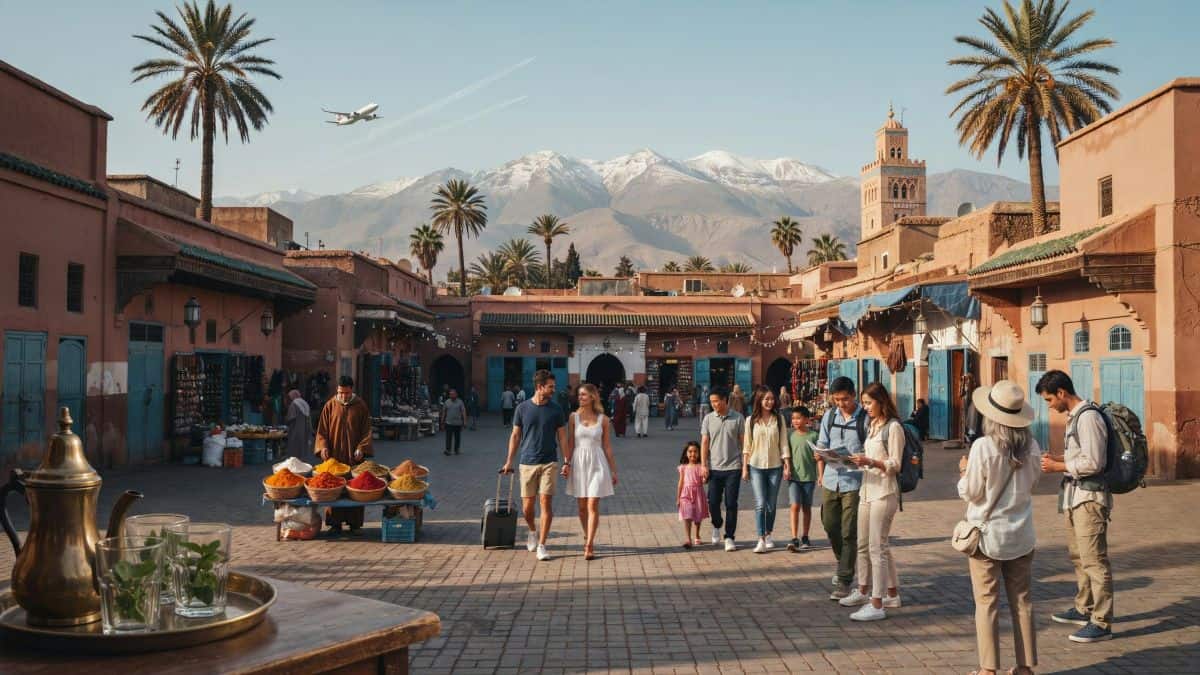
Success of Tourism in Africa is Recreated by Morocco through Visa-Free Access Resulting in 17 Million Visitor Boom, describing how easing access can change a destination. This nation has decreased barriers to entry, and it has increased international air connectivity. In addition, digital visas have made it easy for eligible travelers from certain nations to travel. Improved air connectivity has further brought tourists from all over the world to Morocco. This approach not only helps hotels but also assists other business sectors in Morocco. Morocco will host some global events soon, and its popularity has been increasing. Consequently, this Visitor Boom explains how Access can result in Success.
Morocco’s 17.4 million Visitor Record Changes African Tourism
The scale of Morocco’s tourism rise became clear at the end of 2024.
Official Moroccan government figures show that the country received 17.4 million tourists during the year. This represented nearly three million more arrivals than in 2023.
The increase reached 20% in only one year.
Advertisement
Advertisement
The longer-term recovery was equally striking. Morocco’s 2024 arrival level stood 35% above 2019 according to the government’s January 2025 announcement.
This placed Morocco essentially at the level of a target that had originally been planned for 2026.
Advertisement
Advertisement
The government’s 2023-2026 Tourism Roadmap set a target of 17.5 million tourists by 2026. Morocco therefore came within around 100,000 arrivals of that target two years early. The government described the country as being ahead of schedule.
That is an important distinction.
Advertisement
Advertisement
Morocco did not simply recover from the pandemic. It moved beyond its old tourism scale and entered a new phase of expansion.
Morocco Moves Ahead of Egypt in the African Tourism Race
Morocco’s record also changed the balance between Africa’s biggest tourism destinations.
Egypt received around 15.7 million tourists in 2024, according to information published by Egypt’s State Information Service. Egypt itself described that figure as a national tourism record.
Morocco recorded 17.4 million.
Advertisement
Advertisement
That put Morocco ahead by about 1.7 million arrivals for the year.
The Moroccan government subsequently described the kingdom as the number one destination in Africa.
This does not mean the tourism contest is settled permanently. Visitor numbers change each year. Different countries also measure tourism flows within their own statistical systems.
However, the 2024 figures marked a major moment.
Morocco had moved into a new tourism league.
Easier Entry Removes One of Travel’s Biggest Barriers
Tourism starts before a traveller reaches an airport.
Advertisement
Advertisement
It starts when somebody asks a simple question: how difficult is it to enter the country?
Visa rules can shape that decision.
A traveller who faces a long application, embassy visit, paperwork and uncertainty may choose another destination. A traveller who can enter easily has one less barrier.
That is why Morocco’s entry framework matters.
The kingdom provides straightforward access to major international source markets, while its digital visa system has expanded options for travellers who remain subject to visa requirements.
This creates an important tourism advantage.
Advertisement
Advertisement
But entry rules alone cannot explain Morocco’s tourism success. They work as one part of a much larger system that includes flights, accommodation, marketing and investment.
Morocco’s E Visa Opens Another Digital Door
Morocco has also used technology to make travel easier for eligible visitors who need visas.
The official Acces Maroc system allows qualifying travellers to apply electronically.
Its official rules include citizens of countries such as India, Israel and Thailand among Category A applicants, alongside Azerbaijan, Benin, Brunei Darussalam, Cambodia, Guatemala, Jordan, Laos and Vietnam.
Other visa-required foreign citizens can qualify based on eligible residence permits or qualifying visas from specified countries.
The e-Visa can be issued for tourism or business purposes.
Advertisement
Advertisement
According to the official conditions, a standard application has a stated processing period of 72 Moroccan working hours, while an express application has a stated period of 24 working hours, subject to the conditions of the system. The e-Visa permits a stay of no more than 30 days.
The system is already operating at considerable scale.
Moroccan government information shows that more than 160,000 electronic visas were issued in 2024 to 111 nationalities.
That is a major part of Morocco’s accessibility story.
Visa Policy Works Because Morocco Also Built the Flights
Easy entry means little if travellers cannot reach the destination easily.
Morocco appears to understand this clearly.
Advertisement
Advertisement
Its official Tourism Roadmap makes stronger air capacity and more domestic and international point-to-point connections one of its six main competitiveness levers.
The government has therefore treated aviation as a tourism growth tool rather than as a separate industry.
Air capacity increased by 20% between 2023 and 2024, according to information published by the Moroccan government citing the tourism minister.
The strategy has continued.
For winter 2026, the Moroccan National Tourism Office announced what it described as the biggest Ryanair winter programme ever deployed in Morocco. The programme covers 156 routes, including 17 new connections, and provides 5.3 million seats linking Morocco with 14 European countries.
That gives travellers more ways to enter the country and gives Moroccan regions more opportunities to capture tourism spending.
Advertisement
Advertisement
Marrakech Is No Longer the Whole Morocco Story
For many international travellers, Morocco once meant a small collection of famous names.
Marrakech was the star.
Casablanca was the business gateway.
Fez represented history.
Agadir represented the beach.
That picture is now becoming much wider.
Advertisement
Advertisement
The country’s aviation and tourism strategies are helping destinations including Tetouan, Essaouira, Ouarzazate, Dakhla and Nador gain stronger links with international markets.
The Moroccan National Tourism Office says improved air connectivity can distribute visitors more widely and support more balanced regional tourism growth.
This matters economically.
If travellers move beyond one or two tourism centres, spending can reach more hotels, restaurants, guides, transport companies and local businesses.
Morocco can therefore use rising visitor numbers to create a wider tourism economy.
Morocco Has Something Many Destinations Cannot Easily Copy
One of Morocco’s most interesting advantages is hidden inside its visitor numbers.
Advertisement
Advertisement
Its tourism market has two powerful engines.
In 2024, Morocco welcomed 8.8 million foreign tourists, representing 51% of total arrivals.
At the same time, it recorded 8.6 million arrivals by Moroccans living abroad, representing 49%.
Foreign tourist arrivals increased by 23%. Expatriate Moroccan arrivals rose by 17%.
That near-even split gives Morocco a distinctive demand structure.
International holidaymakers bring foreign tourism demand.
Advertisement
Advertisement
Moroccans living abroad provide another large stream of travel linked to family, culture and personal ties.
The two markets do not behave in exactly the same way.
That can make Morocco’s visitor economy more diversified than a tourism system depending almost entirely on foreign leisure travellers.
The Moroccan Diaspora Is a Tourism Superpower
The importance of Moroccans living abroad extends beyond arrival statistics.
They help sustain air routes.
They travel during important holiday periods.
Advertisement
Advertisement
They visit relatives and communities outside conventional tourism centres.
Their movements can support restaurants, shops, transport and accommodation across a much wider geographical area.
Morocco’s transport planning reflects this importance.
For the 2025 Marhaba operation, authorities prepared maritime capacity for millions of passenger movements and strengthened aviation arrangements. The transport ministry said 59 airlines had been authorised to operate around 2,135 weekly flights connecting Moroccan airports with 141 international airports.
This creates an unusually broad tourism foundation.
Morocco does not have to build its entire visitor economy around international holidaymakers alone.
Advertisement
Advertisement
Record Tourism Is Producing Record Economic Value
More visitors matter only if they create meaningful economic activity.
Morocco’s numbers show that tourism growth has also translated into stronger receipts.
Official government information reported that tourism revenues increased by 7% in 2024, reaching a new record level. The ministry also said the revenue level stood 43% above 2019.
This is important.
Tourism money moves through many layers of an economy.
Visitors need rooms.
Advertisement
Advertisement
They eat in restaurants.
They use trains, taxis and aircraft.
They hire guides.
They visit attractions.
They buy crafts.
They spend in shops.
Advertisement
Advertisement
That means rising international demand can create income far beyond large hotels.
The government’s roadmap consequently connects tourism expansion with employment, investment and wider economic development rather than treating visitor arrivals as the only measure of success.
Morocco’s Tourism Roadmap Shows This Growth Was Not Accidental
Morocco’s expansion follows a formal national plan.
The 2023-2026 Tourism Roadmap was established through a framework agreement signed on 17 March 2023.
Its targets for 2026 included 17.5 million tourists, 200,000 new jobs and 120 billion dirhams in foreign-exchange earnings.
But the strategy goes deeper than headline numbers.
Advertisement
Advertisement
It identifies six competitiveness levers.
These include increasing air capacity, improving promotion and distribution, creating partnerships with major travel companies, stimulating investment in entertainment and strengthening accommodation.
The tourism offer itself was reorganised around nine thematic areas and five cross-cutting sectors.
This helps explain why visa accessibility should not be viewed in isolation.
Easy entry can open the door.
Morocco still needs flights to bring visitors through it and tourism products that persuade them to stay.
Advertisement
Advertisement
Airports Are Becoming the Next Big Tourism Battleground
Morocco is already preparing its transport system for another surge.
Airport infrastructure has become a major part of that effort.
Government information published in 2025 outlined a 28 billion dirham Airports 2030 programme.
Expansion plans include Casablanca as well as airports serving Rabat, Fez and other destinations.
The government’s longer-term airport vision is designed around much greater passenger capacity as Morocco prepares for 2030.
This investment has a simple logic.
Advertisement
Advertisement
More tourists need more airport capacity.
More direct flights need gates and terminals.
Major sporting events can create sharp peaks in demand.
Better airports can also improve the visitor’s first and last impression of a destination.
Morocco is therefore building infrastructure before its next tourism target arrives.
AFCON Put Morocco in the Global Sports Spotlight
Sport is another part of the tourism machine.
Advertisement
Advertisement
Morocco hosted the Africa Cup of Nations from 21 December 2025 to 18 January 2026.
CAF selected six host cities: Rabat, Casablanca, Agadir, Marrakech, Fez and Tangier.
Nine stadiums were used for the tournament, which featured 52 matches over 29 days.
Major sports events can generate far more than ticket sales.
They fill hotel rooms.
They increase flights.
Advertisement
Advertisement
They create worldwide television exposure.
They introduce cities to people who may never previously have considered visiting.
For Morocco, AFCON was also a large-scale test of transport, hospitality and event infrastructure before an even bigger global event arrives.
The 2030 FIFA World Cup Could Push Morocco Into Another Era
The next milestone is enormous.
FIFA has officially appointed Morocco, Portugal and Spain as hosts of the 2030 FIFA World Cup. Three centenary celebration matches will also take place in Argentina, Paraguay and Uruguay.
For Morocco, the tournament is more than a football event.
Advertisement
Advertisement
It creates a hard deadline for infrastructure development.
Airports must handle larger flows.
Transport systems must move crowds efficiently.
Hotels need sufficient capacity.
Host cities need strong public services.
Destinations must be ready for intense international attention.
Advertisement
Advertisement
These investments can remain useful long after the final whistle.
That is why the World Cup could become a powerful accelerator for Morocco’s wider tourism ambitions.
Morocco Is Now Looking Towards 26 Million Visitors
Morocco is not treating 17.4 million visitors as the finish line.
Its official long-term tourism vision targets 26 million tourists by 2030.
That means the country wants to add millions more visitors within this decade.
The challenge will now change.
Advertisement
Advertisement
Getting bigger is one task.
Managing growth well is another.
Popular cities must cope with pressure.
Airports must keep pace.
Hotels need workers.
Tourism benefits need to spread to different regions.
Advertisement
Advertisement
Heritage must remain protected.
Visitor experiences must remain strong even when volumes rise.
Morocco therefore faces the same question confronting many successful tourism destinations: how can it turn rapid growth into durable value?
Morocco’s Real Tourism Formula Goes Far Beyond Visa Free Travel
Morocco Revises Africa Tourism Success With Visa Free Access as Record 17 Million Visitor Boom Emerges. The nation has created an effective travel policy through easing international travels and increasing global flights. Not only that, but Morocco has utilized visa free access with digital visa policies along with increased marketing, advanced airports, and growing accommodation facilities. This strategy enabled the nation to receive 17.4 million visitors in 2024. Consequently, the Tourism industry of Morocco enjoys more reach on the global level. Visa Free Access eliminates travel challenges whereas increased flights lead to a Visitor Boom for Morocco.
Advertisement
