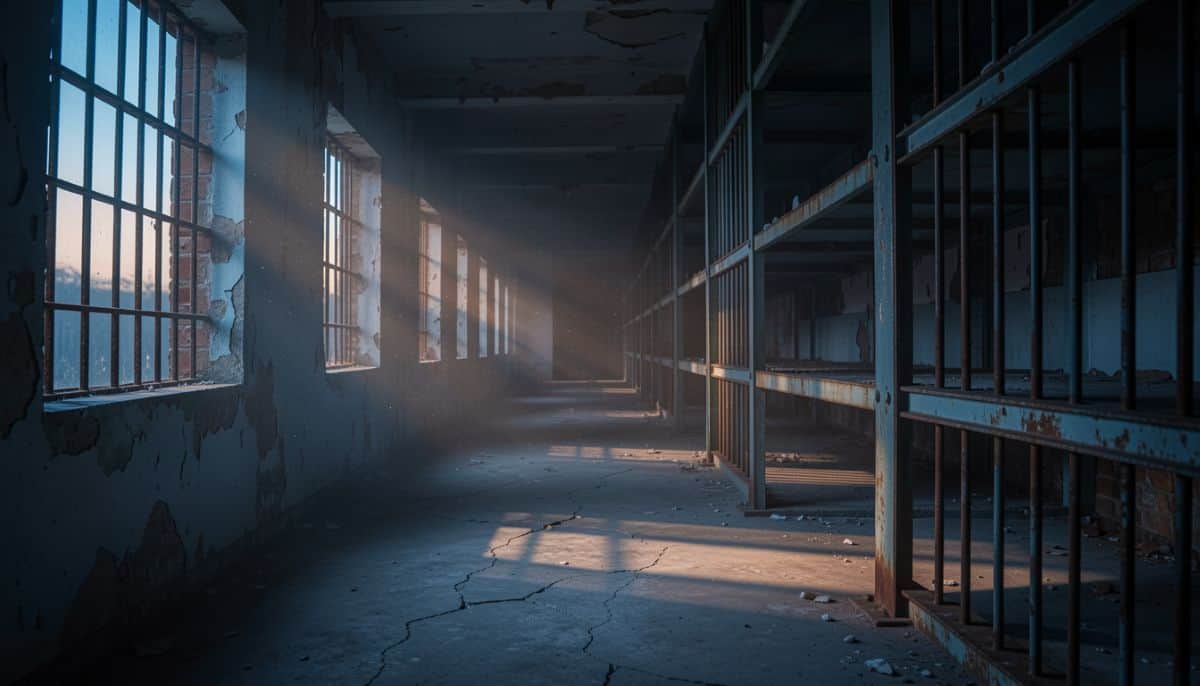
Image generated with Ai
The obsession with the grotesque has undergone a tremendous change over the past 20 years, turning abandoned civic ruins into centres of cultural activity. For the inquisitive traveller in search of a nontraditional journey back in time, abandoned prisons provide an eerily fascinating portal to the past. Exploring these decaying cellblocks taps into a deep psychological curiosity about institutional confinement, societal reform and the paranormal legends left in their wake. These crumbling bastions of justice, bereft of the immediate financial models to keep them afloat, are fated for demolition; paranormal tourism has become an unlikely lifeline for historic preservation.
Standard textbooks often gloss over forgotten histories, and there is a growing desire to connect with them, driving exponential growth in public interest in these sites. Visitors walking past iron gates, down deserted corridors, are not just looking for a quick rush of adrenaline. They are working directly with the physical archives of human suffering, architectural ambition, and social policy. These intimidating landscapes’ future is wholly dependent on public engagement, and tourism is an important economic engine for protecting difficult history.
The enduring allure of former correctional facilities stems from a potent mixture of genuine historical tragedy and atmospheric storytelling. Unlike traditional museums encased in glass, abandoned penitentiaries like Eastern State Penitentiary in Philadelphia or the West Virginia Penitentiary in Moundsville immerse visitors directly into the physical environment where thousands once lived isolated lives. Ghost tours capitalize on this palpable atmosphere, leveraging folklore and reported paranormal encounters to draw crowds who might otherwise overlook standard historical exhibitions.
According to data compiled by historic preservation trusts, sites that integrate evening paranormal programming experience significantly higher visitor retention and ticket sales compared to daytime-only historical tours. This surge in dark tourism generates vital revenue streams that directly fund structural stabilization, roof repairs, and artefact conservation. Ticket sales, specialized night investigations, and seasonal haunted attractions provide the consistent cash flow required to keep historical integrity intact against the ravages of time, weather, and structural decay.
Advertisement
Advertisement
Penal architecture in the United States often reflects changing philosophies of punishment, spanning from the solitary confinement models of the 19th century to the maximum-security complexes of the modern era. When a prison closes its doors, local municipalities frequently inherit multi-acre properties with astronomical maintenance costs. Demolition is often chosen as the default economic option unless adaptive reuse or tourism initiatives prove financially viable.
By packaging these sites into guided historical and paranormal walks, preservationists successfully bridge the gap between entertainment and education. Visitors drawn in by tales of lingering spirits are simultaneously educated on systemic shifts in penal reform, civil rights abuses, and the evolution of American jurisprudence.
Furthermore, architectural preservation at these sites prevents the loss of unique engineering feats. Many historic penitentiaries feature massive radial designs, cast-iron staircases, and self-supporting masonry domes that are no longer practised in modern construction. Tourism revenue ensures that these masterworks of 19th- and early 20th-century design remain standing for future generations of architects, historians, and curious travelers.
One of the biggest challenges facing site operators is balancing the sensationalised ghost lore with the gravity of human suffering that took place within these walls. Ethical heritage tourism means that tour operators should honour the complex stories of former inmates, who often had to endure harsh circumstances, mental illness, or systemic injustices. Rather than commodifying human tragedy into cheap jump scares, the supernatural hook of successful programming provides an entry point for nuanced conversations on criminal justice reform, prisoner rehabilitation and the advancement of human rights standards in America.
Responsible management of theatrical ghost tours can be a gateway drug to deeper historical inquiry. The midnight shadow in a cellblock tier is captivating to visitors and frequently motivates them to become advocates for wider preservation efforts, archival research, and community-based historical societies. In this symbiotic relationship, the ghosts of America’s penal past continue to stand sentinel over the very bricks and mortar that contain their stories, ensuring that the lessons of yesterday are never lost to tomorrow.
Advertisement
Advertisement
Advertisement












Tuesday, September 1, 2026

Tuesday, September 1, 2026

Tuesday, September 1, 2026

Tuesday, September 1, 2026

Tuesday, September 1, 2026

Tuesday, September 1, 2026

Tuesday, September 1, 2026

Tuesday, September 1, 2026



