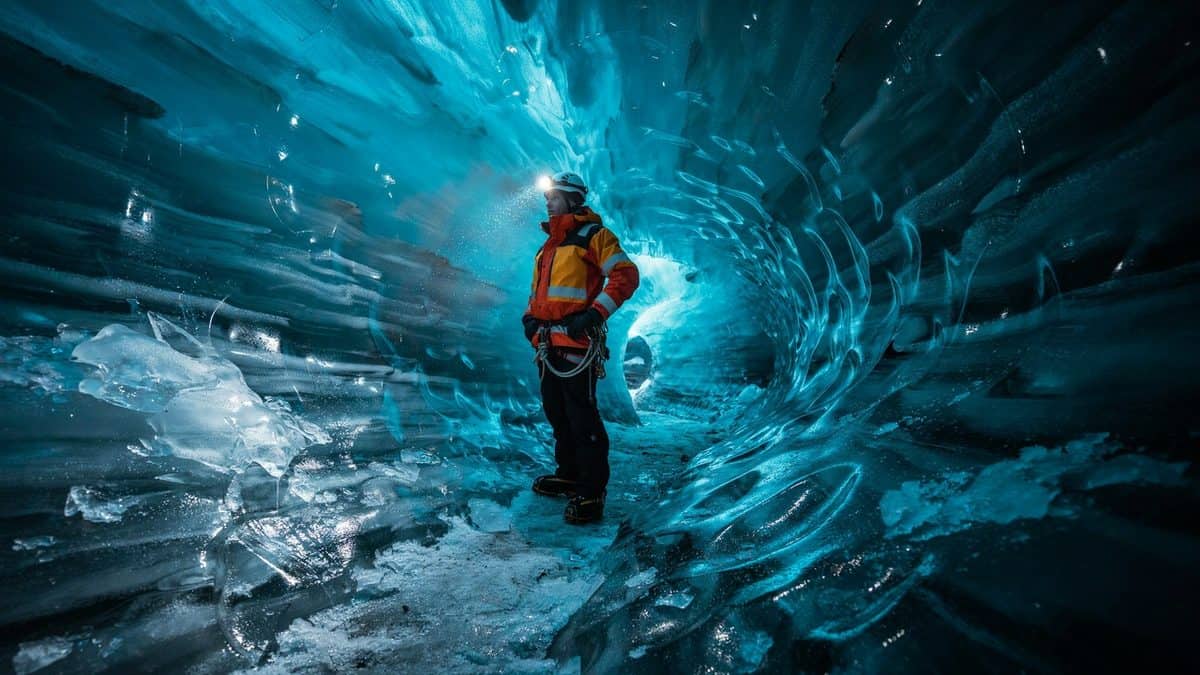
Image generated with Ai
Iceland Features Sub-Glacial Ice Tunnels And Volcanic Lava Tubes Caves Attracts Leading Global Adventure-Geology Boom This new explosion of extreme sport tourism changes the modern world. Bold tourists are rapidly homing in on subterranean tunnels buried deep under polar ice caps.
Exciting sub-glacial ice tunnels and basaltic lava caves have suddenly created a huge boom in international adventure-geology tourism around the globe. Travelers are constantly seeking the ultimate extreme sport adventure, as shifting ground heat keeps altering delicate ice formations.
Advertisement
Sub-glacial and volcanic lava tube cave exploration has rapidly evolved into a premier adventure-geology travel track, captivating thrill-seekers, extreme speleologists, and academic researchers alike with the promise of uncharted subterranean frontiers. This specialized niche blends high-adrenalin exploration with dynamic thermal geology, taking travelers deep beneath active glaciers, ancient basalt fields, and water-sculpted limestone karsts. Navigating these hidden realms requires an exceptional level of physical endurance, specialized safety equipment, and a deep appreciation for the extreme natural forces that have sculpted our planet over millennia. From the fragile, shifting blue ice of Icelandic glaciers to the multi-tiered volcanic chambers of Jeju Island and the luminescence river networks of New Zealand, these subterranean landscapes offer an extraordinary window into the raw, unadulterated history of Earth.
Venturing into man-made and natural ice tunnels carved directly into glaciers offers a striking window into the fragile dynamics of our changing cryosphere. These frozen subterranean landscapes present a constantly shifting matrix of dense blue ice that demands absolute precision and deep respect from every visiting scientist or intrepid traveler. Explorers must navigate treacherous crevasses and melting walls while utilizing specialized crampons and multi-layer thermal gear to withstand the permanent sub-zero temperatures. Furthermore, studying these glacial depths allows glaciologists to monitor annual snow accumulation rates and analyze ancient air trapped for centuries within the crystalline structure. Ultimately, descending beneath a glacier bridges the gap between high-stakes adventure travel and critical climate research that helps humanity understand global warming.
Advertisement
Basaltic lava tube networks form when outer layers of molten rock cool and solidify while scorching lava continues to drain away through long subterranean channels. Navigating these jagged, pitch-black chambers requires robust footwear with thick rubber soles alongside redundant, high-lumen lighting systems to counter total darkness. Historical sites like California’s Lava Beds National Monument also preserve deep cultural layers, offering haunting reminders of past human conflicts set against stark volcanic backdrops. Researchers analyzing these desolate hollows gain crucial insights into planetary geology, drawing fascinating parallels between terrestrial basalt tubes and similar volcanic structures on Mars. Exploring these subterranean vaults therefore transforms a simple physical excursion into an extraordinary lesson regarding the fiery origins of terrestrial landforms.
Jeju Island hosts some of the most pristine and scientifically significant multi-tier lava tunnels found anywhere on Earth, protected proudly under UNESCO heritage guidelines. The mesmerizing Manjanggul tube showcases extraordinary geological artistry through towering multi-story columns, delicate lava stalactites, and ancient flowstone lines frozen in time. Visitors traversing these expansive corridors encounter meticulously maintained boardwalks that safeguard the delicate subterranean ecosystem from accidental human degradation and erosion. Speleologists marvel at how distinct pulses of fluid basalt from ancient volcanic eruptions managed to carve complex, multi-level pathways deep beneath the surface. This remarkable Korean marvel stands as an enduring testament to the raw, creative fury of prehistoric tectonic activity.
“This extraordinary subterranean journey completely redefines what it means to step off the beaten path and explore the raw, untamed power of our planet. Venturing deep beneath shifting glaciers and navigating ancient volcanic channels offers a rare thrill that modern travelers crave. Beyond the sheer adrenaline rush, these fragile underworlds serve as vital natural laboratories for scientists decoding Earth’s complex climate history. It is truly humbling to witness firsthand how fire and ice continually shape these breathtaking hidden landscapes right beneath our feet, making every single expedition an unforgettable adventure.”
— Anup Kumar Keshan, Founder and Editor-in-Chief, Travel And Tour World
Advertisement
Advertisement
New Zealand’s world-renowned Waitomo cave systems are frequently grouped alongside volcanic explorations despite being carved out of ancient Oligocene limestone by relentless water erosion. Adventurers engaging in underground black-water rafting plunge into these water-carved subterranean river networks wearing heavy wetsuits and protective inner tubes. Floating quietly down these hidden waterways introduces travelers to thousands of luminescence glowworms illuminating the damp limestone ceilings like a starry night sky. While distinct from basaltic tubes in terms of chemical composition and genesis, these water-sculpted caverns share identical demands for specialized safety gear and expert local guidance. Embracing this diverse mix of glacial, volcanic, and karstic wonders completes a truly comprehensive masterclass in subterranean adventure geology.Destination Cave Type Primary Features Adventure Activity Langjökull Glacier (Iceland) Glacial Ice Tunnel Dense blue ice, shifting walls, and ancient trapped air Ice-cave trekking and glaciological study Raufarhólshellir (Iceland) Basaltic Lava Tube Jagged pahoehoe floors and spacious subterranean chambers Deep-chamber speleology and lava exploration Lava Beds National Monument (USA) Volcanic Trench & Tube System Over 700 basaltic caves and Modoc War historical sites Self-guided cave crawling and historical touring Manjanggul Cave (South Korea) Multi-Tier Lava Tunnel Multi-story columns, lava stalactites, and flowstone Boardwalk-accessible subterranean hiking Waitomo Caves (New Zealand) Oligocene Limestone Karst Water-sculpted river networks and bioluminescent glowworms Subterranean black-water rafting and tubing
For official safety updates and glaciological data regarding Iceland’s sub-glacial environments, consult the Icelandic Meteorological Office.
Iceland can be called the epicenter of the global adventure-geology boom, offering the most extreme types of sub-glacial ice tunnels and volcanic lava tubes caves that provide unparalleled excitement and challenges. The expert speleologists carefully explore these dangerous underground spaces to find some ancient clues about the globe’s past climate.
These sub-glacial caves are formed by the natural occurrence of the earth’s core heat melting the moving glaciers’ edges during the severe winter conditions. The brave people quickly descend the tunnels covered with thick blue ice plateaus to study the trace of ancient compressed ice.
Advertisement
Advertisement
Advertisement













Friday, September 4, 2026

Friday, September 4, 2026

Friday, September 4, 2026

Friday, September 4, 2026

Thursday, September 3, 2026

Wednesday, September 2, 2026

Friday, September 4, 2026