
Asia Travel Disrupted at Hanoi, Dubai and More Airports with 277 Cancellations and 5,081 Delays

Published
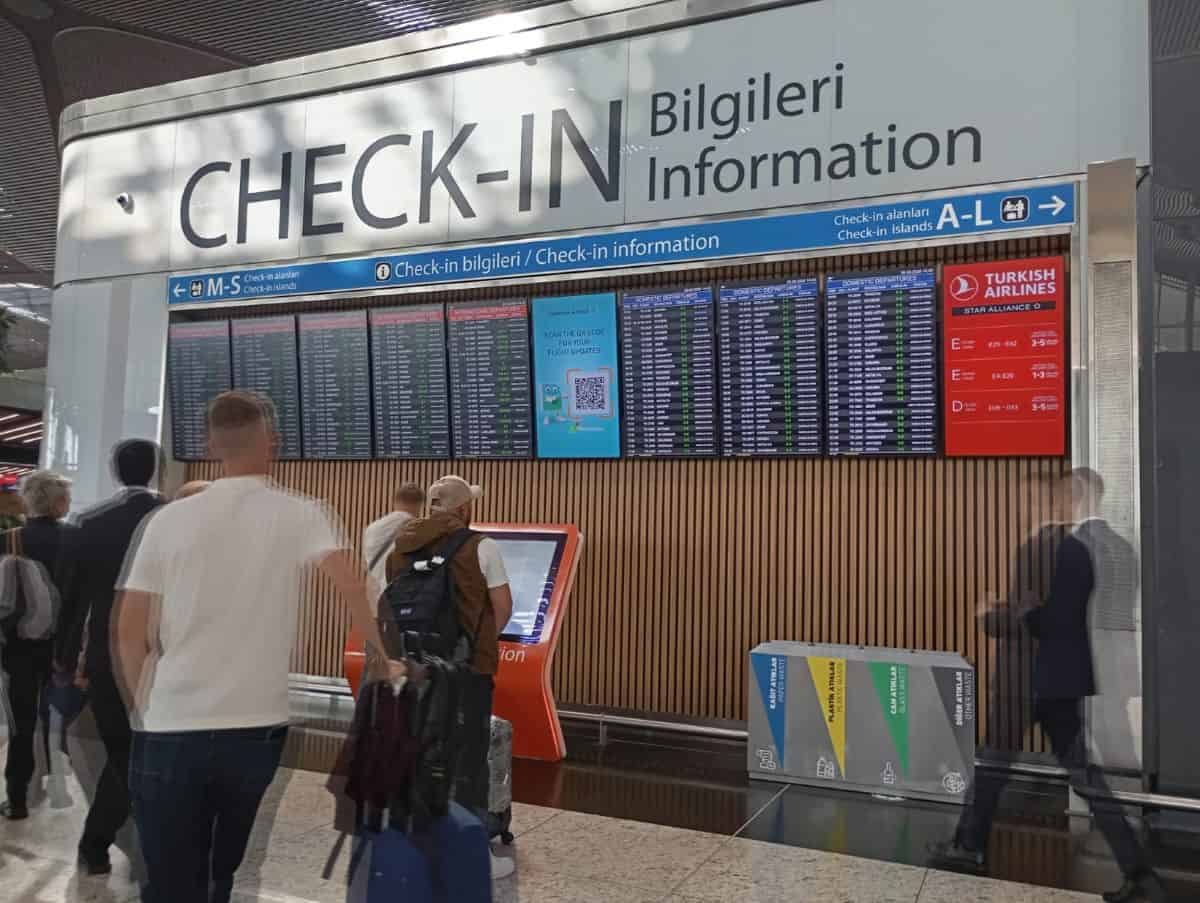
Travel around Asia is hampered by 5,081 flight delays and 277 cancellations at airports in Hanoi, Dubai, and other locations. The massive disruption is disrupting major airline hubs around the region and creating concern for thousands of travelers. The issues are caused by a number of variables. Severe weather, thunderstorms and heavy rainfall are affecting operations in parts of Southeast and South Asia.. In the meantime, Bangkok services are still under pressure due to flood recovery. Some Middle Eastern routes are also being disrupted by airspace limitations and regional security concerns. In addition, excessive passenger traffic, airport congestion and delayed aircraft rotations are causing knock-on consequences across interconnected networks.
How extensive is the disruption across Asian airports?
China accounts for several heavily affected airports in Asia as of today. Shanghai Pudong International Airport reports the largest delay count in the dataset, with 333 delays and eight cancellations. Shanghai Hongqiao records 130 delays and five cancellations.
Beijing is also affected at both major gateways. Beijing Capital International Airport records 108 delays and 17 cancellations, while Beijing Daxing International Airport reports 124 delays and nine cancellations.
Elsewhere in China, Kunming Changshui has 128 delays and six cancellations, Changsha Huanghua has 105 delays and six cancellations, Xi’an Xianyang has 97 delays and five cancellations, Guiyang Longdongbao has 93 delays and four cancellations, Urumqi Diwopu has 81 delays and four cancellations, Chengdu Shuangliu has 76 delays and two cancellations, and Chengdu Tianfu records 112 delays and three cancellations.
Advertisement
Advertisement
Wuhan Tianhe reports 61 delays and six cancellations, Hohhot Baita has 25 delays and five cancellations, while Zunyi records 23 delays and nine cancellations.
Which Southeast Asian airports are facing disruption?
Southeast Asia represents another major concentration of affected flights.
Advertisement
Advertisement
Tan Son Nhat International Airport in Ho Chi Minh City records 269 delays and ten cancellations, while Hanoi’s Noi Bai International Airport has 176 delays and six cancellations.
Indonesia is also prominently represented. Jakarta-Soekarno-Hatta International Airport reports 238 delays and 14 cancellations. Juanda International Airport records 68 delays and six cancellations, Sultan Hasanuddin International has 53 delays and 14 cancellations, while Sam Ratulangi International reports 13 delays and five cancellations.
Advertisement
Advertisement
At Bangkok’s Suvarnabhumi International Airport, the supplied figures show 208 delays and seven cancellations. Bangkok has recently experienced severe flooding that has affected access to the airport and airline operations. Suvarnabhumi itself has remained open, but the wider disruption has created significant operational pressure.
Manila International reports 111 delays and seven cancellations, while Singapore Changi records 168 delays and one cancellation. Hong Kong International has 145 delays and one cancellation.
How are India, the Gulf, Türkiye and other Asian hubs affected?
India’s major gateways also feature prominently. Indira Gandhi International Airport in Delhi records 233 delays and 19 cancellations, while Bengaluru International reports 114 delays and five cancellations. Chatrapati Shivaji International in Mumbai has 107 delays and ten cancellations, while Navi Mumbai International records 23 delays and 11 cancellations.
Across the Gulf, King Khalid International Airport in Riyadh has 250 delays and five cancellations. Dubai International records 184 delays and 24 cancellations, giving Dubai the highest airport cancellation count in the supplied dataset.
Advertisement
Advertisement
King Abdulaziz International records 171 delays and two cancellations, Hamad International has 116 delays and one cancellation, Sharjah International reports 77 delays and one cancellation, King Fahd International has 55 delays and two cancellations, and Abha Regional records 44 delays and three cancellations.
Regional aviation has continued to face schedule adjustments and operational changes amid wider Middle Eastern tensions.
Elsewhere, Istanbul Airport records 190 delays and four cancellations, Antalya has 93 delays and one cancellation, and Ben Gurion International reports 208 delays and 17 cancellations.
In East Asia, Incheon International has 142 delays and two cancellations, while Narita International records 96 delays and six cancellations. Pakistan’s Jinnah International reports 33 delays and four cancellations.
| IATA | Airport | Origin cancelled % (Block 1) | Destination cancelled % (Block 2) |
|---|---|---|---|
| AHB | Abha Regional (Saudi Arabia) | 3% | — |
| BKK | Suvarnabhumi Bangkok (Thailand) | 0% | 0% |
| BLR | Bengaluru Int’l (India) | 0% | 0% |
| BOM | Chatrapati Shivaji Int’l (India) | 1% | 1% |
| CGK | Jakarta-Soekarno-Hatta (Indonesia) | 1% | 0% |
| CSX | Changsha Huanghua (China) | 0% | 0% |
| CTU | Chengdu Shuangliu (China) | 0% | — |
| DEL | Indira Gandhi Int’l (India) | 1% | 1% |
| DXB | Dubai Int’l (UAE) | 2% | 2% |
| HAN | Noi Bai Int’l (Vietnam) | 0% | 0% |
| HET | Hohhot Baita (China) | — | 1% |
| IST | Istanbul Airport (Turkey)* | — | 0% |
| KHI | Jinnah Int’l (Pakistan) | — | 4% |
| KMG | Kunming Changshui (China) | 0% | 0% |
| KWE | Guiyang Longdongbao (China) | 0% | — |
| MDC | Sam Ratulangi Int’l (Indonesia) | — | 10% |
| MNL | Manila Int’l (Philippines) | 1% | 0% |
| NMI | Navi Mumbai International (India) | 7% | 7% |
| NRT | Narita Int’l (Japan) | 0% | 0% |
| PEK | Beijing Capital (China) | 1% | 1% |
| PKX | Beijing Daxing (China) | 0% | 0% |
| PVG | Shanghai Pudong (China) | 0% | 0% |
| RUH | King Khalid Int’l (Saudi Arabia) | — | 0% |
| SHA | Shanghai Hongqiao (China) | 0% | 0% |
| SGN | Tan Son Nhat Int’l (Vietnam) | 0% | 1% |
| SUB | Juanda Int’l (Indonesia) | — | 3% |
| TFU | Chengdu Tianfu (China) | — | 0% |
| TLV | Ben Gurion Int’l (Israel) | 2% | 2% |
| UPG | Sultan Hasanuddin Int’l (Indonesia) | 4% | 2% |
| URC | Urumqi Diwopu (China) | — | 0% |
| WUH | Wuhan Tianhe (China) | 0% | — |
| XIY | Xi’an Xianyang (China) | 0% | 0% |
| ZYI | Zunyi (China) | 31% | 16% |
Which airlines are recording the largest disruption figures across Asia?
Airline-level data reveals a different dimension of the disruption.
China Southern Airlines has the highest number of delays among the listed carriers, recording 410 delayed flights, or 15% of its tracked operations, alongside two cancellations, or 0% when rounded.
Advertisement
Advertisement
China Eastern follows with 394 delays, representing 14%, and 22 cancellations, listed as 0%. IndiGo records 353 delays, or 16%, alongside one cancellation, listed as 0%.
Saudia reports 151 delayed flights, representing 27%, and six cancellations, or 1%. Air China has 145 delays, or 7%, alongside 33 cancellations, or 1%, the largest cancellation count among the airlines supplied.
Vietnam Airlines records 123 delays, representing 28%, alongside ten cancellations, or 2%. Shenzhen Airlines reports 104 delays, or 12%, and three cancellations, listed as 0%.
Qatar Airways records 99 delays, or 16%, and one cancellation, listed as 0%. Spring Airlines has 95 delays, or 14%, and two cancellations, listed as 0%.
Air India records 82 delays, representing 13%, alongside seven cancellations, or 1%. Hainan Airlines has 80 delays, or 9%, and three cancellations, listed as 0%. Shanghai Airlines records 77 delays, or 21%, and four cancellations, or 1%, while Cathay Pacific has 71 delays, or 16%, and one cancellation, listed as 0%.
What does the airport, city, country and airline data over Asia reveal?
The geographical spread is significant. China has disruption across Shanghai, Beijing, Chengdu, Kunming, Changsha, Wuhan, Xi’an and several other cities. Its airline data mirrors that pattern, with China Southern, China Eastern, Air China, Shenzhen Airlines, Spring Airlines, Hainan Airlines, Shanghai Airlines and Tianjin Airlines all appearing in the disruption figures.
Advertisement
Advertisement
India faces disruption across Delhi, Mumbai, Bengaluru and Navi Mumbai, while IndiGo, Air India, SpiceJet and Akasa Air all report affected services.
Vietnam is represented by substantial disruption at both Hanoi and Ho Chi Minh City, while Vietnam Airlines records 123 delays and ten cancellations.
Indonesia has affected airports in Jakarta, Surabaya, Makassar and Manado, with Batik Air and Garuda Indonesia appearing in the airline data.
The Gulf is another important pressure point. Dubai, Riyadh, Jeddah, Doha, Sharjah and Dammam all record delays, while FlyDubai, Saudia and Qatar Airways feature among affected carriers.
Thailand presents a distinctive situation because Bangkok has recently been recovering from severe flooding. Thai Airways has also announced additional cancellations during 1–3 October as it works through operational disruption.
Taken together, the data illustrates how delays at large connecting hubs can matter beyond the cities where they originate. An aircraft arriving late can operate its following sector late, while passengers may also miss onward connections.
Advertisement
Advertisement
What should affected passengers do now?
- Passengers should check their flight directly with the operating airline before leaving for the airport, particularly when travelling through airports showing substantial disruption.
- Travellers should also check connecting flights separately. A first sector may remain operational while a later service has been delayed or cancelled. Those travelling on separate tickets should pay particular attention because a missed connection may not carry the same rebooking protections as a through-ticket itinerary.
- Passengers should keep booking confirmations, boarding passes, airline notifications and receipts for reasonable additional expenses. They should contact their airline promptly if a flight is cancelled rather than immediately purchasing an expensive replacement without checking available rebooking or refund options.
- Travellers heading to Bangkok should allow additional journey time because localised flooding has affected some roads, even though Suvarnabhumi remains operational. Thailand’s tourism authorities have specifically advised visitors to check conditions and allow extra travel time.
Data Verification Notice
The data has been carefully curated by our editorial team using real-time aviation figures recorded on 1 October 2026 at 3:34 pm ET in the United States, corresponding to 2 October 2026 at 2:34 am in Bangkok (GMT+7).
Primary Source: FlightAware, Local Correspondent
Verification Protocol: Our editorial desk independently reviewed and cross-checked all reported statistics. Timestamped records, data logs and relevant feed snapshots have been securely archived internally to maintain historical accuracy, data integrity and editorial transparency.
Important Note: Real-time flight-tracking statistics reflect active aviation, airspace and operational information available at the recorded time. Figures may change as airline and airport operations develop. Therefore, minor differences may occur between these recorded figures and information subsequently displayed by individual airlines, airport terminals or departure gates.
You can read our earlier flight disruption reports across Asia from this link.
Advertisement
Verified by Rana Pratap
