
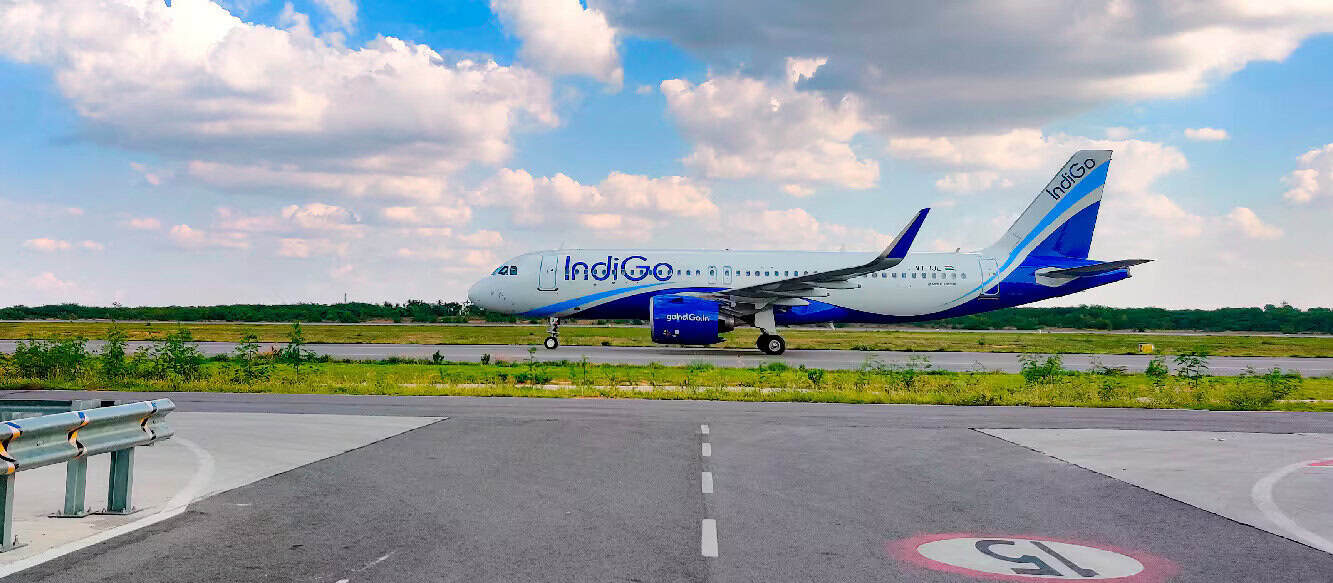
An IndiGo Dubai Mumbai flight emergency landing took place in Gujarat after a flight carrying 194 people was diverted to Rajkot International Airport following a smoke alert from the aircraft’s cargo area. The aircraft landed safely, and all passengers and crew members were reported safe after leaving the plane.
The incident highlights how aviation safety procedures work during unexpected situations. Instead of continuing towards Mumbai, the crew diverted the aircraft to the nearest suitable airport so emergency teams could respond and passengers could disembark safely.
Advertisement
For passengers, emergency diversions can create uncertainty, especially on international flights. However, aviation experts consider precautionary landings a standard safety measure when pilots receive warnings about possible technical issues.
The Dubai–Mumbai route is an important international connection used by tourists, business travellers, families and overseas workers. Any disruption on such a busy route can affect passenger schedules and onward travel plans.
Advertisement
The Rajkot diversion shows why airlines maintain strict emergency response procedures during every stage of international operations.
The IndiGo aircraft operating from Dubai to Mumbai was diverted to Rajkot after smoke was detected in the cargo hold area. Airport authorities said the aircraft landed safely, and all 194 people onboard were able to leave the aircraft without injuries.
The flight was identified as IndiGo flight 6E 1452. Emergency services were placed on standby before the aircraft landed as part of standard aviation safety procedures.
Authorities and technical teams began examining the aircraft to determine the cause of the smoke alert.
Modern aviation systems are designed around early detection and rapid response. Aircraft crews receive extensive training to manage situations involving smoke warnings, technical alerts and other operational concerns.
A diversion does not automatically mean an aircraft has suffered a major failure. In many cases, pilots choose the safest option by landing early for inspection.
These procedures help reduce risks and protect passengers when unexpected situations occur.
Passengers travelling internationally may occasionally experience delays caused by technical checks, weather issues or airport operations. Understanding the process can help travellers manage unexpected changes.
Travellers should rely on official airline updates rather than unverified information shared online during operational incidents.
The Dubai–Mumbai route is one of the busiest international aviation links connecting India and the Gulf region. Thousands of passengers use this route for tourism, business, employment and family travel.
While this incident involved a single flight, it also demonstrates the importance of strong emergency infrastructure at regional airports such as Rajkot, which can support diverted international services when required.
As India’s aviation network continues expanding, secondary airports are becoming increasingly important for operational flexibility.
The flight was diverted to Rajkot after smoke was detected in the aircraft’s cargo area.
No. All 194 people onboard were reported safe after the aircraft landed and passengers exited.
The crew diverted the aircraft to Rajkot as a precaution after receiving the smoke alert and selected it as a suitable alternate airport.
Further travel arrangements depend on aircraft inspections and airline operational decisions.
Diversions are safety measures used by airlines when crews identify possible risks and require additional checks.
The IndiGo Dubai–Mumbai emergency landing at Rajkot ended safely, with all passengers and crew members unharmed. The incident demonstrates the aviation industry’s focus on precautionary action and passenger protection when unexpected warnings occur.
For travellers, the key takeaway is that flight diversions are designed to manage risks quickly and safely, ensuring aircraft are properly checked before continuing operations.
image credit – indigo
Advertisement
Advertisement
Advertisement













Friday, September 4, 2026

Friday, September 4, 2026

Friday, September 4, 2026

Friday, September 4, 2026

Thursday, September 3, 2026

Wednesday, September 2, 2026

Friday, September 4, 2026



