
Indonesia Puts Prambanan at the Heart of a New Tourism-Diplomacy Strategy as India-Backed Restoration Targets Heritage Branding, Indian Visitor Growth, Longer Yogyakarta Stays and Wider Java Tourism

Published
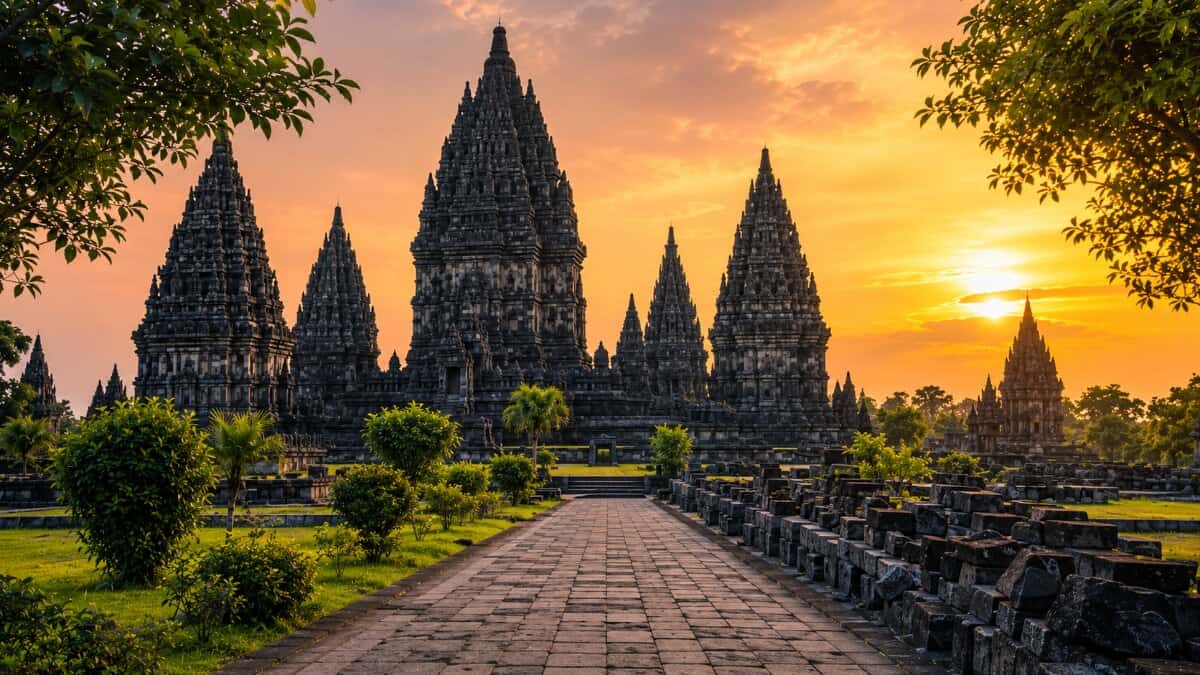
Indonesia has elevated Prambanan from a ceremonial heritage stop into a tourism-diplomacy platform through a new India-supported conservation programme. The initiative covers 224 ancillary temples and combines archaeological research, digital documentation, AI-assisted reconstruction, skills transfer and institutional cooperation. It arrives as Indonesia recorded 298,450 Indian visitors during January–May 2026, while Prambanan attracts about 2.4 million visits annually but fewer than 4,000 Indian visitors. The trade opportunity lies in converting cultural affinity into longer Yogyakarta stays, higher local spending, MICE extensions and stronger visitor dispersal across Java.
Indonesia Converts a State Visit into a Heritage Tourism Strategy
Indian Prime Minister Narendra Modi and Indonesian President Prabowo Subianto formally launched the conservation and restoration programme at the Prambanan Temple Complex on 8 July 2026. India supports the programme through the Archaeological Survey of India, extending regional heritage cooperation into one of Indonesia’s most recognisable cultural assets.
Indonesia’s official tourism framework places Prambanan inside a wider programme of cultural diplomacy, destination branding, international visitor growth and local enterprise development. InJourney Destination Management operates the site within Indonesia’s state-owned aviation and tourism holding structure, connecting conservation with destination promotion and the visitor economy.
The project covers 224 perwara, or ancillary temples. Its technical scope includes archaeological research, digital documentation, AI-based reconstruction, knowledge exchange and capacity building, giving it relevance to sustainable tourism, heritage technology and specialist skills development.
Advertisement
Advertisement
Indian Visitor Data Reveals a Major Conversion Gap
Indian arrivals increased from 606,439 in 2023 to 734,490 in 2025, a rise of about 21.1 per cent. Indonesia then received 298,450 Indian visitors during January–May 2026, up 0.40 per cent year on year.
Prambanan receives about 2.4 million domestic and international visits annually, yet fewer than 4,000 Indian visitors. Compared directionally with Indonesia’s 2025 Indian arrival total, the site reaches roughly 0.5 per cent of that market, although the figures use different visitor bases.
Advertisement
Advertisement
This gap explains the tourism-diplomacy strategy. Indonesia already has a sizeable Indian market. The challenge is to distribute it beyond familiar gateways and convert shared cultural recognition into bookable Java itineraries.
| Official indicator | Latest verified figure | B2B implication |
|---|---|---|
| Indian arrivals, 2023 | 606,439 | Established source market with scope for regional expansion. |
| Indian arrivals, 2025 | 734,490 | About 21.1 per cent growth from 2023. |
| Indian arrivals, January–May 2026 | 298,450 | Positive but slower growth requires stronger conversion. |
| Average Indian visitor expenditure, 2025 | US$1,104 | Multi-night circuits can generate substantial local revenue. |
| Annual Prambanan visits | About 2.4 million | The attraction already has scale and visitor infrastructure. |
| Annual Indian visitors to Prambanan | Fewer than 4,000 | Cultural affinity has not yet translated into broad visitation. |
| Conservation scope | 224 ancillary temples | The programme creates long-term interpretation potential. |
| Indonesia international arrivals, May 2026 | 1.38 million | National inbound demand rose 5.83 per cent year on year. |
Prambanan Can Disperse Tourism Demand Beyond Bali
Bali recorded 6,948,754 direct foreign arrivals in 2025, up 9.72 per cent, while international flight departures reached 39,115. The figures demonstrate Bali’s gateway power and the need for stronger secondary-destination distribution if Indonesia wants tourism value to reach a broader geography.
Advertisement
Advertisement
Prambanan can anchor packages combining Yogyakarta’s urban heritage, cultural performances, creative industries, food and wider Central Java circuits. A two- or three-night module can spread spending across hotels, licensed guides, transport providers, restaurants, performance venues, craft businesses and community experiences.
The destination can also support premium small groups, educational travel, spiritually themed cultural journeys and post-conference extensions. This approach moves the commercial focus away from a short monument visit and towards a complete regional visitor economy.
Yogyakarta Stands to Gain More Hotel Nights
Yogyakarta’s economy grew 5.84 per cent year on year during the first quarter of 2026. Accommodation and food services were the fastest-growing production segment, expanding by 11.59 per cent. Full-year provincial economic growth reached 5.49 per cent in 2025, compared with 5.03 per cent in 2024.
In March 2026, Yogyakarta International Airport processed 6,530 international visitor arrivals. The province recorded 3,763,897 domestic trips, while star-rated hotels posted an occupancy rate of 38.71 per cent and an average stay of 1.48 nights.
Advertisement
Advertisement
The 1.48-night average is the clearest commercial signal for travel businesses. Prambanan can help extend stays when it is combined with additional cultural, culinary and educational experiences rather than sold as a single excursion.
Longer itineraries can improve room-night production and visitor spending without depending solely on higher arrival volumes. They can also spread economic value among smaller suppliers that do not benefit fully from short, tightly scheduled sightseeing programmes.
Heritage Technology Reinforces Sustainable Tourism Credentials
Prambanan entered the UNESCO World Heritage List in 1991. The protected property includes the Prambanan, Sewu, Bubrah and Lumbung temple compounds and contains more than 500 stone temples. The central Prambanan compound contains about 240 temples.
The complex developed across the ninth and tenth centuries and faces risks from earthquakes, volcanic activity and environmental pressure. Conservation began during the early twentieth century, while the 2006 Yogyakarta earthquake created further structural and preservation requirements.
Digital documentation and AI-supported reconstruction can strengthen condition records, technical accuracy and knowledge continuity. These tools may also improve future interpretation and education, although commercial deployment must remain secondary to authenticity, structural safety and UNESCO conservation principles.
India contributes relevant regional experience. The Archaeological Survey of India has undertaken heritage work at Angkor Wat, Ta Prohm, Wat Phou and the My Son monuments. Earlier India–Indonesia cooperation also included documentation work at Borobudur.
Advertisement
Advertisement
MICE and Educational Travel Can Create Higher-Value Demand
The bilateral tourism cooperation framework covers research, education, training, destination promotion, MICE development, tourism investment and private-sector collaboration. Prambanan gives these policy areas a prominent destination platform.
Corporate groups, industry associations and incentive programmes can use Yogyakarta as a base for controlled heritage visits, specialist interpretation, cultural programming and local creative-economy participation.
The site can also support educational programmes linked to archaeology, architecture, conservation science, digital heritage, religion, history and cultural management. Universities, professional bodies and specialist operators could develop study tours, academic exchanges and technical workshops around these subjects.
Such programmes can generate higher-value demand, support travel outside peak leisure periods and encourage deeper engagement than conventional sightseeing packages.
Visa Access, Digital Payments and Connectivity Will Decide Results
Indian passport holders remain eligible for Indonesia’s Visa on Arrival. The B1 visitor visa permits a 30-day stay and one extension for a maximum stay of 60 days. It costs IDR 500,000 and requires at least six months of passport validity together with a return or onward ticket. The electronic option supports digital payment and online extension.
Travellers must also complete Indonesia’s official digital arrival process within the required pre-arrival period. Travel sellers should verify the current procedure before departure because entry-system changes can affect airport handling, documentation and customer communication.
Advertisement
Advertisement
The bilateral agenda includes further discussions on easier travel and visa facilitation. It also records progress towards linking Indian and Indonesian QR payment systems for tourism, small businesses and other cross-border uses. Neither development should be marketed as fully operational until the responsible authorities announce implementation.
Trade Analysis: The Real Prize Is Itinerary Redistribution
The central commercial opportunity is not an immediate surge in total Indian arrivals. It is a change in where visitors travel, how long they remain and how much tourism value reaches businesses in Yogyakarta and Central Java.
Applying Indonesia’s official 2025 Indian arrival figure to the average Indian visitor expenditure of US$1,104 produces an indicative gross market scale of approximately US$811 million. This is an analytical estimate based on two official datasets rather than an officially published aggregate. Even a small shift towards multi-night Yogyakarta programmes could create meaningful hotel, ground-transport and experience demand.
The low Indian visitor share at Prambanan demonstrates that cultural familiarity does not automatically create bookings. Distribution, itinerary design, price clarity, trade education, transport packaging and multilingual interpretation will determine whether heritage diplomacy becomes measurable tourism revenue.
Prambanan also gives Indonesia a differentiated proposition. Bali leads through mature leisure appeal. Yogyakarta can target travellers seeking civilisational links, education, spirituality, architecture and cultural depth.
This positioning broadens Indonesia’s tourism portfolio without attempting to copy Bali’s established resort and island product.
Advertisement
Advertisement
Critical Actions for Travel Agents and Tour Operators
- Build two- or three-night Yogyakarta modules instead of selling only a short Prambanan temple stop.
- Treat the 224-temple programme as phased conservation work and avoid suggesting immediate access to every structure.
- Confirm opening arrangements, conservation zones, cultural events and local transport conditions before fixing group schedules.
- Provide accurate Visa on Arrival, passport-validity, onward-ticket and digital-arrival guidance.
- Avoid marketing future visa changes or India–Indonesia QR interoperability as already operational.
- Prepare contingencies for earthquakes, volcanic activity, severe weather, temporary heritage closures and visitor-capacity controls.
- Use licensed local guides and culturally accurate interpretation to protect product credibility.
- For MICE groups, favour controlled, low-impact heritage extensions with local supplier participation.
Prambanan Could Become an Asian Heritage-Tourism Model
The initiative’s success will be measured not only by the number of restored structures. More meaningful indicators will include Indian visitation at Prambanan, additional Yogyakarta room nights, local visitor spending, off-peak demand, wider Java distribution and sustained conservation quality.
Indonesia has placed a globally recognised heritage site at the intersection of diplomacy, destination branding, technology, education and local economic development. India contributes conservation expertise and access to a valuable Asian source market.
Long-term results will depend on disciplined execution. Heritage protection must remain the first condition. Travel distribution must convert the cultural narrative into saleable itineraries. Entry and payment systems must become easier in practice. Local communities must retain visible economic value.
With these elements aligned, Prambanan can evolve from a symbolic bilateral setting into a durable tourism bridge and a replicable heritage-led destination model for Asia.
Advertisement
