
Europe Rail Revolution Takes Off as New Timetable Strategy Promises Dramatically Shorter Travel Times

Published
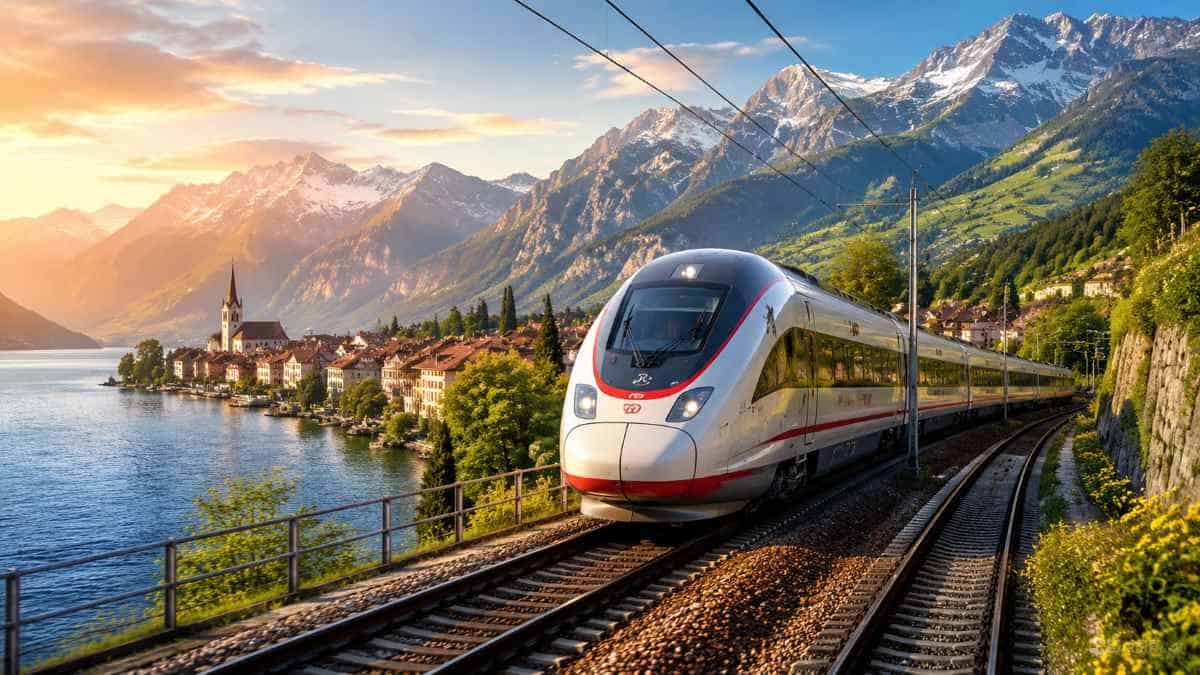
Image generated with Ai
New research shows travellers on Europe’s rail network will benefit from faster travel times, an average of 25% faster, thanks to improved timetables. Researchers reviewed timetables along over 31,000 rail lines. The improved flow between trains facilitates faster connections with less waiting times. Another benefit to improved rail timetables is better European rail travel with a lesser reliance on newer, more expensive infrastructure. There are positive benefits to travelers, Europe, and travel operators. Quick, reliable rail travel will soon be a better way to travel long distances on the continent compared to flying or driving.
Smarter Timetables Could Transform Europe’s Rail Travel Experience
Europe’s railway future may not depend only on faster trains or new high-speed lines. Research has revealed that improved timetable planning could unlock major travel-time savings by reducing unnecessary waiting periods between connecting services. The study examined how passengers move through Europe’s extensive railway network and identified timetable coordination as one of the biggest factors affecting overall journey duration. While modern trains can operate at high speeds, passengers often lose valuable time when connections between regional, national and international services are poorly aligned.
For travellers, this means a journey between two European cities can become longer because of missed connections rather than slow trains. A passenger arriving just minutes after a connecting service departs may face a long waiting period, increasing the total travel time. The research shows that improving these connections could deliver faster journeys across Europe while making existing railway infrastructure more efficient.
European Rail Efficiency Faces a Major Timetable Challenge
The research introduced the concept of travel-time efficiency, comparing current journey durations with a scenario where train connections operate in a highly coordinated way. The findings indicate that European rail travel currently operates at around 75% efficiency, meaning approximately one-quarter of possible travel time improvements could come from better scheduling.
Advertisement
Advertisement
This does not necessarily require immediate construction of new tracks or major engineering projects. Instead, railway operators could achieve significant improvements by aligning departure and arrival times, improving transfer opportunities and creating more integrated networks between countries. For international tourists, this could mean easier multi-country trips, fewer long waiting periods and more reliable travel planning. A traveller moving between major European destinations often depends on several railway operators. Better coordination between these networks could make cross-border journeys smoother and encourage more visitors to explore multiple destinations by train.
Advertisement
Advertisement
Switzerland Model Shows Power of Integrated Railway Planning
Switzerland has become one of Europe’s leading examples of efficient railway coordination. Its rail system focuses heavily on integrated timetables, allowing passengers to transfer between services with minimal waiting time. Rather than depending only on extremely high-speed trains, Switzerland has developed a system where train schedules are designed around connections between major hubs.
This approach allows passengers to move efficiently between cities and regions, demonstrating how timetable planning can improve the overall travel experience. Other European countries have also explored similar integrated timetable models to improve connectivity. Germany’s railway planning initiatives have included efforts to create more coordinated services across the national network. For tourism, these systems create stronger links between major attractions, regional destinations and smaller communities that rely on rail access.
Rail Connectivity Could Boost European Tourism Growth
Improved train schedules could have a direct impact on European tourism by making rail journeys more attractive for international visitors. Many travellers choose destinations based not only on attractions but also on accessibility. Faster and more predictable rail connections could encourage visitors to combine multiple cities and countries during a single holiday.
Potential benefits include:
- Easier city-to-city travel
- More convenient connections between airports and tourism hubs
- Increased demand for regional destinations
- Stronger support for sustainable travel options
- Better access to cultural and natural attractions away from major cities
The development could particularly benefit destinations that are connected through regional rail networks but currently face challenges caused by long transfer times. As Europe continues to promote lower-carbon transport options, efficient rail systems are becoming increasingly important for tourism growth.
Advertisement
Advertisement
Faster Journeys Without Waiting Only for New Infrastructure
European railway improvements have traditionally focused on major infrastructure investments, including high-speed lines, tunnels and upgraded tracks. These projects remain important, but researchers suggest that timetable improvements can provide significant benefits alongside physical development. New railway infrastructure often requires years of planning, construction and investment. Timetable optimisation, however, can deliver improvements by making existing networks operate more effectively.
The research indicates that combining infrastructure upgrades with better scheduling could significantly reduce long-distance travel times across Europe in the coming decades. For the travel industry, this creates new opportunities for rail-based tourism products, including multi-destination holidays, rail passes and sustainable travel packages.
Cross-Border Cooperation Becomes Key to Rail Travel Future
One of the biggest challenges for European rail travel is coordination between different countries and railway operators. Europe’s rail network crosses many national borders, with each country often operating its own railway systems, schedules and operational rules. Improving international cooperation will be essential to creating a more connected travel experience. Better alignment between neighbouring countries could reduce transfer delays and create smoother routes linking major tourism markets.
For example, improved connections between Central Europe, Southern Europe and Northern Europe could allow travellers to reach more destinations with fewer interruptions. A stronger cross-border rail network could also help Europe compete with short-haul air travel by offering convenient alternatives for passengers seeking efficient and environmentally responsible transport.
Sustainable Travel Gains Momentum Through Better Rail Networks
The push for more efficient rail travel comes as Europe continues to expand sustainable transport options. Rail already produces fewer emissions compared with many forms of transport, making it an important part of Europe’s climate and mobility strategy.
Advertisement
Advertisement
By reducing unnecessary waiting times and improving connections, railways can become even more attractive to travellers who want faster and greener journeys. For tourism businesses, improved rail accessibility could support the growth of sustainable travel experiences, encouraging visitors to explore destinations without depending heavily on private vehicles or short-distance flights.
Europe Moves Towards a More Connected Railway Future
The travel sector in Europe is about to experience a major shift. The new trends in travel may mean that faster journeys don’t necessarily require faster trains. Optimized train routes and collaboration among rail networks has the potential for the improvement of most rail networks in Europe.
One of the trends most likely to impact the travel industry in the coming years is the transition to the high frequency of scheduled stops. As travelers resume vacationing abroad after the economy restarts, the demand for ease and overall sustainability of travel in Europe will grow. Europe’s rail network has a unique opportunity to become a sustainable transportation network by meeting the demand for timely travel between various destinations.
Advertisement
