
Italy and Other Countries Back Egypt as New Red Sea Tourist Centres Expand Coastal Tourism

Published
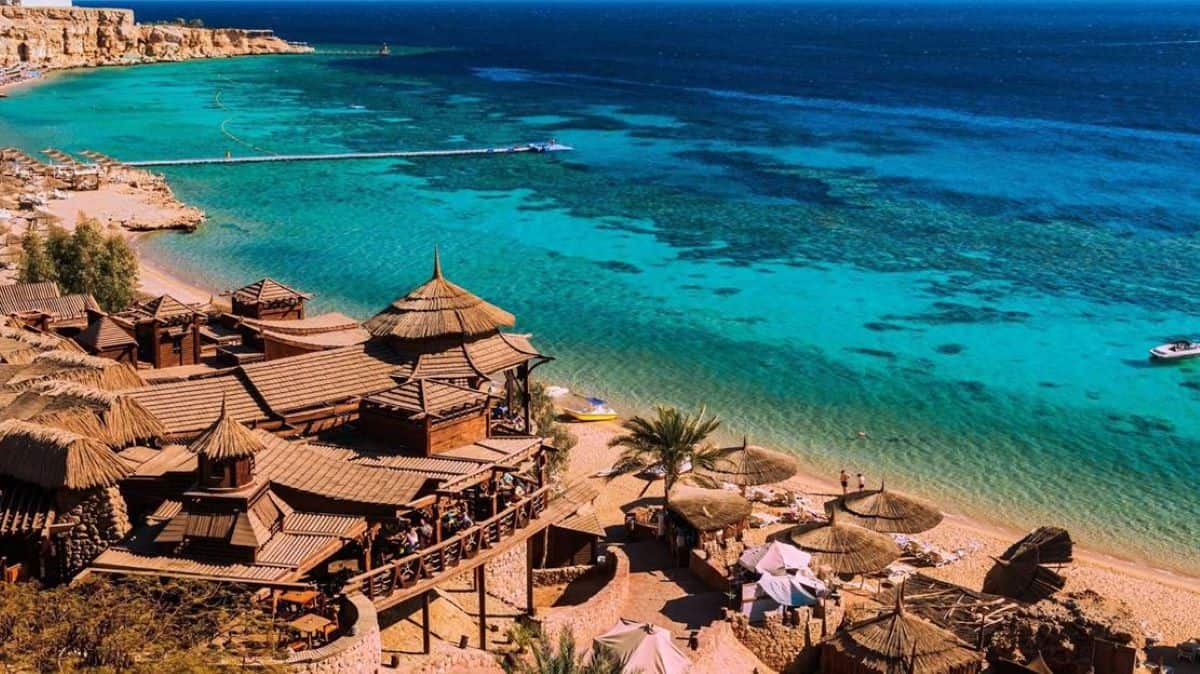
Italy and Other Countries Back Egypt as New Red Sea Tourist Centres Expand Coastal Tourism, reflecting rising international interest in Egypt’s coastal travel economy and broader tourism development strategy. The new Red Sea tourist sites will help improve Egypt’s tourism infrastructure and provide more ways for visitors to engage with beach, wellness, and nature-based tourism. Italy and other key European source markets also create tourism demand for Egypt by showing a strong interest for leisure travel. The new tourist sites will help other destinations develop beyond the resorts. From a global standpoint, if Egypt develops the Red Sea more, it will help travelers have more options for traveling, help more travel-related things happen, and help make the countries in that region more competitive with each other for travel.
Egypt Red Sea Tourism Expansion Takes Shape Around 14 Specialised Coastal Centres
Egypt’s Red Sea tourism expansion is moving towards a planned network of 14 specialised tourist centres organised within three main coastal clusters. The government’s September 2026 planning framework starts from Al Galala as a gateway and links land use to tourism function. Prime coastal areas are intended for hotels and tourism projects, while inland plots are designated for second homes, hotel-managed units, staff accommodation and supporting services. Each centre is expected to reflect its own natural assets, location and competitive strengths. The model supports beach tourism, ecotourism and wellness tourism while widening the investment base along the Red Sea coast.
- Egypt plans 14 specialised tourism centres across the Red Sea development corridor.
- The centres will sit within three principal tourism clusters.
- Coastal plots will prioritise hotels and tourism accommodation.
- Inland development can support managed units, second homes and workforce housing.
- Beach tourism, ecotourism and wellness tourism form central parts of the product mix.
| Egypt Red Sea development factor | Current official position |
|---|---|
| Planned tourism centres | 14 |
| Main coastal clusters | 3 |
| Development gateway | Al Galala |
| Priority coastal use | Hotels and tourism projects |
| Inland uses | Second homes, managed units, staff housing, services |
| Tourism products | Beach, ecological and wellness tourism |
The structure is important because Egypt is not planning 14 identical resorts. Each tourism centre is intended to operate around its location, resources and competitive advantages. This gives the wider Egypt Red Sea tourism expansion a destination-development model rather than a simple hotel-building programme.
Egypt Tourism Growth in 2026 Builds a Stronger Case for New Red Sea Capacity
Egypt enters this Red Sea expansion with strong visitor demand. Official government data show that 6.1 million international tourists visited Egypt in the first four months of 2026, up 7% from 5.7 million in the same period of 2025. The government also reported that tourist arrivals increased 20.5% in 2025. A separate official economic review showed tourism revenues reaching about US$14.4 billion during July 2025 to March 2026, 14.9% above the comparable period. These figures clearly give the planned Red Sea tourist centres a strong demand context as Egypt works towards its national objective of receiving 30 million tourists annually.
Advertisement
Advertisement
- Egypt received 6.1 million tourists in January-April 2026.
- Arrivals grew 7% year on year during those four months.
- Egypt’s 2025 tourist arrivals increased 20.5% from 2024.
- Tourism receipts reached about US$14.4 billion in July 2025-March 2026.
- Egypt continues to pursue an annual target of 30 million tourists.
| Tourism indicator | Latest verified figure |
|---|---|
| Jan-Apr 2026 international tourists | 6.1 million |
| Jan-Apr 2025 comparison | 5.7 million |
| Jan-Apr 2026 growth | 7% |
| 2025 arrival growth | 20.5% |
| Tourism revenue, Jul 2025-Mar 2026 | About US$14.4 billion |
| Revenue growth | 14.9% |
| National annual tourism goal | 30 million tourists |
The combination of rising arrivals, stronger tourism receipts and a much larger long-term visitor ambition makes accommodation growth increasingly relevant. The Red Sea plan therefore sits directly beside Egypt’s broader requirement to create more capacity and more tourism products.
Egypt Hotel Expansion and Tourism Investment Support the 14-Centre Red Sea Plan
Hotel capacity is central to Egypt’s Red Sea tourism expansion because the government has linked coastal allocations directly to accommodation growth. The latest official year-end baseline placed Egypt’s hotel inventory at about 235,000 rooms, with several thousand additional rooms scheduled to lift capacity towards 240,000. In July 2026, the government again identified expanding hotel capacity and opening new investment areas along the Red Sea and in North Sinai as tourism priorities. The 14-centre framework therefore combines destination planning with accommodation supply, land management and private investment. It also creates space for serviced units, second homes, workforce housing and supporting infrastructure.
Advertisement
Advertisement
- The latest government baseline put Egyptian hotel supply at about 235,000 rooms.
- A further 4,500 to 5,000 rooms had been expected to take supply towards 240,000.
- The government is actively identifying new Red Sea tourism investment areas.
- Coastal frontage is being prioritised for hotel capacity.
- Supporting residential and service uses are being shifted further inland.
| Capacity and investment measure | Official context |
|---|---|
| Government-published hotel-room baseline | About 235,000 |
| Additional rooms identified in latest baseline | 4,500-5,000 |
| Potential capacity after additions | Nearly 240,000 |
| Red Sea priority | Expand tourism investment and hotel supply |
| Coastal land focus | Hotel development |
| Hinterland focus | Managed accommodation and support infrastructure |
The Red Sea strategy can therefore help address more than room numbers. Different forms of accommodation can serve package holidaymakers, independent tourists, longer-stay visitors and higher-spending travellers without using the most valuable coastal frontage for every supporting function.
Italy Tourism to Egypt Rises 15% as Red Sea Holidays Gain Stronger Demand
Italy is one of the growth markets supporting Egypt’s tourism demand in 2026. Egypt’s Ministry of Tourism and Antiquities recorded a 15% increase in Italian tourist arrivals from the beginning of 2026 through the first week of June compared with the same period in 2025. The ministry identifies the Red Sea, Luxor and Aswan among destinations attracting Italian visitors today. It also reports growing interest in independent travel from Italy. This matters for the Red Sea plan because Italian demand is not limited to heritage tourism. Italian travellers already use coastal products that match Egypt’s proposed beach and resort expansion.
- Italian arrivals increased 15% in early 2026.
- The comparison covers the beginning of 2026 through the first week of June.
- The Red Sea is officially identified as a key Italian visitor destination.
- Luxor and Aswan remain important alongside coastal tourism.
- Independent travel from the Italian market is also increasing.
| Italy-Egypt tourism indicator | 2026 position |
|---|---|
| Italian arrival growth | 15% |
| Measurement period | Start of 2026-first week of June |
| Main coastal destination | Red Sea |
| Other leading destinations | Luxor and Aswan |
| Traveller pattern | Rising independent travel |
| Wider contribution | Demand for leisure, culture and coastal tourism |
Italy therefore contributes to Egypt’s tourism economy through a useful combination of Red Sea holidays and cultural itineraries. That makes the market particularly relevant to a strategy built around diversified tourism centres rather than resorts offering only one travel experience.
The planned centres may also benefit from the Egyptian government’s wider strategy of connecting different visitor products. A traveller can combine Red Sea leisure with historic destinations, creating opportunities for longer and more varied itineraries.
Russia Leads Egypt Tourism Source Markets as Red Sea Leisure Demand Stays Critical
Russia is Egypt’s largest tourism source market in the latest official 2026 government breakdown. During July 2025 to March 2026, European markets accounted for 69.2% of Egypt’s international tourist arrivals, with Russia ranking first and Germany second. Egypt has intensified digital promotion in Russia during 2026. An eight-month campaign on Yandex generated more than 26.4 million advertising impressions, using search, display, video and other digital formats to stimulate travel demand. Russia’s leading position is especially relevant to the Red Sea strategy because the planned centres expand the type of beach, resort and leisure capacity that serves large European holiday markets.
- Russia is currently Egypt’s largest inbound tourism source market.
- European markets generated 69.2% of arrivals in the latest government breakdown.
- Egypt launched an eight-month Yandex campaign targeting Russia.
- The campaign surpassed 26.4 million advertising impressions.
- Russian demand gives Red Sea leisure capacity strategic importance.
| Russia-Egypt tourism factor | Verified position |
|---|---|
| Russia’s market ranking | No. 1 |
| European share of Egypt arrivals | 69.2% |
| Source-market reporting period | Jul 2025-Mar 2026 |
| Russian digital campaign duration | 8 months |
| Yandex campaign impressions | More than 26.4 million |
| Products relevant to expansion | Beach, resort and leisure tourism |
Egypt is also working through tour-operator distribution. The Ministry of Tourism and Antiquities reported in August 2026 that Coral Travel generates more than one million tourists annually across its combined source markets, including Russia, Germany, Poland, Eastern Europe, the Baltic states and Switzerland. The figure is an aggregate and should not be attributed to Russia alone.
Advertisement
Advertisement
This distribution structure shows how large source markets can feed resort capacity through both promotional campaigns and organised travel channels.
Germany Holds Second Place as Egypt Red Sea Tourism Expansion Targets European Demand
Germany remains one of the most important European markets for Egypt and ranks second among the country’s leading inbound tourism source markets in 2026. Egypt’s official ITB Berlin 2026 material confirms Germany’s position, while government reporting shows German arrivals grew 11.4% in 2025. Egypt used ITB Berlin 2026 to strengthen destination visibility, trade links and demand from Germany. Germany’s role supports the Red Sea expansion because Egypt is planning additional coastal accommodation and specialised tourism products while a major European source market continues to supply significant visitor volumes. This creates a direct link between established demand and planned tourism capacity.
- Germany ranks second among Egypt’s largest inbound source markets.
- German tourist arrivals increased 11.4% in 2025.
- Egypt maintained its German-market focus through ITB Berlin 2026.
- Germany forms part of the wider European market supplying 69.2% of arrivals.
- Additional Red Sea rooms could support continued European leisure demand.
| Germany-Egypt tourism measure | Verified figure/status |
|---|---|
| Germany’s source-market ranking | No. 2 |
| German arrival growth in 2025 | 11.4% |
| Major 2026 tourism platform | ITB Berlin |
| ITB Berlin 2026 dates | 3-5 March 2026 |
| Wider European share | 69.2% |
| Relevance to Red Sea | Major established leisure source market |
Germany’s importance lies in the size and continuity of its Egyptian tourism demand. Unlike an emerging market that first needs awareness building, Germany already sits near the top of Egypt’s inbound rankings.
That matters for hotel planning. Large coastal accommodation projects require recurring international demand, and Germany forms part of the European base already supporting Egyptian tourism at scale.
Italy, Russia and Germany Put Europe at the Centre of Egypt’s Tourism Growth Strategy
Europe has a decisive role in the commercial background to the Red Sea plan. The government’s latest source-market data show European countries accounting for 69.2% of international tourist arrivals during July 2025-March 2026. Russia occupied first place among individual markets and Germany second, while Italy recorded 15% growth during the opening months of 2026. These three markets therefore contribute in different ways. Russia supplies leading overall volume, Germany provides another large established European base, and Italy is delivering measurable current growth. Together, they support the type of international beach, resort, cultural and multi-destination demand that Egypt’s tourism expansion is designed to accommodate.
- Europe generates 69.2% of Egypt’s international tourism arrivals.
- Russia ranks first among source markets.
- Germany ranks second.
- Italy grew 15% during the measured early-2026 period.
- All three markets have relevance to Egypt’s coastal tourism economy.
| Country | 2026 tourism relevance to Egypt | Main contribution |
|---|---|---|
| Russia | No. 1 source market | Large inbound visitor base |
| Germany | No. 2 source market | Established European leisure demand |
| Italy | 15% early-2026 growth | Growing Red Sea and multi-destination demand |
| Europe overall | 69.2% of arrivals | Dominant regional source market |
This European concentration also explains why Red Sea tourism investment has international significance. New hotel capacity needs reliable access to major overseas markets. Russia, Germany and Italy already provide verified demand rather than hypothetical future demand.
Advertisement
Advertisement
For Egypt, the opportunity is to use the new centres to diversify what those visitors can book, while retaining the established appeal of Red Sea beach tourism.
North Sinai Development Extends Egypt’s Tourism Expansion Beyond the Red Sea
The Red Sea plan sits within a government strategy to open new tourism investment areas beyond established resorts. In July 2026, the Prime Minister’s tourism review instructed the Tourism Development Authority to identify opportunities along the Red Sea coast and in North Sinai. By September, the government’s planning vision included a northeastern Sinai development track covering West Arish, Arish and the Zaranik area near Lake Bardawil. West Arish is planned across about 9,000 feddans. The approach links tourism with environmental, agricultural and logistical assets, showing Egypt is pairing coastal resort expansion with regional development rather than relying on existing destinations.
- North Sinai forms a separate but connected tourism-development track.
- West Arish is one of the principal proposed development areas.
- The West Arish tourism centre covers roughly 9,000 feddans.
- Arish and Zaranik near Lake Bardawil are also included.
- Planning combines tourism with environmental, agricultural and logistics potential.
| North Sinai development element | Planned role |
|---|---|
| West Arish | Major tourism development centre |
| Approximate area | 9,000 feddans |
| Arish | Urban and tourism development node |
| Zaranik | Environmental and nature-based tourism potential |
| Lake Bardawil | Natural and ecological asset |
| Wider objective | Tourism plus regional economic development |
This second corridor is relevant because Egypt’s tourism growth strategy is becoming geographically broader. The country is seeking to create additional tourism areas rather than concentrating all future visitor growth in established centres such as Hurghada, Sharm El-Sheikh or the Nile Valley.
Travel and Tourism Impact: 14 Red Sea Tourist Centres Could Expand Choice for International Visitors
For travellers, Egypt’s 14 Red Sea tourist centres could broaden the range of places, accommodation types and experiences available along the coast. The development framework combines hotels with beach tourism, ecotourism, wellness products and supporting services, while reserving inland areas for accommodation and staff needs. The timing is significant because Europe supplies 69.2% of Egypt’s inbound tourists, Russia and Germany rank first and second, and Italian arrivals rose 15% in early 2026. If delivered as planned, greater room supply and more specialised coastal centres would help Egypt distribute demand across a wider tourism geography while supporting its 30-million-tourist annual objective.
- Travellers could gain access to more Red Sea resort destinations.
- Additional hotel capacity can widen accommodation choice during high-demand periods.
- Specialised centres can create clearer beach, ecotourism and wellness products.
- New destinations can spread international visitors beyond established resorts.
- Russia, Germany and Italy provide existing European demand for expanded capacity.
| Tourism impact area | Potential traveller effect |
|---|---|
| Hotel expansion | More accommodation choice |
| 14 specialised centres | Wider selection of Red Sea destinations |
| Beach tourism | Expanded coastal holiday product |
| Ecotourism | More nature-focused experiences |
| Wellness tourism | Broader high-value leisure options |
| European source markets | Strong international demand base |
| 30-million annual target | Need for greater national tourism capacity |
The strongest tourism implication is therefore not simply that Egypt plans to build more hotels. The Egypt Red Sea tourism expansion is structured around creating specialised destinations capable of serving different traveller needs while adding the accommodation capacity required for continued international growth.
Russia and Germany already lead Egypt’s inbound source markets, while Italy is showing strong current growth and established demand for the Red Sea. That combination gives the planned 14 tourist centres a clear connection to the international markets already driving Egypt’s tourism economy.
Conclusion
Italy and other countries continue to back Egypt as new Red Sea tourist centres expand coastal tourism and strengthen the country’s position as a leisure destination. The strategy aims to provide travelers with more options for beach, wellness, and nature-based trips while also creating more investment and development for travel and tourism. The interest for coastal travel in Europe, especially, empowers Egypt to develop the resorts quickly to facilitate travel in the areas outside of the resorts as well. The new projects help travelers stay longer, travel more, and create opportunities for travel-related businesses and coastal communities.
Advertisement
