

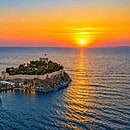
Image generated with Ai
Set within the English Channel, the Isle of Sark is presented as one of Europe’s most distinctive travel destinations, where modern transport and urban noise are almost entirely absent. As part of the Bailiwick of Guernsey, the island is positioned between southern England and Normandy, lying roughly 13 kilometers east of Guernsey. Access is exclusively by sea, ensuring that visitor numbers remain limited and the atmosphere retains a rare sense of calm.
The island’s small size, approximately 3 miles by 1.5 miles, and its population of around 500 residents contribute to an environment where simplicity and tradition dominate daily life. The absence of cars, combined with a strong preservation of heritage and natural landscapes, creates a destination that feels removed from contemporary pressures. Sark is therefore often regarded as a retreat for travelers seeking tranquility, natural beauty, and immersive experiences rather than fast-paced tourism.
Advertisement
The Isle of Sark is governed as part of the Bailiwick of Guernsey, a self-governing Crown Dependency. While it is closely linked to the United Kingdom, it remains outside both the UK and the European Union. However, it is included within the Common Travel Area, allowing relatively smooth movement for certain travelers.
Its geography is defined by a plateau surrounded by steep cliffs, small bays, and rugged coastline. A unique political and cultural identity has been preserved, with its own parliament and legal system still functioning. This independence, combined with its isolation, has shaped a way of life that continues to attract curious travelers from across the world.
Advertisement
Advertisement
One of the most defining features of Sark is its strict ban on private motor vehicles. Movement across the island is carried out by foot, bicycle, or horse-drawn carriage. Freight and essential services are managed by tractors. The absence of paved roads and traffic noise creates an environment where silence and clean air dominate.
This slow-paced lifestyle is often described as a return to simpler times, where travel itself becomes part of the experience rather than merely a means of reaching destinations.
Sark was designated as the world’s first Dark Sky Island in 2011 by the International Dark-Sky Association. Due to minimal artificial lighting, exceptionally clear night skies are experienced. The Milky Way is visible to the naked eye, and thousands of stars can be observed without telescopes.
The Sark Observatory, operated by the Sark Astronomy Society, provides guided stargazing sessions. Events such as Starfest are organized, drawing astronomy enthusiasts from across the globe.
The island’s coastline is marked by dramatic cliffs, sea caves, and narrow bays. A notable feature is La Coupée, a narrow ridge connecting Sark to Little Sark, offering breathtaking views on both sides.
Activities such as hiking, sea kayaking, and coasteering are commonly undertaken. Locations like Dixcart Bay and the Venus Pool are frequently explored for swimming and relaxation.
Sark’s historical identity as a former feudal fief continues to shape its character. Sites such as La Seigneurie Gardens and the island museum provide insights into its past.
Tourism remains small-scale and locally managed, ensuring that visitors interact directly with residents rather than large commercial entities. This creates a more authentic and personal travel experience.
As part of the Bailiwick of Guernsey, Sark follows UK immigration laws extended to the region. Travelers from many countries are required to obtain a UK Standard Visitor visa, which also covers entry into the Channel Islands.
While the Standard Visitor visa may allow stays of up to six months, Guernsey’s Population Management Law limits visits to 90 days within a 12-month period unless special permits are obtained.
Travelers are advised to verify visa requirements through UK Visas and Immigration and the Guernsey Border Agency before planning their journey. Requirements may vary depending on nationality and travel purpose.
The journey to Sark typically begins with travel to Guernsey or Jersey. Flights are available from major cities such as London, Dublin, and Paris. Ferry services also operate from ports in England and France.
From St Peter Port, passengers transfer to a ferry operated by the Isle of Sark Shipping Company. The journey takes approximately 45 to 50 minutes.
Weather conditions can affect sailings, particularly during winter months, so flexibility in travel planning is recommended.
Upon arrival at Maseline Harbour, passengers walk through a tunnel and ascend Harbour Hill. A tractor-drawn bus or a steep walk leads to the village, while luggage is delivered separately to accommodations.
Movement across Sark is achieved through walking, cycling, and horse-drawn carriages. Bicycle rentals, including electric bikes, are available in the village.
Carriage tours provide guided exploration, often covering major landmarks such as La Coupée and Little Sark.
The Sark Visitor Centre serves as the main hub for information, maps, and assistance. The Avenue functions as the central area for shops, cafés, and essential services.
Accommodation ranges from boutique hotels and guesthouses to self-catering cottages and campsites. Most properties are independently owned and reflect the island’s rustic charm.
Camping at La Valette offers affordable options, including grass pitches and furnished pods. Shared facilities and scenic coastal views make it a popular choice for budget travelers.
Higher-end stays, such as Stocks Hotel, provide landscaped gardens, fine dining, and additional amenities. Prices vary depending on season, with peak periods seeing higher rates.
Due to limited capacity, early booking is strongly recommended, especially between Easter and October when tourism peaks.
Accommodation represents the primary expense, followed by transport costs. Food prices are slightly higher due to reliance on imported goods.
Dining options range from casual cafés to hotel restaurants, with local seafood and produce being prominent. Self-catering is often used to manage expenses.
The island’s dark skies make it one of Europe’s best stargazing destinations. Guided sessions and independent observation are both popular.
Extensive walking routes and quiet cycling paths allow exploration of the island’s landscapes at a relaxed pace.
Small, secluded beaches provide opportunities for swimming and relaxation. Adventure activities such as kayaking and coasteering are also available.
Gardens, historical sites, and local traditions offer cultural insights. Everyday life on the island forms part of the visitor experience.
The main travel season runs from spring to autumn, with summer being the busiest period.
September and early October provide a balance of good weather and fewer crowds.
Winter visits offer solitude and excellent stargazing, though services may be limited.
The Guernsey pound is used, though UK currency is widely accepted. Cash should be withdrawn before arrival, as ATMs are not available on the island.
English is the primary language. Mobile coverage is generally reliable, though internet speeds may vary.
Basic healthcare and essential services are available, but advanced facilities are located in Guernsey.
The Isle of Sark is defined by its simplicity, natural beauty, and commitment to preserving a slower way of life. Its car-free environment, dark skies, and dramatic landscapes create a travel experience that is increasingly rare in modern Europe. While reaching the island requires careful planning and a willingness to embrace limited infrastructure, the rewards are substantial.
Travelers are offered an opportunity to disconnect from fast-paced routines and engage with a setting where nature, heritage, and community take precedence. Whether the visit is motivated by stargazing, outdoor exploration, or quiet relaxation, Sark provides a distinctive and memorable escape. Careful preparation, including visa checks, accommodation booking, and transport coordination, ensures a smoother journey. Ultimately, the island stands as a reminder of the value of preserving environments where simplicity and authenticity remain central to daily life.
Advertisement
Tags: budget travel Sark, car free island Europe, Channel Islands tourism, Dark Sky Island Sark, Guernsey travel guide
Advertisement
Advertisement












Sunday, September 6, 2026
Sunday, September 6, 2026
Sunday, September 6, 2026

Sunday, September 6, 2026
Saturday, September 5, 2026
Saturday, September 5, 2026
Sunday, September 6, 2026

Sunday, September 6, 2026



