
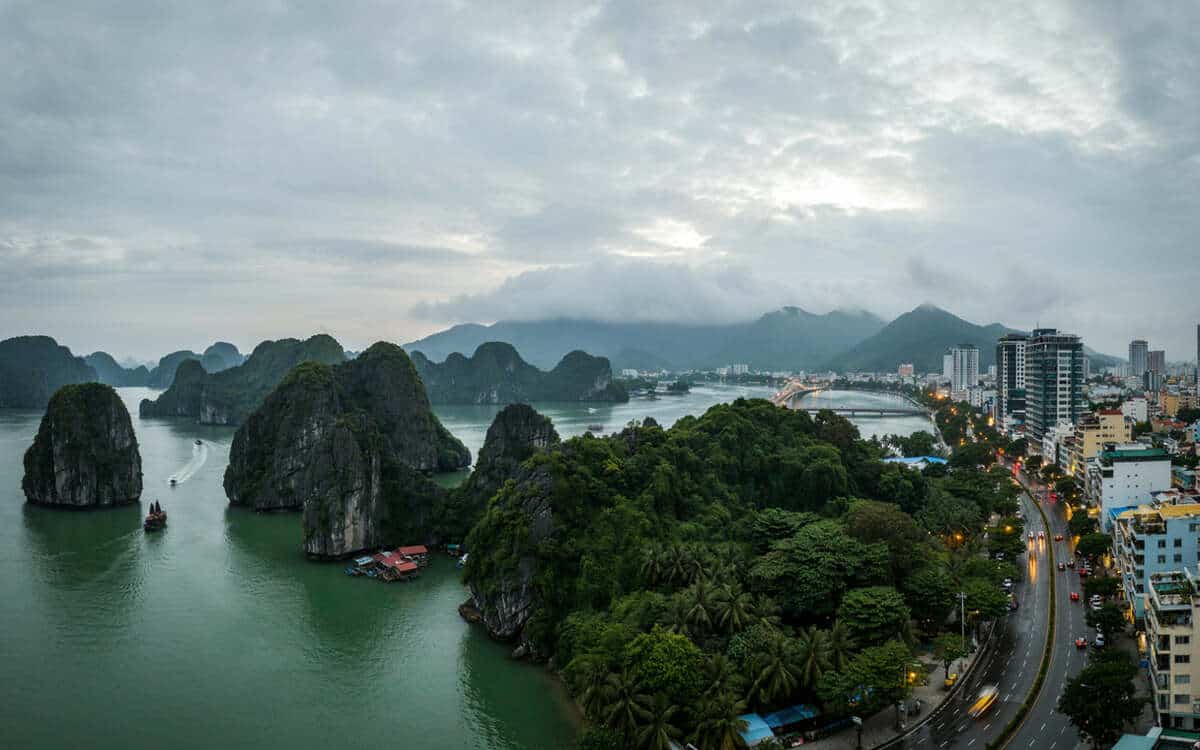
Image generated with Ai
Quang Ninh and Da Nang are making the best of the bad weather in Vietnam. Vietnam’s premier tourist destinations are turning weather challenges into tourism opportunities by seeking to create year-round destinations where visitors are encouraged to come multiple times throughout the year. In Quang Ninh, Da Nang and other major areas throughout the country, tourism is changing to offset seasonal variations, promote extended length visits and offer a broader range of experiences that are appealing even when the weather is unpredictable.
Seasonal tourism has remained a major challenge for Vietnam’s destinations, with visitor numbers traditionally rising during favourable summer months before declining during rainy periods. Coastal destinations that once depended heavily on beach holidays are now being encouraged to develop broader tourism ecosystems that can operate throughout the year.
The shift towards four-season tourism is allowing destinations to use cultural heritage, nature, entertainment, wellness, community experiences and urban attractions to maintain visitor interest beyond traditional travel periods.
Vietnam’s diverse climate has always created different travel patterns across regions, with rainfall and monsoon conditions affecting tourism flows at different times of the year. However, destinations are increasingly focusing on adaptation rather than allowing weather changes to reduce tourism activity.
Advertisement
Advertisement
The new approach is based on creating flexible tourism products where visitors can enjoy meaningful experiences regardless of seasonal conditions. Instead of viewing rainy months only as a limitation, destinations are positioning them as opportunities for slower, more immersive and less crowded travel.
Quang Ninh has emerged as one of Vietnam’s strongest examples of seasonal tourism transformation. Known internationally for its coastal attractions, the province is now expanding its tourism strategy by reducing reliance on marine experiences alone.
A wider range of products is being developed, including cultural tourism, spiritual journeys, entertainment programmes, night-time experiences and nature-based activities connected with mountains and forests.
This transformation is designed to create a more balanced tourism economy where businesses can continue attracting visitors beyond the busiest travel periods.
Advertisement
Advertisement
Regular entertainment programmes and destination activities are being introduced to encourage travellers to extend their stays and discover more aspects of the region. By creating additional reasons to visit, Quang Ninh is working towards a tourism model where demand is distributed more evenly throughout the year.
The province’s approach reflects a wider trend across Vietnam, where destinations are increasingly focusing on experience-driven travel instead of depending on a single attraction type.
Rather than competing only during peak holiday periods, destinations are attempting to build stronger identities through culture, heritage, landscapes and local experiences.
Da Nang has traditionally been recognised as one of Vietnam’s leading coastal destinations, attracting travellers with beaches, resorts and seaside experiences. However, changing weather patterns and seasonal fluctuations have encouraged the city to develop a more diversified tourism structure.
The city is gradually moving from a beach-focused model towards a combination of urban tourism, resort experiences, cultural attractions and entertainment options.
This strategy allows visitors to explore Da Nang even when weather conditions are unsuitable for traditional coastal activities.
Urban attractions, cultural spaces, natural landscapes and resort facilities are becoming increasingly important parts of the city’s tourism offering. This broader approach provides travellers with alternative activities and reduces dependence on sunny weather.
Da Nang’s transformation reflects the changing expectations of modern travellers, who increasingly seek complete destination experiences rather than a single type of holiday.
By expanding its tourism portfolio, the city is strengthening its position as a year-round destination capable of attracting different visitor segments during different seasons.
Hue has developed a distinctive approach by embracing its connection with rainy landscapes and historical atmosphere. The former imperial capital is using its heritage value to create experiences that remain attractive even during wetter periods.
Instead of relying on outdoor activities alone, Hue’s tourism strategy focuses on cultural exploration, heritage visits, traditional performances, museums and historical experiences.
Rainy weather is being presented as part of the city’s unique character, creating a slower and more reflective travel atmosphere.
The destination continues to expand cultural events throughout the year, ensuring that visitors have reasons to explore Hue across different seasons.
This approach demonstrates how weather conditions can become part of a destination’s identity rather than only being viewed as a tourism barrier.
By highlighting heritage and cultural depth, Hue is creating a travel experience that is less dependent on climate conditions and more focused on emotional connections with the destination.
Hanoi is also strengthening its year-round tourism strategy by developing experiences that can attract visitors during periods of extreme heat or unpredictable rainfall.
The capital is expanding night-time tourism, cultural experiences and suburban leisure opportunities to create additional travel options.
Community-based destinations and upgraded cultural attractions are providing visitors with more choices beyond traditional sightseeing.
The focus is being placed on activities that allow travellers to discover the city through history, local communities and cultural environments.
By developing more flexible tourism products, Hanoi is working to reduce the impact of seasonal demand changes.
The city’s approach highlights how urban destinations can maintain tourism momentum by offering experiences that are not entirely dependent on outdoor weather conditions.
Although Vietnam’s destinations are exploring ways to attract visitors during rainy periods, safety remains the most important priority.
Tourism experts emphasise that normal rainfall can create unique travel experiences, but extreme weather events cannot be treated as tourism opportunities.
Storms, tropical depressions, flash floods, landslides, thunderstorms, tornadoes and dangerous sea conditions require strict monitoring and immediate safety measures.
Tourism operators are increasingly expected to develop emergency procedures, provide updated weather information and prepare alternative travel plans when conditions change.
Visitor protection must remain above commercial considerations, particularly during periods when natural hazards create risks.
Destinations are therefore focusing not only on attracting tourists but also on improving preparedness, communication systems and crisis management capabilities.
Climate change is creating new challenges for destinations worldwide, and Vietnam is responding by improving adaptability within its tourism sector.
Future tourism competitiveness will depend not only on natural attractions and infrastructure but also on how effectively destinations manage unpredictable conditions.
The ability to provide accurate information, respond quickly to emergencies and protect visitors will become increasingly important.
Vietnam’s move towards four-season tourism represents a broader shift in destination management. By creating diverse experiences across different seasons, destinations can reduce pressure during peak periods while generating more consistent economic benefits.
The transformation of rainy seasons into unique travel opportunities demonstrates how tourism destinations can adapt to changing environmental conditions.
However, long-term success will depend on maintaining a careful balance between innovation, visitor attraction and safety management.
Quang Ninh and Da Nang are changing the way Vietnam tourism is being perceived by creating new opportunities based on the year-round appeal of the destinations through offering a variety of activities and experiences beyond beaches.
As Quang Ninh, Da Nang and other Vietnamese destinations continue developing their year-round tourism models that will see weather challenges turned into opportunities for sustainable growth and enhanced visitor experience, an improved tourism industry will emerge.
Advertisement
Advertisement
Advertisement













Saturday, September 5, 2026

Friday, September 4, 2026

Saturday, September 5, 2026

Friday, September 4, 2026

Thursday, September 3, 2026

Wednesday, September 2, 2026
Saturday, September 5, 2026