

Aleph Hospitality Co-CEO Neil George Explains How Third-Party Hotel Management is Looking at Middle East & Africa Hospitality at FHS World 2026

Updated
Published
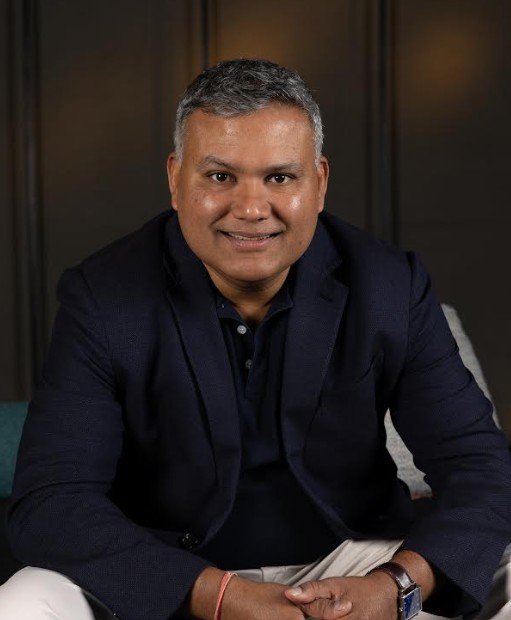
Neil George, Partner and Co-CEO of Aleph Hospitality, who discussed the company’s operational model and growth strategy at the Future Hospitality Summit (FHS) Dubai 2026. Under his leadership, Aleph Hospitality has reached a milestone of over 50 hotels across 24 countries and 38 cities—highlighted by recent additions like the Mövenpick Grand Al Bustan in Dubai—with a strategic roadmap to double its portfolio to 100 properties by 2029. He detailed the company’s bespoke, owner-centric third-party management model (offering franchise and white-label operations), regional office expansion in Casablanca, Cape Town, and Nairobi to support a massive 26-hotel deal with ONOMO in Africa, and the launch of a dedicated Luxury Division tailored to high-end hotel investors.
Advertisement
Advertisement
Advertisement
Advertisement
How are you feeling about the energy and deal-making momentum at FHS Dubai 2026 today?
Aleph Hospitality has been a long-term partner of Future Hospitality Summit. Again this year, we had a busy three days in Dubai meeting with owners, investors and partners. During FHS we also announced our third hotel in Dubai, the Mövenpick Grand Al Bustan, as well as our 2026 growth story so far which covers hotel management agreements across six countries and nine hotels with a total of 1,330 keys year to date.
For our Travel and Tour World audience, how is Aleph Hospitality’s third-party management model continuing to disrupt traditional hotel operations across the region?
Independent, or third-party, management has been a prevalent model in the US and Europe for many years. When we founded Aleph in 2015, it was with the aim of bringing this model to the Middle East and Africa. Today it is well established and growing in the region.
Advertisement
Advertisement
The model has two key drivers: brands wanting to expand rapidly and owners requiring a bespoke management solution. Owners are increasingly sophisticated and selective. They separate the brand from the operator and question each layer of cost to protect their return on investment. They want contractual flexibility, full visibility of the operations and a management team that reports to them.
Our model is built around that. We manage hotels directly for owners, either on a franchise basis for branded properties or as a white-label operator for independent hotels. Let me give you some examples. At Jewel of the Creek in Dubai we run a dual-brand operation of Hilton Dubai Creek Hotel & Residences and Marriott Marquis Dubai Creek, two brands in one complex with clustered support functions, a first for the region. We recently expanded that cluster to include the Mövenpick Grand Al Bustan, a third branded hotel, resulting in material operating efficiencies for our owner, while benefiting from three different brand systems. Our agreement with African Hotel Development for 26 ONOMO hotels, the largest such deal ever in Africa, follows from the same logic: they focus on brand development and asset management, and we focus on operations.
Following your massive 26-hotel portfolio deal with ONOMO, how are your new African regional offices ensuring you avoid “remote-controlled management”?
Local expertise is critical to success in this business. Our principle is simple: set the standard, then empower those who know their markets best.
Following our rapid expansion in Africa, we established regional offices in Casablanca, Cape Town and Nairobi to provide local, on-the-ground support. Our Regional VPs lead the business in their regions and are accountable for each hotel’s financial, commercial and operational performance, as well as owner relationships, people and community investment. This gives every owner direct access to a senior Aleph Hospitality leader.
Advertisement
Advertisement
Every hotel we add must deliver returns for its owner. We remain focused on providing locally informed, world-class, owner-centric hotel management across the region.
Having just celebrated your 10th anniversary and hitting your 50-hotel milestone, what is your strategic roadmap to double that portfolio to 100 properties by 2029?
The roadmap rests on three things:
The first is the value we create for owners. Our tailored-to-fit model adjusts to each asset, whether it is a repositioning, a transition or a pre-opening, and is designed to drive high returns on their investment. Owners keep control of their asset, with a say in all aspects of the operation, full visibility of performance and flexible contracts. Our fee is tied to their results, so our interests are aligned.
The second is our track record. We have been doing this successfully for over a decade. Our current portfolio comprises over 50 hotels across 24 countries and 38 cities. More than 60% of our owners have us managing more than one hotel, and demand for an experienced independent operator keeps growing.
The third is markets. Many of the markets we are present in are dynamic, with significant growth anticipated. Africa has a record pipeline of almost 124,000 rooms, yet only a small percentage open on schedule, so the opportunity lies in getting hotels operational. Across the Middle East, the recent disruptions notwithstanding, we see growth in every market we are present. In Saudi Arabia, for example, we see opportunities in secondary cities such as Abha, Al Khobar and Dammam as well as the major destinations.
With the recent launch of your dedicated Luxury Division, how are you adapting your localized, owner-centric approach specifically for high-end hotel investors?
Our Luxury Division tailors our owner-centric approach to the demands of the luxury segment. Clearly, luxury requires a different skill-set and different focus. From bespoke staff training to rigorous quality standards and KPIs, it gives each property the expertise and tools to deliver exceptional guest experiences.
Advertisement
Advertisement
We combine luxury expertise with a flexible, local approach, adapting to each property, market and owner’s objectives to enhance asset value and deliver sustainable returns.
Advertisement
