
Travelers Stuck at Miami International Airport as United, LATAM, American, Air France, Delta, Volaris and More Airlines Record 123 Delays and 5 Cancellations Impacting Flights Across US, UK, Germany, Spain, France, Italy, Mexico, Colombia, Peru, Panama and Caribbean Destinations

Published
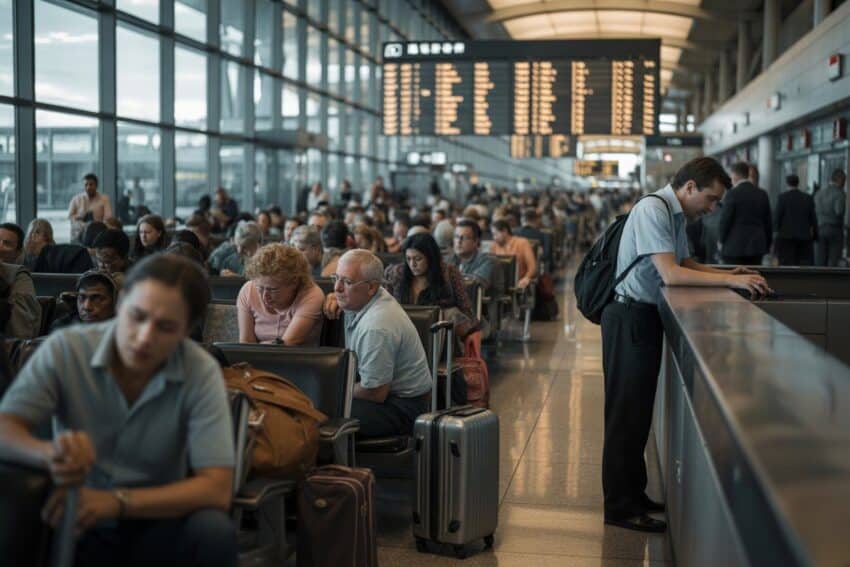
Travellers at Miami International Airport are facing widespread disruption as international flight operations experience significant strain across multiple global routes. Consequently, 123 delays and 5 cancellations have been recorded, intensifying pressure on airport infrastructure and passenger movement systems across Miami’s global hub. The situation is driven by a high volume of operational delays and schedule adjustments affecting both arrivals and departures throughout the day. This disruption is linked to a broader network imbalance affecting major aviation links between the US, UK, Germany, Spain, France, Italy, Mexico, Colombia, Peru, Panama and Caribbean regions. Contributing factors include cascading delays from upstream airports, tight aircraft rotation schedules, and congestion within peak travel windows. Airlines such as United, LATAM, American, Air France, Delta, Volaris and several others are adjusting operations to manage flow stability.
Operational Pressure Builds at Miami International Airport
Air travel operations linked to Miami International Airport are experiencing notable disruption today, with a total of 123 flight delays and 5 cancellations recorded across inbound and outbound services. The disruption is not limited to a single region but instead reflects a multi-continental operational imbalance affecting North America, Europe, Latin America, and the Caribbean.
The situation has created uneven scheduling across flight banks, affecting passenger flow, aircraft rotations, and onward connections. Travellers using Miami as a transit hub are experiencing extended waiting times and missed connections as ripple effects spread through interconnected airline networks.
Airport-Wide Operational Overview: Miami at the Centre of Network Strain
The disruption impacting Miami International Airport is primarily driven by a combination of inbound delays and cancellations from a wide range of origin airports across the global aviation system.
Advertisement
Advertisement
With 123 delays recorded, Miami’s arrival system is under sustained pressure, particularly during peak inbound windows where international and domestic flights converge. The 5 cancellations further indicate structural scheduling adjustments, likely triggered by cascading delays affecting aircraft availability and crew rotation limits.
This imbalance has led to irregular arrival sequencing, causing congestion at gates and increased turnaround times for aircraft preparing for subsequent departures.
Advertisement
Advertisement
Analysis of Airports, Cities and Countries Affected
North America: Major US Hub Disruptions
A significant share of disruption originates within the United States, where multiple high-traffic airports are contributing to delays into Miami. These include Atlanta, Dallas-Fort Worth, Chicago O’Hare, LaGuardia, Orlando, Nashville, Charlotte, Philadelphia, Houston Bush, Houston Hobby, Kansas City, Raleigh-Durham, St Louis, Phoenix, Tampa, and Washington Reagan National.
These airports serve as critical domestic feeder points into Miami, especially for passengers connecting to international flights. Even minor delays at these hubs are cascading into Miami’s arrival system due to tightly scheduled domestic-to-international transfers.
Europe: Transatlantic Connectivity Under Pressure
European operations feeding into Miami are also impacted, with delays and cancellations recorded at London Heathrow, Frankfurt, Madrid-Barajas, Paris Charles de Gaulle, Zurich, Milan Malpensa, and Rome Fiumicino.
These airports represent key long-haul gateways into Florida, and disruptions here have amplified effects due to limited daily frequencies on transatlantic routes. Even a single delay can disrupt aircraft positioning for return journeys, further intensifying schedule instability at Miami International Airport.
Latin America and Caribbean: High-Volume Tourism Routes Affected
Latin American and Caribbean airports form one of the most important travel corridors into Miami, and today’s disruption is heavily concentrated in this region.
Affected airports include Cancún, Mexico City, Monterrey, Bogotá, Lima, Panama City, San José, Guatemala City, Santo Domingo, Punta Cana, Nassau, Grand Cayman, Havana, Piarco, Providenciales, and others across the region.
Advertisement
Advertisement
These routes are heavily used by both tourism and diaspora travel markets. The tight operational structure of short-haul Caribbean flights means delays quickly propagate into Miami’s arrival scheduling, especially during peak leisure travel windows.
Airlines and Operational Network Impact
While specific airline-level breakdowns are not fully detailed in the dataset, the widespread nature of affected airports indicates multi-carrier involvement across domestic US airlines, European flag carriers, and Latin American operators.
The disruption pattern suggests that no single airline is responsible; rather, the issue is distributed across the global aviation network feeding into Miami International Airport.
Impact on Passengers and Airport Flow
Passengers travelling through Miami International Airport are facing a range of operational challenges, including delayed arrivals, missed connections, and extended layovers.
International travellers arriving from Europe are particularly impacted, as onward connections to Latin America and the Caribbean are being disrupted. Domestic passengers connecting through US hubs are also experiencing schedule uncertainty due to cascading delays from originating airports.
At the airport level, gate congestion, aircraft turnaround delays, and irregular arrival sequencing are contributing to operational bottlenecks, reducing schedule predictability for both passengers and airlines.
Advertisement
Advertisement
What Affected Passengers Can Do Now
Travellers impacted by today’s disruption at Miami International Airport are advised to take the following steps:
Monitor Flight Status Continuously
Passengers should check airline apps and airport updates frequently, as gate and timing changes are being made dynamically.
Reconfirm Connections Immediately
Those with onward flights should verify connection status and rebooking options, especially for international-to-regional transfers.
Use Airline Service Desks for Reaccommodation
Airlines are adjusting schedules due to delays and cancellations, and passengers may be eligible for alternative routing or standby options.
Prepare for Extended Waiting Times
Given the scale of 123 delays, passengers should expect longer-than-usual processing times at gates and boarding areas.
Retain Documentation for Claims
Travel receipts and booking confirmations should be preserved for potential compensation or assistance claims, depending on airline policy.
Advertisement
Advertisement
Conclusion: Miami’s Role as a Global Hub Under Temporary Strain
The disruption at Miami International Airport, marked by 123 delays and 5 cancellations, underscores the complexity of managing one of the world’s most interconnected aviation hubs. With disruptions originating across North America, Europe, Latin America, and the Caribbean, the airport is experiencing a cascading effect driven by global network dependency. While operations continue, passengers are facing reduced reliability in schedules and increased uncertainty in connection timing. The situation highlights how quickly multi-region disruptions can converge at major international gateways, amplifying localised operational stress into global travel impact.
Source: FlightAware and Affected Airports
Advertisement
