
Zermatt Teams Up With Interlaken and More as Alpine Destinations of Europe With Cooler Summer Escapes

Published
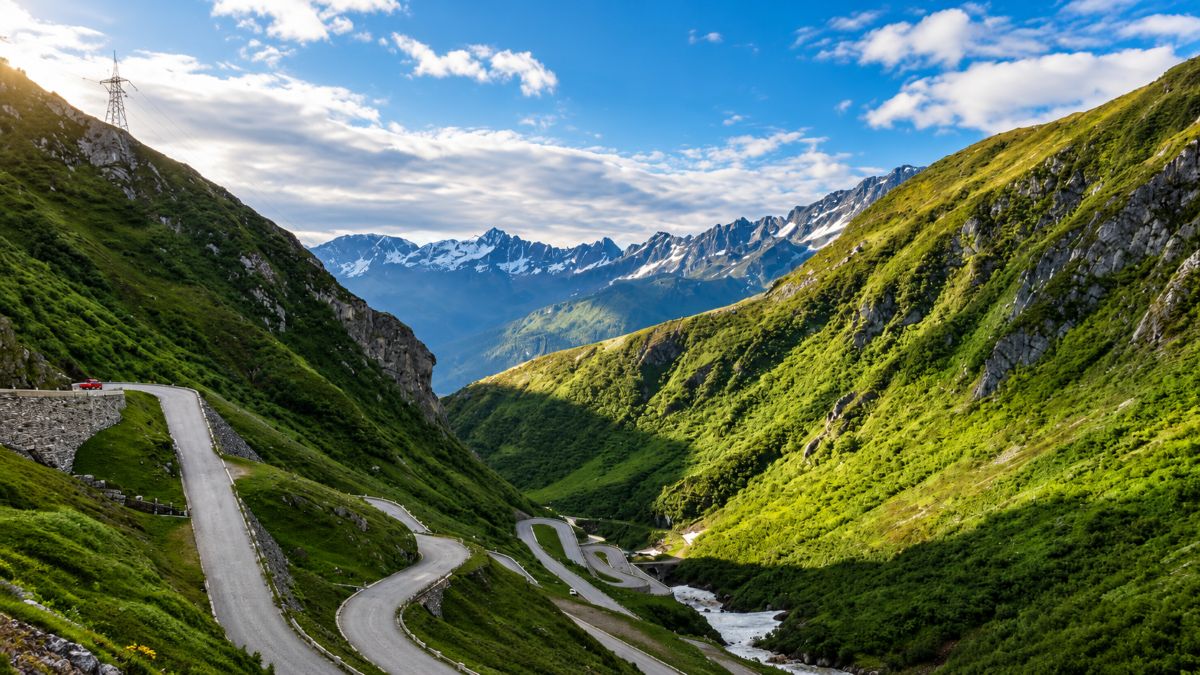
Image generated with Ai
Europe’s summer travel scene is taking a dramatic turn as Zermatt teams up with Interlaken and more spectacular Alpine destinations to attract travellers searching for cooler summer escapes. As temperatures rise across Europe, the Alpine destinations of Europe are emerging as refreshing alternatives for travellers seeking mountain air, breathtaking landscapes and unforgettable outdoor adventures. Zermatt and Interlaken are leading this growing travel movement, while other Alpine destinations are offering equally compelling summer experiences. Meanwhile, Travel And Tour World urges travellers to look beyond traditional European summer hotspots and discover how these extraordinary mountains are transforming summer travel with cooler escapes, scenic adventures and memorable high-altitude experiences.
A Strong Summer for Alpine Travel
Alps tourism is gaining momentum as increasingly hot European summers encourage travellers to seek cooler mountain environments. Austria’s summer mountain railway network surveyed 39 experts, with 87% reporting increased visitor numbers during the first half of the 2026 summer season. No participating operator recorded a decline. The season received an average 4.3/5 rating, compared with 3.7 last year, while 54% gave it the maximum score.
Advertisement
Advertisement
Heat Is Changing Traveller Choices
High temperatures are becoming an important factor behind this growth. 71% of surveyed operators said hot weather had a positive or strongly positive effect on visitor demand. Only 8% reported a somewhat negative impact, while none recorded a strongly negative effect.
For travellers, higher Alpine locations provide opportunities for hiking, mountain railway journeys, lakeside breaks and outdoor recreation away from overheated cities.
Advertisement
Advertisement
Austria Records 41.87 Million Summer Nights
Austria’s wider tourism figures reinforce the trend. Statistics Austria recorded 41.87 million overnight stays between May and July 2026, up 3.2% year on year and representing a record for the period since electronic records began in 1973.
July produced 19.46 million overnight stays, increasing 4.8%. Arrivals climbed 9.3% to 5.97 million. International visitors generated 14.68 million nights, up 5.9%. Germany led international demand with 7.18 million nights, followed by the Netherlands at 1.53 million, Czechia at 0.74 million, and Switzerland/Liechtenstein at 0.60 million.
Advertisement
Advertisement
Coolcation Opportunities Across the Alps
Austria’s official tourism organisation now promotes “coolcation” holidays across Alpine regions, lakes, forests and higher-altitude destinations. Recommended areas include regions around 1,000 to 1,500 metres, offering mountain lakes, forests, alpine pastures and cooler outdoor experiences.
Travellers can consider Tyrol, Carinthia, Salzburg and Styria for hiking, waterfalls, lakes, cable cars and mountain viewpoints.
Travellers Should Prepare for Changing Weather
Higher altitude does not guarantee stable summer weather. Switzerland Tourism states that temperatures generally fall approximately 1°C for every 100 metres of altitude. At 2,000 metres, conditions can therefore be dramatically cooler than in lowland areas, with snow still possible. Mountain weather can change rapidly.
Travellers should therefore carry warm layers, rain protection, sun protection and suitable footwear when exploring higher Alpine terrain.
Tourism Operators Are Adapting
The Alpine boom also presents challenges. The original survey found 59% of operators were planning or considering adaptations, including more shade, drinking-water facilities, improved visitor information and revised operating hours.
For global travellers, the message is increasingly clear: as European summer temperatures rise, Austria and the wider Alps are becoming compelling destinations for cooler, active and nature-focused holidays.
Advertisement
Advertisement
Five Mountain Destinations Travellers Should Watch as Europe Gets Hotter
The European Alps are becoming increasingly important for summer travellers searching for cooler surroundings, outdoor activities and high-altitude escapes.
Austria provides some of the strongest evidence. Statistics Austria recorded 41.87 million overnight stays between May and July 2026, an increase of 3.2% compared with the same period in 2025. July alone produced 19.46 million overnight stays, up 4.8% year on year.
Tourist arrivals reached 5.97 million in July, representing a 9.3% increase. International visitors generated 14.68 million overnight stays, up 5.9%.
Austria also reached a major long-term tourism milestone. The country recorded approximately 157 million overnight stays during 2025, an all-time annual high according to Statistics Austria.
The summer mountain trend is particularly notable. A survey covering 39 Austrian summer mountain railway experts found that 87% reported increasing visitor numbers during the first half of summer 2026. None reported declining visitor numbers.
Furthermore, 71% of operators said high temperatures had a positive or strongly positive influence on demand. Only 8% reported a somewhat negative effect.
Advertisement
Advertisement
This suggests that hotter weather is not simply changing when people travel. It is increasingly influencing where they travel.
Alpine Tourism Data at a Glance
| Indicator | Latest verified figure | Change / significance |
|---|---|---|
| Austria overnight stays, May-July 2026 | 41.87 million | +3.2% year on year |
| Austria overnight stays, July 2026 | 19.46 million | +4.8% |
| Austria arrivals, July 2026 | 5.97 million | +9.3% |
| International nights, July 2026 | 14.68 million | +5.9% |
| Austria annual overnight stays, 2025 | About 157 million | National record |
| Austrian mountain railway operators surveyed | 39 | Summer 2026 survey |
| Operators reporting visitor growth | 87% | Strong positive trend |
| Operators seeing positive heat effect | 71% | Demand increasingly linked to hot weather |
| Switzerland hotel overnight stays, 2024 | About 42.8 million | +2.6% over previous record |
| Zermatt-Matterhorn overnight stays, 2023/24 period | 2,667,357 | +19.17% |
| Interlaken holiday region, 2025 | 3,729,702 | +3.7% over 2024 |
| Chamonix Valley annual overnight stays | About 7.8 million | Roughly 51% summer, 49% winter |
Austria’s official tourism statistics also show how resilient Alpine demand has become. The country recorded 154 million overnight stays in 2024, followed by a new record in 2025.
Switzerland is experiencing a similar pattern. Swiss tourism recorded approximately 42.8 million hotel overnight stays in 2024, an increase of 2.6% over its previous record.
For travellers, the important point is that the Alps now offer far more than winter skiing.
Summer visitors can choose hiking, cycling, cable cars, panoramic railways, lakes, glacier viewpoints, climbing, paragliding, mountain restaurants and wellness stays.
Five Alpine Destinations Travellers Should Consider
1. Zermatt, Switzerland: Matterhorn Views and High-Altitude Summer Adventures
Zermatt remains one of the Alps’ strongest year-round destinations. The Zermatt-Matterhorn tourism area recorded 2,667,357 overnight stays during its 2022/23 financial year, representing a remarkable 19.17% increase over the preceding year. The destination ranked third nationally behind Geneva and Zurich in the cited comparison.
Advertisement
Advertisement
More recent destination data indicate 2,567,381 overnight stays in 2025, with 1,390,158 during winter and 1,177,223 during summer. Domestic visitors represented about 32.62%, while major international markets included the United States, Germany and the United Kingdom. Because Zermatt reports by tourism year and financial year in different publications, direct calendar-year comparisons should be made carefully.
| Zermatt indicator | Figure |
|---|---|
| 2022/23 overnight stays | 2,667,357 |
| Growth reported | +19.17% |
| 2025 overnight stays | 2,567,381 |
| 2025 winter nights | 1,390,158 |
| 2025 summer nights | 1,177,223 |
| Domestic share in 2025 | 32.62% |
Zermatt works especially well for travellers escaping lowland heat because many experiences are located at substantial elevations. Visitors can ride the Gornergrat Railway, explore Sunnegga, hike around Riffelsee and enjoy panoramic Matterhorn viewpoints. The destination also offers mountain huts, luxury hotels, apartments and chalets.
The village itself is car-free. Private vehicles normally stop at Täsch, from where travellers continue by train, taxi or other permitted transport. This makes Zermatt particularly attractive for visitors wanting a mountain holiday without relying heavily on cars.
For accommodation, travellers can choose everything from traditional mountain huts to luxury properties and serviced apartments. Families can also benefit from Zermatt’s family-oriented facilities and the Wolli programme for younger visitors.
The best summer strategy is to combine a village stay with higher mountain excursions. Travellers should check weather and trail conditions before hiking because Alpine conditions can change quickly.
2. Interlaken, Switzerland: A Gateway to Lakes, Jungfrau and Mountain Railways
Interlaken has become one of Switzerland’s major Alpine gateways. The destination recorded an estimated 3.38 million overnight stays in 2023, setting a record at that time. The 2024 tourism year subsequently exceeded 3.5 million overnight stays, according to destination reporting.
Advertisement
Advertisement
The 2025 holiday region reached 3,729,702 overnight stays, representing a 3.7% increase over 2024. The core Interlaken-Matten-Unterseen-Wilderswil-Gsteigwiler-Saxeten area accounted for approximately 1,998,418 nights, up 3.4%. Tourism revenue in that core area reached around CHF465 million, while average stay duration was approximately 2.1 nights.
| Interlaken indicator | Figure |
|---|---|
| 2023 holiday-region nights | About 3.38 million |
| 2024 holiday-region nights | More than 3.5 million |
| 2025 holiday-region nights | 3,729,702 |
| 2025 growth | +3.7% |
| Core-area nights, 2025 | 1,998,418 |
| Core-area growth | +3.4% |
| Core-area tourism revenue | CHF465 million |
| Average stay | 2.1 nights |
Interlaken is ideal for travellers who want to combine Alpine scenery with easy access to major attractions. Lake Thun and Lake Brienz provide opportunities for boating and lakeside experiences, while the surrounding mountains offer hiking and panoramic excursions.
The destination is also an excellent base for visiting Jungfraujoch, Grindelwald, Lauterbrunnen and the wider Bernese Oberland.
Travellers can stay in traditional hotels, modern properties, guesthouses and apartments around Interlaken and nearby villages. Official tourism guidance also encourages visitors to behave responsibly around the lakes and mountain environment.
For heat-affected travellers, Interlaken’s biggest advantage is flexibility. A visitor can spend a warm afternoon beside a lake, then move higher into the mountains by railway or cable car.
3. Innsbruck, Austria: The City-and-Mountain Summer Combination
Innsbruck provides a different Alpine experience because travellers can combine an urban break with immediate access to the mountains.
Advertisement
Advertisement
The wider Innsbruck tourism region recorded almost 3.5 million overnight stays in 2023. The destination is particularly attractive for visitors who do not want a remote mountain holiday but still want fast access to Alpine landscapes.
Austria’s tourism data also underline the importance of the Innsbruck region. In the 2023/24 tourism year, it accounted for 18.5% of Austrian arrivals from the domestic market during winter and 16.4% during summer.
| Innsbruck indicator | Figure |
|---|---|
| Wider-region nights, 2023 | Almost 3.5 million |
| Domestic-market winter share, 2023/24 | 18.5% |
| Domestic-market summer share, 2024 | 16.4% |
| Region | Tyrol |
| Summer transport advantage | Rail, public transport and mountain lifts |
Travellers can explore the historic city centre before heading towards Nordkette and surrounding hiking areas. Official destination guidance describes the region as suitable for different levels of hiking ability, with lifts and cable cars helping visitors access Alpine terrain without requiring extreme fitness.
The Welcome Card provides another practical advantage. Guests staying at participating properties for at least two nights can receive public transport access and discounts on attractions. Stays of three nights or more can provide additional mountain-lift benefits under the applicable 2026 programme.
Innsbruck is also easy to reach without a car. ÖBB Nightjet services, Deutsche Bahn connections and other rail services link the city with European markets.
Accommodation ranges from city hotels and boutique properties to apartments and Alpine lodges. This makes Innsbruck especially suitable for first-time Alpine visitors who want culture, restaurants, transport convenience and mountains within one itinerary.
Advertisement
Advertisement
4. St. Moritz, Switzerland: High-Altitude Luxury With a Growing Summer Appeal
St. Moritz offers one of the Alps’ most distinctive combinations of altitude, luxury, lakes and outdoor recreation.
The destination’s summer performance is becoming particularly relevant to the coolcation trend. In 2026, St. Moritz reported 33,972 overnight stays in May, an increase of 15.9% compared with May 2025. The five-star segment grew 21.1%, four-star hotels increased 22.3%, three-star properties rose 9.9%, and zero-to-two-star accommodation increased 9.5%.
Recent summer data also showed a particularly strong result. July 2026 generated 99,075 overnight stays, the destination’s best July result in more than a decade, representing a 27% increase. Summer overnight stays were reported as 20.6% higher than summer 2025 in the latest destination update.
| St. Moritz indicator | Latest figure |
|---|---|
| May 2026 overnight stays | 33,972 |
| May year-on-year growth | +15.9% |
| July 2026 overnight stays | 99,075 |
| July year-on-year growth | +27% |
| Summer 2026 growth reported | +20.6% |
| Average stay in latest summer update | 1.97 nights |
| Swiss market growth | +23.8% |
| Five-star May growth | +21.1% |
| Four-star May growth | +22.3% |
| Three-star May growth | +9.9% |
St. Moritz is well suited to travellers looking for premium accommodation, wellness and scenic outdoor activities. Visitors can explore the surrounding Engadin Valley, walk around alpine lakes, hike mountain trails and enjoy panoramic railway journeys.
The destination’s elevation also makes it an interesting summer refuge when lower European cities experience intense heat.
Accommodation is dominated by upscale hotels, although apartments and other lodging options are also available. Travellers seeking a quieter experience can explore nearby Engadin communities rather than staying directly in St. Moritz.
Advertisement
Advertisement
5. Chamonix-Mont-Blanc, France: Mont Blanc Adventures Beyond Skiing
Chamonix-Mont-Blanc remains one of the most internationally recognised destinations in the French Alps.
Official Chamonix tourism material reports approximately 82,469 tourist beds, including 15,970 professional beds, 16,514 holiday-rental beds and 43,328 private accommodation options in its 2022 tourism figures.
The valley has historically generated around 7.8 million overnight stays annually, with approximately 51% occurring during summer and 49% during winter. Foreign visitors accounted for around 37% of tourist overnight stays, with European markets particularly important.
| Chamonix indicator | Reported figure |
|---|---|
| Tourist beds | 82,469 |
| Professional beds | 15,970 |
| Holiday-rental beds | 16,514 |
| Private accommodation | 43,328 |
| Annual overnight stays | About 7.8 million |
| Summer share | 51% |
| Winter share | 49% |
| Foreign overnight-stay share | 37% |
Chamonix’s attraction extends far beyond skiing. Visitors can take the Aiguille du Midi cable car, explore hiking routes, cycle through the valley and enjoy viewpoints around Mont Blanc.
The Aiguille du Midi reached approximately 640,000 visitors in 2024, with around 70% reported as international tourists, according to the ESPON cross-border Alpine study. The cable-car system provides access to approximately 3,842 metres.
The Chamonix Valley also offers a broad accommodation spectrum, from luxury hotels and historic properties to apartments, chalets and other holiday accommodation.
Advertisement
Advertisement
For summer travellers, the destination is particularly compelling because the valley supports a genuine four-season tourism economy. Visitors should nevertheless remember that high-mountain conditions can remain severe even during summer.
Five-Destination Tourism Comparison
| Destination | Country | Key tourism figure | Summer relevance | Best for |
|---|---|---|---|---|
| Zermatt | Switzerland | 2,567,381 nights in 2025 | 1.18m summer nights | Matterhorn, hiking, railways |
| Interlaken | Switzerland | 3,729,702 nights in 2025 | Strong year-round demand | Lakes, Jungfrau, families |
| Innsbruck region | Austria | Almost 3.5m nights in 2023 | Strong urban-Alpine combination | City + mountains |
| St. Moritz | Switzerland | 99,075 nights in July 2026 | July +27% year on year | Luxury, lakes, wellness |
| Chamonix | France | About 7.8m annual nights | 51% historically in summer | Mont Blanc, hiking, cable cars |
Five-Year Tourism Comparison: What the Data Really Shows
A direct five-year comparison requires caution because destinations publish statistics using different geographical boundaries and reporting periods. Zermatt, for example, reports tourism-year figures in some publications, while national statistical offices often publish calendar-year accommodation statistics.
| Destination | 2021 | 2022 | 2023 | 2024 | 2025/latest |
|---|---|---|---|---|---|
| Zermatt-Matterhorn | Pandemic-affected | Recovery | 2.67m in cited 2022/23 period | Strong destination performance | 2.57m |
| Interlaken region | Pandemic-affected | Recovery | 3.38m | >3.5m | 3.73m |
| Innsbruck region | Pandemic-affected | Strong Tyrol recovery | ~3.5m | Continued demand | Latest regional data published |
| St. Moritz | Pandemic-affected | Recovery | Growth | Strong | Strong 2026 summer |
| Chamonix Valley | Pandemic-affected | ~7.8m annual benchmark | Four-season demand | Strong regional tourism | Latest detailed comparable figure varies |
The most important trend is therefore not simply a rise in visitor numbers at individual resorts.
It is the expansion of summer demand.
Austria’s national tourism records show record accommodation demand, while individual Alpine destinations are reporting stronger summer performance. Switzerland’s St. Moritz is reporting substantial summer increases, while Zermatt continues to attract visitors across both winter and summer periods.
What Travellers Should Know Before Booking an Alpine Summer Holiday
Choose Elevation Carefully
Higher does not automatically mean risk-free or consistently cool. Alpine weather can change rapidly, and temperatures can vary considerably between valleys and summits.
Advertisement
Advertisement
Switzerland Tourism advises travellers to prepare for changing mountain conditions. Temperature generally decreases with altitude, making high-elevation destinations attractive during hot periods but potentially much colder after sunset or during storms.
Book Accommodation Based on Your Travel Style
Zermatt is particularly suitable for Matterhorn views and premium mountain experiences.
Interlaken works well for visitors wanting transport links and day trips.
Innsbruck is better suited to travellers combining culture with mountain activities.
St. Moritz is particularly strong for luxury, wellness and high-altitude leisure.
Chamonix is ideal for adventure-focused visitors wanting access to Mont Blanc and extensive outdoor activities.
Advertisement
Advertisement
Use Public Transport Where Possible
Several Alpine destinations have strong rail and public transport networks.
Zermatt is car-free at village level, while Innsbruck provides extensive public transport and rail connections. These options can reduce the need for rental cars and make multi-destination Alpine itineraries easier.
Do Not Treat Summer Mountains Like Lowland Holidays
Travellers should pack layers, waterproof clothing, suitable footwear, sun protection and sufficient water.
Hiking routes should be checked before departure. Cable cars can also provide easier access to higher areas, but operating schedules may change because of weather or seasonal conditions.
The Bigger Travel Trend
The latest figures suggest that the Alps are moving beyond their traditional identity as a winter destination.
Austria’s record tourism performance, strong summer mountain railway demand, Switzerland’s growing accommodation numbers and individual destination gains all point towards a more diversified Alpine tourism economy.
Advertisement
Advertisement
For global travellers, that creates a new summer strategy.
Instead of automatically choosing Europe’s hottest cities or Mediterranean resorts, visitors can move higher into the mountains.
The Alps offer cooler surroundings, dramatic landscapes, outdoor activities and extensive accommodation choices.
As European summers become hotter, these destinations could become increasingly important to travellers looking for a different kind of summer holiday: less heat, more altitude and a stronger connection with nature.
Conclusion
The rise of Zermatt, Interlaken and other Alpine destinations of Europe highlights a major shift in summer travel. As European temperatures climb, travellers are increasingly searching for cooler summer escapes surrounded by mountains, lakes and fresh alpine air. Zermatt and Interlaken offer spectacular scenery, outdoor adventures and easy access to high-altitude experiences. Meanwhile, destinations across the Alps are expanding their summer appeal beyond traditional winter tourism. For global travellers planning their next European holiday, these mountain destinations offer an exciting alternative to hotter cities and crowded coastal resorts. Travel And Tour World encourages readers to explore these cooler Alpine escapes and discover a refreshing new side of European summer travel.
Advertisement
