
United Kingdom Beats Italy and All Other Destinations in Europe as Glasgow Witnesses a Massive 2,400% Surge in Travel Searches Ahead of Mega Events

Published
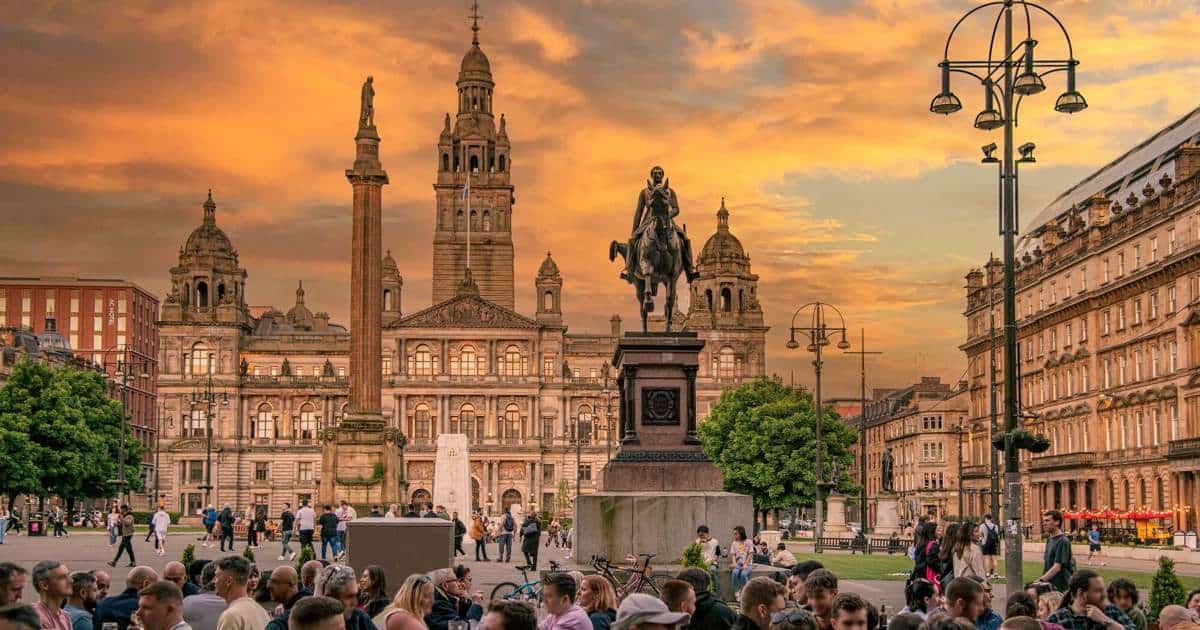
United Kingdom beats Italy and all other destinations in Europe as Glasgow witnesses a massive 2,400% surge in travel searches ahead of mega events, driven by growing global interest in the Oasis Live ’27 concerts and the city’s potential to attract visitors through flights, accommodation, transport and wider tourism experiences.
The United Kingdom is taking the early lead in Europe’s next major wave of event-led tourism, as Glasgow records an extraordinary 2,400% surge in travel searches ahead of the Oasis Live ’27 tour. The increase is equivalent to roughly a 25-fold jump compared with the same period a year earlier, placing the Scottish city substantially ahead of other European host destinations. Manchester follows with an 846% rise, while Rome in Italy records 659%, Barcelona 655%, Dublin 614%, Amsterdam 592% and Paris 279%. The figures are based on travel-search activity covering interest in flights, rail journeys and travel packages rather than confirmed tourist arrivals. Yet their scale provides an important early signal: major concerts are increasingly becoming tourism events in their own right, influencing where travellers fly, sleep, eat and spend across Europe.
European Destinations Seeing the Mega-Event Travel Effect
| Rank | Country | Destination | Travel Search Surge | Tourism Impact |
|---|---|---|---|---|
| 1 | United Kingdom | Glasgow | +2,400% | Strongest event-led travel interest |
| 2 | United Kingdom | Manchester | +846% | Major demand around extensive concert run |
| 3 | Italy | Rome | +659% | Concert tourism adds to established city-break demand |
| 4 | Spain | Barcelona | +655% | Music tourism combines with summer leisure travel |
| 5 | Ireland | Dublin | +614% | Strong international and regional travel interest |
| 6 | Netherlands | Amsterdam | +592% | Significant short-haul European demand |
| 7 | France | Paris | +279% | Event travel adds to an already enormous tourism market |
United Kingdom — Glasgow’s 2,400% Surge Places Britain at the Heart of the Boom
Glasgow has emerged as the standout destination in Europe’s Oasis-driven travel boom. Searches for the Scottish city increased 2,400%, roughly 25 times their year-earlier level. The scale becomes clearer when compared with Manchester’s 846% rise and Rome’s 659% increase. Glasgow is set to host the opening five Oasis Live ’27 concerts at Celtic Park on 21, 23, 25, 28 and 29 May 2027, giving the city five major event nights within just nine days. For the visitor economy, that concentration could be particularly valuable. Fans arriving from elsewhere in Britain and overseas will require accommodation, trains, flights, taxis, meals and entertainment. Some could also extend their stay into a wider Scottish holiday. The search figures are therefore more than evidence of musical excitement; they offer an early indication of potentially significant event-driven tourism demand.
Glasgow — A £2.74 Billion Visitor Economy Is Ready for Another Major Event Wave
The Oasis surge is arriving at a particularly strong moment for Glasgow tourism. The city welcomed 31.50 million visitors in 2025, an increase of 15.8%, while direct visitor expenditure climbed 14.4% to £2.74 billion. Overnight visitors reached 4.91 million, up 4.1%, and generated an economic impact of approximately £1.96 billion, itself 6.6% higher. Day visitors totalled 26.59 million, rising 18.3%, while tourism supported around 41,055 full-time-equivalent jobs, up 10.7%. These numbers help explain why the 2,400% search increase matters. Glasgow already possesses a sizeable accommodation, restaurant, transport, retail and entertainment economy. Five major concerts will feed into an established tourism ecosystem rather than create one from scratch, potentially turning concert nights into broader city breaks and generating expenditure well beyond Celtic Park.
Advertisement
Advertisement
United Kingdom — Manchester Adds an 846% Surge and Eleven Stadium Concerts
Manchester strengthens the United Kingdom’s position further, recording an 846% increase in travel searches. The city has a particularly strong connection to Oasis and is expected to host an extensive run of 11 concerts at the Etihad Stadium during June 2027. That extended schedule could produce a different tourism effect from Glasgow. Instead of concentrating demand within nine days, Manchester could experience repeated waves of visitors across almost an entire month. The economic potential is supported by the existing strength of music tourism across North West England, where visitor spending linked to concerts and music events has been growing strongly. Manchester’s cultural connection to Oasis may also encourage fans to treat the city itself as part of the experience. That creates additional opportunities for hotels, restaurants, nightlife, taxis, trains, retail and local attractions as fans build complete trips around individual concert dates.
Italy — Rome’s 659% Increase Makes It Continental Europe’s Strongest Performer
Italy emerges as the leading continental European destination in the search data, with Rome recording a 659% increase. Rome’s position is particularly interesting because it already possesses one of Europe’s strongest leisure tourism economies. Unlike a destination attempting to create awareness through a major concert, Rome can attach the event to an established visitor proposition centred on archaeological attractions, museums, restaurants, shopping and neighbourhood experiences. The opportunity is therefore to transform a concert journey into a multi-night city break. A fan who travels primarily for Oasis but stays several days creates expenditure well beyond the stadium. Italy’s 659% surge is substantial, but Glasgow’s 2,400% increase is more than three-and-a-half times larger. The comparison demonstrates just how exceptional the early response to the Scottish dates has been, while also showing that the event-tourism effect is spreading far beyond the United Kingdom.
Advertisement
Advertisement
Spain — Barcelona’s 655% Surge Turns Music Into Another Summer Tourism Driver
Barcelona sits almost level with Rome, recording a 655% increase in travel searches around the Oasis tour. The difference between Rome and Barcelona is only four percentage points, placing the two Mediterranean tourism giants virtually side by side in the initial travel response. Barcelona already combines beaches, architecture, food, nightlife and cultural attractions, making it particularly well positioned to convert concert attendance into longer leisure stays. For the city’s tourism economy, major concerts provide another reason to travel alongside conventional summer holidays. But there is also a capacity challenge. Large event crowds arriving during an already busy tourism season can intensify pressure on accommodation, local transport and public spaces. The challenge for Barcelona will be converting concert-led demand into economic value while managing an additional surge during peak summer. Hotels, restaurants and entertainment businesses could nevertheless benefit considerably when fans turn their concert journey into a wider city holiday.
Ireland — Dublin Sees a 614% Jump in Travel Interest
Ireland records another powerful response, with Dublin travel searches rising 614% as fans begin planning journeys around the Irish dates. Although major concerts may take place outside central Dublin, the capital is likely to function as an important international aviation, accommodation and transport gateway for many visitors. This creates the possibility of tourism spending being distributed beyond the immediate venue. Travellers arriving from Britain, continental Europe or farther abroad may stay in Dublin before travelling onwards, while others could extend their visit into a wider Irish holiday. The 614% search increase demonstrates the geographical reach of music tourism: demand does not necessarily remain confined to the city containing the concert venue. Airports, transport corridors, surrounding towns, hotels, restaurants and attractions can all participate when a major event becomes the primary reason for international travel.
Netherlands — Amsterdam Sees Travel Searches Climb 592%
Amsterdam has recorded a 592% rise in travel searches, placing the Netherlands firmly within the leading group of European destinations benefiting from the Oasis announcement. Amsterdam’s strong international air and rail connectivity gives it a particular advantage in event tourism because fans can reach the city from numerous European markets without relying exclusively on flights. That accessibility makes short concert-led city breaks particularly practical. Yet the same advantage can create pressure. Amsterdam already manages substantial visitor volumes, meaning additional stadium demand can affect hotel availability, local transport and accommodation prices during major event periods. The figures nevertheless demonstrate that live music is becoming another important component of European city-break behaviour. Travellers increasingly combine concerts with sightseeing, food, nightlife and cultural experiences, allowing a single stadium event to generate economic activity across multiple sectors of the city’s visitor economy.
France — Paris Adds a 279% Surge to an Already Huge Visitor Market
Paris records the smallest percentage increase among the destinations highlighted, but its 279% surge remains significant. The percentage should also be interpreted within the context of Paris’s enormous existing tourism base. A destination that already receives substantial travel-search volumes may register a smaller percentage increase even when the absolute number of additional searches is large. Paris also offers extensive opportunities for concert visitors to extend their trips through museums, restaurants, shopping, cultural attractions and sightseeing. For the French capital, mega-events are unlikely to transform the city’s tourism identity. Instead, they provide another powerful reason for international travellers to select specific dates and potentially stay for several nights. The economic value therefore extends beyond stadium tickets. Hotels, cafés, restaurants, public transport, retail and attractions can all benefit when concert-goers transform an event visit into a wider Paris city break.
UK Music Tourism Has Already Become an £11.2 Billion Economy
The scale of Britain’s existing music-tourism economy explains why the new search figures deserve attention. A record 24.7 million music tourists travelled to concerts and festivals around the UK in 2025, up 4.8% from 23.5 million in 2024. Their spending reached a record £11.2 billion, rising 11.3% from approximately £10 billion the previous year. International demand expanded even faster. The UK attracted approximately 2.1 million overseas music tourists, up 26.8% from 1.6 million, while domestic music tourists increased to around 22.6 million from 21.9 million. The sector supported approximately 74,000 full-time-equivalent jobs. Of total music-tourism expenditure, around £5.7 billion came through direct spending on areas such as tickets, accommodation, travel and meals, while another £5.5 billion flowed indirectly through the wider economy and supply chain.
Oasis Has Already Demonstrated Its Ability to Move Tourism Spending
The potential economic effect is not purely theoretical. Oasis’s previous reunion activity demonstrated how strongly major concerts can move travel and visitor expenditure. The band played 17 sold-out UK concerts in 2025, attracting almost 1.4 million people. Spending connected with the tour had been projected at approximately £1.06 billion, equivalent to roughly £766 per fan across tickets, accommodation, transport, clothing and other expenses. Scotland experienced the impact directly when three sold-out Murrayfield Stadium shows attracted more than 201,000 fans and generated an estimated £67.1 million in economic impact. Across a wider programme of Scottish summer events, accommodation spending reached around £11.12 million, food and drink generated £15.25 million, transport expenditure reached approximately £13.26 million, while indirect supply-chain expenditure totalled around £50.68 million. Those figures demonstrate why Glasgow’s new 2,400% search surge could become economically significant if interest converts strongly into bookings.
Advertisement
Advertisement
Mega Events Are Changing How Travellers Choose European Cities
The Oasis search boom fits into a broader transformation in European travel behaviour. Increasingly, travellers choose the event first and the destination second. A major stadium concert can become the anchor around which flights, hotel stays, restaurant reservations, nightlife and sightseeing are organised. That changes the economic value of live entertainment. A concert ticket may represent only one part of total visitor expenditure. Travellers crossing national borders can spend substantially more on transport and accommodation than they do on admission to the event itself. For destinations such as Glasgow, Manchester, Rome and Barcelona, major events therefore function as tourism campaigns as well as entertainment. The strongest economic results are likely to come when destinations persuade visitors to arrive before the event, remain afterwards and explore beyond the stadium. Music tourism consequently has the potential to turn a few hours of entertainment into several days of visitor spending.
Hotels Airlines Railways and Restaurants Could Become Major Winners
The immediate beneficiaries of event tourism extend far beyond stadium operators. Airlines and rail companies can experience concentrated demand around performance dates, while hotels face sudden increases in searches for specific nights. Restaurants, pubs, taxis, public transport, retail businesses and attractions can subsequently benefit from the same visitor flows. Britain’s music-tourism economy provides evidence of the scale. Around £5.7 billion of the £11.2 billion spent by UK music tourists in 2025 represented direct expenditure on tickets, travel, accommodation, meals and related purchases. Another £5.5 billion moved through supporting industries and supply chains. Glasgow’s five concerts and Manchester’s extensive run could create different patterns of demand. Glasgow faces an intense opening period, while Manchester could receive repeated visitor waves throughout June. Continental destinations then extend the tourism effect into the European summer season, creating an unusually long cycle of event-led travel demand.
Search Growth Does Not Mean Tourist Arrivals Will Rise by the Same Percentage
The 2,400% Glasgow figure needs an important qualification. It represents a surge in travel searches, not a forecast that Glasgow will receive 2,400% more tourists. The data measure interest in travel products such as flights, rail journeys and packages. One traveller may conduct several searches, compare different destinations or ultimately decide not to book. The percentages are therefore better understood as measures of rapidly increasing travel intent. Even with that limitation, the comparison remains striking. Glasgow stands at 2,400%, Manchester 846%, Rome 659%, Barcelona 655%, Dublin 614%, Amsterdam 592% and Paris 279%. Glasgow’s increase is almost three times Manchester’s and more than three-and-a-half times Rome’s. The critical next stage will be determining how much of that interest converts into confirmed transport tickets, accommodation bookings and longer visitor stays.
Glasgow Could Turn the Surge Into Wider Scottish Tourism
The greatest opportunity for Glasgow may lie beyond the city itself. Its 31.50 million visitors and £2.74 billion visitor economy already demonstrate substantial tourism strength, but international concert visitors can also be encouraged to explore other parts of Scotland. Glasgow can function as a gateway to Loch Lomond, Edinburgh, the Highlands and other destinations, particularly for travellers arriving from continental Europe or North America. That would transform the concerts from a short-lived stadium boost into a broader Scottish tourism opportunity. The key measure will not simply be how many fans enter Celtic Park. It will be how many nights they stay, how much they spend and how widely that expenditure is distributed. With Glasgow’s 4.91 million overnight visitors already generating approximately £1.96 billion in economic impact during 2025, encouraging event visitors to extend their trips even modestly could amplify the benefits considerably.
United Kingdom Takes the Early Lead in Europe’s Mega-Event Tourism Race
The early numbers place the United Kingdom decisively at the centre of this European travel surge. Glasgow’s 2,400% increase dwarfs Rome’s 659%, Barcelona’s 655%, Dublin’s 614%, Amsterdam’s 592% and Paris’s 279%. Manchester adds another 846% increase, giving Britain the two strongest destinations in the current search data.
The wider economic environment strengthens that position. UK music tourism attracted 24.7 million visitors and generated £11.2 billion in spending during 2025, while Glasgow alone welcomed 31.50 million visitors and generated £2.74 billion in direct visitor expenditure.
Advertisement
Advertisement
The real test will come when searches become bookings. But the direction is already visible. Mega-events are no longer merely filling stadium seats. They are influencing flights, trains, hotels, restaurants and entire city breaks. For Glasgow, a roughly 25-fold increase in travel searches provides an early indication of how powerful that effect could become when the events arrive in 2027.
United Kingdom beats Italy and all other destinations in Europe as Glasgow witnesses a massive 2,400% surge in travel searches ahead of mega events, driven by Oasis Live ’27 concerts and rising demand for flights, accommodation and event-led city travel.
In conclusion, the United Kingdom beats Italy and all other destinations in Europe as Glasgow witnesses a massive 2,400% surge in travel searches ahead of mega events, highlighting the growing power of music-led tourism. The increase has been driven by strong interest in Oasis Live ’27 concerts, with travellers planning flights, accommodation, rail journeys and wider city experiences around major events. While the figures represent travel-search activity rather than confirmed arrivals, they demonstrate how mega events can influence destination choices and generate opportunities for hotels, transport providers, restaurants and local attractions. Glasgow’s surge reflects a wider European shift towards event-driven travel growth.
Advertisement
