
Brussels Airport Follows Frankfurt and More as EES Passport Queues Put Global Travellers on Alert

Published
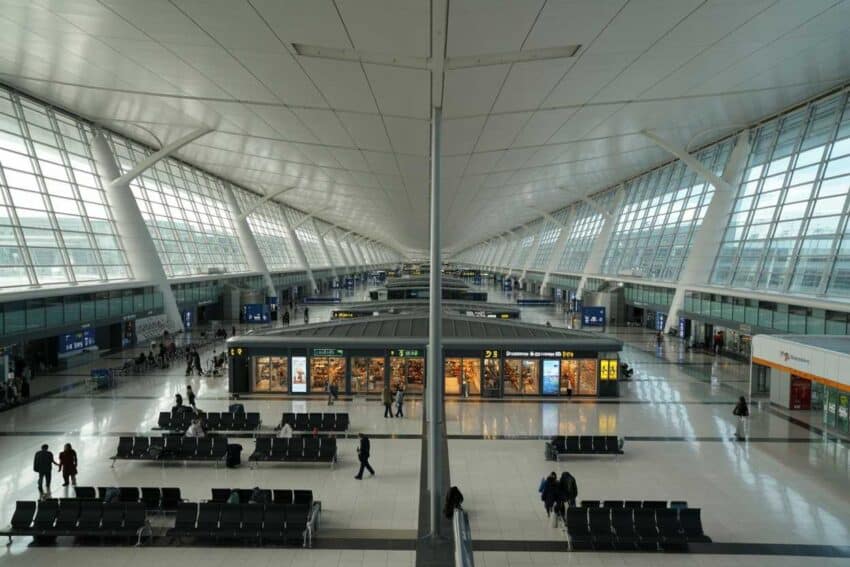
Image generated with Ai
Brussels Airport follows Frankfurt and more European gateways as EES passport queues put global travellers on alert. Brussels Airport has become an important focus for travellers watching EES passport queues across Europe. Frankfurt and more major airports are also adapting to the new Entry/Exit System. These EES procedures can affect global travellers arriving from outside the Schengen Area. As passport queues become an important part of journey planning, travellers need to understand what the changes mean. Travel And Tour World brings the latest Brussels Airport, Frankfurt, EES, passport queues and global travellers update. Travel And Tour World urges readers to read the entire story for essential travel guidance.
Brussels Airport Passport Queues Reveal Wider European Border-Control Pressure as EES Reshapes Travel
Brussels Airport is not the only European gateway where travellers have encountered longer passport-control processing under the Entry/Exit System, or EES. During 2026, several major airports reported longer border-processing periods, while industry data showed peak queues reaching hours at some external Schengen borders.
The scale of the issue matters because Europe’s busiest airports handle millions of international passengers during the summer. Even a relatively small increase in processing time per passenger can create large queues when several wide-body aircraft arrive close together.
The European Commission says EES became fully operational at external Schengen border crossing points on April 10, 2026. The system applies primarily to non-EU nationals travelling for short stays and electronically records travel-document information, entry and exit details, facial images and fingerprints.
Advertisement
Advertisement
For travellers, the most important point is that EES delays are not uniform. They vary according to airport infrastructure, passenger volumes, staffing, technology performance, arrival waves and the proportion of passengers requiring registration.
EES Border-Control Data: The Numbers Travellers Need to Know
The European Commission reported that more than 145 million entries and exits had been registered in EES by July 27, 2026. Earlier Commission figures showed more than 45 million crossings recorded during the progressive rollout before full operation.
Advertisement
Advertisement
The system operates across 29 European countries. A short stay means up to 90 days within any 180-day period, with the calculation applying across the participating European countries rather than separately for each destination.
The EU system collects passport and personal information alongside biometric information. For visa-exempt travellers, the system can collect four fingerprints and a facial image. Travellers requiring a short-stay visa generally already have fingerprints recorded through the Visa Information System, so EES processing differs according to traveller status.
Advertisement
Advertisement
| EES statistic or requirement | 2026 figure/detail |
|---|---|
| EES countries using the system | 29 |
| Full operational date | 10 April 2026 |
| Maximum short stay | 90 days |
| Reference period | 180 days |
| EES entries/exits reported by July 27 | 145+ million |
| Crossings recorded during earlier rollout | 45+ million |
| Data recorded | Passport, entry/exit, facial image, fingerprints |
| EU nationals | Generally outside EES |
| Iceland, Liechtenstein, Norway and Switzerland nationals | Generally outside EES |
| Manual passport stamping | Replaced by EES from full operation |
| Records of entries/exits/refusals | Normally retained for 3 years |
| Certain overstayer records | Can be retained for 5 years |
The figures show why relatively small operational problems can have a large passenger impact. EES is designed for millions of border movements across multiple countries, while airports must process passengers in concentrated waves.
Brussels Airport: Five-Hour Queues Follow Earlier Three-Hour Delays
Brussels Airport has experienced several distinct phases of EES-related pressure during 2026.
In March, before the final full implementation stage, the airport reported waiting times of more than three hours for arriving non-European passengers and as much as two hours for departures. The airport said nearly 600 passengers missed flights during a four-day period, while accumulated delays linked to border problems reached 21 hours.
At that stage, only a portion of passengers were being registered under the progressive EES process. Brussels Airport also identified staffing and restricted access to automated gates as operational factors affecting passenger flows.
Advertisement
Advertisement
The pressure later returned during the September 2026 travel period. Reports citing Brussels Airport indicated that some passengers arriving from outside the Schengen Area waited as long as five hours at passport control during the week of September 21 to 27. The delays primarily affected passengers who needed staffed border checks.
The airport’s passenger volume provides important context. Brussels Airport handled 2,521,985 passengers in August 2026, 1.3% more than August 2025. Total summer traffic reached approximately 5.1 million passengers across July and August.
| Brussels Airport indicator | Figure |
|---|---|
| March 2026 arrival wait | More than 3 hours |
| March 2026 departure wait | Up to 2 hours |
| Passengers reported missing flights | Nearly 600 |
| Border-related accumulated delays | 21 hours |
| August 2026 passengers | 2,521,985 |
| August year-on-year change | +1.3% |
| July-August summer passengers | About 5.1 million |
| August cargo | 70,764 tonnes |
| August cargo year-on-year change | +22% |
| August commercial flight movements | Slightly below 2025 |
The combination of high passenger volumes and additional border-processing requirements explains why the airport’s queues can change rapidly.
Frankfurt Airport: Two-Hour Peak Queues at One of Europe’s Major Hubs
Frankfurt Airport has become one of the clearest examples of how EES-related processing pressure can interact with very high passenger volumes.
Independent Qsensor data reported by the Financial Times showed a peak passport-control waiting time of 120 minutes at Frankfurt in July 2026. The comparable figure for July 2025 was 60 minutes, meaning the recorded peak doubled year on year.
The figure represents a peak queue measurement rather than a constant waiting time for every passenger. That distinction is important because border queues can change substantially during individual arrival waves.
Advertisement
Advertisement
Fraport’s own passenger data illustrates the scale of Frankfurt’s operation. The airport handled approximately 6.2 million passengers in July 2026, 1.4% above July 2025. In August, passenger traffic reached approximately 6.3 million, although that was 0.3% below the previous year’s August level. August nevertheless represented Frankfurt’s highest monthly passenger total of 2026 at that point.
Fraport expected around nine million travellers at Frankfurt between June 26 and August 9 during the German summer holiday period. The airport specifically warned non-EU travellers about longer border-control waits because of EES requirements.
| Frankfurt Airport indicator | 2025/2026 comparison |
|---|---|
| July 2025 peak passport wait | 60 minutes |
| July 2026 peak passport wait | 120 minutes |
| Reported peak change | +100% |
| July 2026 passengers | About 6.2 million |
| July passenger change | +1.4% |
| July 2026 aircraft movements | 41,286 |
| August 2026 passengers | About 6.3 million |
| August passenger change | -0.3% |
| August 2026 aircraft movements | 40,968 |
| August 2026 cargo | 179,400 tonnes |
| June-August holiday-period forecast | About 9 million travellers |
Frankfurt’s experience is particularly relevant to international tourists using Germany as a gateway to Central Europe. A long immigration queue can affect onward trains, domestic flights and connecting international services.
Amsterdam Schiphol: Peak Waiting Times Reached Two Hours
Amsterdam Schiphol has also been affected by the additional border procedures introduced for non-EU travellers.
Independent Qsensor figures reported by the Financial Times showed that the maximum recorded waiting time at Schiphol reached 120 minutes in July 2026. The corresponding July 2025 figure was 80 minutes. This represented a 40-minute increase, or approximately 50%, in the reported peak.
Schiphol itself warned travellers that passport control could become particularly busy when multiple flights arrived at similar times. The airport specifically connected the additional pressure with the new European border system.
Advertisement
Advertisement
The airport has made substantial infrastructure preparations. Schiphol says it installed 161 EES registration kiosks and added Passenger Assistants to help travellers through the revised process.
Schiphol’s guidance also makes an important distinction for travellers. Passengers holding Dutch or other EU passports do not use the EES kiosks in the same way as non-EU short-stay travellers. The airport advises passengers to follow the correct EU or non-EU signage and use eligible e-gates where available.
| Schiphol indicator | Figure |
|---|---|
| July 2025 peak passport wait | 80 minutes |
| July 2026 peak passport wait | 120 minutes |
| Peak increase | 40 minutes |
| Approximate percentage increase | 50% |
| EES registration kiosks | 161 |
| EES application | Non-EU short-stay travellers |
| Full EES operation | 10 April 2026 |
| EU passport holders | Outside normal EES registration |
For tourists using Amsterdam as a gateway to the Netherlands, Belgium, Germany or other European destinations, the airport’s advice reinforces one practical point: passenger flows can vary considerably according to arrival timing.
Munich Airport: Peak Waits Nearly Doubled
Munich Airport recorded another significant change in peak passport-control waiting times.
According to Qsensor data reported by the Financial Times, the maximum waiting time increased from 31 minutes in July 2025 to 60 minutes in July 2026. The increase was 29 minutes, representing roughly a 94% rise in the reported peak.
Although the absolute waiting time was lower than the 120-minute peaks reported at Frankfurt and Amsterdam, the year-on-year comparison demonstrates the additional pressure visible at another major German gateway.
Advertisement
Advertisement
Munich is an important entry point for travellers heading to Bavaria, Austria, Switzerland and other Central European destinations. Many international visitors also use the airport for connecting flights.
The airport’s experience should therefore be considered alongside the broader European pattern rather than viewed in isolation. A 60-minute border queue can become operationally significant when a traveller has a short connection or a separate rail reservation after landing.
| Munich Airport indicator | July comparison |
|---|---|
| July 2025 peak wait | 31 minutes |
| July 2026 peak wait | 60 minutes |
| Absolute increase | 29 minutes |
| Approximate percentage increase | 94% |
| 2026 system involved | EES |
| Affected traveller group | Primarily non-EU short-stay travellers |
The Munich figure also illustrates why travellers should not assume that every airport experiencing EES pressure will have identical delays. Airport design, passenger mix, border staffing and the timing of international arrivals all influence the result.
Paris Charles de Gaulle: Five-Hour Traveller Reports Highlight Connection Risks
Paris Charles de Gaulle has also appeared in reports concerning lengthy EES-related border queues.
Independent travel reporting documented traveller experiences involving waits of several hours, including a reported five-hour experience at Charles de Gaulle that resulted in a missed flight. Such individual reports should not be interpreted as an average airport waiting time, but they demonstrate the potential impact of severe peak-period congestion.
The airport is particularly significant for international tourism because Charles de Gaulle is one of Europe’s largest intercontinental gateways. Passengers frequently arrive from North America, Asia, Africa and other non-Schengen markets before connecting to France or other European destinations.
Advertisement
Advertisement
The EES issue becomes more complicated when several long-haul flights arrive within a narrow period. A single aircraft can carry hundreds of passengers, and a sequence of arrivals can create a sudden concentration of non-EU travellers requiring border processing.
France has also been among the countries seeking additional flexibility around EES implementation during periods of operational pressure. Reporting in September indicated that France and several other countries had sought continued flexibility rather than immediately applying biometric processing in every circumstance.
| Paris CDG consideration | Detail |
|---|---|
| Documented severe traveller wait | About 5 hours in an individual report |
| Consequence reported | Missed onward flight |
| Traveller group most relevant | Non-EU passengers crossing external Schengen border |
| Airport role | Major international gateway |
| EES challenge | High-volume arrival waves and border-processing capacity |
| Important qualification | Individual queue report, not an airport-wide average |
For tourists connecting through Paris, the most important lesson is to avoid building an itinerary around an extremely short connection when the journey requires external Schengen border processing.
Lisbon Airport: Portugal Warns Travellers About Longer Border-Control Times
Lisbon Airport provides another important example because its operator has directly warned passengers about longer border-control processing.
ANA, the airport operator, has published passenger information explaining the EES process and the collection of travel-document information, facial images and fingerprints. Its passenger guidance also warns that longer waiting times can occur because of changes in border control.
Portugal has also been one of the countries using the EU’s pre-registration approach through the Travel to Europe system. Industry sources have identified Lisbon among airports experiencing EES-related pressure during busy periods.
Advertisement
Advertisement
Lisbon is particularly important for travellers from Brazil, North America, Africa and other international markets because it functions as a major gateway into Portugal and the wider Schengen Area.
The practical issue for visitors is not simply the first border crossing. A traveller arriving in Lisbon and continuing by air, rail or road may have a tightly timed onward itinerary. Any unexpected immigration delay can therefore affect the remainder of the trip.
| Lisbon Airport factor | Traveller relevance |
|---|---|
| EES coverage | Non-EU short-stay travellers |
| Biometrics | Facial image and fingerprints depending on traveller status |
| Airport warning | Longer border waits possible |
| International role | Major gateway into Portugal |
| Pre-registration | Portugal among countries using the EU travel application approach |
| Key risk | Tight onward connections |
Lisbon’s experience demonstrates that airport preparation and passenger guidance are becoming as important as the biometric technology itself.
Milan Bergamo: Biometric Processing Applies to Extra-Schengen Travellers
Milan Bergamo Airport has also introduced dedicated EES procedures for passengers travelling to and from destinations outside the Schengen Area.
The airport operator, SACBO, announced that from March 30, 2026, border controls for affected non-EU passengers on extra-Schengen flights would use biometric data capture through EES. The airport specifically advised affected departing passengers to proceed directly to passport control after completing security checks. It also warned that arriving passengers could experience extended waiting times.
The airport’s official guidance is significant because it shows how the new system changes the sequence of a traveller’s airport experience. The passenger is not simply completing an additional digital step at an isolated kiosk. The biometric registration process is integrated into the overall border-control operation.
Advertisement
Advertisement
Milan Bergamo is heavily used by leisure travellers visiting northern Italy. It also serves as a practical gateway for tourists heading toward Milan, Lake Como, the Italian Alps and other destinations.
| Milan Bergamo EES indicator | Detail |
|---|---|
| Full biometric procedure for affected extra-Schengen traffic | From 30 March 2026 |
| Traveller group | Non-EU passport holders on affected routes |
| Departure instruction | Proceed promptly to passport control after security |
| Arrival impact | Waiting times may be extended |
| Main travel relevance | Northern Italy and wider European connections |
For tourists, the airport’s own instructions reinforce the need to treat border control as a separate time requirement rather than simply assuming security and passport procedures will move at the same speed.
Madrid-Barajas: Heavy International Traffic Adds Another Layer of Pressure
Madrid-Barajas is another important airport to monitor because of its enormous international passenger volume.
Aena reported 6,544,815 passengers at Madrid-Barajas during August 2026, an increase of 4.8% compared with August 2025. Of those passengers, 4,966,750 travelled on international routes, representing approximately 76% of the airport’s commercial passenger traffic during the month.
The airport also recorded 39,606 aircraft movements in August, up 6.5% year on year. Between January and August, Madrid-Barajas handled 47,072,394 passengers, 4.4% above the corresponding period of 2025.
These figures do not establish that all of the airport’s passenger growth translated directly into EES queues. They do, however, demonstrate the enormous volume of traffic moving through a major European external border gateway.
Advertisement
Advertisement
Madrid has also appeared among airports identified by airlines as experiencing significant EES-related delays during the 2026 summer season.
| Madrid-Barajas indicator | August 2026 |
|---|---|
| Total passengers | 6,544,815 |
| Year-on-year passenger change | +4.8% |
| Commercial passengers | 6,535,566 |
| International passengers | 4,966,750 |
| International passenger share of commercial traffic | About 76% |
| Domestic passengers | 1,568,816 |
| Aircraft movements | 39,606 |
| Movement change | +6.5% |
| January-August passengers | 47,072,394 |
| January-August passenger change | +4.4% |
| August cargo | 59,695 tonnes |
For travellers, Madrid’s figures underline why airport congestion can become highly sensitive to international arrival patterns. A high-volume airport does not need every passenger to experience a long wait for the border system to become a significant travel-planning consideration.
Other European Airports Reported as EES Pressure Points
The issue extends beyond the seven airports examined in detail above.
A July 2026 analysis of traveller reports identified Alicante, Amsterdam Schiphol, Berlin, Krakow, Lisbon, Malaga and Milan Bergamo among airports frequently mentioned in connection with long EES queues. Other airports appearing in traveller reports included Paris Charles de Gaulle and Naples.
Ryanair separately identified a wider group of airports where it said passengers were experiencing significant EES-related delays. Its list included Lisbon, Tenerife South, Madrid, Lanzarote, Alicante, Malaga, Milan Bergamo, Milan Malpensa, Verona, Paris Beauvais, Berlin, Cologne, Frankfurt Hahn, Krakow and Budapest.
These lists should not be treated as official EU rankings. The European Commission and Frontex do not publish a standardized airport-by-airport league table of EES waiting times. The airport and industry reports therefore provide a picture of documented pressure rather than a definitive ranking.
Advertisement
Advertisement
| Airport | Country | Reported EES/queue issue | Data qualification |
|---|---|---|---|
| Brussels | Belgium | Peaks up to 5 hours | Airport-related reports |
| Frankfurt | Germany | 120-minute July 2026 peak | Qsensor data reported by FT |
| Amsterdam Schiphol | Netherlands | 120-minute July 2026 peak | Qsensor data reported by FT |
| Munich | Germany | 60-minute July 2026 peak | Qsensor data reported by FT |
| Paris CDG | France | Individual reports of several-hour waits | Traveller reports |
| Lisbon | Portugal | Longer waits acknowledged by airport | Official airport guidance |
| Milan Bergamo | Italy | Extended waiting times possible | Official airport guidance |
| Madrid | Spain | Listed among reported EES hotspots | Airline reporting |
| Alicante | Spain | Frequently reported queues | Traveller/airline reports |
| Malaga | Spain | Frequently reported queues | Traveller/airline reports |
| Milan Malpensa | Italy | Reported EES delays | Airline reporting |
| Verona | Italy | Reported EES delays | Airline reporting |
| Krakow | Poland | Reported EES delays | Traveller/airline reports |
| Budapest | Hungary | Reported EES delays | Airline reporting |
| Berlin | Germany | Reported EES queues | Traveller/airline reports |
| Frankfurt Hahn | Germany | Reported EES delays | Airline reporting |
| Paris Beauvais | France | Reported EES delays | Airline reporting |
| Tenerife South | Spain | Reported EES delays | Airline reporting |
| Lanzarote | Spain | Reported EES delays | Airline reporting |
Why Airport Queues Can Change So Quickly
The EES process adds a digital registration component to border crossings involving eligible non-EU short-stay travellers. The EU says the system is designed to modernise border management, replace passport stamping and support automated border checks.
The operational reality depends on several variables.
The first is passenger volume. A busy arrival bank can place hundreds or thousands of people into border-control facilities within a short period.
The second is first-time registration. A traveller who has not previously completed the relevant EES registration can require more processing than a traveller whose details are already stored.
The third is technology. Airports need functioning kiosks, biometric equipment, databases and connections between local border infrastructure and the European system.
The fourth is staffing. Automated systems still require border officials to supervise processes, resolve exceptions and authorize entry.
Advertisement
Advertisement
The fifth is airport layout. Older terminals may have limited space for new registration equipment or may need passengers to move between several processing stages.
The European airport sector identified staffing shortages, technology issues, self-service equipment problems and limited use of automated border-control gates as major operational concerns during the rollout.
EES Processing Timeline: From Progressive Rollout to Full Operation
| Date/period | EES development | Traveller significance |
|---|---|---|
| 12 October 2025 | Progressive EES operation began | Registration introduced gradually |
| December 2025 | Airport industry reported processing increases of up to 70% at affected border points | Early operational pressure |
| February 2026 | ACI Europe reported waits of up to 2 hours at peak times | Concerns before summer |
| March 2026 | Brussels reported waits above 3 hours on arrival | Missed flights became a concern |
| 30 March 2026 | Brussels reported nearly 600 missed flights during four days | Major operational disruption |
| 10 April 2026 | EES became fully operational | Full external-border deployment |
| July 2026 | Major airport peaks reached 120 minutes at Frankfurt and Amsterdam | Summer congestion |
| August 2026 | Brussels handled 2.52 million passengers | Heavy summer traffic |
| September 2026 | Some countries sought further flexibility | Implementation remained uneven |
| September 2026 | Brussels Airport reported queues of up to 5 hours | Renewed travel disruption |
ACI Europe reported in December 2025 that EES-related processing times at airports had increased by as much as 70% at some border-control points, with waits reaching three hours during peak periods.
By February 2026, the airport sector was already warning that peak-season queues could reach four hours or more if operational problems remained unresolved.
By July, ACI Europe reported that peak waiting times had reached as much as five hours at some locations.
What the EES Means for Different Traveller Groups
Not every passenger arriving at Brussels or another Schengen airport is affected in the same way.
Advertisement
Advertisement
| Traveller category | EES treatment |
|---|---|
| EU citizen | Generally not registered |
| Icelandic citizen | Generally not registered |
| Liechtenstein citizen | Generally not registered |
| Norwegian citizen | Generally not registered |
| Swiss citizen | Generally not registered |
| Non-EU short-stay visitor | Normally registered |
| Visa-exempt non-EU visitor | Normally registered |
| Non-EU traveller with qualifying residence permit | Generally exempt |
| Non-EU traveller with qualifying long-stay visa | Generally exempt |
| Certain qualifying family members of EU citizens | Exempt when conditions are met |
The European Commission specifically states that EU nationals and nationals of Iceland, Liechtenstein, Norway and Switzerland are not registered in EES. It also identifies exemptions for certain non-EU nationals holding qualifying residence permits or long-stay visas.
This makes it important for travellers to identify their status before departure rather than assuming every international passenger faces the same procedure.
What Global Tourists Should Do Before Travelling Through a Busy EES Airport
Allow Extra Border Time
Travellers should leave a meaningful buffer between landing and any onward flight, train, coach or time-sensitive reservation.
A short connection that appears comfortable on paper can become risky when border-control processing changes unexpectedly.
Check the Correct Passenger Queue
EU and non-EU passengers can have different processing routes. Schiphol, for example, specifically advises passengers to follow the correct signs and use eligible automated gates.
Keep Travel Documents Accessible
Passports, residence documents and supporting travel paperwork should be immediately available.
Advertisement
Advertisement
This is particularly important when families are travelling together and multiple passengers must complete border procedures.
Avoid Tight Separate-Ticket Connections
A passenger holding separate tickets may have fewer protection options if an immigration queue causes a missed departure.
A longer connection can provide a much larger safety margin.
Check Airport Updates Before Departure
Airports can change passenger-flow procedures according to traffic levels.
Brussels Airport, Frankfurt Airport and Schiphol all provide traveller information relating to border processing and EES procedures.
The Biggest Numbers at a Glance
| Airport | Key 2026 queue figure | Key traffic figure | Source type |
|---|---|---|---|
| Brussels | Up to 5 hours | 2,521,985 passengers in Aug. | Airport/reporting |
| Frankfurt | 120-minute July peak | About 6.3m passengers in Aug. | Qsensor + airport |
| Amsterdam Schiphol | 120-minute July peak | Airport publishes monthly traffic statistics | Qsensor + airport |
| Munich | 60-minute July peak | Major German international hub | Qsensor |
| Paris CDG | Individual reports around 5 hours | Major international gateway | Traveller reports |
| Lisbon | Longer waits acknowledged | Major Portuguese gateway | Airport guidance |
| Milan Bergamo | Extended waits possible | Major extra-Schengen leisure gateway | Airport guidance |
| Madrid-Barajas | Reported as an EES hotspot | 6,544,815 passengers in Aug. | Airline + Aena |
The comparison demonstrates an important pattern: there is no single standard EES queue time across Europe. Waiting periods differ sharply between airports and even between individual arrival periods at the same airport.
Advertisement
Advertisement
Why the Five-Hour Brussels Figure Matters for Travellers
The Brussels Airport situation is significant because it combines an extremely long reported peak wait with a major international passenger operation.
The airport handled more than 2.5 million passengers in August alone and more than five million during July and August combined. Its network includes extensive European and intercontinental traffic, creating substantial arrival waves at the external Schengen border.
Earlier in 2026, Brussels had already recorded more than three-hour arrival waits and nearly 600 missed flights during a particularly difficult four-day period.
The latest five-hour figure therefore forms part of a wider pattern rather than representing an isolated operational concern.
For tourists, the message is practical. Border control should now be treated as a major component of European journey planning when entering the Schengen Area from outside Europe.
Final Traveller Data Summary
The EES has changed the way many non-EU visitors cross Europe’s external borders.
Advertisement
Advertisement
The system now operates across 29 countries and electronically records eligible travellers’ entry and exit information. It also uses biometric information, including facial images and fingerprints, according to the traveller’s circumstances.
More than 145 million entries and exits had already been registered by July 2026, showing the scale at which the system is operating.
At the same time, airports have reported operational challenges. Frankfurt recorded a 120-minute July peak, Amsterdam reached the same reported peak, and Munich reached 60 minutes. Brussels subsequently recorded reports of queues lasting as long as five hours.
For international tourists, these figures do not mean every journey will involve a long queue. They demonstrate that waiting times can vary considerably.
The safest travel strategy is therefore to understand whether EES applies, arrive with all required documents ready, monitor official airport information and leave sufficient time for border processing.
As European airports continue refining their infrastructure and procedures, travellers should expect the border experience to remain an important part of trip planning throughout the transition to Europe’s digital border system.
Conclusion
Brussels Airport follows Frankfurt and more European gateways as EES passport queues continue to attract attention from global travellers. The new border system is changing how many non-EU visitors enter the Schengen Area. Longer processing times can also affect connecting flights, trains and holiday plans. Therefore, travellers should check official EES requirements before departure and allow extra time for border control. Brussels Airport, Frankfurt and other major gateways are adapting to the new procedures. With careful planning, global travellers can reduce uncertainty and enjoy smoother European journeys while the EES system continues to evolve.
Advertisement
