
Albania vs Montenegro: Why Beach Geography, Tourism Growth and Seasonality Matter for Travellers

Published
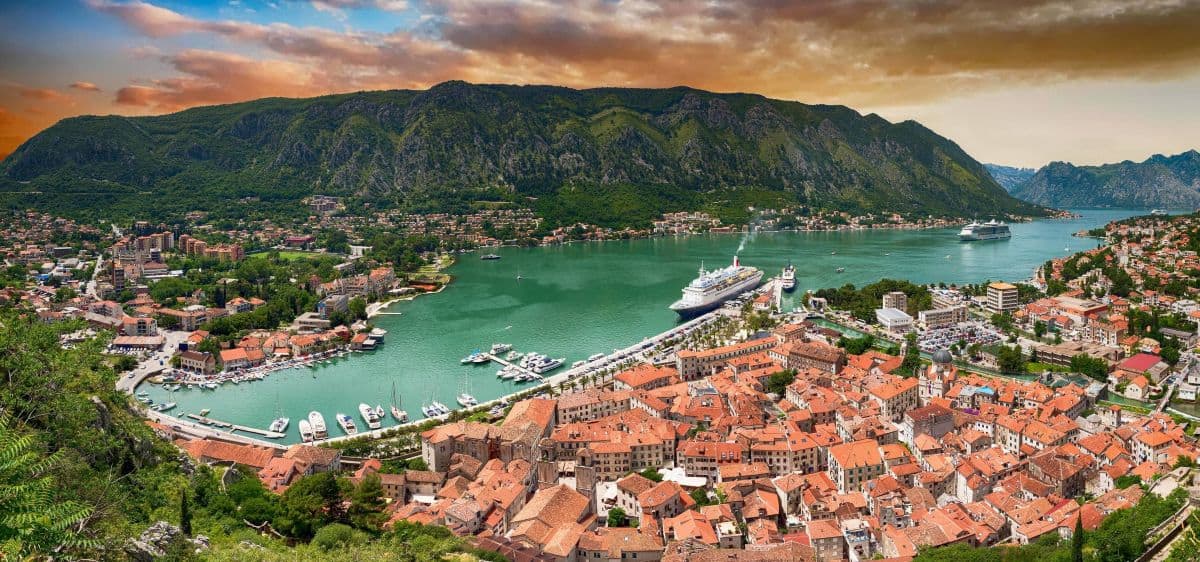
Montenegro and Albania now sit among Europe’s most closely watched Balkan coastal destinations, yet their seaside propositions differ sharply. Montenegro recorded 2.73 million tourist arrivals and 15.37 million overnight stays in 2025, with 92.6% of nights concentrated in seaside resorts. Albania, meanwhile, reported rapid accommodation growth through 2025, including a 33.3% rise in nights spent during August and a 38.2% increase in June.
The contrast extends beyond visitor numbers. Montenegro compresses bays, mountains, medieval settlements and beaches into a 293-kilometre coastline, while Albania combines a 450-kilometre Adriatic-Ionian coastline with long sandy beaches and the increasingly prominent Albanian Riviera. For travellers, the decision therefore depends on geography, beach character, mobility, season, accommodation and the kind of coastal experience they want.
Two Coastlines, Two Holiday Architectures
Montenegro offers a compact maritime geography. Its official tourism authority lists 293 kilometres of coastline, 117 beaches and 52 kilometres of beach length. Velika Plaža near Ulcinj stretches for 13 kilometres, creating an important counterpoint to Montenegro’s better-known rocky bays.
The coastline also creates unusual proximity between different holiday environments. Travellers can move from the Bay of Kotor’s steep mountain setting towards Tivat, Budva, Bar and Ulcinj. That compactness makes Montenegro particularly suitable for itineraries mixing swimming, heritage, dining and short road journeys.
Advertisement
Advertisement
Albania presents a broader coastal canvas. Its official tourism material places the western coastline at 450 kilometres, including the Adriatic and Ionian shores and associated lagoon areas. The Adriatic section is generally flatter and sandier, while the Ionian side becomes more rugged, mountainous and bay-rich.
| Coastal characteristic | Montenegro | Albania |
|---|---|---|
| Coastline | 293 km | About 450 km |
| Officially cited beaches | 117 | Diverse beaches across Adriatic and Ionian coasts |
| Major seas | Adriatic | Adriatic and Ionian |
| Longest cited beach | Velika Plaža, 13 km | Borsh coastline cited at about 7 km |
| Major coastal zones | Kotor, Tivat, Budva, Bar, Ulcinj | Durrës, Vlorë, Himarë, Dhërmi, Borsh, Sarandë, Ksamil |
| Core coastal character | Bays, coves, beaches and mountain backdrops | Sandy Adriatic shore plus rugged Ionian Riviera |
The comparison therefore starts with geography rather than marketing. Montenegro is compact and concentrated; Albania is expansive and geographically varied.
Advertisement
Advertisement
Montenegro’s Coast Works as a Compact Circuit
Montenegro’s strongest travel proposition lies in the ability to combine several holiday formats without crossing huge distances. Kotor supplies fortified urban heritage and dramatic bay scenery, while Tivat brings a more contemporary maritime atmosphere.
Further south, Budva provides a denser resort environment, nightlife and established beach infrastructure. Bar adds a more spacious coastal setting, while Ulcinj introduces long sandy beaches and a different cultural landscape.
The official tourism authority also highlights sailing, yachting, kayaking, paddleboarding, boat trips and kitesurfing among coastal activities. That broadens the proposition beyond conventional beach lounging.
The numbers reinforce the coastline’s centrality. 92.6% of Montenegro’s 2025 tourist overnight stays occurred in seaside resorts, compared with only 2.8% in mountain resorts and 2.7% in the capital.
That concentration has an important practical implication. Travellers seeking a predominantly coastal holiday will find that Montenegro’s tourism infrastructure is heavily aligned with the Adriatic rather than dispersed evenly across the country.
Albania Brings the Adriatic and Ionian Worlds Together
Albania’s geographical advantage is variety across a longer coastal corridor. The official tourism authority describes the Adriatic as predominantly sandy, with flatter beaches and calmer waters. It specifically identifies Velipoja, Shëngjin, Durrës, Golem, Spille, Divjaka and Vlorë among its coastal destinations.
Advertisement
Advertisement
South of Vlorë, the physical landscape changes. The Albanian Riviera runs towards Sarandë and Ksamil, passing through Palasa, Dhërmi, Vuno, Himarë, Qeparo, Borsh and Lukovë. The route combines steep terrain, coves, villages and Ionian beaches.
That creates two distinctly different Albanian beach holidays. The northern and central Adriatic can suit travellers seeking longer, flatter and more family-oriented beaches, while the Riviera offers a more dramatic road-trip proposition.
The difference matters when planning a first visit. Travellers should not treat “Albania’s coast” as one uniform destination because Durrës and Ksamil can represent very different experiences.
Tourism Numbers Reveal a Rapidly Changing Market
The tourism statistics tell a bigger story than beach photographs. Montenegro welcomed 2,728,564 tourists in 2025, generating 15,367,166 overnight stays. Foreign travellers accounted for 95.8% of those nights, demonstrating the country’s pronounced international orientation.
Its private accommodation market is also substantial. Individual accommodation recorded 1.22 million arrivals and 10.18 million overnight stays in 2025. Moreover, 94.8% of those private-accommodation nights occurred in seaside resorts.
Albania is displaying a different growth pattern. INSTAT reported that accommodation-establishment visitors increased 35.1% year on year in August 2025, while nights climbed 33.3%. Non-resident nights rose 42.6%, and coastal non-resident visitors increased 47.8%.
Advertisement
Advertisement
June showed similar momentum. Total visitors increased 37.2%, while nights increased 38.2%. Non-resident visitors in coastal areas rose 42.4%, indicating strong international demand entering the summer season.
| Tourism indicator | Montenegro | Albania |
|---|---|---|
| 2025 tourist arrivals | 2.73 million | Official annual accommodation total is still being consolidated separately |
| 2025 overnight stays | 15.37 million | Strong monthly growth throughout 2025 |
| Foreign share of Montenegro nights | 95.8% | Strong non-resident growth |
| Montenegro seaside share | 92.6% | Coastal growth particularly strong in summer |
| August 2025 night growth | — | +33.3% |
| June 2025 night growth | — | +38.2% |
A crucial statistical warning applies here. Albania’s border-entry figures should not be equated with hotel arrivals. INSTAT defines border arrivals as entries at air, sea and land points, while accommodation arrivals refer to people staying overnight.
That distinction prevents inflated or misleading comparisons between the two countries.
Seasonality Changes the Holiday Equation
Summer remains the dominant period for both markets. Eurostat’s 2026 analysis identified Montenegro and Albania among Europe’s countries with the strongest tourism seasonality in 2025. Across the wider European tourism market, almost one-third of annual accommodation nights occurred in July and August.
For travellers, this makes shoulder-season planning particularly significant. June and September can potentially combine usable beach weather with less intense seasonal pressure, although conditions vary by coast and year.
Albania’s statistics demonstrate that demand can strengthen quickly before and after the absolute peak. September 2025 recorded 405,011 non-resident accommodation visitors, compared with 293,909 in September 2024. Coastal non-resident visitors rose from 192,219 to 276,989.
Advertisement
Advertisement
Montenegro also maintains meaningful coastal accommodation activity beyond high summer. In October 2025, seaside resorts still represented 85.7% of collective-accommodation overnight stays.
Beach Type Matters More Than Beach Reputation
The biggest mistake in comparing these destinations is treating every celebrated beach as interchangeable. Beach material, water conditions, access and surrounding terrain can completely change the traveller experience.
Montenegro provides a mixture of sandy, pebbled and rocky environments. Velika Plaža is the obvious large-scale sandy exception, while numerous coves and smaller beaches create a more enclosed coastal experience.
Albania’s official tourism authority describes its Adriatic shore as mainly sandy, with shallow and calmer beaches suited to family holidays. The Ionian coast becomes more rugged, with rocky bays, dramatic cliffs and smaller beaches.
For families, therefore, northern and central Albanian beaches may offer a different proposition from the steep Riviera. Conversely, travellers prioritising dramatic coastal scenery may find the southern Albanian route particularly compelling.
Accommodation Is Becoming a Strategic Factor
Montenegro already has a mature private-accommodation ecosystem. Its 2025 individual accommodation market produced more than 10.17 million overnight stays, equivalent to roughly two-thirds of the country’s total tourist nights.
Advertisement
Advertisement
Albania is rapidly expanding its accommodation supply. INSTAT reported a 61.5% hotel-room occupancy rate in August 2025, up from 59.6% a year earlier. September occupancy also climbed to 52.7%, compared with 40.4% in September 2024.
This growth matters for travellers because increasing demand can produce greater choice while also intensifying pressure on popular coastal locations. Booking timing, location and cancellation conditions therefore become increasingly important during peak months.
The Infrastructure Question Cannot Be Ignored
A beach destination is only as useful as its connections. Montenegro’s compact geography allows travellers to structure a multi-stop coastal itinerary around Podgorica, Tivat and neighbouring regional gateways.
Albania provides access through Tirana and a road network that connects the capital with its principal coastal zones. Official Albanian tourism material cites approximately 18,000 kilometres of roads, including about 3,700 kilometres of national main roads.
The practical difference is itinerary design. Montenegro lends itself naturally to a concentrated coastal circuit, whereas Albania rewards travellers who allocate more time to moving between distinct coastal regions.
Tourism Growth Is Creating New Pressure
Both countries now face the classic challenge of successful coastal tourism: expanding demand without eroding the qualities that attract visitors.
Advertisement
Advertisement
Albania’s tourism strategy has explicitly promoted coastal and maritime tourism alongside mountain, ecotourism, cultural, agritourism and gastronomic products.
That diversification matters because reducing dependence on a short summer season can distribute economic activity more widely. Albania’s 2025 accommodation data already show growing demand beyond the traditional coastal summer pattern, including substantial growth in non-coastal areas.
Montenegro faces a related concentration issue. With more than nine in every ten tourist nights occurring in seaside resorts, the coastal economy remains exceptionally exposed to seasonal demand.
For travellers, this translates into a simple consideration: the quieter experience increasingly requires timing and destination selection rather than assuming the entire coastline remains uncrowded.
Match The Coastline To Your Trip
| Traveller priority | What the evidence suggests |
|---|---|
| Compact multi-stop itinerary | Montenegro’s concentrated coastline |
| Dramatic bay-and-mountain scenery | Montenegro’s Bay of Kotor and central coast |
| Long sandy beaches | Albania’s Adriatic and Montenegro’s Ulcinj area |
| Riviera road trip | Southern Albania |
| Historic coastal atmosphere | Kotor and Montenegro’s older coastal settlements |
| Larger geographical variety | Albania |
| Private apartments | Strong established market in Montenegro |
| Expanding accommodation choice | Albania |
| Shoulder-season exploration | Both, with strong seasonality requiring careful timing |
| Family-oriented flatter beaches | Albania’s Adriatic coast |
| Sailing and compact coastal excursions | Montenegro |
| Beach plus broader Balkan itinerary | Either, depending on entry point and route |
A More Useful Way to Choose
The evidence does not produce one universal answer. Instead, it reveals two distinct coastal travel models.
Montenegro suits travellers who value concentration. Its 293-kilometre coastline packs bays, historic towns, resort centres, mountains and beaches into a relatively compact itinerary. The exceptionally high share of seaside overnight stays confirms how deeply tourism infrastructure is tied to the coast.
Advertisement
Advertisement
Albania suits travellers who value geographical range. Its 450-kilometre coastline crosses two seas and shifts from sandy Adriatic beaches to the mountainous Ionian Riviera. Its rapidly growing accommodation market also signals a destination still undergoing substantial tourism transformation.
For travellers planning several days rather than a single resort stay, that distinction is more valuable than any generic ranking. The smarter choice is to decide first whether the holiday requires compactness, coastal drama, sandy beaches, cultural stops, road-trip variety or shoulder-season flexibility. The two countries can then be assessed against those priorities.
The Balkan Coast Is Becoming More Diverse
Montenegro and Albania increasingly occupy the same international travel conversation, but their tourism trajectories remain distinct. Montenegro has a mature, highly concentrated coastal economy, while Albania is experiencing rapid accommodation growth and expanding its appeal across both the Adriatic and Ionian shores.
For readers, the most useful lesson is that neither coastline should be reduced to a checklist of famous beaches. The real choice is between different holiday architectures, shaped by geography, tourism intensity, accessibility and seasonality.
That makes both countries relevant for different kinds of Balkan travel. Montenegro can compress a sophisticated coastal itinerary into a smaller geographic footprint, while Albania offers a longer, more varied maritime journey. Travellers who understand that distinction can build a trip around the experience they actually want, rather than choosing a destination based only on social-media beach imagery.
Frequently Asked Questions
Is Montenegro or Albania better for a beach holiday?
Montenegro and Albania offer different coastal experiences rather than identical beach holidays. Montenegro combines a compact Adriatic coastline, mountain scenery and historic towns, while Albania offers a longer coastline spanning both the Adriatic and Ionian seas.
Advertisement
Advertisement
Which country has more coastline, Montenegro or Albania?
Albania has the longer coastline. Montenegro has about 293 kilometres of coastline, while Albania’s coastline extends for roughly 450 kilometres, including its Adriatic and Ionian shores.
Which country has the better sandy beaches?
Albania has extensive sandy beaches along parts of its Adriatic coast, particularly around Durrës and further north. Montenegro also has sandy stretches, with 13-kilometre Velika Plaža near Ulcinj standing out as one of its largest.
Is Montenegro more scenic than Albania?
The two countries offer different forms of coastal scenery. Montenegro is particularly notable for the dramatic Bay of Kotor, where steep mountains meet the sea, while Albania’s southern Riviera combines rugged mountains, turquoise Ionian waters and smaller coastal bays.
Which country is better for a Balkan road trip?
Montenegro’s compact coastline makes it convenient for travellers wanting several coastal stops within a relatively short itinerary. Albania offers a longer coastal journey, particularly between Vlorë, Himarë, Dhërmi, Borsh, Sarandë and Ksamil.
Which destination is better for families?
Albania’s Adriatic coast contains numerous broad, relatively shallow sandy beaches that can suit family holidays. Montenegro also has family-friendly resorts, although some of its celebrated beaches are smaller, pebbled or surrounded by steeper terrain.
Which country has more established coastal tourism?
Montenegro has a particularly concentrated coastal tourism economy. 92.6% of its tourist overnight stays in 2025 occurred in seaside resorts, demonstrating the importance of the Adriatic to its tourism sector.
Advertisement
