
United States Echoes Canada as Newark, Dallas, Denver Raise Alarm Over Challenging Connecting Flights

Published
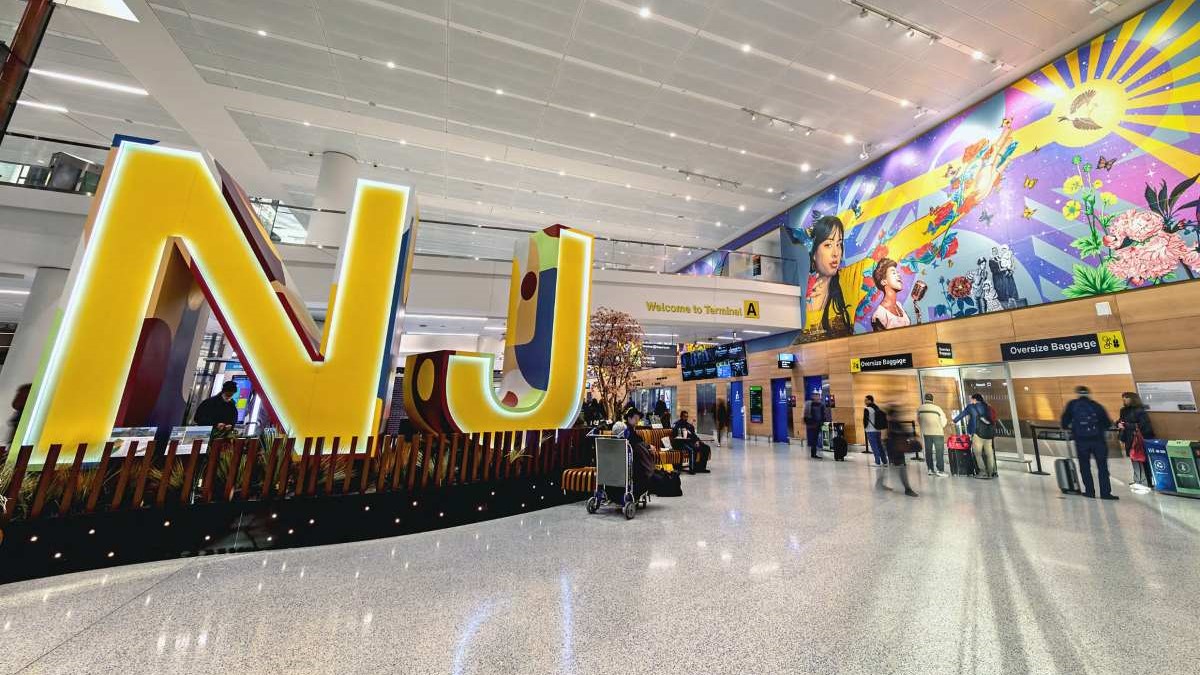
Indeed, for many people, making a connection can be the most stressful experience during their trip. Recently, the United States has joined Canada in bringing to the spotlight the problem of connecting flights in large-scale airports. Passengers using connections from Newark, Dallas, and Denver need to be aware of the problems that these connections might bring. But besides delays, there could be other factors such as distance between gates, change of terminals, bad weather, security checks, and arrival at an international terminal that can transform a few-minute connection into a race against time. In addition, a missed flight could be the cause of additional expenses, delays, and cancellation of holiday plans. The strong warning is justified since what seems like an easy connection during the process of booking a ticket might prove to be a completely different thing once one arrives at an airport. Travel And Tour World reviews difficult connections for passengers and shares important information about connections travelers should be aware of. Learn more about this topic in the full article below.
Worst U.S. Airports for Connecting Flights: The Cities and States Where Tight Layovers Can Turn Risky
A connecting flight can turn a simple journey into a race against the clock. A late inbound aircraft, a distant gate, a terminal change, or another security check can quickly consume the time a passenger thought they had.
Across the United States, some major airports create more connection challenges than others. The reasons vary. At some hubs, the biggest issue is recurring delay pressure. At others, the airport itself is so large that passengers need significant time to move between gates. International travellers face another layer of complexity, with customs, baggage collection and security screening often required before continuing to a domestic flight.
This does not mean every connection at these airports will be difficult. It means passengers should understand the risks before choosing a short layover.
Advertisement
Advertisement
The latest Bureau of Transportation Statistics data available through July 2026 provide a useful starting point. BTS defines an on-time flight as one that departs or arrives less than 15 minutes after its scheduled time. Its database contains historical airport and airline performance data dating back decades.
Recent 2026 data also show that several large U.S. airports continue to struggle with punctuality. One BTS-based analysis puts Newark, LaGuardia, Orlando, San Francisco, JFK and Chicago O’Hare among the airports with particularly low arrival punctuality in 2026. For connecting passengers, however, the numbers tell only part of the story.
Advertisement
Advertisement
Comment from Anup Kumar Keshan, Founder and Editor-in-Chief, Travel And Tour World:
“Connecting through a major U.S. airport can shape the entire travel experience. Passengers should look beyond ticket prices and consider delays, terminal distances, weather risks and immigration procedures. A well-planned connection with sufficient time can reduce stress and help travellers navigate America’s busiest aviation hubs with greater confidence.”
Ranked comparison of major U.S. airports for connecting passengers
| Rank | Airport | City | State | Airport code | Key connection concern | BTS 2026 departure on-time performance |
|---|---|---|---|---|---|---|
| 1 | Dallas/Fort Worth International Airport | Dallas–Fort Worth | Texas | DFW | Large hub, weather and network-wide delay risk | —* |
| 2 | Newark Liberty International Airport | Newark | New Jersey | EWR | Northeast airspace congestion and operational restrictions | —* |
| 3 | Chicago O’Hare International Airport | Chicago | Illinois | ORD | Huge hub, terminal transfers and weather disruption | 70% |
| 4 | Denver International Airport | Denver | Colorado | DEN | Very large airport, long transfers and weather | —* |
| 5 | John F. Kennedy International Airport | New York | New York | JFK | Multiple terminals and international transfer procedures | —* |
| 6 | LaGuardia Airport | New York | New York | LGA | Congested Northeast airspace and cancellation exposure | —* |
| 7 | Hartsfield-Jackson Atlanta International Airport | Atlanta | Georgia | ATL | Enormous hub volume and weather-related cascading delays | 77% |
| 8 | Miami International Airport | Miami | Florida | MIA | International processing and weather disruption | —* |
| 9 | Los Angeles International Airport | Los Angeles | California | LAX | Long terminal transfers and possible additional screening | —* |
| 10 | San Francisco International Airport | San Francisco | California | SFO | Weather/ATC exposure and connection timing | —* |
| 11 | Boston Logan International Airport | Boston | Massachusetts | BOS | Northeast weather and airspace congestion | —* |
| 12 | Philadelphia International Airport | Philadelphia | Pennsylvania | PHL | Northeast congestion and weather-related disruption | —* |
| 13 | Ronald Reagan Washington National Airport | Washington, D.C. | Virginia | DCA | Cancellation exposure and constrained regional operations | —* |
Why connecting flights are more vulnerable to airport problems
A passenger travelling directly from A to B has one major flight to worry about. A passenger travelling through a hub has two or more moving parts.
If the first aircraft arrives 25 minutes late, the passenger may still have to walk or take a train to another concourse. If the next flight leaves from a different terminal, the passenger could need a shuttle or another security screening.
International connections are even more complicated.
At Denver International Airport, for example, passengers arriving internationally must clear U.S. Customs and Border Protection, collect their baggage, recheck it, and pass through TSA security before travelling to their connecting gate.
Advertisement
Advertisement
That makes a 90-minute connection very different from a 90-minute connection between two domestic flights using nearby gates.
The most difficult airports therefore tend to fall into several categories: airports with frequent delays, huge connecting hubs, complex terminal layouts, weather exposure, and airports where international transfers involve additional processing.
Texas: Dallas-Fort Worth International Airport
Dallas-Fort Worth International Airport, or DFW, is one of the most important connecting hubs in the United States. It is also an airport where operational disruption can have consequences far beyond one individual flight.
Recent connection-risk analysis has highlighted DFW because it combines punctuality, cancellation exposure and enormous connecting volume. BTS airport data also show DFW remains one of the busiest major U.S. airports by scheduled activity.
There is an important distinction here.
DFW is not especially difficult because passengers cannot move around the airport. In fact, its Skylink train connects all five terminals. The airport says the service operates 24 hours a day, trains arrive every two minutes and the average journey takes about five minutes. The longest journey between terminals is about nine minutes.
Advertisement
Advertisement
The bigger concern is what happens when flights begin running late.
A major hub carries connecting passengers from many different origins. When weather, aircraft availability or air-traffic restrictions disrupt the operation, delays can spread through the network.
For passengers using DFW, a longer connection can therefore be more valuable than simply choosing the shortest possible itinerary.
New Jersey: Newark Liberty International Airport
Newark Liberty International Airport is one of the clearest examples of an airport where the wider airspace system matters as much as the terminal.
Newark sits within the highly congested New York metropolitan aviation system. FAA traffic advisories during 2026 have repeatedly cited arrival delays at EWR because of staffing, thunderstorms and constrained demand. In August, for example, the FAA warned of airborne holding and arrival delays of up to 30 minutes during separate disruption periods.
That matters for connecting passengers because a delay before landing can be just as damaging as a delay after landing.
Advertisement
Advertisement
A passenger may arrive at the airport only 20 or 30 minutes behind schedule, but that lost time can be enough to turn a comfortable connection into a missed flight.
The airport’s vulnerability was demonstrated dramatically on 21 September 2026. A communications failure at an FAA air-traffic facility in Philadelphia, compounded by a severed backup fibre-optic line, disrupted flights across the Northeast. Newark was among the hardest-hit airports, with hundreds of cancellations.
The incident was exceptional rather than an everyday event. But it illustrated how a problem in the regional air-traffic-control system can quickly affect several airports at once.
For connecting passengers, that is the bigger lesson from Newark: the risk is not always inside the airport.
Colorado: Denver International Airport
Denver International Airport is a different kind of connection challenge.
The airport is enormous, and its physical scale can become important when passengers have a short layover.
Advertisement
Advertisement
DEN uses an automated train to connect its concourses. That system makes the airport much easier to navigate than its size might suggest. Yet passengers still need to reach the train, travel to the correct concourse, and then make their way to the gate.
Weather adds another complication.
Denver can experience winter storms, strong winds and other weather conditions capable of disrupting flight schedules. When that happens at a major connecting hub, passengers can find themselves dealing with both an operational delay and a difficult airport transfer.
International travellers face additional steps. DEN states that passengers arriving internationally must clear customs and immigration, collect and recheck baggage, pass through TSA screening, and then take the automated train to their connecting gate.
That sequence makes international-to-domestic connections particularly important to plan carefully.
The airport is therefore a good example of why punctuality figures alone cannot define connection difficulty.
Advertisement
Advertisement
Illinois: Chicago O’Hare International Airport
Chicago O’Hare International Airport is one of America’s most important aviation hubs. It is also an airport where passengers need to understand the terminal map before booking a tight connection.
O’Hare has four passenger terminals: 1, 2, 3, and 5. Terminals 1, 2 and 3 are connected on the secure side, which makes many domestic transfers relatively straightforward. Terminal 5 is different.
The airport provides a Terminal Transfer Bus for connecting passengers between Terminal 5 and the core terminals. The service operates during specified hours and can avoid another security screening.
But outside those operating hours, passengers transferring between Terminal 5 and Terminals 1, 2, or 3 may need to leave the secure area, use the Airport Transit System, and pass through TSA screening again.
International arrivals create another layer.
Passengers arriving from abroad generally have to clear U.S. Customs and Border Protection and collect their checked luggage before continuing. Connecting passengers then recheck their bags and go through security.
Advertisement
Advertisement
For an international traveller, therefore, the difference between a 90-minute and a two-hour connection can be substantial.
New York: John F. Kennedy International Airport
John F. Kennedy International Airport presents a different challenge.
The airport’s terminal structure means the connection experience depends heavily on the airlines and terminals involved.
A passenger making a straightforward connection within a compatible terminal arrangement may have an uncomplicated experience. Another passenger may need to transfer between terminals, deal with additional security procedures or allow more time for an international arrival.
JFK also shares the broader constraints of the New York airspace system.
The September 2026 FAA communications outage demonstrated just how interconnected the region’s airports are. JFK, LaGuardia, Newark, and Philadelphia were all affected by the same underlying air-traffic-control problem.
Advertisement
Advertisement
For passengers, this means that a delayed connection through JFK may not be caused by anything happening at the gate itself.
New York: LaGuardia Airport
LaGuardia is not normally the first airport people associate with international hub connections. Yet its delay profile makes it relevant when passengers are comparing itineraries.
BTS-based 2026 analysis has placed LaGuardia among the U.S. airports with particularly low on-time arrival performance.
Its location within the crowded New York aviation system adds another challenge.
The September 2026 FAA outage affected LaGuardia along with Newark, JFK and Philadelphia. Flights resumed after the communications problem was repaired, but the disruption continued to affect passengers after normal operations restarted.
For travellers using LGA as a connection, the main consideration is therefore not simply terminal size. It is the possibility that a regional disruption can affect the first or second flight in the itinerary.
Advertisement
Advertisement
Georgia: Hartsfield-Jackson Atlanta International Airport
Atlanta is perhaps the best example of an airport that can be easy to navigate while still being vulnerable as a connecting hub.
Hartsfield-Jackson is built around connecting traffic, and its internal transport system helps passengers move between concourses.
The challenge is scale.
When a hub handles a huge number of flights, even a relatively small operational problem can affect a large number of passengers.
Weather is particularly important in Atlanta. Thunderstorms can slow aircraft movements, affect departures and arrivals and create knock-on delays across an airline’s network.
This means Atlanta should not automatically be avoided simply because it is a large hub. Instead, passengers should recognise the difference between a normal day and a disruption day.
Advertisement
Advertisement
A longer connection can provide useful protection when the first flight is delayed.
Florida: Miami International Airport
Miami International Airport plays an especially important role for passengers travelling between the United States, Latin America and the Caribbean.
That makes international connection procedures particularly relevant.
Travellers arriving from abroad may need to complete U.S. immigration and customs procedures before continuing to another destination. Weather can add another source of disruption, particularly during periods of severe storms or tropical weather.
Miami is therefore a good example of an airport where the connection risk depends heavily on the itinerary.
A domestic-to-domestic transfer is not the same experience as arriving from another country and continuing to a U.S. city.
Advertisement
Advertisement
Passengers should check whether baggage will be transferred automatically, whether they must clear U.S. entry formalities and whether another TSA screening is required.
California: Los Angeles International Airport
Los Angeles International Airport is another airport where geography matters.
LAX has improved its terminal connections, including pedestrian access and shuttle services. The airport says passengers can now walk between terminals on a post-security route, with the distance from Terminal 1 to Terminal 8 stretching to roughly two miles.
That is useful progress, but two miles is still two miles.
LAX also operates a free terminal connection shuttle. The airport warns passengers that transfer times depend on the terminals involved and the time of day. During busy periods, passengers should allow additional time because shuttles can become crowded.
Some terminal combinations can also require passengers to leave the secure area and go through security again.
Advertisement
Advertisement
This makes the exact terminal combination crucial.
A connection that looks comfortable on a booking screen may be much tighter once walking, shuttle travel, and security are considered.
California: San Francisco International Airport
San Francisco International Airport is another major West Coast hub where weather and air-traffic conditions can influence connection reliability.
SFO’s position within the Bay Area aviation system means passengers should pay attention to the time of year and the nature of their itinerary.
A connection involving a nearby gate can be straightforward. A connection affected by a delayed inbound aircraft can be much less forgiving.
Recent 2026 airport data have also placed SFO among the large U.S. airports with weaker punctuality performance.
Advertisement
Advertisement
For passengers, the practical lesson is simple: do not judge the safety of a connection by the airport’s map alone.
Massachusetts: Boston Logan International Airport
Boston Logan is another airport where Northeast airspace congestion matters.
Like Newark, JFK, LaGuardia, and Philadelphia, Boston can be affected by broader regional weather and air-traffic conditions.
The September 2026 communications outage provided a striking example. The disruption affected airports across the Northeast, including Boston, even though the technical problem was located at an FAA facility elsewhere.
That is why passengers travelling through the Northeast should think about the entire regional network rather than one airport in isolation.
Pennsylvania: Philadelphia International Airport
Philadelphia International Airport is particularly interesting because its operational role extends beyond the airport itself.
Advertisement
Advertisement
The September 2026 FAA outage originated at an air-traffic-control facility in Philadelphia and affected flight operations throughout the Northeast. More than 200 flights were cancelled at Philadelphia during the disruption, according to AP.
This shows why aviation infrastructure outside the passenger terminal can matter so much.
For connecting travellers, a delay at Philadelphia can become part of a much wider chain reaction involving flights arriving from or departing to other major hubs.
Virginia: Ronald Reagan Washington National Airport
Ronald Reagan Washington National Airport deserves attention because of its cancellation record.
BTS-based 2025 data cited in airport-delay analyses placed DCA among the airports with the lowest on-time performance and a particularly high cancellation rate.
For a connecting passenger, cancellations are more damaging than ordinary delays because they can force a complete change of itinerary.
Advertisement
Advertisement
A 20-minute delay may still leave a passenger with a chance of making the next flight. A cancellation can remove that possibility altogether.
The bigger lesson for passengers
There is no single reason why a U.S. airport becomes difficult for connecting passengers.
The problem can come from the airline network, the airport layout, regional airspace, weather or international processing requirements.
DFW illustrates the importance of hub reliability.
Newark shows how air-traffic-control constraints can affect connections before an aircraft even reaches the terminal.
Denver demonstrates how airport size and international processing can consume connection time.
Advertisement
Advertisement
O’Hare highlights the importance of knowing the terminal.
LAX shows why physical distance matters.
The New York airports demonstrate another important point: airports should not always be considered independently. Newark, JFK, and LaGuardia operate within the same highly constrained metropolitan airspace system, so a regional problem can affect all three.
For passengers, the safest approach is not necessarily to avoid every large airport.
Instead, look at the type of connection.
A domestic connection between nearby gates is one situation. An international arrival followed by a domestic flight at another terminal is another. A 45-minute connection at a compact airport is not equivalent to 45 minutes at a sprawling hub.
Advertisement
Advertisement
That means checking the terminals, airline, baggage arrangements, immigration requirements, and security procedures before booking.
A few extra hours can feel excessive when everything runs perfectly. But when an inbound aircraft is late, a terminal transfer takes longer than expected, or an unexpected operational disruption hits the network, those extra minutes can become the difference between walking calmly to the next gate and spending the evening trying to find another flight.
For connecting passengers, the airport is not just a place between two flights. It is part of the journey itself.
Advertisement
