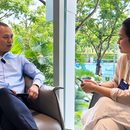

Image generated with Ai
South Korea is strengthening its position as one of Asia’s leading destinations for remote workers by expanding its digital nomad visa program. As countries across the region, including Japan, Singapore, Thailand, and Indonesia, continue developing policies to attract location-independent professionals, South Korea has refined its visa framework to make long-term stays more accessible while preserving strict eligibility standards. The updated program reflects the country’s broader strategy of combining tourism, innovation, and international talent attraction in an increasingly competitive global travel market.
The government’s decision to relax certain income requirements and extend the maximum stay period demonstrates its commitment to welcoming experienced professionals who contribute to local economies without competing directly in the domestic labor market. For travelers seeking a balance between world-class infrastructure, vibrant urban life, rich cultural experiences, and reliable digital connectivity, South Korea is becoming an increasingly attractive destination. The revised visa policy also aligns with the growing demand for flexible lifestyles, allowing remote employees and freelancers to live abroad while maintaining careers with overseas employers. As digital nomad tourism continues to reshape international travel, South Korea’s evolving visa program is expected to play a significant role in strengthening the country’s global tourism appeal.
| Key Details | Information |
|---|---|
| Visa Type | Digital Nomad Visa |
| Initial Launch | January 2024 (Pilot Program) |
| Maximum Stay | Up to 3 years |
| Eligible Applicants | Remote employees working for overseas employers and qualifying professionals |
| Purpose | Long-term residence while working remotely for foreign companies |
| Main Benefit | Experience South Korea without entering the local workforce |
South Korea introduced its Digital Nomad Visa to attract professionals who work remotely for overseas employers. The initiative recognizes the growing global workforce that no longer needs to remain in one country to maintain employment.
Since the pilot program began in January 2024, hundreds of remote workers have chosen South Korea as their temporary home. Government officials report that the program has successfully attracted professionals seeking both lifestyle benefits and business-friendly infrastructure.
Advertisement
Advertisement
Unlike traditional work permits, the visa allows eligible applicants to continue working exclusively for employers located outside South Korea.
| Advantage | Benefit for Travelers |
|---|---|
| High-Speed Internet | One of the fastest internet networks globally |
| Public Transport | Efficient nationwide transportation |
| Safety | Low crime rates and excellent healthcare |
| Culture | Rich heritage combined with modern cities |
| Tourism | Four-season travel experiences |
South Korea offers an attractive combination of modern infrastructure and cultural diversity.
Remote workers can enjoy efficient transportation, advanced telecommunications, world-class healthcare, and numerous coworking spaces while exploring destinations ranging from Seoul and Busan to Jeju Island and historic cities like Gyeongju.
The country’s strong digital ecosystem makes it particularly appealing for professionals working in technology, finance, marketing, consulting, education, design, and creative industries.
| Requirement | Details |
|---|---|
| Employment | Must work for an overseas employer or qualifying foreign business |
| Income Proof | Employment certificate, salary slips, and bank statements |
| Valid Passport | Required |
| Health Insurance | Must meet government requirements |
| Supporting Documents | Additional documentation may be requested |
Applicants must demonstrate that their employment remains outside South Korea.
The government requires applicants to submit employment certificates, recent payslips, bank statements, and other financial records to verify that they meet the required income threshold. These documents ensure that visa holders are financially self-sufficient throughout their stay.
Unlike employment visas issued for domestic jobs, the Digital Nomad Visa does not authorize applicants to work for South Korean companies under the same visa category.
| Previous Policy | Updated Approach |
|---|---|
| Higher income threshold for all applicants | Certain applicants receive relaxed income requirements |
| Pilot restrictions | Expanded eligibility |
| Shorter permitted stay | Up to three years possible |
When the program first launched, many observers believed the income requirement was relatively high compared with similar visas offered by other countries.
To improve accessibility, South Korean authorities have introduced greater flexibility for some applicants while maintaining financial stability requirements.
The revised approach balances responsible immigration management with efforts to attract experienced international professionals capable of supporting themselves during extended stays.
| Country | Digital Nomad Appeal |
|---|---|
| South Korea | Long-term stay, advanced infrastructure, cultural immersion |
| Japan | Expanding remote work options for international professionals |
| Singapore | Business hub with global connectivity |
| Thailand | Popular tropical destination with flexible remote work appeal |
| Indonesia | Bali remains a leading digital nomad hotspot |
Asia has become one of the world’s fastest-growing regions for digital nomad tourism.
Countries are increasingly recognizing that remote professionals contribute to tourism, hospitality, accommodation, dining, transportation, and local businesses while remaining employed abroad.
South Korea distinguishes itself by combining sophisticated technology, excellent public services, and year-round tourism experiences with a growing ecosystem designed for international professionals.
| Benefit | Description |
|---|---|
| Extended Stay | Greater opportunity to experience Korean culture |
| Stable Living | Access to modern infrastructure |
| Tourism | Explore multiple regions across seasons |
| Professional Productivity | Reliable internet and coworking facilities |
| Cultural Experience | Language, cuisine, festivals, and heritage |
Longer stays allow visitors to experience South Korea beyond traditional tourism.
Digital nomads often spend several months living within local communities, supporting neighborhood businesses and exploring destinations that short-term tourists rarely visit.
This slower style of travel contributes to sustainable tourism while encouraging deeper cultural understanding.
The expansion of the Digital Nomad Visa supports South Korea’s broader tourism strategy by attracting visitors who typically spend more per trip than conventional tourists.
Rather than remaining for a few days, digital nomads often stay for several months, renting accommodation, using local transportation, dining at neighborhood restaurants, visiting attractions, and participating in cultural activities.
Their spending benefits multiple sectors of the economy while helping distribute tourism beyond peak holiday seasons.
The visa also enhances South Korea’s international competitiveness as countries worldwide compete to attract skilled professionals seeking flexible lifestyles.
Prospective applicants should prepare employment verification documents, salary records, bank statements, passport documentation, proof of health insurance, and any additional paperwork requested by immigration authorities.
Financial documentation plays an important role in demonstrating eligibility, while employment verification confirms that applicants continue working for organizations located outside South Korea.
Carefully preparing complete documentation helps improve processing efficiency and reduces delays during application review.
South Korea’s evolving Digital Nomad Visa reflects broader changes in international travel and employment patterns.
Remote work has permanently transformed how professionals choose destinations, allowing them to combine career development with international living experiences.
By extending permitted stays and refining eligibility rules, South Korea positions itself alongside leading destinations competing for long-term international visitors.
As global demand for flexible travel continues to grow, the country is expected to attract increasing numbers of professionals seeking a safe, technologically advanced, culturally rich, and globally connected place to live while working remotely.
The Digital Nomad Visa represents more than an immigration policy—it highlights South Korea’s ambition to become a major hub for remote work tourism in Asia, offering international professionals an opportunity to experience Korean culture while maintaining successful global careers.
1. What is South Korea’s Digital Nomad Visa?
It is a long-term residence visa allowing eligible foreign professionals to live in South Korea while working remotely for overseas employers.
2. Who can apply for the visa?
Qualified remote employees and eligible professionals working for companies outside South Korea can apply if they meet the required criteria.
3. How long can digital nomads stay in South Korea?
The updated program allows eligible applicants to stay for up to three years.
4. Can visa holders work for a South Korean company?
No. The visa is intended for individuals employed by overseas organizations and does not authorize local employment under the same category.
5. What documents are required?
Applicants generally need employment certificates, payslips, bank statements, passport documentation, and proof of health insurance.
6. Why did South Korea introduce this visa?
The country aims to attract global talent, support tourism, and strengthen its position as a leading destination for remote workers.
7. Has the income requirement changed?
Yes. The government has relaxed certain income requirements for some eligible applicants while maintaining financial eligibility standards.
8. Why is South Korea attractive to digital nomads?
Its advanced infrastructure, fast internet, efficient transportation, safety, healthcare, and rich cultural experiences make it highly appealing.
9. How does the visa benefit the tourism industry?
Digital nomads typically stay longer and spend more across accommodation, dining, transportation, and local experiences, supporting sustainable tourism growth.
10. How does South Korea compare with other Asian destinations?
South Korea offers a strong combination of technology, quality of life, cultural attractions, and long-term stay options, making it competitive alongside Japan, Singapore, Thailand, and Indonesia for remote professionals.
Advertisement
Tags: Asia digital nomad destinations, Busan, digital nomad South Korea, digital nomad travel, east asia
Advertisement
Advertisement













Saturday, September 5, 2026

Friday, September 4, 2026

Saturday, September 5, 2026
Friday, September 4, 2026

Thursday, September 3, 2026

Wednesday, September 2, 2026
Saturday, September 5, 2026