
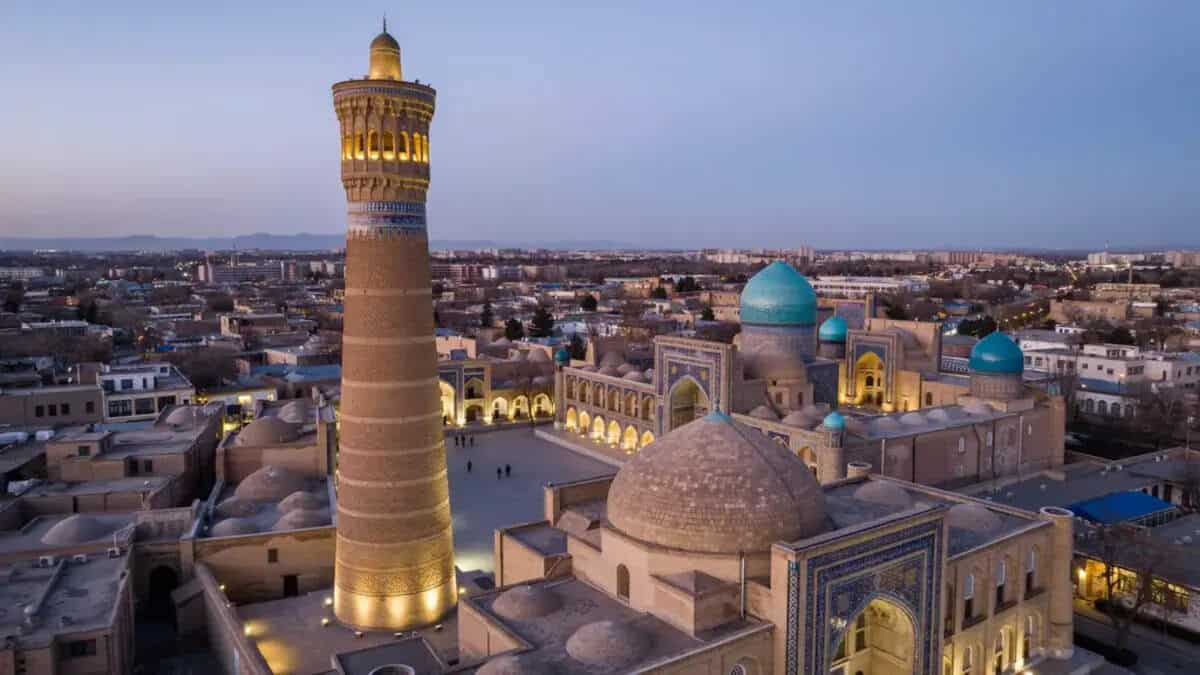
Image generated with Ai
The new change that is taking place in Uzbekistan’s tourism industry shows the interest of American visitors towards this country’s rich heritage of the Silk Road and its modern day travel facilities. In the period of Jan-July of 2026; the number of American visitors to Uzbekistan reached 42,074, showing an 18.8% rise from the 35,433 visitors in the same period of 2025. Lone-haul travelers are showing a special interest in Uzbekistan and the United States is showing the most interest among the countries of the Americas.
The latest figures underline a significant shift in Uzbekistan’s global tourism profile. Once considered an off-the-beaten-path destination mainly visited by experienced explorers, the country is now attracting increasing attention from American and Western Hemisphere travellers seeking authentic cultural experiences, historic cities, and affordable luxury travel.
The United States has become the dominant source market among visitors arriving from the Americas, accounting for the majority of long-distance travellers choosing Uzbekistan in 2026. During the first seven months of the year, 26,050 American tourists visited the country, representing 61.9% of all arrivals from the Americas region.
The scale of US demand has placed American travellers far ahead of other markets across North, Central, and South America. Canada followed with 6,014 visitors, contributing around 14.3% of the total, while Brazil ranked third with 1,475 arrivals.
Advertisement
Mexico recorded 1,012 visitors, and Cuba contributed 970 travellers, completing the top five American markets for Uzbekistan during the period.
The strong US performance demonstrates how Uzbekistan is gradually moving beyond its traditional regional tourism base. While neighbouring countries continue to provide the largest visitor numbers, the growth of American arrivals represents a valuable opportunity because long-haul travellers generally stay longer, spend more, and strengthen a destination’s global reputation.
A major factor behind the increase in US arrivals has been Uzbekistan’s decision to introduce visa-free entry for American citizens from January 2026. The policy allows eligible US travellers to stay in the country for up to 30 days, making Uzbekistan easier and more attractive to visit.
The removal of visa requirements has reduced administrative barriers and encouraged more travellers to consider Uzbekistan as a realistic holiday destination. For many Americans, Central Asia had previously appeared complicated due to visa procedures, limited awareness, and concerns about accessibility.
With simplified entry rules, Uzbekistan has been positioned alongside emerging cultural destinations that offer historical depth, unique landscapes, and immersive experiences without the crowds found in many established tourism hotspots.
The timing of the visa reform has also coincided with stronger international promotion of Uzbekistan’s heritage cities, improved tourism services, and increasing coverage of the country in global travel media.
The growing interest from American travellers has been strongly connected to Uzbekistan’s legendary Silk Road heritage. The country offers a concentrated collection of historic destinations where ancient trade routes, Islamic architecture, and centuries-old traditions remain visible.
Samarkand continues to serve as one of Uzbekistan’s biggest tourism attractions. The city’s iconic Registan Square, historic monuments, and connection to the ancient Silk Road have made it a major cultural destination for international visitors.
Bukhara has also gained popularity due to its preserved historic centre, traditional markets, religious architecture, and centuries-old atmosphere. The city provides travellers with an opportunity to experience a living example of Silk Road civilisation.
Khiva remains another major attraction, with its walled inner city offering one of Central Asia’s most remarkable heritage experiences. The preserved streets, ancient buildings, and historic landmarks create a unique travel experience that appeals strongly to cultural tourists.
Meanwhile, Tashkent has developed as the country’s modern gateway, offering international connectivity, hotels, restaurants, and transport links that support growing visitor demand.
Uzbekistan’s tourism growth has also been supported by significant improvements in infrastructure. Better transport networks, expanded hospitality facilities, and restored heritage sites have helped create a smoother travel experience for international visitors.
High-speed rail connections between major tourism cities have reduced travel times and made multi-city itineraries easier for independent travellers. Visitors can now combine destinations such as Tashkent, Samarkand, Bukhara, and Khiva more efficiently.
The expansion of hotel capacity has further supported international tourism development. New accommodation options, upgraded services, and increasing investment in hospitality have improved Uzbekistan’s ability to welcome visitors from premium long-haul markets.
Air connectivity has also played an important role. Improved international links and more convenient flight options have made travel from North America more accessible, helping Uzbekistan compete with other emerging cultural destinations.
Although travellers from the Americas still represent a smaller share compared with Uzbekistan’s neighbouring markets, their importance is increasing.
During the first seven months of 2026, visitors from the Americas represented 17.2% of the foreign visitors included in the statistical comparison, showing that Western Hemisphere markets are becoming a more visible part of Uzbekistan’s tourism ecosystem.
North America remained the strongest contributor, providing 33,076 visitors, or 78.6% of arrivals from the Americas.
South America contributed 2,627 travellers, while the Caribbean accounted for 2,035 visitors and Central America recorded 336 arrivals.
Beyond the United States and Canada, Uzbekistan has also started attracting visitors from a wider range of countries, including Argentina, Colombia, Chile, Costa Rica, Ecuador, Peru, Uruguay, Trinidad and Tobago, Panama, Bolivia, Paraguay, and other Latin American and Caribbean markets.
The geographical spread indicates that Uzbekistan’s appeal is expanding beyond traditional tourism networks. Even though long-distance travel from these markets requires greater investment in time and money, increasing arrivals suggest that awareness of Uzbekistan is growing worldwide.
The growth from American travellers is part of a much larger tourism expansion taking place across Uzbekistan. Between January and July 2026, the country recorded 7.75 million foreign tourist arrivals, representing a 22.6% year-on-year increase.
The majority of visitors continue to come from neighbouring Central Asian countries, including Kyrgyzstan, Kazakhstan, and Tajikistan. These regional markets remain essential because of geographical proximity and strong travel connections.
However, Uzbekistan’s strategy increasingly focuses on attracting visitors from distant, high-value markets such as the United States, Europe, and Asia. These travellers contribute to longer stays, higher tourism spending, and greater international recognition.
The government has set ambitious tourism goals aimed at significantly increasing foreign arrivals and tourism revenue. These targets are being supported through visa liberalisation, airport improvements, hotel development, heritage restoration, and international marketing campaigns.
The increase in American visitors represents a promising milestone for Uzbekistan’s tourism industry. However, maintaining this momentum will require continued investment in connectivity, hospitality quality, and visitor experiences.
The country’s challenge will be transforming first-time visitors into repeat travellers and encouraging positive word-of-mouth among international audiences.
The autumn travel season could become particularly important, as cooler weather makes destinations such as Samarkand, Bukhara, and Khiva more comfortable for sightseeing. This period traditionally attracts cultural travellers seeking outdoor exploration and heritage experiences.
Uzbekistan’s tourism success in 2026 shows that the country is moving from a niche destination into a rising global travel hotspot. The strong growth from the United States and other American markets demonstrates that the Silk Road nation is gaining recognition among travellers who once overlooked Central Asia.
In the first seven months of 2026, Uzbekistan’s tourism saw a 20% growth, largely due to the US leading the way with American travel. This tourism surge can be attributed to the visa-free policy, Silk Road Tourism, and better travel connectivity.
Uzbekistan has improved entry policies, connectivity and has an abundance of world renowned cultural sites. This has positioned Uzbekistan as a top contender for international travelers’ destinations.
Advertisement
Tags: Central Asia Tourism, international tourism growth, Silk Road Travel, US Travellers, Uzbekistan Tourism
Advertisement
Advertisement













Saturday, September 5, 2026

Saturday, September 5, 2026

Saturday, September 5, 2026

Saturday, September 5, 2026

Saturday, September 5, 2026

Thursday, September 3, 2026

Saturday, September 5, 2026

Saturday, September 5, 2026



