

Amtrak Unveils $8 Million Station Upgrades in Norman and Pauls Valley, Transforming Oklahoma Rail Travel in 2026

Published
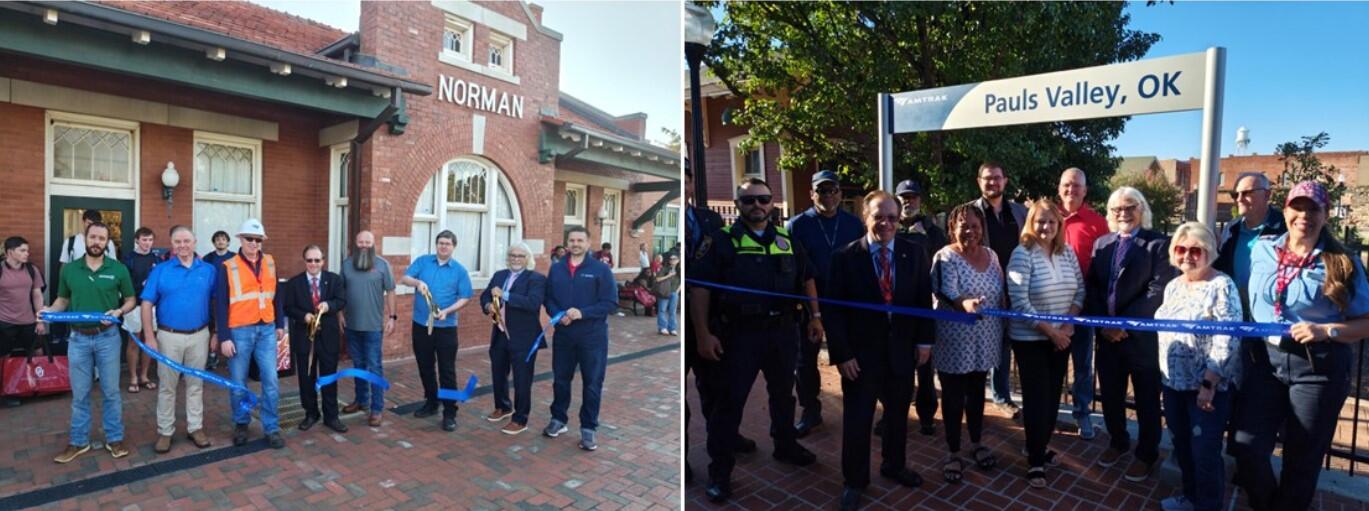
Amtrak has invested $8 million on improvements in Norman and Pauls Valley, in Oklahoma, which have resulted in increased safety at the boarding areas and better facilities for travelers along the Heartland Flyer, the train service connecting Oklahoma City and Fort Worth, Texas. This improvement initiative is one of Amtrak’s efforts towards modernizing their stations and making travel easier for people with varying levels of mobility.
The improvements represent a significant development for railway infrastructure in southern Oklahoma, where the Heartland Flyer provides an important passenger connection between communities in Oklahoma and northern Texas. Both stations now offer upgraded platforms, improved pedestrian access, modern lighting and clearer passenger information to make everyday rail journeys easier and more comfortable.
Advertisement
Advertisement
The projects also highlight Amtrak’s continuing efforts to make its national railway network more inclusive. Rather than concentrating only on larger railway terminals, the operator is extending infrastructure improvements to smaller regional stations that play an important role in connecting local communities with wider transport networks.
Oklahoma Rail Travel Enters a New Phase with Major Station Modernisation
The completion of the projects in Norman and Pauls Valley marks another step in Amtrak’s broader investment in passenger railway infrastructure across the United States.
Advertisement
Advertisement
The two stations serve the Heartland Flyer, which operates between Oklahoma City and Fort Worth, providing a transport link for passengers travelling for business, leisure and other purposes.
Under the improvement programme, approximately $3 million was directed towards Norman station, while Pauls Valley received around $5 million.
Advertisement
Advertisement
The work concentrated on improving station accessibility and creating safer movement between passenger waiting areas and boarding platforms. These changes are particularly important for travellers using wheelchairs, walking aids, pushchairs and wheeled luggage.
By removing physical barriers and introducing smoother pathways, Amtrak aims to make train travel more convenient for passengers who previously faced challenges navigating older railway facilities.
Advertisement
Advertisement
The investment also strengthens the role of regional railway stations as accessible transport gateways for residents and visitors.
Norman Station Receives $3 Million Upgrade While Preserving Its Historic Railway Character
Norman station has undergone a substantial transformation designed to improve passenger facilities while respecting the architectural heritage of the building.
Originally constructed in 1909 for the Atchison, Topeka and Santa Fe Railway, the station remains an important historic landmark within central Norman.
Its distinctive Mission Revival architecture reflects an earlier period of American railway development. The building features brick and limestone construction, a cross-gabled design and a traditional clay-tiled roof.
Advertisement
Advertisement
These architectural details have helped establish the station as a recognisable feature of Norman’s historic townscape.
The recent infrastructure project focused on improving the operational and passenger areas surrounding the historic structure rather than replacing its established character.
A major element of the work involved upgrading the station’s boarding platform, which now extends approximately 300 feet.
The redesigned platform incorporates reinstalled brick paving, helping maintain a visual connection with the station’s historic setting while creating a more practical surface for modern railway users.
Accessible routes have also been introduced between the station building and the platform, allowing passengers to move more easily through the facility.
These improvements help ensure that the railway station can continue serving contemporary transport needs while retaining its historical significance.
Advertisement
Advertisement
New Platforms and Walkways Make Norman Station Safer and Easier to Navigate
The redesigned facilities at Norman introduce several improvements intended to simplify boarding and movement around the station.
Sloped pedestrian walkways now provide more accessible routes for passengers travelling between different areas of the facility.
These routes are especially useful for passengers who use wheelchairs or mobility aids, as well as families with pushchairs and travellers carrying heavy suitcases.
Safety barriers have also been installed to improve the separation between pedestrian areas and operational railway spaces.
Another important element of the project involves new energy-efficient LED lighting.
The lighting system provides coverage across the boarding platform, helping passengers navigate the station more confidently during periods of limited natural light.
Advertisement
Advertisement
Detectable warning surfaces have been added to help passengers identify potentially hazardous areas, particularly near platform edges.
New signs complete the improvements, making it easier for travellers to identify important station facilities and understand where to board their trains.
Together, these changes create a more accessible and organised environment while supporting safer railway operations.
Pauls Valley Station Benefits from $5 Million Investment in Passenger Infrastructure
Pauls Valley has received the larger share of the two-station investment, with approximately $5 million allocated to modernising its passenger facilities.
Unlike Norman’s historic railway building, the present Pauls Valley station opened in 2002.
Its construction received funding assistance from the Oklahoma Department of Transportation through the federal Transportation Equity Act for the 21st Century.
Advertisement
Advertisement
The station was designed to reflect the appearance of the community’s original railway depot, preserving a connection with local railway history while offering facilities suited to modern passengers.
The building includes a climate-controlled waiting area and passenger toilets, providing shelter and basic amenities before departure.
The latest improvement programme has concentrated on the boarding environment and routes connecting the station with its railway platform.
A new concrete boarding platform, measuring approximately 290 feet, has been installed.
The platform includes an embedded brick-paving surface, combining practical infrastructure with design elements that complement the railway station’s appearance.
The project strengthens Pauls Valley’s capacity to provide accessible railway facilities for local passengers and visitors using the Heartland Flyer service.
Advertisement
Advertisement
Modern Lighting, Safety Features and Clearer Signs Improve the Pauls Valley Passenger Experience
The upgraded Pauls Valley station now offers several features designed to make boarding easier and improve movement around the railway premises.
Sloped accessible walkways have been installed to help passengers reach the boarding platform without encountering unnecessary physical barriers.
These improvements support passengers with reduced mobility while also benefiting travellers carrying luggage or accompanying young children.
New safety barriers provide additional protection around designated pedestrian areas.
Energy-efficient LED lighting has been introduced across the platform, offering more consistent illumination during evening and early-morning travel.
The improvements also include detectable warning systems that help passengers recognise the boundaries of potentially hazardous spaces.
Advertisement
Advertisement
Updated signage offers clearer directions within the railway environment.
The combined changes are intended to make the station easier to use for people with different mobility requirements while creating a more comfortable and predictable boarding experience.
Heartland Flyer Remains an Important Passenger Rail Link Between Oklahoma and Texas
The improved stations serve Amtrak’s Heartland Flyer, a passenger railway service connecting Oklahoma City in Oklahoma with Fort Worth in Texas.
Operating as Trains 821 and 822, the service provides a daily return connection between the two cities, with scheduled stops at Norman and Pauls Valley in both directions.
The route serves communities that rely on regional transport links for access to larger urban centres.
For Oklahoma passengers, the service provides an alternative to driving between destinations along the corridor.
Advertisement
Advertisement
It also offers opportunities for leisure travel, short visits and journeys that combine railway transport with other services available in larger cities.
Norman and Pauls Valley are important intermediate stops along this route, helping extend passenger railway access beyond the main terminals.
The Heartland Flyer is financially supported by the Oklahoma and Texas state transportation departments, reflecting the role of state participation in maintaining regional passenger rail services.
The improvements at both stations contribute to the long-term development of this interstate transport connection by making existing infrastructure more accessible and convenient.
Amtrak Advances Nationwide Accessibility Programme Across Dozens of Stations
The improvements in Oklahoma form part of Amtrak’s national programme to make railway stations more accessible and compliant with the Americans with Disabilities Act.
According to figures associated with the programme, 22 stations achieved accessibility compliance during the 12-month period ending 30 September.
Advertisement
Advertisement
A further 58 stations were targeted for completion over the following year, supported by a forecast investment of approximately $300 million.
The programme is designed to address infrastructure barriers that can prevent passengers with disabilities or mobility limitations from using rail services independently.
Improvements can include accessible boarding platforms, pedestrian pathways, lighting, warning surfaces, safety equipment and passenger information systems.
The work extends across Amtrak’s national network rather than focusing exclusively on individual railway corridors.
More than 80 stations were reported to have accessibility-related construction projects underway as part of the wider effort.
These developments demonstrate the scale of the undertaking involved in adapting existing railway infrastructure to modern accessibility standards.
Advertisement
Advertisement
More Than $1 Billion Invested in Making American Railway Stations Accessible
Amtrak’s station accessibility initiative represents a long-term infrastructure commitment extending well beyond the recent Oklahoma projects.
Since 2011, the operator has invested more than $1 billion in accessibility upgrades and related improvements at 169 stations across its national network.
This investment addresses the different challenges presented by railway facilities of varying ages, layouts and construction standards.
Some stations occupy historic buildings designed long before modern accessibility requirements existed, while others need improvements to platforms, paths and passenger facilities.
Amtrak’s ADA Stations Program is advancing 116 station design projects and 85 construction projects as part of its continuing modernisation effort.
The programme has established a target of achieving full accessibility compliance by 2029.
Advertisement
Advertisement
Reaching that objective requires a combination of engineering work, station redesign, construction activity and coordination with public-sector partners.
The Norman and Pauls Valley projects illustrate how individual station upgrades contribute to the broader national effort.
Federal Funding Supports Long-Term Improvements to the US Passenger Rail Network
Federal financial support plays an important role in delivering Amtrak’s station accessibility improvements.
The projects receive dedicated congressional funding administered through the Federal Railroad Administration.
This arrangement supports investment in facilities that require significant engineering and construction work to meet accessibility requirements.
Regional railway stations can present particular challenges because some were originally built when passenger needs, platform standards and accessibility expectations were very different from those of today.
Advertisement
Advertisement
Modernising these facilities may require extensive changes to boarding areas, pedestrian connections and station infrastructure.
The work in Oklahoma also involved engineering, construction and specialist service providers, including businesses operating within the state.
WSP USA was responsible for design work at Norman, with Centennial Contractors Enterprises providing general contracting services.
At Pauls Valley, HDR carried out the design role, while George Allen Construction provided general contracting services.
Additional Oklahoma-based contractors supported aspects of the projects, reflecting the involvement of regional businesses in delivering passenger railway improvements.
Station Accessibility Improvements Could Make Regional Rail Travel More Attractive
Accessibility investments can influence the wider appeal of railway services by reducing practical difficulties associated with using stations.
Advertisement
Advertisement
For passengers with limited mobility, the ability to move between a waiting area and a boarding platform without significant obstacles is an essential part of travelling independently.
Families with pushchairs, older passengers and people carrying large suitcases can also benefit from improved pedestrian routes and level surfaces.
Better lighting and clearer signage make stations easier to understand and navigate, particularly for passengers unfamiliar with a railway facility.
These changes can help improve confidence in regional passenger rail services.
However, the completed station upgrades do not automatically establish that passenger numbers will increase. Actual demand will also depend on factors such as service frequency, journey times, ticket prices and connections with other transport options.
For Norman and Pauls Valley, the immediate benefit is a more accessible station environment supporting the Heartland Flyer’s existing operations.
Advertisement
Advertisement
The investment also provides an infrastructure foundation that can support passenger needs over the longer term.
Oklahoma’s Historic Railway Stations Balance Preservation with Modern Travel Needs
One of the notable aspects of the Norman and Pauls Valley improvements is the attention given to railway buildings with connections to local history.
Norman’s station dates back more than a century, while Pauls Valley’s present facility was designed to echo an earlier depot.
These buildings reflect the importance of railways in the development of Oklahoma communities.
Preserving their appearance while improving passenger accessibility presents a different challenge from constructing entirely new facilities.
The upgrades demonstrate how modern passenger requirements can be addressed without removing the architectural identity that makes a station distinctive.
Advertisement
Advertisement
In Norman, the integration of brick paving alongside modern accessible pathways helps connect the upgraded platform with its historic surroundings.
In Pauls Valley, the concrete platform with embedded brick paving creates a functional boarding area while maintaining design continuity with the station.
Such projects highlight the practical relationship between heritage preservation and contemporary transport investment.
Oklahoma’s Rail Modernisation Reflects a Wider Shift Towards Inclusive Passenger Travel
The completion of the Norman and Pauls Valley improvements demonstrates Amtrak’s continuing investment in making passenger railway infrastructure more accessible across the United States.
The approximately $8 million programme has delivered upgraded boarding platforms, sloped walkways, modern lighting, safety barriers, detectable warning features and improved station signage.
For the Heartland Flyer corridor, the projects provide immediate improvements at two important intermediate stations between Oklahoma City and Fort Worth.
Advertisement
Advertisement
For Amtrak’s wider network, they form part of a much larger effort involving more than $1 billion in accessibility investment since 2011.
With additional station projects advancing through design and construction, the railway operator continues working towards its stated 2029 accessibility objective.
The significance of these improvements extends beyond the replacement of ageing infrastructure. Accessible station design makes it easier for a wider range of passengers to use railway services and participate in everyday travel.
As Norman and Pauls Valley begin serving passengers with their improved facilities, the projects offer a clear example of how targeted infrastructure investment can modernise regional railway travel while respecting the character of established railway stations.
For Oklahoma passengers, the result is straightforward: easier access, safer boarding areas and a more comfortable journey along the Heartland Flyer route.
Advertisement
