

American Airlines Takes the Sky by Storm With Starlink on One Thousand Plus Aircraft as United Faces Pressure

Published
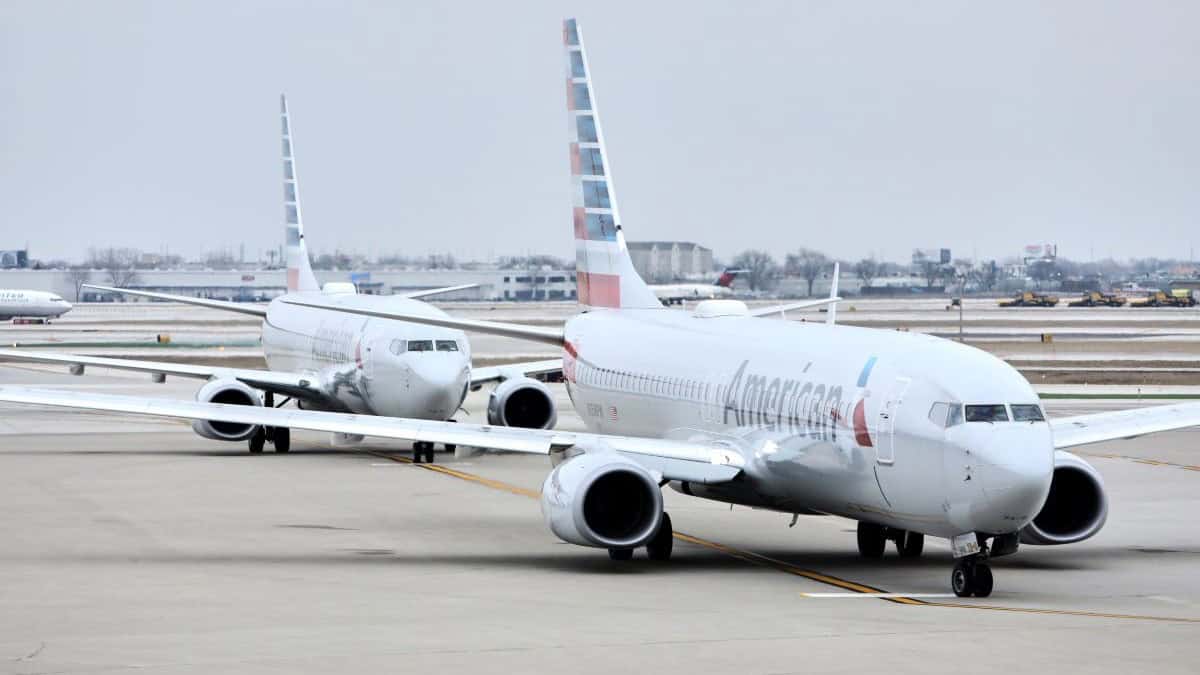
American Airlines is taking the sky by storm with a sweeping Starlink upgrade that could reshape how passengers stay connected in the air. The carrier plans to bring high-speed Starlink internet to more than one thousand plus aircraft, creating a major shift in its onboard experience. Meanwhile, United Airlines faces new pressure as competition over faster and more reliable in-flight connectivity intensifies. However, this is not simply another Wi-Fi upgrade. American Airlines is making a powerful statement about what travellers should expect when they fly. With installations scheduled to begin in early 2027, the move could influence the wider aviation industry and push rival carriers to respond. So, what does this ambitious Starlink expansion mean for passengers, airline competition and the future of connected travel? Travel And Tour World examines the details, the technology and the growing battle for the connected traveller. Read the full story to see why this development matters.
American Airlines Goes All-In on Starlink With 1,000+ Aircraft Set for High-Speed Wi-Fi Upgrade
American Airlines is dramatically expanding its plans for Starlink Wi-Fi, moving from a partial fleet rollout to a programme covering its entire mainline fleet of more than 1,000 aircraft.
Advertisement
Advertisement
The airline said on October 8 that it will install SpaceX’s Starlink satellite internet service across all of its mainline aircraft, including Airbus and Boeing narrowbody jets as well as Boeing widebody aircraft. Installation is scheduled to begin in early 2027.
The decision marks a major change from American’s earlier plan, announced in May, when the airline said it would bring Starlink to more than 500 narrowbody aircraft. The expanded programme now covers more than 1,000 aircraft and is designed to create a more consistent connectivity experience across American’s mainline network. For passengers, the significance is straightforward. American wants internet access in the sky to feel less like an occasional extra and more like a normal part of the journey.
Advertisement
Advertisement
That shift is becoming increasingly important as travellers use flights to work, stream entertainment, communicate with family and friends, shop online and manage everyday tasks. At the same time, airlines are increasingly treating connectivity as part of the overall passenger experience rather than simply a technical feature.
“American Airlines is recognising that reliable connectivity is becoming a core part of the passenger experience. Its decision to bring Starlink across the mainline fleet could raise expectations for airlines worldwide. As competition intensifies, faster onboard internet will increasingly influence how travellers judge comfort, convenience and the overall quality of their journey,” said Anup Kumar Keshan, Founder and Editor-in-Chief, Travel And Tour World.
Advertisement
Advertisement
US Airline Passenger Market Statistics for 2026
| 2026 market indicator | Passenger volume / result |
|---|---|
| US airline scheduled passengers, June 2026 | 87.5 million |
| Domestic passengers, June 2026 | 75.5 million |
| International passengers, June 2026 | 12.0 million |
| Year-on-year change in total June passengers | -1.4% |
| Change from June 2024 record | -2.5% |
| Seasonally adjusted change from May 2026 | -0.4% |
| Seasonally adjusted change from June 2024 record | -3.7% |
| US airline passenger-airline employment, July 2026 | 555,559 workers |
American expands Starlink beyond its original plan
American’s May announcement focused on more than 500 Airbus narrowbody aircraft, with installations due to start in the first quarter of 2027. At that stage, Boeing 737 aircraft and the airline’s long-haul Boeing 777 and 787 fleets were outside the Starlink programme.
The October announcement changes that position.
Advertisement
Advertisement
The new programme will cover American’s entire mainline fleet, which currently consists of more than 1,030 aircraft. The airline lists more than 500 Airbus narrowbodies, more than 400 Boeing narrowbodies and more than 130 Boeing widebodies.
This is important because the widebody aircraft operate many of American’s long-haul international services. Bringing them into the programme means Starlink will not be limited to short and medium-haul flying.
American expects installations to begin in early 2027. The airline also expects its mainline fleet to grow as it takes delivery of more than 300 new aircraft in the coming years. The scale of the project will therefore remain significant even as the fleet changes.
Leading US International Air Travel Markets
| Rank | Country / market | US international passenger traffic, year ended December 2025 |
|---|---|---|
| 1 | Mexico | Largest country market |
| 2 | Canada | Second-largest country market |
| 3 | United Kingdom | Third-largest country market |
| 4 | Germany | Fourth-largest country market |
| 5 | Dominican Republic | Fifth-largest country market |
What Starlink could mean for passengers
Starlink uses a low-Earth-orbit satellite network to provide broadband connectivity. American says the Starlink Performance Aero Terminal can deliver speeds of up to 1 Gbps per terminal.
Advertisement
Advertisement
That does not mean every passenger will necessarily receive 1 Gbps of individual bandwidth. The figure describes the capability of the aircraft terminal. Actual passenger performance will depend on factors including demand, network conditions, and how the available capacity is shared.
Still, the technology is designed for activities that can be difficult with slower or less consistent aircraft internet.
American specifically highlights streaming, online gaming, real-time collaboration, social media, online shopping and general web browsing as potential uses. The airline also says customers will be able to remain connected from gate to gate.
That matters because modern travellers increasingly carry their digital lives with them.
A business traveller may want to join a meeting, upload a document or respond to urgent messages. A leisure traveller may want to stream a programme, message family members or browse social media. Families may rely on internet access to keep children occupied during longer flights.
The expectation is changing from simply having Wi-Fi to having Wi-Fi that actually works for these activities.
Advertisement
Advertisement
Free Wi-Fi has already changed the American experience
The Starlink announcement comes after American had already made free high-speed Wi-Fi a bigger part of its passenger proposition.
In January 2026, the airline began rolling out complimentary high-speed Wi-Fi sponsored by AT&T for AAdvantage members. American said the programme would cover 100% of its narrowbody and dual-class regional fleets and eventually provide free connectivity on more than two million flights a year.
That means the airline is not starting from zero.
Passengers already have access to free high-speed satellite Wi-Fi on a large part of the network. The Starlink programme is instead aimed at changing the technology behind that experience across the mainline fleet.
This distinction is important.
The value of the new investment is not simply that American can advertise Wi-Fi. It is that the airline is seeking to make the underlying connectivity faster and more consistent across a much broader range of aircraft.
Advertisement
Advertisement
American has also connected Wi-Fi with its loyalty strategy. AAdvantage members receive complimentary access, making connectivity another practical benefit of joining the programme.
The airline is therefore using Wi-Fi in two ways: as a passenger-experience upgrade and as a loyalty tool.
Why the Boeing aircraft decision matters
The expansion to Boeing aircraft is one of the most significant elements of the announcement.
American’s earlier Starlink plan was centred on more than 500 Airbus narrowbody aircraft. That would have represented a major upgrade, but passengers could still encounter very different Wi-Fi experiences depending on the aircraft operating their flight.
The expanded programme removes much of that uncertainty over time.
Boeing 737 aircraft will now be included. So will Boeing 777 and 787 widebodies.
Advertisement
Advertisement
That creates a more consistent technology proposition across domestic, regional and international parts of the airline’s mainline operation, although the regional American Eagle fleet is separate from this announcement.
For travellers, consistency can be almost as important as headline speed.
A passenger booking several flights does not necessarily know which aircraft will operate every sector. Aircraft can also be swapped as airlines manage their schedules.
A fleetwide approach reduces the gap between different aircraft types as the installation programme progresses.
The timing is significant for long-haul travellers
The inclusion of American’s widebody aircraft is particularly relevant for international passengers.
Long-haul flights can last many hours. During that time, passengers may want to work, communicate or access online entertainment.
Advertisement
Advertisement
Connectivity can also matter more on long journeys because passengers have more time to use it.
American operates a large international network, with more than 6,000 daily flights to more than 350 destinations in more than 60 countries. The airline says more than 165 million customers fly on its mainline aircraft each year.
A connectivity upgrade across that operation therefore affects a substantial number of passengers.
The change also comes as American is investing in other parts of the onboard experience.
In August, the airline announced plans to restore seatback entertainment screens and increase premium seating across its narrowbody fleet. The company has also been expanding its premium lounges and upgrading other elements of the passenger journey.
The pattern is clear: American is investing in several parts of the experience at the same time.
Advertisement
Advertisement
The airline Wi-Fi race is getting more competitive
American’s decision cannot be viewed in isolation.
Airline Wi-Fi has become a competitive issue among major carriers, particularly in the United States.
United Airlines has been expanding Starlink across its fleet. American is now committing to the technology across its mainline aircraft. Other carriers are pursuing different approaches.
Delta Air Lines, for example, has chosen Amazon Leo for its next-generation satellite connectivity. Delta announced in March that it would begin installing Amazon Leo on 500 aircraft in 2028, with the programme expanding to hundreds of aircraft over time.
This creates an interesting split in the market.
Starlink has established a significant position among airlines, while Amazon is developing Leo as a competing satellite network.
Advertisement
Advertisement
For airlines, the choice is not simply about buying an internet service. Connectivity affects passenger satisfaction, loyalty programmes and the wider perception of the airline.
A traveller who can stream a film, attend a work meeting or send large files during a flight may consider the experience very different from one where a simple webpage takes a long time to load.
That makes the technology increasingly visible to customers.
Wi-Fi is becoming part of airline loyalty
There was a time when onboard internet was largely treated as a paid add-on.
That model is changing.
American has tied free connectivity to its AAdvantage programme. Delta provides free Delta Sync Wi-Fi to SkyMiles members across more than 1,200 aircraft, while continuing to expand its connected travel proposition.
Advertisement
Advertisement
This shows how airlines are using connectivity to strengthen loyalty relationships.
The strategy is logical.
Loyalty programmes need benefits that passengers actually notice and use. Wi-Fi is potentially valuable because it can be used on almost every flight.
It is also a benefit that can be experienced immediately.
A passenger does not need to wait until a future trip to understand its value. Once onboard, the ability to connect without paying separately can become part of the airline preference.
This could make connectivity increasingly important when travellers compare carriers.
Advertisement
Advertisement
The technology race is also a battle over passenger expectations
The most important long-term change may not be the technology itself.
It may be the expectation that airlines are creating.
As more carriers offer fast, free connectivity, slow or unreliable Wi-Fi becomes harder to defend as a normal part of flying.
Passengers already expect reliable internet in hotels, cafés, airports and many public spaces. Aircraft have historically been different because of the technical challenges of providing connectivity at altitude and over oceans.
Satellite technology is helping reduce that gap.
Low-Earth-orbit satellite networks are particularly significant because they are designed to provide high-speed, lower-latency connectivity compared with some older satellite systems.
Advertisement
Advertisement
That can make applications requiring more responsive connections more practical.
American says Starlink will support activities including streaming, gaming and real-time collaboration. These are much more demanding than simply sending a text message or checking an email.
The implication is that in-flight connectivity is moving closer to the experience people expect from a normal broadband connection.
A more connected aircraft could support future services
American also sees the Starlink programme as more than a Wi-Fi upgrade.
The airline says the technology will provide a foundation for future customer-experience innovations.
That is potentially significant because reliable connectivity can support services beyond basic internet access.
Advertisement
Advertisement
Airlines increasingly use digital systems for everything from entertainment and shopping to operational updates and personalised travel services.
American has already been expanding digital features across the passenger journey. Its recent investments include mobile tools, digital services and other technology designed to give customers more control over their trips.
Better onboard connectivity can complement those developments.
The aircraft itself becomes another connected part of the passenger journey.
However, it is still too early to say exactly what future services American will build on top of Starlink. The airline has not provided a detailed list of new products that will depend on the network.
For now, the clearest benefit remains faster and more reliable internet access.
Advertisement
Advertisement
The rollout will take time
There is an important practical point behind the headline numbers.
American is not installing Starlink on more than 1,000 aircraft overnight.
The airline says installation will begin in early 2027. That means passengers will see the upgraded experience gradually rather than across the entire fleet at once.
Aircraft also have different configurations and operational schedules. Retrofitting a large fleet requires planning around maintenance and aircraft availability.
As a result, travellers should not assume that every American flight will have Starlink as soon as installations begin.
The programme is a long-term fleet transformation.
Advertisement
Advertisement
That also means the passenger experience during the transition could remain mixed. Some aircraft may have the new system while others continue using existing connectivity technology.
Over time, however, the objective is much clearer: make Starlink the connectivity platform across American’s entire mainline fleet.
What this means for the future of flying
The American announcement points to a broader change in the aviation industry.
Airlines are no longer competing only on fares, schedules, routes and cabin products.
They are increasingly competing on what happens between take-off and landing.
That includes entertainment, connectivity, power, seating, food and digital services.
Advertisement
Advertisement
Wi-Fi sits at the centre of several of these developments because it can connect passengers to both their own services and the airline’s digital ecosystem.
American’s decision to expand Starlink from a limited narrowbody programme to its entire mainline fleet suggests that the company sees reliable connectivity as a long-term part of its onboard product.
It also raises the competitive pressure on other airlines.
If passengers become accustomed to fast internet on one carrier, they may start to expect the same experience elsewhere. Airlines that provide slower or less consistent connectivity could increasingly face questions about why their service does not match the standard set by competitors.
That does not mean Wi-Fi alone will determine where people fly. Price, schedule, loyalty status, routes and overall service remain important.
But connectivity is becoming another piece of the decision.
Advertisement
Advertisement
American is betting that connected travel is the next normal
American Airlines’ Starlink expansion is ultimately a bet on how passengers will travel in the years ahead.
The airline is moving from a limited programme covering more than 500 Airbus aircraft to a plan covering more than 1,000 mainline jets, including narrowbody and widebody aircraft. Installations are due to start in early 2027.
The timing also places American directly in a rapidly developing technology race.
United is expanding Starlink. Delta is preparing for Amazon Leo. Other airlines are also upgrading their onboard connectivity.
The competition is likely to benefit passengers if it pushes airlines and technology providers to improve speed, reliability, and accessibility.
For American, the immediate objective is straightforward: provide a more consistent high-speed internet experience across its mainline fleet.
Advertisement
Advertisement
The larger significance is that the definition of a good flight is changing.
Passengers increasingly want to arrive at their destination without having spent several hours disconnected from work, entertainment, communication, or everyday life.
For an industry built around moving people across long distances, keeping them connected while they travel is becoming just as important as getting them there.
Advertisement
