
Singapore and Malaysia Stand Alongside Asia’s Leading Travel Hubs as Transit Hubs Battle for Connections

Published
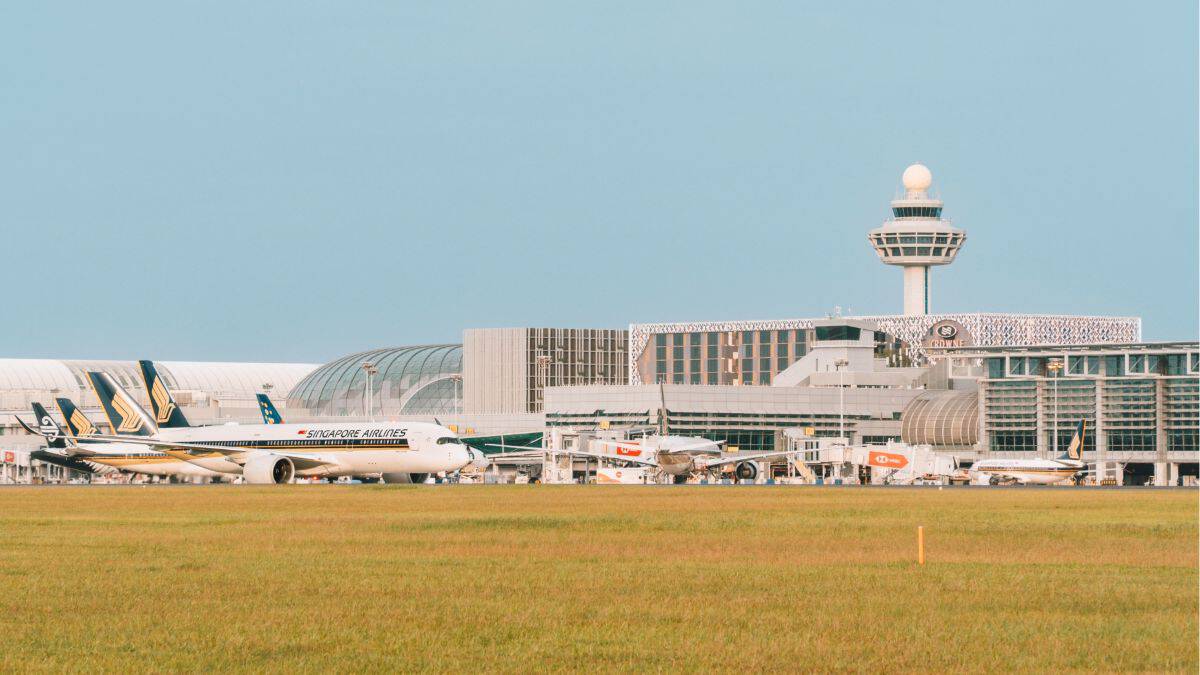
Singapore, Thailand, Malaysia and Qatar are intensifying the contest for international transfer traffic as aviation networks expand across Asia. Kuala Lumpur ranks fourth globally in OAG’s 2026 Megahubs Index, while Singapore and Bangkok rank 11th and 12th. Doha stands at 46th globally, although its importance extends far beyond its connectivity ranking through Qatar Airways’ long-haul network.
The numbers reveal a striking shift in Asian aviation. Singapore handled 69.4 million international passengers in 2025, compared with 54.3 million at Doha, 50.5 million at Bangkok and 45.5 million at Kuala Lumpur. Yet Kuala Lumpur generated more potential international connections than its regional rivals under OAG’s methodology.
Advertisement
Advertisement
Four Hubs, Four Different Strategies
The competition looks straightforward until passenger traffic and connectivity are examined together. ACI World measures passengers moving through an airport, while OAG measures possible flight connections within a six-hour window and adjusts those opportunities against destinations served.
That difference matters for travellers. A passenger flying directly into Bangkok contributes to traffic, but a passenger flying Delhi–Bangkok–Tokyo creates a different economic role for the airport. The second traveller uses the hub as a network interchange, generating value from the airport’s location, schedules, airlines and transfer infrastructure.
Advertisement
Advertisement
| Hub | 2025 international passengers | OAG 2026 global rank | OAG connectivity index |
|---|---|---|---|
| Singapore Changi | 69.4m | 11 | 187.0 |
| Bangkok Suvarnabhumi | 50.5m | 12 | 179.1 |
| Kuala Lumpur KLIA | 45.5m | 4 | 232.1 |
| Doha Hamad | 54.3m | 46 | Not comparable in the same Asia-Pacific ranking |
ACI’s international passenger figures show the enormous scale of Singapore and Doha. OAG’s separate connectivity measurement, meanwhile, highlights Kuala Lumpur’s unusually dense network of possible connections.
Advertisement
Advertisement
The result is an increasingly fragmented hub landscape. There is no single Asian formula for capturing transfer passengers, because each airport draws strength from a different combination of geography, airline capacity, tourism demand and network structure.
Kuala Lumpur Turns Connectivity Into Currency
Kuala Lumpur provides the clearest challenge to the traditional premium-hub model. KLIA retained fourth place globally in OAG’s 2026 ranking, making it the most connected airport in the Asia-Pacific region. Its connectivity index reached 232.1, with 35,749 potential connections across 154 destinations.
Its capacity also rose 6.9%, while AirAsia operated 34% of flights at the airport. OAG separately placed KLIA first among the world’s low-cost megahubs, with almost 15,000 possible low-cost connections across 154 destinations.
That structure gives Kuala Lumpur a distinctive advantage. Southeast Asia’s low-cost carriers account for 51% of regional seats, compared with a global average of 34%, according to OAG. The region therefore has an unusually strong market for passengers willing to trade premium airport experiences for frequency, price and network breadth.
Malaysia Airports reported 63.3 million passengers at KLIA in 2025, an annual increase of 10.8%. The airport operator also said KLIA added seven scheduled airlines and nine routes during 2026, including links involving Riyadh, Algeria and Jinan.
Advertisement
Advertisement
The longer-term ambition is even more substantial. Malaysia Airports says the KLIA Development Plan is designed to support capacity growth beyond 100 million passengers annually over time, placing the airport’s expansion firmly within the region’s long-range hub contest.
Singapore Builds A Premium Transfer Engine
Singapore’s competitive proposition is different. Changi combines a huge international network with a strong home market, premium airline presence and a sophisticated transfer environment.
Changi recorded 68.4 million passenger movements in financial year 2024/25, up 9% year on year. During that period, the airport welcomed seven new passenger airlines and maintained connections to around 170 cities through more than 7,200 weekly flights.
Its India strategy shows how a hub can manufacture connecting demand rather than simply wait for it. IndiGo operated 75 weekly India–Singapore services and carried more than one million passengers to and through Changi in 2024. Its codeshare partnership with Qantas also produced a nine-fold increase in transfer traffic over the previous year.
That is significant for travellers from India. A passenger may now use Singapore not merely to reach Singapore, but to connect onwards towards Australia and other regional markets. Consequently, airline partnerships can be as important as airport size when determining where international traffic flows.
Advertisement
Advertisement
Changi is also preparing for a much larger future network. Terminal 5 is being developed in two phases, with its first phase designed to handle about 50 million passenger movements annually and expected to become operational around the mid-2030s.
The strategic significance is considerable. Changi is not merely adding terminal space; it is building additional capacity to preserve its position as an integrated international hub as Asian aviation demand expands.
Bangkok Leverages Thailand’s Tourism Gravity
Bangkok has a different asset: enormous destination demand. Suvarnabhumi serves both travellers who begin or end their journeys in Thailand and passengers who use Bangkok as an interchange.
ACI recorded 50.47 million international passengers at Bangkok in 2025, placing it 12th globally for international traffic. OAG ranked Bangkok 12th among global megahubs, while its low-cost connectivity ranking placed it 14th.
The airport’s infrastructure is evolving accordingly. Suvarnabhumi’s SAT-1 terminal has 28 contact gates, including eight capable of handling Code F aircraft such as the Airbus A380. The facility forms part of an expansion that increased annual passenger handling capacity from 45 million to 60 million, while AOT’s 2025 reporting lists current capacity at 65 million.
Advertisement
Advertisement
AOT also reports a 75-minute minimum connecting time at Suvarnabhumi. For passengers building itineraries through Bangkok, that benchmark provides a useful reference when comparing connection options.
The airport’s opportunity therefore extends beyond transfer traffic. Thailand’s tourism magnetism creates a large pool of passengers who can combine a Bangkok stop with another Asian destination, strengthening the airport’s role as both gateway and interchange.
Doha Rewrites The Long-Haul Equation
Doha competes on a different axis. Hamad International Airport is designed around the long-haul network of Qatar Airways, giving the airport a geographic role that stretches far beyond the Southeast Asian market.
ACI recorded 54.34 million international passengers at Doha in 2025, placing it among the world’s ten busiest airports for international traffic. Qatar Airways subsequently reported more than 41.8 million passengers for financial year 2025/26, maintaining extensive global connectivity through Hamad International Airport.
Hamad’s latest expansion increased annual passenger capacity beyond 65 million. Concourses D and E added 17 aircraft contact gates, lifting the total to 62 and reducing reliance on bus transfers for aircraft boarding.
Advertisement
Advertisement
Doha therefore competes particularly strongly for itineraries linking South and Southeast Asia with Europe, Africa and the Americas. Its advantage is not necessarily the densest short-haul connection matrix, but the ability of one major network carrier to aggregate passengers from many origins onto long-haul services.
OAG’s 2026 ranking needs careful interpretation here. Doha placed 46th globally, while OAG noted that ongoing Middle East disruption reduced regional scheduled capacity by 5.7% year on year in August 2026. The ranking therefore reflects an unusual operating environment rather than a simple measure of Doha’s long-term strategic importance.
India Becomes A Crucial Transfer Market
India sits near the centre of this contest because its rapidly expanding international aviation market feeds several hub models simultaneously. Delhi also ranked 28th globally in OAG’s 2026 megahub table, while IndiGo’s growing international network is creating new opportunities for one-stop itineraries.
The Singapore example demonstrates the scale of this opportunity. IndiGo’s 75 weekly India–Singapore services and more than one million annual passengers to and through Changi illustrate how additional frequencies can generate transfer flows.
For Indian travellers, the practical question is therefore becoming more nuanced. The fastest itinerary may be non-stop, while a one-stop itinerary can offer greater frequency, a better fare or access to destinations without direct services.
Advertisement
Advertisement
| Traveller objective | Hub model that may matter most |
|---|---|
| India–Australia connections | Singapore’s Southeast Asian network |
| Southeast Asia low-cost connections | Kuala Lumpur’s LCC ecosystem |
| Thailand stopover plus onward travel | Bangkok’s tourism-led gateway |
| India–Europe or India–Africa connections | Doha’s long-haul network |
| Premium regional transfers | Singapore’s full-service ecosystem |
This is not a ranking of airports. Instead, it illustrates how different network architectures serve different passenger needs.
Airline Partnerships Are The Hidden Battleground
Airport connectivity increasingly depends on what airlines can sell beyond their own metal. Codeshares, interline agreements and joint networks allow an airport to turn two separate flights into one commercially useful journey.
Changi’s IndiGo–Qantas example is particularly revealing. IndiGo’s transfer traffic increased nine-fold after the partnership, demonstrating how a commercial agreement can change passenger flows without necessarily requiring a new airport terminal.
Kuala Lumpur meanwhile benefits from an unusually broad low-cost ecosystem. AirAsia’s 34% share of flights makes it the dominant carrier, but OAG’s data also shows the wider importance of mixing full-service and low-cost connectivity.
That diversification matters because travellers increasingly segment themselves by purpose. Business passengers may prioritise schedule reliability and premium facilities, while leisure passengers may prioritise frequency, price and access to secondary cities.
Advertisement
Advertisement
Capacity Is Becoming The Next Contest
The current traffic figures are only one part of the story. The bigger question is which airports can create sufficient capacity before network growth becomes constrained.
| Airport | Current strategic capacity development |
|---|---|
| Changi | Terminal 5 first phase designed for about 50m annual movements |
| Suvarnabhumi | Current capacity reported at 65m passengers |
| KLIA | Long-term development ambition beyond 100m passengers |
| Hamad | Capacity increased beyond 65m passengers |
These projects reveal four different approaches. Singapore is preparing for sustained long-term hub growth, Bangkok is expanding to absorb tourism and regional demand, Kuala Lumpur is positioning itself for major scale, while Doha has already completed another substantial phase of terminal expansion.
The timing matters because global aviation has entered a new capacity cycle. ACI World reported that airports handled a record 9.8 billion passengers in 2025, but warned that growth was slowing in 2026 amid geopolitical and economic pressures.
What Travellers Should Watch Before Booking
Connectivity rankings cannot tell passengers everything. Travellers should also examine whether an itinerary involves one ticket, protected connections, baggage transfer and a realistic transfer window.
A short connection can look attractive in a booking engine but become less appealing when passengers must change terminals or repeat security procedures. Conversely, a longer connection can provide greater resilience and allow travellers to explore a hub city during a stopover.
Advertisement
Advertisement
At Bangkok, AOT publishes a 75-minute minimum connecting-time benchmark. Changi operates an integrated transfer environment, while Hamad’s D and E expansion was specifically designed to increase gates and reduce bus transfers.
Kuala Lumpur is also investing in the passenger journey alongside network growth. Malaysia Airports has upgraded check-in, self-service bag drops and passenger facilities across KLIA, while its 2026 programme continues to focus on capacity and service improvements.
For travellers, therefore, the most useful comparison is not simply which airport has more connections. The better question is whether those connections are frequent, affordable, protected and operationally convenient.
The New Geography of Asian Connections
The competition between these hubs points towards a broader change in global aviation. Southeast Asia is no longer dependent on a single dominant transfer model, because full-service airlines, low-cost carriers and sixth-freedom networks now overlap.
Kuala Lumpur demonstrates how low-cost connectivity can create an enormous web of possible journeys. Singapore shows how premium infrastructure and airline partnerships can deepen transfer demand. Bangkok combines tourism gravity with growing interchange capacity, while Doha uses long-haul network density to pull passengers across continents.
Advertisement
Advertisement
The latest figures make the shift unmistakable. KLIA has the strongest connectivity ranking among these four airports, Changi carries the largest international passenger volume, Bangkok combines transfer potential with Thailand’s tourism machine, and Doha remains a major long-haul bridge between Asia and markets farther west.
The Passenger, Not The Airport, Decides
The battle for connecting traffic will ultimately be decided by passenger behaviour. Airport size, terminal investment and headline rankings matter, but travellers respond to combinations of price, schedule, destination choice, reliability and transfer convenience.
That makes the Asian hub contest more fluid than conventional airport league tables suggest. A traveller from India heading to Australia may find Singapore compelling, while another passenger travelling to Europe may find Doha’s long-haul network more relevant. A leisure traveller moving through Southeast Asia may instead find Kuala Lumpur’s low-cost connectivity or Bangkok’s destination appeal more useful.
The enduring story is therefore not which airport becomes the single dominant hub. It is how Asia’s aviation map is becoming more interconnected, segmented and competitive, giving travellers more ways to cross the region while forcing airports and airlines to compete over every transfer opportunity.
Advertisement
