

Albania Begins Public Consultation on Strategic Border Motorway With New Prospects for Montenegro Tourism

Updated
Published
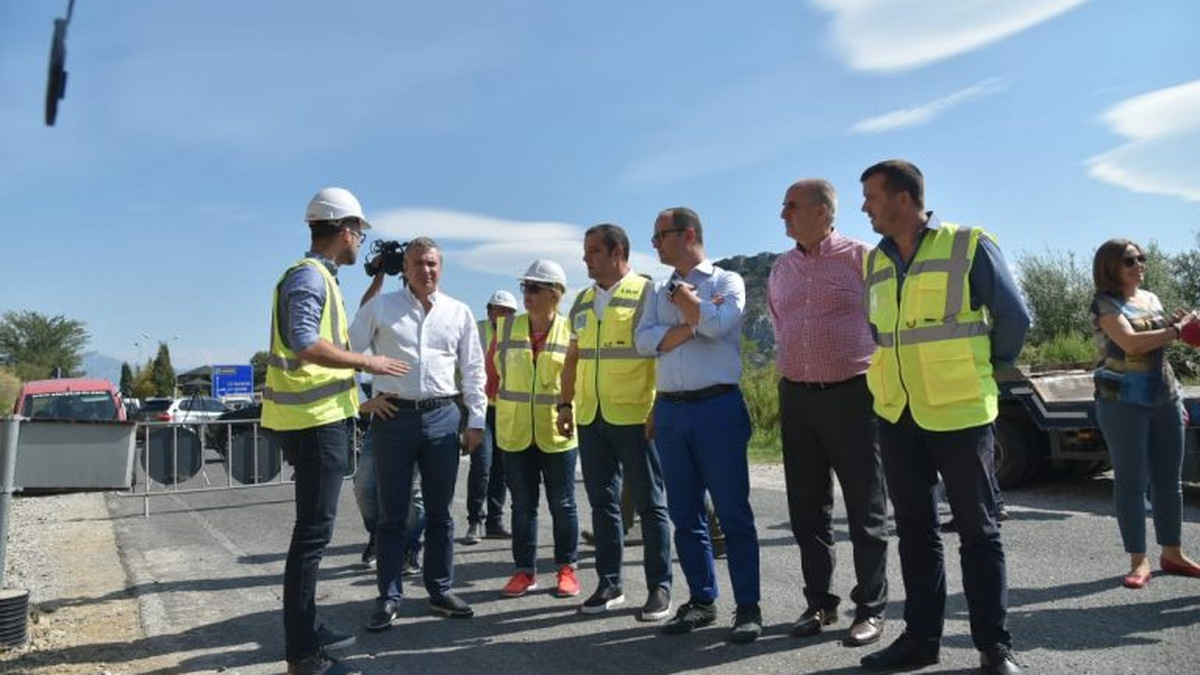
Albania is holding a major public consultation on 12 October 2026 for the proposed Murriqan–Lezhë motorway, a strategic road link that could improve travel between northern Albania and Montenegro. The approximately 41-kilometre project has an estimated investment value of €423.69 million and forms part of the wider Adriatic–Ionian Corridor. The review will examine environmental risks, land use, road design and community concerns. Montenegro is also planning an adjoining motorway towards Sukobin. Both projects could strengthen future cross-border tourism, although neither proposed motorway is currently open to travellers.
Albania’s October 12 Motorway Review Marks a Critical Step Towards Better Cross-Border Tourism
Albania has reached an important planning milestone in its effort to improve road connections with neighbouring Montenegro. A new round of public consultations begins in Shkodër on 12 October 2026, bringing the proposed Murriqan–Lezhë motorway under closer public examination.
Advertisement
Advertisement
According to Albania’s Ministry of Infrastructure and Energy, the meetings form part of the preparation of the motorway’s environmental and social assessment. They will examine the possible effects of construction and future road operations.
The project covers the northwestern part of Albania, from the Murriqan border crossing towards Lezhë. It is designed to provide a modern motorway connection along a route important for regional transport and international travel.
Advertisement
Advertisement
The development also has wider significance for Montenegro. The neighbouring country is planning its own Adriatic–Ionian motorway section from Bar through Ulcinj towards Sukobin, at the Albanian frontier.
Together, these separate infrastructure proposals could eventually support more efficient movement between coastal resorts, cultural destinations and regional transport hubs.
Advertisement
Advertisement
However, the October consultation concerns project preparation. It is not confirmation of construction approval, completed financing or a new road opening.
October 2026 Consultation Schedule and Public Participation
The Albanian government has announced four meetings across the affected region. The process gives residents, businesses and other interested groups an opportunity to examine the plans before subsequent assessment and project-development stages.
| Date | Location | Scheduled local time |
|---|---|---|
| 12 October 2026 | Shkodër Municipal Council Hall | 11:00 |
| 13 October 2026 | Vau i Dejës Municipality | 10:00 |
| 13 October 2026 | Lezhë Municipality | 14:00 |
| 14 October 2026 | Ministry of Infrastructure and Energy | 12:00 |
| 28 October 2026 | End of public comment period | Deadline date |
According to Shkodër Municipality, the formal consultation period runs from 28 September to 28 October 2026.
This means tourism businesses and local communities still have time to submit concerns about access, environmental protection and the possible effects of the motorway on their operations.
Albania’s Proposed 41-Kilometre Motorway Could Transform Northern Adriatic Road Connectivity
The proposed motorway would extend approximately 41 kilometres between the Murriqan–Sukobin border crossing and the Balldren area near Lezhë.
The detailed environmental scoping report identifies an alignment of approximately 40.4 kilometres. The rounded 41-kilometre figure appears in the official public information leaflet.
Advertisement
Advertisement
According to the project information published by Albania’s Ministry of Infrastructure and Energy, the motorway would feature two carriageways and controlled access.
Its preliminary engineering design uses a speed of 120 kilometres per hour. This is a design parameter rather than confirmation of the legal speed limit that would apply after opening.
Five interchanges are planned at Murriqan, Velipojë, Vau i Dejës, Gjadër and Balldren.
The scheme also includes bridges, drainage systems, protective fencing and connections with local roads. These features aim to improve safety and maintain access to surrounding communities.
An important but less visible component involves approximately 30 kilometres of associated local roads, covering 77 road connections across 19 villages. The environmental scoping report also identifies 40 proposed underpasses.
These connections matter because a motorway can improve long-distance journeys while creating new access challenges for communities living beside it.
Advertisement
Advertisement
The detailed design must address both requirements.
Montenegro’s Separate 42-Kilometre Highway Proposal Could Complete a Vital Tourism Connection
Across the border, Montenegro is advancing the planning of another strategic road section.
According to the Government of Montenegro, a conceptual-design tender announced in July 2024 covered approximately 42 kilometres between the southern portal of the Sozina Tunnel and the Sukobin border crossing.
The proposed alignment runs towards Bar, Ulcinj and the Albanian frontier.
Montenegro’s design brief envisages four traffic lanes, two emergency lanes and six interchanges. Its main carriageway design speed is 100 kilometres per hour.
The authorities also required alternative alignments to be examined, including the effects of tunnels, bridges and other major structures.
Advertisement
Advertisement
Crucially, this is a separate project from Albania’s Murriqan–Lezhë motorway. The two schemes have different planning processes, engineering requirements and financing arrangements.
| Infrastructure feature | Albania | Montenegro |
|---|---|---|
| Proposed section | Murriqan–Lezhë | Bar–Ulcinj–Sukobin |
| Approximate length | 41 km | 42 km |
| Design speed | 120 km/h | 100 km/h |
| Planned interchanges | 5 | 6 |
| Strategic purpose | Link the border with northern Albania | Link southern Montenegro with Albania |
| Documented stage | Detailed design and environmental assessment | Conceptual-design planning |
The combined geographical opportunity is clear. A more continuous road system could eventually make it easier for visitors to include both countries in one holiday.
Nevertheless, neither project should be advertised as a completed cross-border motorway. The published documentation does not establish a shared opening date or a verified end-to-end journey-time saving.
€423.69 Million Investment Places Albania’s Highway Among Its Major Regional Transport Proposals
The proposed Albanian motorway carries a substantial estimated investment requirement.
According to the Western Balkans Investment Framework, the total estimated investment stands at €423,690,147.
The project is listed under reference PRJ-ALB-TRA-016, with the European Bank for Reconstruction and Development identified as the lead international financial institution.
Advertisement
Advertisement
The official project record describes the scheme as being in preparation.
Official Financing Breakdown for the Murriqan–Lezhë Project
| Financing component | Amount | Classification |
|---|---|---|
| EBRD loan | €220,641,297 | Listed loan financing |
| National contribution | €51,125,225 | Domestic contribution |
| Anticipated WBIF grant | €147,094,198 | Expected external grant |
| WBIF grant WB24-ALB-TRA-01 | €1,608,000 | Technical-assistance grant |
| WBIF grant WB30-ALB-TRA-01 | €3,221,427 | Technical-assistance grant |
| Total estimated investment | €423,690,147 | Project estimate |
The financing table requires careful interpretation. The anticipated €147.09 million grant should not be described as money already received or definitively secured.
Similarly, the project’s total value is not the same as an awarded construction contract.
The official September 2026 information leaflet records that preliminary design was completed in 2024. Detailed design began in June 2025, with a planned duration of 24 months.
That timetable points towards further design work during 2027. It does not establish a confirmed construction completion date.
Albania’s Latest 2026 Visitor Growth Highlights Why Better Road Infrastructure Matters
Albania’s growing international visitor market provides important context for the motorway proposal.
Advertisement
Advertisement
According to the Albanian Institute of Statistics, the country recorded 9,443,700 foreign border arrivals from January to August 2026.
That was 5.3% higher than the 8,969,002 recorded during the same period in 2025.
August alone produced 2,429,532 foreign arrivals, representing annual growth of 2%.
These figures indicate continued international demand. However, they do not show how many visitors used the Murriqan crossing or stayed in northern Albania.
INSTAT measures border entries, including repeat visits and different travel purposes. Its August release also warns that detailed indicators are undergoing additional verification.
Therefore, the national totals cannot establish exact visitor numbers for individual destinations or transport routes.
Advertisement
Advertisement
Official Albania and Montenegro Tourism Indicators
| Indicator | Period | Official figure |
|---|---|---|
| Albania foreign border arrivals | January–August 2026 | 9,443,700 |
| Albania foreign border-arrival growth | January–August 2026 | +5.3% |
| Albania foreign border arrivals | August 2026 | 2,429,532 |
| Montenegro registered tourist arrivals | Full year 2025 | 2,728,564 |
| Montenegro registered tourist overnight stays | Full year 2025 | 15,367,166 |
| Montenegro collective-accommodation arrivals | August 2026 | 264,475 |
| Montenegro collective-accommodation nights | August 2026 | 1,125,805 |
Statistical interpretation: Albania’s figures measure border entries. Montenegro’s figures measure registered accommodation use. They represent different indicators and should not be directly compared as equivalent tourism-arrival totals.
Sources: INSTAT and MONSTAT.
Montenegro’s Coastal Tourism Market Adds Commercial Importance to the Proposed Border Corridor
Montenegro’s tourism statistics provide another reason to examine the proposed motorway link.
According to Montenegro’s Statistical Office, MONSTAT, collective accommodation establishments recorded 264,475 tourist arrivals and 1,125,805 overnight stays in August 2026.
Seaside destinations accounted for 92.1% of recorded overnight stays in this accommodation category during the month.
The latest complete annual accommodation data also show considerable activity close to Albania.
Advertisement
Advertisement
In 2025, Ulcinj registered 312,677 tourist arrivals and 1,509,750 overnight stays. Bar recorded 260,176 arrivals and 2,217,381 overnight stays.
These municipalities are relevant because the proposed Montenegrin motorway would improve strategic connectivity through the southern coastal region.
The national data also show 53,214 registered tourist arrivals from Albania to Montenegro during 2025, accounting for 176,318 overnight stays.
This establishes an existing Albanian visitor market in Montenegro, although it does not identify which border crossings those visitors used.
For travel operators, the figures indicate a potential commercial market for better connected multi-destination holidays.
Ulcinj, Bar, Shkodër and Lezhë Could Benefit From Future Cross-Border Travel Packages
The greatest tourism opportunity may come from linking several destinations rather than promoting the motorway as a single attraction.
Advertisement
Advertisement
On the Montenegrin side, Bar and Ulcinj provide access to coastal accommodation, historic areas and leisure activities.
Across the border, northern Albania offers Shkodër, Lake Shkodër, Velipojë and the wider Lezhë region.
The proposed motorway could eventually support itineraries that combine these locations without requiring travellers to treat the international border as the end of their holiday experience.
For inbound tour operators, stronger road connections may allow more flexible itineraries involving cultural visits, coastal stays, outdoor activities and local accommodation.
The scheme may also help redistribute tourism spending towards businesses that are not located in the most heavily visited resort areas.
However, access to individual attractions will still depend on local roads, parking facilities, border procedures and the quality of visitor services.
Advertisement
Advertisement
Motorway construction alone cannot guarantee higher hotel occupancy, increased spending or additional visitor nights.
Those outcomes would require measurable changes in traveller behaviour after the infrastructure becomes operational.
Albania and Montenegro Must Address Existing Border Bottlenecks Before Promising Seamless Tourism
Improving the road leading to a border crossing does not automatically improve the crossing itself.
This is an important distinction for tourism planners.
The Government of Montenegro reported in June 2026 that representatives of both countries had examined operational matters at the joint Sukobin–Muriqan crossing.
The discussions covered coordination over repairs to a bridge at Kravarski Potok, close to the crossing, and issues involving customs procedures.
Advertisement
Advertisement
These matters show that border infrastructure and administration remain important elements of regional connectivity.
Montenegro has also undertaken a separate project to reconstruct approximately 14 kilometres of road between Bar, Kamenički Most and Krute.
The Montenegrin government announcement in September 2024 recorded an investment of approximately €12.2 million and an October 2026 completion target.
That was the original target, not verified evidence that the works have finished.
For travellers, the practical message is straightforward. Existing routes remain the basis for journey planning, and border waiting times must be considered separately from driving time.
Environmental Protection Emerges as a Major Test for Albania’s Sustainable Tourism Ambitions
The motorway would cross a landscape containing farmland, drainage networks, rivers and environmentally sensitive areas.
Advertisement
Advertisement
According to the official environmental and social scoping report, particular attention is required near the Buna River and the Buna River–Velipojë Protected Landscape.
The wider area has ecological importance for wetlands, birds, aquatic habitats and other wildlife.
Earlier route studies examined alternative alignments to reduce environmental damage and avoid sensitive locations.
The project documentation also identifies potential impacts from noise, dust, soil disturbance, habitat fragmentation and construction activity.
Proposed safeguards include improved drainage, biodiversity studies, protection measures for wildlife and environmental monitoring.
Flood resilience is particularly relevant because the alignment crosses low-lying land with extensive irrigation and drainage systems.
Advertisement
Advertisement
A new road could improve mobility while also creating environmental costs if its design and construction are poorly managed.
This makes the October consultation significant beyond the transport sector.
For nature-based tourism businesses, the quality of environmental protection may be just as important as improved accessibility.
Albania’s Detailed Highway Design Reveals Important Risks for Communities and Local Businesses
The proposed motorway is not simply a road running between two major points.
Its construction could affect agricultural land, existing local transport routes and commercial activities.
The published scoping report identifies a need to assess land acquisition, temporary construction areas and possible economic displacement.
Advertisement
Advertisement
It also provides for a resettlement plan to be developed when the detailed design and affected land parcels are sufficiently defined.
The project documents indicate that compensation and livelihood-restoration measures must follow Albanian requirements and applicable EBRD standards.
For tourism businesses, access to premises can be a major practical concern.
A guesthouse or small tourism operation may benefit from improved regional connectivity while still facing difficulties if its existing entrance road changes.
The inclusion of 77 local roads and 40 proposed underpasses is therefore a significant detail.
It shows that maintaining local access forms part of the engineering challenge.
Advertisement
Advertisement
Successful implementation will depend on ensuring that faster long-distance journeys do not leave nearby communities less connected.
Why the Albania–Montenegro Highway Connection Could Change Balkan Tourism Economics
The strategic opportunity extends beyond shorter road journeys.
International visitors often choose itineraries according to how easily they can move between destinations. A poorly connected border can discourage a two-country holiday, even when attractive places sit relatively close together.
The proposed Albania–Montenegro corridor could change that calculation over time.
Consider a tour operator designing a coastal holiday. Better infrastructure could make it easier to combine accommodation in Montenegro with additional nights in northern Albania. It could also improve the reliability of scheduled transfers and allow operators to distribute activities across a wider region.
This creates possible benefits for hotels, guesthouses, attractions, transport providers and local suppliers.
Advertisement
Advertisement
Yet the economic effect will depend on more than road capacity.
Border processing, seasonal congestion, car-hire permissions, environmental limits and the availability of quality accommodation will all influence whether the theoretical connectivity becomes a practical tourism advantage.
The most important performance measure will not be the number of kilometres constructed. It will be whether visitors find the complete journey easier, safer and more reliable.
If the project eventually supports longer stays and wider regional spending, its tourism value could extend beyond the direct benefits normally associated with highway development.
What International Travellers Need to Know Before Planning Albania–Montenegro Road Trips in 2026
The October 2026 developments do not introduce a new motorway that visitors can use immediately.
Nor do they announce changes to visa rules, passport requirements or entry eligibility.
Advertisement
Advertisement
Travellers should continue to plan journeys using the existing transport network and allow time for international border formalities.
Driving times may change according to traffic levels, weather, road conditions and the period of travel.
Those hiring vehicles should also confirm that their rental agreement permits travel between Albania and Montenegro, including any applicable insurance requirements.
The proposed motorway may eventually improve the road journey, but there is no verified date on which that benefit will become available.
For people travelling in late 2026, the announcement is primarily relevant as an indication of future transport development rather than an immediate change to holiday arrangements.
Critical Operational Takeaways for Travel Agents, DMCs and Tour Operators
Travel businesses should treat the proposed corridor as a medium- to long-term development opportunity while continuing to manage present-day operating risks.
Advertisement
Advertisement
- Maintain realistic travel schedules: Use current routes and operating conditions. Do not advertise anticipated motorway travel-time savings as existing benefits.
- Monitor border operations: Check the Sukobin–Muriqan crossing and any relevant roadwork notices before confirming transfers and group itineraries.
- Review cross-border documentation: Verify traveller entry requirements, vehicle insurance, rental permissions and coach-operating arrangements for both countries.
- Track infrastructure milestones: Monitor environmental approvals, land acquisition, financing commitments, procurement notices and construction announcements.
- Evaluate future product opportunities: Consider combined Ulcinj, Bar, Shkodër and Lezhë itineraries while ensuring that environmental and community impacts are addressed.
Albania and Montenegro Could Help Shape a More Connected Western Balkans Tourism Market
The Murriqan–Lezhë consultation marks a meaningful stage in Albania’s long-term transport strategy. Combined with Montenegro’s adjoining planning work, it highlights the prospect of a more connected coastal tourism region.
The potential benefits include easier multi-country travel, stronger regional business links and improved access to destinations beyond established resort centres.
However, the next milestones remain decisive. Environmental assessments must progress, designs must be finalised, funding must be secured and construction must eventually be completed.
The broader opportunity is to create a transport connection that supports sustainable tourism without weakening the natural and cultural attractions that encourage people to visit.
As of 12 October 2026, the proposal represents a potentially important investment in future Albania–Montenegro connectivity, not a completed transformation of the visitor experience.
Advertisement
