
Finland Partners With Denmark, Norway, Sweden, Iceland and Greenland to Build a Future-Ready Nordic Travel Empire With Eco-Friendly Hospitality, Indigenous Heritage and Smart Tourism Growth

Published
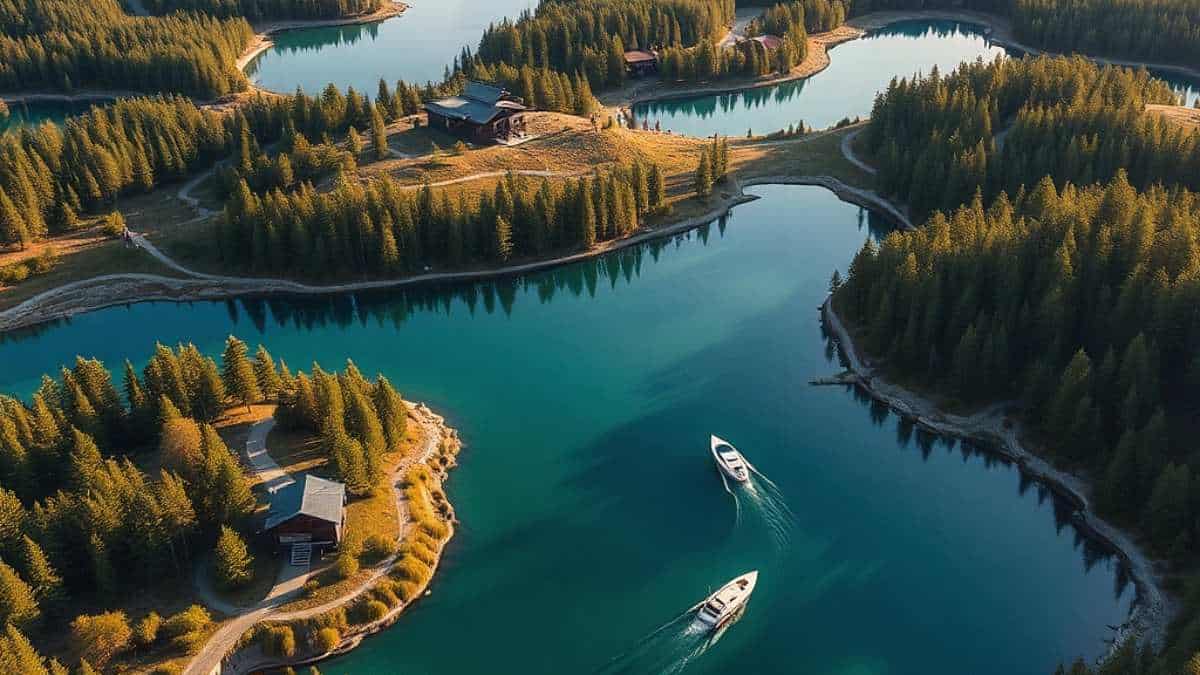
Image generated with Ai
Finland Partners With Denmark, Norway, Sweden, Iceland and Greenland to build a future-ready Nordic Travel empire with eco-friendly hospitality as the region enters a powerful new era of sustainable tourism. Through stronger cooperation, Finland Partners With Denmark, Norway, Sweden, Iceland and Greenland to create a future-ready Nordic Travel empire focused on responsible growth, smart tourism innovation and environmentally conscious experiences. The Nordic countries are building a connected travel ecosystem where eco-friendly hospitality, cultural heritage and green solutions are shaping the future of global tourism. Moreover, this partnership highlights how Finland Partners With Denmark, Norway, Sweden, Iceland and Greenland to transform the Nordic Travel landscape through sustainable practices, indigenous heritage protection and innovative tourism strategies. The future-ready Nordic Travel empire is being strengthened through collaboration, where eco-friendly hospitality and smart tourism growth are becoming the foundation of a resilient and sustainable travel destination.
Lake Saimaa Drives Finland’s Cultural Tourism Rise
Finland’s Lakeland has emerged as one of the strongest examples of sustainable cultural tourism development in Northern Europe. The region contains Europe’s largest lake district and has become a destination where nature, heritage and performing arts are closely connected.
Located in eastern Finland, the Great Lake Saimaa formation covers more than 427,946 hectares and represents the fourth-largest lake system in Europe. The interconnected waterways, islands and protected landscapes have created a unique environment for slow travel and cultural exploration.
At the heart of this tourism experience is the Savonlinna Opera Festival 2026, scheduled from July 3 to August 1, 2026. The festival is hosted inside the historic Olavinlinna Castle, a 15th-century medieval fortress built on a small island in Lake Saimaa. The castle’s enclosed courtyard provides a distinctive open-air performance environment, where historical architecture and natural surroundings are combined into one cultural attraction.
Advertisement
Advertisement
The 2026 artistic season has been organised under the artistic leadership of Ville Matvejeff, with a focus on Italian opera traditions. The programme includes major productions from Mozart, Puccini, Verdi and Bellini, while strengthening cultural connections between Finland and other Nordic countries.
The Marriage of Figaro by Wolfgang Amadeus Mozart will be performed on July 3, 6, 9, 13, 16, 20, 22 and 25. The production will feature conductor Andrea Sanguineti and artists including Kristian Lindroos, Henning Von Schulman, Lucrezia Drei, Iris Candelaria, Waltteri Torikka, Jérôme Boutillier and Sonja Herranen. The traditional opera buffa production will be presented in Italian with Finnish and English surtitles, with ticket prices starting from €69.60.
Advertisement
Advertisement
Madama Butterfly by Giacomo Puccini will follow on July 4, 7, 10, 15, 18 and 23. Conducted by Piergiorgio Morandi and directed by Henry Akina, the production will include Silja Aalto, Antony Ciaramitaro, Emilia Rukavina and Tuomas Miettola. The tragic opera will explore themes of relationships and betrayal.
Giuseppe Verdi’s Nabucco will return following its 2024 premiere and will be staged on July 8, 11, 14, 17, 21 and 24. Conducted by Ivan Lopez Reynoso and directed by Rodula Gaitanou, the production will feature Marigona Qerkezi, Petri Lindroos, Timo Riihonen and Giorgio Berrugi.
Advertisement
Advertisement
The Swedish connection will be highlighted through La Traviata by Verdi from July 27 to 31, presented as a guest performance by The Göteborg Opera. The production will feature the Göteborg Opera Orchestra and Chorus, creating another example of Nordic cultural cooperation.
The festival season will conclude with Norma by Vincenzo Bellini on July 29 and August 1, featuring soprano Lisette Oropesa in her role debut. The concert presentation will complete the Italian-focused programme.
For 2026, improvements have been introduced to the audience experience at Olavinlinna Castle through updated seating arrangements and revised ticket structures. The Pajatsolippu programme has also been introduced, allowing visitors to purchase a lottery-style ticket for €104.60 while guaranteeing a seat valued at a minimum of €149.60.
Beyond cultural value, the Savonlinna Opera Festival has been recognised as an important economic contributor for eastern Finland. Around €24 million in regional revenue is generated annually, while more than 500 local residents are employed during the summer season. Approximately 400 volunteers are also involved in supporting festival operations.
Advertisement
Advertisement
Environmental responsibility has remained a central element of the festival strategy. The event received the EcoCompass certificate in July 2023 and the Sustainable Travel Finland label in August 2023. Production facilities are heated through district heating systems using local forestry by-products, including 85% renewable wood chips. Costume recycling and sustainable set construction practices have also been introduced.
Finland Powers Green Ferry Tourism Future
Finland’s sustainable tourism development has been supported by a major transformation of regional water transport infrastructure. Between 2026 and 2027, Finferries (Suomen Lauttaliikenne Oy), the state-owned domestic ferry operator, has been transitioning its Lake Finland fleet towards hybrid-electric and fully electric propulsion.
The programme has been designed to reduce maritime emissions by more than 90% compared with traditional diesel-powered vessels. Instead of constructing new vessels, existing ferry hulls have been reused, reducing carbon emissions associated with steel manufacturing.
Engineering design has been managed by ILS Ship Design & Engineering, while HL-Marine has been responsible for conversion work at the Inkilänniemi shipyard in Savonlinna. By April 2026, the first two converted ferries had reached the outfitting quay, while two additional vessels had entered dry dock.
Several important maritime projects are supporting Finland’s transition.
The Elektra electric car ferry operating on the Nauvo-Parainen route has become one of Europe’s largest electric car ferries. It uses dual lithium-ion battery packs with 530 kWh capacity each and features a five-minute shore-side rapid charging system. Fuel costs have been reduced by up to 60%.
Advertisement
Advertisement
The L-317 battery-hybrid cable ferry operating between Nauvo and Korppoo has introduced hybrid-electric propulsion and virtual cable technology to improve efficiency and reduce emissions.
The wider Lakeland Modernisation project includes 14 inland waterway ferries across eastern and central Finland. Through hybrid-electric conversion, local waterway emissions are expected to decline by more than 90%.
The Hailuoto Causeway project has also strengthened Finnish transport connectivity. The 8.4-kilometre permanent maritime road connection in the Oulu region has replaced the previous seasonal ferry service, providing year-round vehicle access.
A proposed Nordic Connector between Vaasa in Finland and Umeå in Sweden is also being examined through technical feasibility studies. The fixed bridge or tunnel concept across the Gulf of Bothnia has been designed to improve trade routes and strengthen strategic connections between the two countries.

Image generated with Ai
Denmark and Faroe Islands Lead Nordic Change
Denmark and the Faroe Islands have played an increasingly important role in shaping Nordic cooperation priorities. During the 2026 presidency of the Nordic Council of Ministers, attention has been directed towards digital security, societal resilience and stronger regional coordination.
The updated approach has focused on adapting historic agreements to modern realities, including efforts to revise the Helsinki Treaty to reflect the participation of all Nordic administrative regions.
Advertisement
Advertisement
Denmark’s role in Nordic tourism has also remained connected with coastal sustainability, island management and responsible visitor planning. With more than 500 islands, Denmark has developed experience in balancing tourism growth with environmental protection, waste management and coastal preservation.
The Nordic approach has increasingly linked tourism development with economic security, climate adaptation and regional infrastructure planning.
Norway, Sweden and Finland Advance Green Maritime Future
Norway, Sweden and Finland have strengthened cooperation through green shipping initiatives and climate-focused transport strategies. The Nordic Ministers for the Environment and Climate established a framework for zero-emission shipping routes, supported by port charging infrastructure and low-emission fuels.
The declaration signed in Oslo on May 3, 2022, committed Nordic countries to developing green maritime corridors by 2030.
Private sector cooperation has also expanded. Nordic Ferry Infrastructure, created through the integration of Molslinjen, Torghatten and ForSea, operates more than 60 routes with a fleet of 100 vessels across Norway, Denmark and Sweden. Major investments have been directed towards zero-emission maritime transport solutions.
Sweden has also strengthened cultural tourism links through cooperation with Finland. The Göteborg Opera participation at the Savonlinna Opera Festival demonstrates how Nordic cultural institutions are increasingly connected through shared tourism experiences.
Advertisement
Advertisement
Iceland and Greenland Lead Arctic Tourism Shift
Iceland, Greenland and other Nordic territories have become central to discussions surrounding climate adaptation and responsible Arctic tourism.
The Nordic Council of Ministers has supported scientific cooperation examining major climate risks affecting the North Atlantic region. Following concerns raised by climate scientists, Nordic Tipping Week was organised from October 21 to 24, 2025, in Helsinki and Rovaniemi.
The initiative contributed to the publication of A Nordic Perspective on AMOC Tipping on February 4, 2026. The report examined the potential impacts of Atlantic Meridional Overturning Circulation changes and recommended precautionary climate adaptation strategies.
For Greenland, sustainable tourism has been connected with local economic participation. Tourism regulations introduced by Naalakkersuisut require that two-thirds of tourism operator ownership must remain locally controlled by 2027, excluding hotels.
The policy has been designed to ensure tourism revenue remains within local communities while protecting cultural heritage.
Nordic Tourism Plan Drives Green Growth
The Nordic Tourism Plan 2025–2030 has become the central framework guiding sustainable tourism development across the region. Published by the Nordic Council of Ministers in March 2025, the strategy has been designed to create competitive, innovative and attractive Nordic destinations.
Advertisement
Advertisement
The Competitive Nordics approach focuses on economic resilience, improved data cooperation and support for green transition among small and medium-sized enterprises.
The Innovative Nordics strategy promotes digital solutions, biodiversity monitoring and visitor management through advanced technology.
The Attractive Nordics strategy focuses on community-based tourism, off-season travel and partnerships with food, creative industries and wellness sectors.
The plan has also addressed challenges linked to high consumption-based carbon footprints and resource use. Through sustainable indicators including the Sustainable Development Index, Transitions Performance Index and Doughnut Economy Indicators, regional policymakers have identified the need for regenerative tourism models.
Finland Links Baltics With Premium Tourism Growth
To replace declining eastern tourism markets, the New Nordic initiative led by Savonlinna Development Services Ltd has been developed with support from the Central Baltic Programme.
The Beyond Nordics brand has been created to attract high-value independent travellers from the United States, United Kingdom and Japan.
Advertisement
Advertisement
The programme connects Finland’s Lake Saimaa region with Estonia and Latvia.
Finland contributes nature-based wellness, seal-friendly tourism and the Savonlinna Opera Festival.
Estonia contributes Tallinn’s historic environment and Tartu’s cultural identity.
Latvia contributes Riga’s Art Nouveau architecture and Jūrmala’s coastal tourism.
The project aims to involve 300 regional businesses, create 45 tourism products and secure international sales partnerships.

Image generated with Ai
Nordic Travel Embraces Green Hospitality Future
The Savonlinna region has demonstrated how local communities can combine hospitality with environmental responsibility.
Advertisement
Advertisement
More than 21% of the region is protected under Natura 2000, requiring careful management to protect sensitive ecosystems, including the endangered Saimaa ringed seal.
Lomamokkila, a fourth-generation family farm in Savonlinna, has become an example of regenerative tourism. The property holds Sustainable Travel Finland and EcoCompass certifications and participates in the Circular Economy for Regenerative Tourism project.
Sustainable construction, renewable energy improvements and local food sourcing have been integrated into operations.
The Nordic approach has also included indigenous tourism protection. The European Indigenous Tourism Conference held in Inari, Finland, in 2025 brought together Sámi and Inuit tourism entrepreneurs from Finland, Norway, Sweden and Greenland.
Four pillars were identified for ethical indigenous tourism: connection to land, authentic storytelling, indigenous-controlled certification and community participation.
Nordic Countries Balance Tourism Growth With Future Challenges
Across Finland, Denmark, Norway, Sweden, Iceland and the wider Nordic Region, tourism development is increasingly being connected with sustainability, infrastructure innovation and social responsibility.
Advertisement
Advertisement
Second-home tourism remains a major factor, with around two million people in Finland using seasonal lakeside cabins. Similar challenges are experienced across Sweden, Norway and Denmark, where municipalities must manage healthcare, infrastructure and public services for seasonal populations.
Digital transport solutions are being introduced to support lower-emission travel. Matkahuolto’s Matkat application now integrates ferry connections from Viking Line, Eckerö Line and Tallink Silja Line, allowing travellers to combine buses, trains and ferries through one platform.
Through cultural events, green transport, indigenous tourism protection and regional cooperation, the Nordic Region is developing a new tourism model where economic growth is balanced with environmental protection and community wellbeing.
Advertisement
