

South Korea is Now Seeing New Arctic Shipping Services as it Builds on Its First Europe Cargo Travel Round Trip

Updated
Published
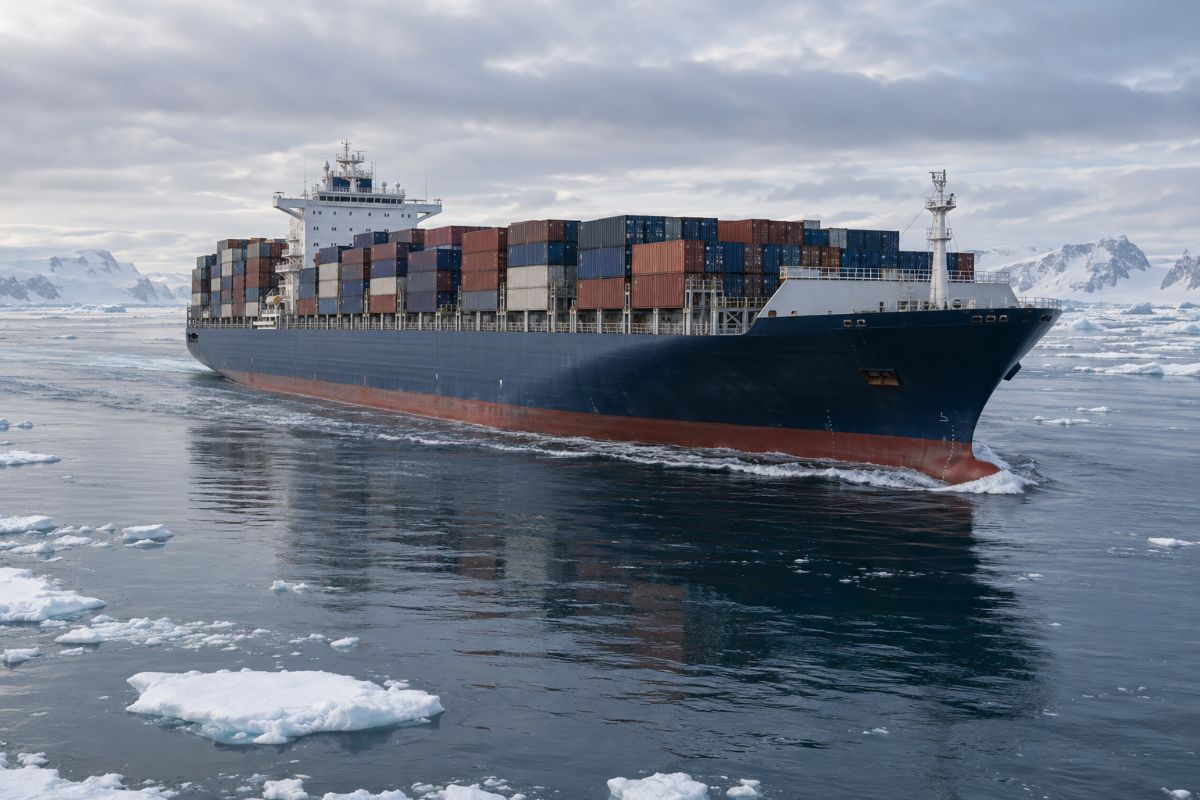
South Korea’s Arctic Shipping trial, launched from Busan on 22 August 2026, has reached European ports through the northern maritime corridor. Government records confirm a freight experiment designed to assess commercial demand, navigation conditions and operating costs. For travellers and tourism businesses, the immediate distinction matters: the Europe Cargo Round Trip has not introduced a passenger connection or changed visitor-entry rules. The wider policy targets regular freight services by 2030, while separate coastal development plans provide the tourism context. Final commercial results and the reported return date require careful verification.
Arctic Shipping Evidence: What the Official Record Shows
The strongest evidence concerns freight transport, route economics and polar operations. The percentages below are an editorial assessment of the story’s emphasis, not official statistics, economic contributions or measured tourism impacts. They total exactly 100% and reflect the relative importance of the verified material.
| News Component | Share of Story | Officially Verified Finding | Relevance to Travellers | Official Source |
|---|---|---|---|---|
| Freight transport | 40% | Container trial; announced loading plan of 737 TEU of cargo within 837 TEU overall. | No passenger product announced. | Government trial announcement. coast.mof.go.kr |
| Route economics | 20% | Approximately 13,000 kilometres via the northern route versus 20,000 through Suez. | Freight-distance comparison, not holiday savings. | Official municipal voyage update. www.busan.go.kr |
| Polar safety | 20% | Polar Code safeguards and additional navigation requirements effective in January 2026. | Requirements depend on the vessel and operation. | Polar safety framework; 2026 regulatory update. www.imo.org |
| Maritime policy | 15% | Regular Korea–Europe route targeted for 2030. | Policy objective without passenger booking dates. | Government development strategy. www.mof.go.kr |
| Tourism context | 5% | A southern coastal leisure and tourism belt is proposed separately. | No measured visitor gain established by the trial. | Official coastal development plans. www.mof.go.kr |
The Europe Cargo Round Trip therefore belongs primarily to shipping and logistics coverage. Its travel relevance concerns the limits of passenger access, regional development and maritime safety. The evidence establishes an operational trial and future ambitions; it does not establish cheaper holidays, additional tourist arrivals or an available cruise itinerary.
From the May Strategy to September Port Calls
The policy chronology begins with the southern maritime development strategy published on 26 May 2026. It set out preparations for a regular Korea–Europe route and wider regional investment. An August trial announcement then identified a vessel with capacity of 2,758 TEU and an original sailing plan of approximately 45 days. Departure followed on 22 August. An official update dated 30 September records Felixstowe on 12 September, Rotterdam on 13 September and Gdańsk on 19 September.
Advertisement
Advertisement
The latest official Arctic Shipping voyage update reviewed still described the return as forthcoming, with 12 October listed as the expected date. The reported 11 October arrival and 50-day duration were not independently corroborated by an official completion release in this review. This distinction affects how the current situation should be described. The Europe Cargo Round Trip has documented European milestones, but an earlier expected return date cannot verify the actual completion date or final performance.
Why the Northern Route Is Being Tested
A Shorter Passage Drives Arctic Shipping Research
The directly stated purpose is to gather operating evidence from actual freight movements. The published Busan–Rotterdam comparison indicates a potential reduction of 7,000 kilometres, equivalent to 35% of the Suez distance. That is a geographical comparison, not a confirmed fuel or cost saving. The Europe Cargo Round Trip also requires consistent measurements: a return journey with several port calls cannot be compared directly with one uninterrupted passage. Sailing time, port time and total expenditure answer different commercial questions.
Advertisement
Advertisement
The announced August loading plan included 737 TEU of loaded cargo and empty containers bringing the total to 837 TEU. TEU expresses capacity using a standard 20-foot container; a 40-foot container normally counts as two. Dividing 737 by 837 gives a calculated loaded share of approximately 88.1%. This describes the planned container mix. It does not measure profitability, utilisation of the vessel’s full capacity or the final cargo transported in both directions.
Polar Conditions Set the Operating Limits
Official international guidance identifies ice, poor weather, limited navigational information and difficult communications as polar operating challenges. Cold can affect machinery and emergency equipment, while remoteness complicates rescue and pollution response. Arctic Shipping consequently requires more than a shorter distance: vessel capability and safe operating limits matter. The Polar Code entered into force on 1 January 2017. Navigation and voyage-planning extensions took effect on 1 January 2026 for specified fishing vessels, pleasure yachts and smaller cargo ships. These requirements provide regulatory context, rather than evidence of an incident during this trial.
Advertisement
Advertisement
Trial preparations included polar training for navigation officers, continuous contact with the vessel and emergency arrangements. These measures addressed operational readiness, rather than demonstrating that commercial risks had disappeared. Together, the evidence explains the purpose of the trial, while leaving dependable schedules and verified financial performance as questions for assessment.
Tourism Benefits Remain Separate From Freight Milestones
The wider development programme connects Arctic Shipping ambitions with ports, marine services, industrial activity and specialist skills. It separately proposes a coastal leisure and tourism belt. This matters locally because transport and visitor projects can form part of the same regional strategy. It does not mean that a container voyage has opened attractions, increased accommodation capacity or improved visitor access. Each tourism project requires its own implementation evidence.
As analysis, additional maritime activity could generate meetings, training or supplier visits and create indirect hospitality demand. However, the reviewed official material does not quantify those outcomes or attribute additional bookings to the voyage. The international relevance lies in assessing another Asia–Europe freight corridor. For tourism businesses, the useful question is whether subsequent decisions create an identifiable visitor service, infrastructure improvement or business-travel requirement.
What Travellers Should Check Next
The trial announcements provide no reason, by themselves, to change a holiday itinerary. They contain no passenger fares, tourist application process or associated visa reform. Monitoring is more relevant than immediate action for readers interested in future maritime services.
Advertisement
Advertisement
- Confirm passenger availability before treating any freight announcement as a travel option.
- Check entry requirements with the relevant immigration authority for your nationality and itinerary.
- Look for published operating results before relying on claimed journey or cost savings.
- Treat the 2030 objective as a target until a service timetable is formally announced.
For the Europe Cargo Round Trip, the announced next task is analysis of distance, duration, fuel consumption and operating costs. The findings are intended to guide policy. Wider preparations include specialist training, suitable vessels, cleaner fuel infrastructure and international cooperation. The reviewed material provides no fixed publication deadline for the assessment.
Conclusion: Freight Evidence Comes Before Passenger Promises
The trial gives South Korea practical evidence for evaluating a northern freight connection with Europe. Confirmed port calls demonstrate progress, while the route comparison explains why further assessment matters. Commercial reliability, safety requirements and operating costs will determine how that evidence supports later decisions. For travellers, Arctic Shipping remains separate from passenger access and border policy. Coastal tourism ambitions have their own delivery requirements. The next meaningful developments will be official operating results and clearly defined service decisions. Until then, distinguish freight progress from passenger opportunities and follow official updates for verified results, confirmed services and any relevant travel changes.
Advertisement
