
Boston Logan Airport 2026 Departures: Essential Tips for Maximizing Your Airport Experience

Published
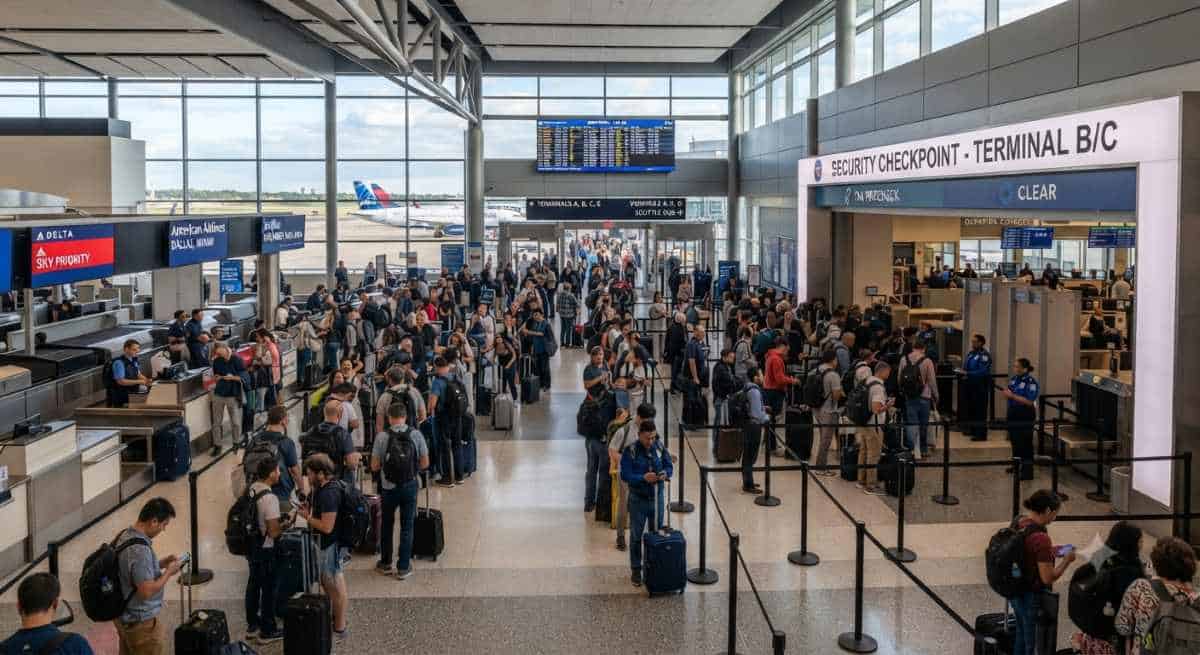
Image generated with Ai
The departure experience at Boston Logan International Airport is fundamentally shaped by its role as a critical air travel hub for the New England region. As travelers navigate the complexities of terminals, security protocols, and flight schedules, understanding the underlying operational flow is essential for ensuring a seamless journey.
In 2026, the landscape of airport logistics remains a focus for those seeking to mitigate the stress of travel. Whether embarking on a domestic trip or an international journey, the importance of how early to arrive and the nuances of security checkpoints cannot be overstated.
Understanding Terminal Logistics and Infrastructure
Boston Logan, identified by the code BOS, is composed of four distinct passenger terminals: A, B, C, and E. Notably, Terminal D does not exist. Terminals A, B, and C are primarily dedicated to domestic and Canadian routes, whereas Terminal E serves as the central hub for international departures.
The connectivity between these terminals is facilitated by an infrastructure of enclosed walkways and the Massport shuttle bus system, which operates landside.
Advertisement
Advertisement
While airside connections exist between certain concourses—such as the link between Terminal B and C—these paths are not universal. It is frequently advised that if a change in airlines or terminals is required, passengers should prepare to exit, navigate to the appropriate terminal, and undergo security screening once more.
Digital signage at the airport entrance is utilized to direct passengers to the correct terminal based on their specific airline and destination, necessitating that travelers confirm their terminal details well in advance of their arrival.
Advertisement
Advertisement
Strategic Timing for Departures
The determination of an appropriate arrival time is influenced by several variables, including the time of day, the specific day of the week, and the presence of checked luggage. Generally, a minimum of two hours for domestic flights and three hours for international flights is recommended.
During the early morning peak, typically between 5:30 a.m. and 8:00 a.m., security throughput in Terminals A, B, and C is subjected to intense demand from both business and leisure passengers. For these periods, an earlier arrival is strongly suggested to account for potential congestion.
Advertisement
Advertisement
Conversely, midday and late-evening departures are often characterized by a more manageable pace. However, the presence of winter weather conditions or holiday travel surges often necessitates a more conservative approach, as the risk of missing a flight is mitigated by providing a larger time buffer for security and check-in procedures.
Security Protocols and Passenger Throughput
The security architecture at Logan utilizes multiple checkpoints across all terminals. The efficacy of these checkpoints is enhanced by programs such as TSA PreCheck and CLEAR, which are widely available. TSA PreCheck allows for streamlined screening, while CLEAR provides biometric identity verification.
Despite these tools, wait times remain dynamic and subject to fluctuations based on staffing and passenger volume. It is observed that utilizing live wait time estimates through airport information screens or airline applications can assist passengers in making informed decisions about which checkpoint to utilize within their assigned terminal.
The Role of Lounges and Infrastructure
The airport provides a diverse range of lounges designed to offer relief from the public departure areas. Terminal A features a Delta Sky Club, while Terminal B offers the American Airlines Admirals Club, a United Club, and the Chase Sapphire Lounge by The Club, which is accessible to a broader range of travelers.
Advertisement
Advertisement
Terminal C and Terminal E also host various airline-specific lounges that cater to premium-class and eligible elite-status passengers. These spaces are utilized for relaxation, work, and sustenance, providing a structured environment before departure.
Evolving Policies and Industry Insights
The landscape of air travel in 2026 reflects a shift toward increased digital reliance. Online check-in, available 24 hours prior to departure, is encouraged as a primary method for reducing wait times at the airport. Furthermore, the standardization of document verification processes—particularly for international departures from Terminal E—has been refined to ensure compliance with international entry requirements.
Compared to previous years, where processes were perhaps less digitized, the current reliance on mobile applications for check-in and flight updates has become a central component of the departure experience, effectively reducing the burden on physical check-in counters.
Advertisement
