
Europe’s Car Industry Turns to Emergency Airfreight as Parts Shortages Threaten Production Lines

Published
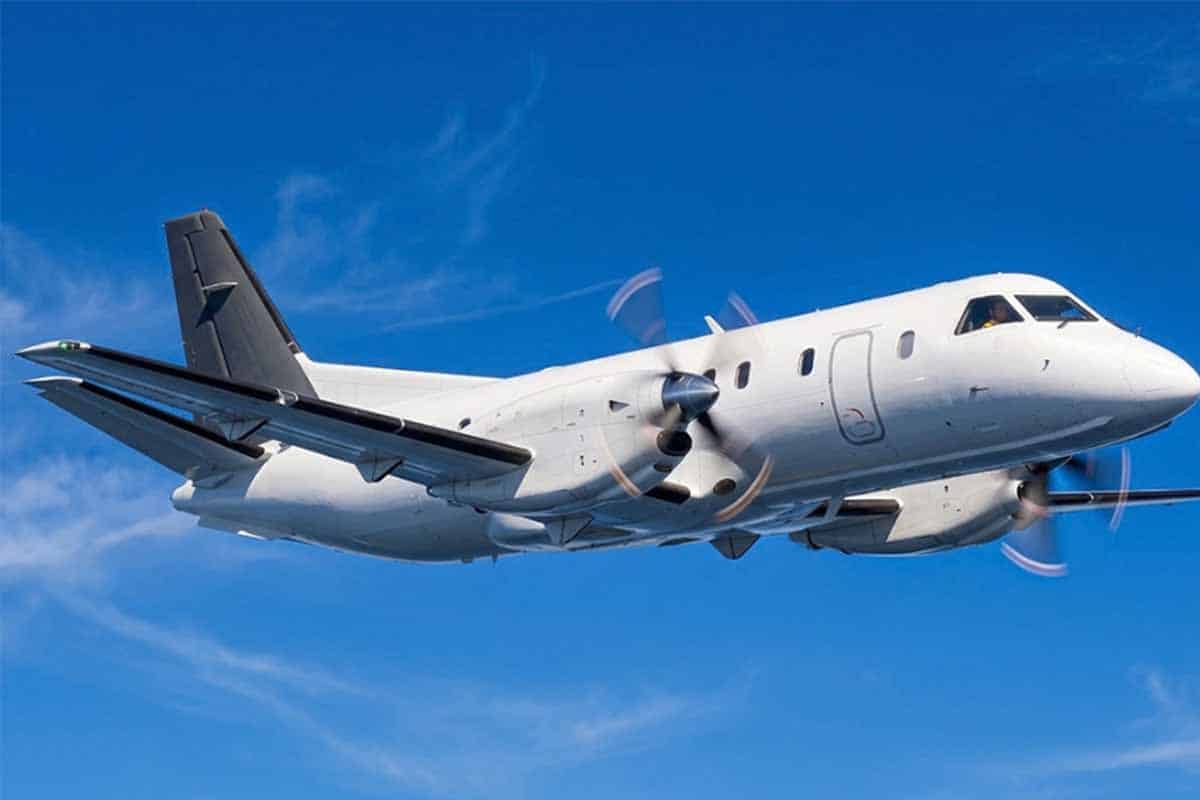
Europe’s automotive industry is increasingly relying on emergency airfreight when disrupted supply chains threaten production. A missing shipment can bring an entire assembly line to a halt, making speed more valuable than transport cost. For manufacturers, dedicated aircraft can provide a crucial solution when conventional logistics cannot meet increasingly tight deadlines.
Why can a small parts shipment threaten an entire car plant?
A relatively small shipment of automotive components can create a major operational crisis when it is required at a precise stage of vehicle assembly. Modern car manufacturing depends heavily on just-in-time and highly synchronised supply chains, leaving limited room for delays once components are needed on the production line.
According to Chapman Freeborn Senior Manager Cargo Charter – DACH and Automotive Expert Isidro Nuñez Oñate, a recent case involved three pallets of automotive parts located in Bulgaria while a major German manufacturing plant faced a potential shortage. The shipment was too large for an on-board courier, while scheduled airfreight could not satisfy the required deadline.
A dedicated charter aircraft transported the components to a regional airport near the German plant, with onward delivery arranged directly to the production facility. The complete operation took approximately eight hours from the initial request, helping the manufacturer avoid a potentially much more expensive interruption.
Advertisement
Advertisement
Why is downtime more expensive than emergency airfreight?
The fundamental calculation behind emergency automotive logistics is straightforward: manufacturers must compare the price of urgent transportation with the financial consequences of stopping production.
Automotive assembly lines are designed around carefully sequenced processes. Components arrive according to production schedules, and vehicles move through multiple stages in a fixed order. If one essential part is unavailable, the impact can extend well beyond that particular component.
Advertisement
Advertisement
The Siemens True Cost of Downtime report has estimated that an hour of inactivity at a major automotive plant can cost as much as $2.3 million. The figure illustrates why an apparently expensive charter can become economically rational when measured against the potential cost of an extended production stoppage.
As Nuñez Oñate explains, car factories operate with considerable precision, meaning that relatively minor disruptions can have consequences across the wider manufacturing process. A failed truck delivery, defective component batch or unexpected supplier problem can rapidly become a plant-wide issue.
When do manufacturers turn to emergency charters?
Emergency transport decisions are generally made after conventional logistics options can no longer protect the production deadline. Some automotive customers may identify a requirement several days ahead, but highly urgent requests can arrive on the same morning that a plant is expected to run out of components.
Logistics teams typically evaluate several possibilities before selecting a solution. These can include the next available scheduled flight, an on-board courier, scheduled airfreight, dedicated road transport or a dedicated charter aircraft.
The objective is not necessarily to select the fastest transportation method at any cost. Instead, the priority is to identify the most cost-effective option capable of delivering the parts before the production deadline.
When a shipment is too large for an on-board courier and scheduled services cannot provide sufficient speed, a charter may become the most practical solution. The aircraft can be positioned specifically for the shipment, reducing the dependency on fixed schedules and connecting flights.
Advertisement
Advertisement
Which European automotive supply chains face the greatest pressure?
The challenge extends across Europe’s principal automotive manufacturing and supplier markets, including Germany, the UK, Italy and Poland. Each market has its own logistics infrastructure and production characteristics, but manufacturers face a similar underlying problem: a specific component must reach a particular location at a fixed time.
The risk can also originate beyond the immediate European manufacturing network. Automotive suppliers in North Africa, particularly Tunisia and Morocco, have become important participants in European vehicle supply chains, while supplier activity is also growing in Algeria.
These networks depend substantially on road and ferry connections between North Africa and Europe. When those links are interrupted, the resulting delay can be difficult to recover through conventional road transport alone.
For manufacturers operating with limited inventory buffers, even a disruption lasting several hours can create pressure on production schedules. Airfreight therefore acts as a contingency mechanism capable of restoring connectivity when surface transport cannot recover lost time quickly enough.
How do strikes and extreme weather affect automotive logistics?
Weather disruption, industrial action and infrastructure problems can transform a stable supply chain into an emergency operation with little warning.
Mediterranean ferry services provide one example. Automotive components moving between North Africa and European production facilities may depend on scheduled crossings. Severe weather or strikes can prevent trucks from travelling according to plan, creating delays that accumulate rapidly.
Advertisement
Advertisement
Road transport cannot always compensate for a missed ferry because the alternative routes may involve significantly longer distances or additional border crossings. By the time the disruption becomes visible, the remaining delivery window may already be too narrow for conventional transportation.
In such circumstances, urgent airfreight or a dedicated charter can provide a bridge between the disrupted supplier and the production plant. The objective is not to replace road and ferry logistics permanently, but to protect the manufacturing schedule during an exceptional disruption.
Have electric vehicles changed the urgency of automotive airfreight?
The growth of electric vehicle production has not fundamentally changed the need for rapid automotive logistics. EV manufacturers remain exposed to the same basic production principle: essential components must arrive before they are required on the assembly line.
However, some EV-related components can create additional operational requirements because of dangerous goods regulations. Lithium batteries and certain battery-related materials may require specialised handling, documentation, packaging and transportation procedures.
Those requirements become particularly important during time-critical shipments because urgency does not remove regulatory obligations. Logistics providers must ensure that the shipment is correctly classified, prepared and accepted for transportation while simultaneously working against a tight production deadline.
This creates another layer of complexity for emergency automotive logistics. Speed remains critical, but compliance, safety and aircraft suitability must be considered before a shipment can move.
Advertisement
Advertisement
Why are most automotive charters still last-minute?
Despite the strategic importance of resilient supply chains, many emergency charter requirements remain reactive rather than planned. Automotive manufacturers operate within extensive international supplier networks, making it difficult to predict precisely where the next disruption will originate.
A shortage can result from purchasing or planning errors, quality-control problems, supplier failures, traffic disruption, industrial action, severe weather or unexpected transport cancellations.
Manufacturers cannot eliminate every one of these risks. What they can influence is their ability to respond once a disruption occurs.
Maintaining access to multiple transport options can therefore become an important element of supply-chain resilience. Road transport may remain the most economical choice under normal conditions, while scheduled airfreight can provide additional speed. An on-board courier may work for smaller consignments, but larger or heavier shipments may require a dedicated aircraft.
The ability to move quickly between these options can determine whether a disruption remains a logistics problem or becomes a manufacturing crisis.
What does the Bulgarian-to-Germany case show?
The movement from Bulgaria to Germany demonstrates why emergency charter decisions cannot be assessed solely through the price of an aircraft.
Advertisement
Advertisement
Three pallets represented a comparatively small volume of cargo, but their importance was determined by their role in the production process. Once the conventional transportation options failed to meet the required timeline, the shipment became time-critical.
The parts were collected from the supplier and transported to Sofia Airport. A dedicated aircraft was then positioned to carry the shipment towards Germany, with final delivery coordinated to the assembly plant.
The operation illustrates a central principle of automotive logistics: cargo value is not always reflected by its physical size or purchase price. A relatively inexpensive component can become operationally critical if its absence prevents thousands of vehicles from progressing through production.
Why will air charters remain important to automotive supply chains?
The automotive sector is likely to continue relying on emergency airfreight as manufacturers balance lean inventory strategies with increasingly complex international supply networks.
Just-in-time manufacturing delivers efficiency by reducing the need for large inventories, but it also increases sensitivity to disruption. As supplier networks become more geographically diverse, the number of potential pressure points can increase.
Emergency chartering provides manufacturers with a contingency option when regular transportation can no longer protect the production deadline. It does not remove the underlying supply-chain problem, but it can provide the time needed to prevent a local disruption from becoming a major manufacturing shutdown.
Advertisement
Advertisement
For automotive companies, the key calculation is therefore not simply how much an aircraft costs. It is whether the aircraft can deliver the required components before the production line stops — and whether that cost is lower than the financial and operational consequences of standing still.
Conclusive Summary — 50 words
Emergency airfreight has become an important safety valve for Europe’s automotive supply chains, particularly when road, ferry and scheduled air services cannot meet production deadlines. From Bulgaria to Germany and North Africa to European factories, dedicated charters can restore critical links quickly, protecting manufacturers from the potentially enormous cost of production downtime.
Advertisement
